Compare commits
1 Commits
master
...
feature/ma
| Author | SHA1 | Date |
|---|---|---|
 Junior B
|
ff8586989d |
|
|
@ -34,19 +34,3 @@ timeline.xctimeline
|
|||
# Carthage/Checkouts
|
||||
|
||||
Carthage/Build
|
||||
|
||||
|
||||
# Various
|
||||
|
||||
.DS_Store
|
||||
|
||||
|
||||
# Linux
|
||||
|
||||
*.swp
|
||||
*.swo
|
||||
|
||||
# Swift Package Manager
|
||||
|
||||
.build/
|
||||
Packages/
|
||||
|
|
|
|||
278
.jazzy.yml
278
.jazzy.yml
|
|
@ -1,278 +0,0 @@
|
|||
---
|
||||
custom_categories:
|
||||
- name: RxSwift
|
||||
children:
|
||||
- AnyObserver
|
||||
- Cancelable
|
||||
- ConnectableObservableType
|
||||
- Disposable
|
||||
- Errors
|
||||
- Event
|
||||
- ImmediateSchedulerType
|
||||
- Observable+Extensions
|
||||
- Observable
|
||||
- ObservableConvertibleType
|
||||
- ObservableType
|
||||
- ObserverType
|
||||
- Rx
|
||||
- RxMutableBox
|
||||
- SchedulerType
|
||||
- name: RxSwift/Concurrency
|
||||
children:
|
||||
- AsyncLock
|
||||
- Lock
|
||||
- LockOwnerType
|
||||
- SynchronizedDisposeType
|
||||
- SynchronizedOnType
|
||||
- SynchronizedSubscribeType
|
||||
- SynchronizedUnsubscribeType
|
||||
- name: RxSwift/DataStructures
|
||||
children:
|
||||
- Bag
|
||||
- InfiniteSequence
|
||||
- PriorityQueue
|
||||
- Queue
|
||||
- name: RxSwift/Disposables
|
||||
children:
|
||||
- AnonymousDisposable
|
||||
- BinaryDisposable
|
||||
- BooleanDisposable
|
||||
- CompositeDisposable
|
||||
- DisposeBag
|
||||
- DisposeBase
|
||||
- NAryDisposable
|
||||
- NopDisposable
|
||||
- RefCountDisposable
|
||||
- ScheduledDisposable
|
||||
- SerialDisposable
|
||||
- SingleAssignmentDisposable
|
||||
- StableCompositeDisposable
|
||||
- SubscriptionDisposable
|
||||
- name: RxSwift/Extensions
|
||||
children:
|
||||
- String+Rx
|
||||
- name: RxSwift/Observables/Implementations
|
||||
children:
|
||||
- AddRef
|
||||
- Amb
|
||||
- AnonymousObservable
|
||||
- Buffer
|
||||
- Catch
|
||||
- CombineLatest+arity
|
||||
- CombineLatest+CollectionType
|
||||
- CombineLatest
|
||||
- Concat
|
||||
- ConnectableObservable
|
||||
- Debug
|
||||
- Deferred
|
||||
- DelaySubscription
|
||||
- DistinctUntilChanged
|
||||
- Do
|
||||
- ElementAt
|
||||
- Empty
|
||||
- Error
|
||||
- Filter
|
||||
- Generate
|
||||
- Just
|
||||
- Map
|
||||
- Merge
|
||||
- Multicast
|
||||
- Never
|
||||
- ObserveOn
|
||||
- ObserveOnSerialDispatchQueue
|
||||
- Producer
|
||||
- Range
|
||||
- Reduce
|
||||
- RefCount
|
||||
- Repeat
|
||||
- RetryWhen
|
||||
- Sample
|
||||
- Scan
|
||||
- Sequence
|
||||
- ShareReplay1
|
||||
- ShareReplay1WhileConnected
|
||||
- SingleAsync
|
||||
- Sink
|
||||
- Skip
|
||||
- SkipUntil
|
||||
- SkipWhile
|
||||
- StartWith
|
||||
- SubscribeOn
|
||||
- Switch
|
||||
- Take
|
||||
- TakeLast
|
||||
- TakeUntil
|
||||
- TakeWhile
|
||||
- Throttle
|
||||
- Timeout
|
||||
- Timer
|
||||
- ToArray
|
||||
- Using
|
||||
- Window
|
||||
- WithLatestFrom
|
||||
- Zip+arity
|
||||
- Zip+CollectionType
|
||||
- Zip
|
||||
- name: RxSwift/Observables
|
||||
children:
|
||||
- Observable+Aggregate
|
||||
- Observable+Binding
|
||||
- Observable+Concurrency
|
||||
- Observable+Creation
|
||||
- Observable+Debug
|
||||
- Observable+Multiple
|
||||
- Observable+Single
|
||||
- Observable+StandardSequenceOperators
|
||||
- Observable+Time
|
||||
- name: RxSwift/Observers
|
||||
children:
|
||||
- AnonymousObserver
|
||||
- ObserverBase
|
||||
- TailRecursiveSink
|
||||
- name: RxSwift/Platform
|
||||
children:
|
||||
- Platform.Darwin
|
||||
- Platform.Linux
|
||||
- name: RxSwift/Schedulers
|
||||
children:
|
||||
- ConcurrentDispatchQueueScheduler
|
||||
- ConcurrentMainScheduler
|
||||
- CurrentThreadScheduler
|
||||
- DispatchQueueSchedulerQOS
|
||||
- HistoricalScheduler
|
||||
- HistoricalSchedulerTimeConverter
|
||||
- ImmediateScheduler
|
||||
- MainScheduler
|
||||
- OperationQueueScheduler
|
||||
- RecursiveScheduler
|
||||
- SchedulerServices+Emulation
|
||||
- SerialDispatchQueueScheduler
|
||||
- VirtualTimeConverterType
|
||||
- VirtualTimeScheduler
|
||||
- name: RxSwift/Schedulers/Internal
|
||||
children:
|
||||
- AnonymousInvocable
|
||||
- InvocableScheduledItem
|
||||
- InvocableType
|
||||
- ScheduledItem
|
||||
- ScheduledItemType
|
||||
- name: RxSwift/Subjects
|
||||
children:
|
||||
- BehaviorSubject
|
||||
- PublishSubject
|
||||
- ReplaySubject
|
||||
- SubjectType
|
||||
- Variable
|
||||
- name: RxCocoa/Common
|
||||
children:
|
||||
- CLLocationManager+Rx
|
||||
- DelegateProxy
|
||||
- DelegateProxyType
|
||||
- KVORepresentable+CoreGraphics
|
||||
- KVORepresentable+Swift
|
||||
- KVORepresentable
|
||||
- Logging
|
||||
- NSLayoutConstraint+Rx
|
||||
- Observable+Bind
|
||||
- Reactive
|
||||
- RxCocoa
|
||||
- RxTarget
|
||||
- RxTextInput
|
||||
- SectionedViewDataSourceType
|
||||
- name: RxCocoa/Common/CocoaUnits
|
||||
children:
|
||||
- ControlEvent
|
||||
- ControlProperty
|
||||
- UIBindingObserver
|
||||
- name: RxCocoa/Common/CocoaUnits/Driver
|
||||
children:
|
||||
- ControlEvent+Driver
|
||||
- ControlProperty+Driver
|
||||
- Driver+Operators+arity
|
||||
- Driver+Operators
|
||||
- Driver+Subscription
|
||||
- Driver
|
||||
- ObservableConvertibleType+Driver
|
||||
- Variable+Driver
|
||||
- name: RxCocoa/Common/Observables/Implementations
|
||||
children:
|
||||
- ControlTarget
|
||||
- DeallocObservable
|
||||
- KVOObservable
|
||||
- KVOObserver
|
||||
- MessageSentObserver
|
||||
- name: RxCocoa/Common/Observables
|
||||
children:
|
||||
- NSNotificationCenter+Rx
|
||||
- NSObject+Rx+KVORepresentable
|
||||
- NSObject+Rx+RawRepresentable
|
||||
- NSObject+Rx
|
||||
- NSURLSession+Rx
|
||||
- name: RxCocoa/Common/Proxies
|
||||
children:
|
||||
- RxCLLocationManagerDelegateProxy
|
||||
- name: RxCocoa/iOS/DataSources
|
||||
children:
|
||||
- RxCollectionViewReactiveArrayDataSource
|
||||
- RxTableViewReactiveArrayDataSource
|
||||
- name: RxCocoa/iOS/Events
|
||||
children:
|
||||
- ItemEvents
|
||||
- name: RxCocoa/iOS
|
||||
children:
|
||||
- NSTextStorage+Rx
|
||||
- UIActivityIndicatorView+Rx
|
||||
- UIAlertAction+Rx
|
||||
- UIApplication+Rx
|
||||
- UIBarButtonItem+Rx
|
||||
- UIButton+Rx
|
||||
- UICollectionView+Rx
|
||||
- UIControl+Rx
|
||||
- UIDatePicker+Rx
|
||||
- UIGestureRecognizer+Rx
|
||||
- UIImagePickerController+Rx
|
||||
- UIImageView+Rx
|
||||
- UILabel+Rx
|
||||
- UINavigationItem+Rx
|
||||
- UIPageControl+Rx
|
||||
- UIPickerView+Rx
|
||||
- UIProgressView+Rx
|
||||
- UIRefreshControl+Rx
|
||||
- UIScrollView+Rx
|
||||
- UISearchBar+Rx
|
||||
- UISearchController+Rx
|
||||
- UISegmentedControl+Rx
|
||||
- UISlider+Rx
|
||||
- UIStepper+Rx
|
||||
- UISwitch+Rx
|
||||
- UITabBarItem+Rx
|
||||
- UITableView+Rx
|
||||
- UITextField+Rx
|
||||
- UITextView+Rx
|
||||
- UIView+Rx
|
||||
- UIViewController+Rx
|
||||
- name: RxCocoa/iOS/Protocols
|
||||
children:
|
||||
- RxCollectionViewDataSourceType
|
||||
- RxTableViewDataSourceType
|
||||
- name: RxCocoa/iOS/Proxies
|
||||
children:
|
||||
- RxCollectionViewDataSourceProxy
|
||||
- RxCollectionViewDelegateProxy
|
||||
- RxImagePickerDelegateProxy
|
||||
- RxPickerViewDelegateProxy
|
||||
- RxScrollViewDelegateProxy
|
||||
- RxSearchBarDelegateProxy
|
||||
- RxSearchControllerDelegateProxy
|
||||
- RxTableViewDataSourceProxy
|
||||
- RxTableViewDelegateProxy
|
||||
- RxTextStorageDelegateProxy
|
||||
- RxTextViewDelegateProxy
|
||||
- name: RxCocoa/OSX
|
||||
children:
|
||||
- NSButton+Rx
|
||||
- NSControl+Rx
|
||||
- NSImageView+Rx
|
||||
- NSSlider+Rx
|
||||
- NSTextField+Rx
|
||||
- NSView+Rx
|
||||
|
|
@ -1,13 +1,10 @@
|
|||
language: objective-c
|
||||
|
||||
osx_image: xcode8
|
||||
osx_image: xcode7
|
||||
xcode_sdk: iphonesimulator9.0
|
||||
|
||||
notifications:
|
||||
slack: rxswift:3ykt2Z61f8GkdvhCZTYPduOL
|
||||
email: false
|
||||
|
||||
script:
|
||||
- "bundle exec danger --verbose"
|
||||
- xcodebuild -version
|
||||
- xcodebuild -showsdks
|
||||
- ./scripts/all-tests.sh
|
||||
script: ./scripts/pre-release-tests.sh
|
||||
|
|
|
|||
451
CHANGELOG.md
451
CHANGELOG.md
|
|
@ -3,455 +3,6 @@ All notable changes to this project will be documented in this file.
|
|||
|
||||
---
|
||||
|
||||
## Master
|
||||
|
||||
## [3.0.0.alpha.1](https://github.com/ReactiveX/RxSwift/releases/tag/3.0.0.alpha.1) (Xcode 8 beta 6 compatible 8S201h)
|
||||
|
||||
#### Features
|
||||
|
||||
* Modernizes API to be more consistent with Swift 3.0 API Design Guidelines
|
||||
* Replaces `rx_*` prefix with `rx.*` extensions. (Inspired by `.lazy` collections API). We've tried annotate deprecated APIs with `@available(*, deprecated, renamed: "new method")` but trivial replacements aren't annotated.
|
||||
* `rx_text` -> `rx.text`
|
||||
* `rx_tap` -> `rx.tap`
|
||||
* `rx_date` -> `rx.date`
|
||||
* ...
|
||||
* Deprecates `subscribeNext`, `subscribeError`, `subscribeCompleted` in favor of `subscribe(onNext:onError:onCompleted:onDisposed)` (The downsides of old extensions were inconsistencies with Swift API guidelines. They also weren't expressing that calling them actually performes additional subscriptions and thus potentially additional work beside just registering observers).
|
||||
* Deprecates `doOnNext`, `doOnCompleted`, `doOnError` in favor of `do(onNext:onCompleted:onError:onSubscribe:onDisposed:)`
|
||||
* Adds `onSubscribe` and `onDisposed` to `do` operator.
|
||||
* Adds namespace for immutable disposables called `Disposables`
|
||||
* Deprecates `AnonymousDisposable` in favor of `Disposables.create(with:)`
|
||||
* Deprecates `NopDisposable` in favor of `Disposables.create()`
|
||||
* Deprecates `BinaryDisposable` in favor of `Disposables.create(_:_:)`
|
||||
* Deprecates `toObservable` in favor of `Observable.from()`.
|
||||
* Replaces old javascript automation tests with Swift UI Tests.
|
||||
* ...
|
||||
|
||||
#### Anomalies
|
||||
|
||||
* There is a problem using `UISwitch` extensions because it seems that a bug exists in UIKit that causes all `UISwitch` instances to leak. https://github.com/ReactiveX/RxSwift/issues/842
|
||||
|
||||
## [2.6.0](https://github.com/ReactiveX/RxSwift/releases/tag/2.6.0)
|
||||
|
||||
#### Features
|
||||
|
||||
* Adds Swift 2.3 compatibility.
|
||||
* Adds `UIViewController.rx_title` extension.
|
||||
* Adds `UIScrollView.rx_scrollEnabled` extension.
|
||||
* Resolve static analysis issues relating to non-use of an assigned value, and potential null dereferences in RxCocoa's Objective-C classes.
|
||||
* Changes `forwardDelegate` property type on `DelegateProxy` from `assign` to `weak`.
|
||||
* Simplifies UITable/CollectionView data source generic parameters.
|
||||
* Adds simple usage examples to UITable/CollectionView data source extensions.
|
||||
* Documents UITable/CollectionView data source extensions memory management and adds unit tests to cover that documentation.
|
||||
* Adds `.jazzy.yml`
|
||||
* Adds `UITabBar` extensions and delegate proxy wrapper
|
||||
* rx_didSelectItem
|
||||
* rx_willBeginCustomizing
|
||||
* rx_didBeginCustomizing
|
||||
* rx_willEndCustomizing
|
||||
* rx_didEndCustomizing
|
||||
* Adds `UIPickerView` delegate proxy and extensions:
|
||||
* rx_itemSelected
|
||||
* Adds `UIAlertAction.rx_enabled` extension.
|
||||
* Adds `UIButton.rx_title(controlState: UIControlState = .Normal)` extension.
|
||||
* Adds `UIPageControl.rx_currentPage` extension.
|
||||
* Adds `hasObservers` property to `*Subject`.
|
||||
|
||||
#### Anomalies
|
||||
|
||||
* Fixes problem with UITable/CollectionView releasing of data sources when result subscription disposable wasn't retained.
|
||||
* Fixes all Xcode analyzer warnings
|
||||
|
||||
|
||||
## [2.5.0](https://github.com/ReactiveX/RxSwift/releases/tag/2.5.0)
|
||||
|
||||
#### Features
|
||||
|
||||
* Exposes `installForwardDelegate`.
|
||||
* Adds `proxyForObject` as protocol extension and deprecates global function version.
|
||||
* Improves `installForwardDelegate` assert messaging.
|
||||
* Improves gesture recognizer extensions to use typed gesture recognizers in `rx_event`.
|
||||
* Adds `RxTextInput` protocol to enable creating reactive extensions for `UITextInput/NSTextInput`.
|
||||
* Adds `rx_willDisplayCell` and `rx_didEndDisplayingCell` extensions to `UITableView`.
|
||||
* Improves playgrounds.
|
||||
|
||||
|
||||
#### Anomalies
|
||||
|
||||
* Fixes in documentation.
|
||||
* Turns off Bitcode for `RxTests` CocoaPods integration.
|
||||
* Fixes `UITextField.rx_text` and `UITextView.rx_text` integrations to be more robust when used with two way binding.
|
||||
* Fixes two way binding example code so it now properly handles IME used in Asian cultures and adds explanations how to properly perform two way bindings. https://github.com/ReactiveX/RxSwift/issues/649
|
||||
* Removes `distinctUntilChanged` from control extensions. https://github.com/ReactiveX/RxSwift/issues/626
|
||||
|
||||
|
||||
## [2.4.0](https://github.com/ReactiveX/RxSwift/releases/tag/2.4)
|
||||
|
||||
#### Features
|
||||
|
||||
* adds `Driver.drive` with `Variable` parameter.
|
||||
* exposes `RxSearchBarDelegateProxy`
|
||||
* adds `rx_cancelButtonClicked` to `UISearchBar`.
|
||||
* adds `rx_searchButtonClicked` to `UISearchBar`.
|
||||
* adds `UISearchController` extensions:
|
||||
* `rx_didDismiss`
|
||||
* `rx_didPresent`
|
||||
* `rx_present`
|
||||
* `rx_willDismiss`
|
||||
* `rx_willPresent`
|
||||
|
||||
|
||||
#### Anomalies
|
||||
|
||||
* Fixes anomaly with `multicast` disposing subscription.
|
||||
* Small grammar fixes in code.
|
||||
* Fixes in documentation.
|
||||
|
||||
## [2.3.1](https://github.com/ReactiveX/RxSwift/releases/tag/2.3.1)
|
||||
|
||||
#### Features
|
||||
|
||||
* Xcode 7.3 / Swift 2.2 support
|
||||
|
||||
## [2.3.0](https://github.com/ReactiveX/RxSwift/releases/tag/2.3.0)
|
||||
|
||||
#### Features
|
||||
|
||||
* Adds `rx_badgeValue` to `UITabBarItem`.
|
||||
* Adds `rx_progress` to `UIProgresView`.
|
||||
* Adds `rx_selectedScopeButtonIndex` to `UISearchBar`.
|
||||
* Adds `asyncInstance` to `MainScheduler`.
|
||||
* Makes `name` parmeter optional for `rx_notification` extension.
|
||||
* Adds `UnitTests.md`.
|
||||
* Adds `Tips.md`.
|
||||
* Updates playground inline documentation with running instructions.
|
||||
* Synchronizes copy of `RxDataSources` source files inside example project to `0.6` release.
|
||||
|
||||
#### Anomalies
|
||||
|
||||
* Fixes anomaly with synchronization in disposable setter of `SingleAssignmentDisposable`.
|
||||
* Improves `DelegateProxy` memory management.
|
||||
* Fixes anomaly during two way binding of `UITextView` text value.
|
||||
* Improves `single` operator so it handles reentrancy better.
|
||||
|
||||
## [2.2.0](https://github.com/ReactiveX/RxSwift/releases/tag/2.2.0)
|
||||
|
||||
#### Public Interface anomalies
|
||||
|
||||
* Fixes problem with `timer` operator. Changes return type from `Observable<Int64>` to `Observable<T>`. This could potentially cause code breakage, but it was an API anomaly.
|
||||
* Curried functions were marked deprecated so they were replaced in `UITableView` and `UICollectionView` extensions with equivalent lambdas. This shouldn't break anyone's code, but it is a change in public interface.
|
||||
|
||||
This is example of those changes:
|
||||
|
||||
```swift
|
||||
- public func rx_itemsWithCellFactory<S : Sequence, O : ObservableType where O.E == S>
|
||||
(source: O)
|
||||
(cellFactory: (UITableView, Int, S.Iterator.Element) -> UITableViewCell) -> Disposable
|
||||
+ public func rx_itemsWithCellFactory<S : Sequence, O : ObservableType where O.E == S>
|
||||
(source: O)
|
||||
-> (cellFactory: (UITableView, Int, S.Iterator.Element) -> UITableViewCell) -> Disposable
|
||||
```
|
||||
|
||||
* Fixes anomaly in `CLLocationManager` extensions
|
||||
|
||||
```swift
|
||||
- public var rx_didFinishDeferredUpdatesWithError: RxSwift.Observable<NSError> { get }
|
||||
+ public var rx_didFinishDeferredUpdatesWithError: RxSwift.Observable<NSError?> { get }
|
||||
```
|
||||
|
||||
#### Features
|
||||
|
||||
* Adds `UIBindingObserver`.
|
||||
* Adds `doOnNext` convenience operator (also added to `Driver`).
|
||||
* Adds `doOnError` convenience operator.
|
||||
* Adds `doOnCompleted` convenience operator (also added to `Driver`).
|
||||
* Adds `skip`, `startWith` to `Driver`.
|
||||
* Adds `rx_active` extension to `NSLayoutConstraint`.
|
||||
* Adds `rx_refreshing` extension to `UIRefreshControl`.
|
||||
* Adds `interval` and `timer` to `Driver`.
|
||||
* Adds `rx_itemAccessoryButtonTapped` to `UITableView` extensions.
|
||||
* Adds `rx_networkActivityIndicatorVisible` to `UIApplication`.
|
||||
* Adds `rx_selected` to `UIControl`.
|
||||
|
||||
#### Anomalies
|
||||
|
||||
* Fixes anomaly with registering multiple observers to `UIBarButtonItem`.
|
||||
* Fixes anomaly with blocking operators possibly over-stopping the `RunLoop`.
|
||||
|
||||
## [2.1.0](https://github.com/ReactiveX/RxSwift/releases/tag/2.1.0)
|
||||
|
||||
#### Features
|
||||
|
||||
* Adds `UIImagePickerController` delegate wrappers.
|
||||
* Adds `SectionedViewDataSourceType` that enables third party data sources to use existing `rx_modelSelected`/`rx_modelDeselected` wrappers.
|
||||
* Adds `rx_modelDeselected` to `UITableView`
|
||||
* Adds `rx_itemDeselected` to `UITableView`
|
||||
* Adds `rx_modelDeselected` to `UICollectionView`
|
||||
* Adds `rx_itemDeselected` to `UICollectionView`
|
||||
* Adds `rx_state` to `NSButton`
|
||||
* Adds `rx_enabled` to `NSControl`
|
||||
* Adds `UIImagePickerController` usage example to Example app.
|
||||
|
||||
#### Anomalies
|
||||
|
||||
* Removes usage of `OSSpinLock`s from all `Darwin` platforms because of problems with inversion of priority on iOS. [Original thread on swift mailing list is here](https://lists.swift.org/pipermail/swift-dev/Week-of-Mon-20151214/000321.html)
|
||||
* Reduces verbose output from `RxCocoa` project in debug mode. `TRACE_RESOURCES` is now also treated as a verbosity level setting. It is possible to get old output by using `TRACE_RESOURCES` with verbosity level `>= 2`. [#397](https://github.com/ReactiveX/RxSwift/issues/397)
|
||||
* Fixes anomaly with logging of HTTP body of requests in `RxCocoa` project.
|
||||
|
||||
## [2.0.0](https://github.com/ReactiveX/RxSwift/releases/tag/2.0.0)
|
||||
|
||||
#### Features
|
||||
|
||||
* Changes package names to `io.rx.[library]`
|
||||
* Packages data sources from `RxDataSourceStarterKit` into it's own repository [RxDataSources](https://github.com/RxSwiftCommunity/RxDataSources) under `RxSwiftCommunity`.
|
||||
* Removes deprecated APIs.
|
||||
|
||||
#### Anomalies
|
||||
|
||||
* Replaces hacky code that solved anomaly caused by interaction between autocorrect and text controls notification mechanism with proper solution. #333
|
||||
|
||||
## [2.0.0-rc.0](https://github.com/ReactiveX/RxSwift/releases/tag/2.0.0-rc.0)
|
||||
|
||||
#### Features
|
||||
|
||||
* Adds generic `public func rx_sentMessage(selector: Selector) -> Observable<[AnyObject]>` that enables observing of messages
|
||||
sent to any object. (This is enabled if DISABLE_SWIZZLING isn't set).
|
||||
* use cases like `cell.rx_sentMessage("prepareForReuse")` are now supported.
|
||||
* Linux support (proof of concept, but single threaded mode works)
|
||||
* more info in [Documentation/Linux.md](https://github.com/ReactiveX/RxSwift/blob/master/Documentation/Linux.md)
|
||||
* Initial support for `Swift Package Manager`
|
||||
* works on `Linux` (`RxSwift`, `RxBlocking`, `RxTests`)
|
||||
* doesn't work on OSX because it can't compile `RxCocoa` and `RxTests` (because of inclusion of `XCTest` extensions), but OSX has two other package managers and manual method.
|
||||
* Project content is linked to `Sources` automagically using custom tool
|
||||
* more info in [Documentation/Linux.md](https://github.com/ReactiveX/RxSwift/blob/master/Documentation/Linux.md)
|
||||
* Adds `VirtualTimeScheduler` to `RxSwift`
|
||||
* Adds `HistoricalScheduler` to `RxSwift`
|
||||
* Improves performance of virtual schedulers using priority queue.
|
||||
* Adds new `RxTests` library to enable testing of custom Rx operators.
|
||||
This library contains everything needed to write unit tests in the following way:
|
||||
```swift
|
||||
func testMap() {
|
||||
let scheduler = TestScheduler(initialClock: 0)
|
||||
|
||||
let xs = scheduler.createHotObservable([
|
||||
next(150, 1),
|
||||
next(210, 0),
|
||||
next(220, 1),
|
||||
next(230, 2),
|
||||
next(240, 4),
|
||||
completed(300)
|
||||
])
|
||||
|
||||
let res = scheduler.start { xs.map { $0 * 2 } }
|
||||
|
||||
let correctEvents = [
|
||||
next(210, 0 * 2),
|
||||
next(220, 1 * 2),
|
||||
next(230, 2 * 2),
|
||||
next(240, 4 * 2),
|
||||
completed(300)
|
||||
]
|
||||
|
||||
let correctSubscriptions = [
|
||||
Subscription(200, 300)
|
||||
]
|
||||
|
||||
XCTAssertEqual(res.events, correctEvents)
|
||||
XCTAssertEqual(xs.subscriptions, correctSubscriptions)
|
||||
}
|
||||
```
|
||||
|
||||
* Adds test project for `RxExample-iOS` that demonstrates how to easily write marble tests using `RxTests` project.
|
||||
```swift
|
||||
let (
|
||||
usernameEvents,
|
||||
passwordEvents,
|
||||
repeatedPasswordEvents,
|
||||
loginTapEvents,
|
||||
|
||||
expectedValidatedUsernameEvents,
|
||||
expectedSignupEnabledEvents
|
||||
) = (
|
||||
scheduler.parseEventsAndTimes("e---u1----u2-----u3-----------------", values: stringValues).first!,
|
||||
scheduler.parseEventsAndTimes("e----------------------p1-----------", values: stringValues).first!,
|
||||
scheduler.parseEventsAndTimes("e---------------------------p2---p1-", values: stringValues).first!,
|
||||
scheduler.parseEventsAndTimes("------------------------------------", values: events).first!,
|
||||
|
||||
scheduler.parseEventsAndTimes("e---v--f--v--f---v--o----------------", values: validations).first!,
|
||||
scheduler.parseEventsAndTimes("f--------------------------------t---", values: booleans).first!
|
||||
)
|
||||
```
|
||||
|
||||
* Adds example app for GitHub signup example that shows the same example written with and without `Driver`.
|
||||
* Documents idea behind units and `Driver` in `Units.md`.
|
||||
* Example of table view with editing is polished to use more functional approach.
|
||||
* Adds `deferred` to `Driver` unit.
|
||||
* Removes implicitly unwrapped optionals from `CLLocationManager` extensions.
|
||||
* Removes implicitly unwrapped optionals from `NSURLSession` extensions.
|
||||
* Polishes the `debug` operator format.
|
||||
* Adds optional `cellType` parameter to Table/Collection view `rx_itemsWithCellIdentifier` method.
|
||||
* Polish for calculator example in `RxExample` app.
|
||||
* Documents and adds unit tests for tail recursive optimizations of `concat` operator.
|
||||
* Moves `Event` equality operator to `RxTests` project.
|
||||
* Adds `seealso` references to `reactivex.io`.
|
||||
* Polishes headers in source files and adds tests to enforce standard header format.
|
||||
* Adds `driveOnScheduler` to enable scheduler mocking for `Driver` during unit tests.
|
||||
* Adds assertions to `drive*` family of functions that makes sure they are always called from main thread.
|
||||
* Refactoring and polishing of internal ObjC runtime interception architecture.
|
||||
|
||||
#### Deprecated
|
||||
|
||||
* Changes `ConnectableObservable`, generic argument is now type of elements in observable sequence and not type of underlying subject. (BREAKING CHANGE)
|
||||
* Removes `RxBox` and `RxMutable` box from public interface. (BREAKING CHANGE)
|
||||
* `SchedulerType` now isn't parametrized on `Time` and `TimeInterval`.
|
||||
* Deprecates `Variable` implementing `ObservableType` in favor of `asObservable()`.
|
||||
* Now variable also sends `.Completed` to observable sequence returned from `asObservable` when deallocated.
|
||||
If you were (mis)using variable to return single value
|
||||
```
|
||||
Variable(1).map { x in ... }
|
||||
```
|
||||
... you can just use `just` operator
|
||||
```
|
||||
Observable.just(1).map { x in ... }
|
||||
```
|
||||
* Deprecates free functions in favor of `Observable` factory methods, and deprecates versions of operators with hidden external parameters (scheduler, count) in favor of ones with explicit parameter names.
|
||||
E.g.
|
||||
|
||||
`Observable.just(1)` instead of `just(1)`
|
||||
|
||||
`Observable.empty()` instead of `empty()`
|
||||
|
||||
`Observable.error()` instead of `failWith()`
|
||||
|
||||
`Observable.of(1, 2, 3)` instead of `sequenceOf(1, 2, 3)`
|
||||
|
||||
`.debounce(0.2, scheduler: MainScheduler.sharedInstance)` instead of `.debounce(0.2, MainScheduler.sharedInstance)`
|
||||
|
||||
`Observable.range(start:0, count: 10)` instead of `range(0, 10)`
|
||||
|
||||
`Observable.generate(initialState: 0, condition: { $0 < 10 }) { $0 + 1 }` instead of `generate(0, condition: { $0 < 10 }) { $0 + 1 }`
|
||||
|
||||
`Observable<Int>.interval(1, scheduler: MainScheduler.sharedInstance)` instead of `interval(1, MainScheduler.sharedInstance)`
|
||||
|
||||
...
|
||||
|
||||
If you want to continue using free functions form, you can define your free function aliases for `Observable` factory methods (basically copy deprecated methods).
|
||||
* Deprecates `UIAlertView` extensions.
|
||||
* These extensions could be stored locally if needed.
|
||||
* Deprecates `UIActionSheet` extensions.
|
||||
* These extensions could be stored locally if needed.
|
||||
* Deprecates `rx_controlEvents` in favor of `rx_controlEvent`.
|
||||
* Deprecates `MainScheduler.sharedInstance` in favor of `MainScheduler.instance`
|
||||
* Deprecates `ConcurrentMainScheduler.sharedInstance` in favor of `ConcurrentMainScheduler.instance`
|
||||
* Deprecates factory methods from `Drive` in favor of `Driver` factory methods.
|
||||
* Deprecates `sampleLatest` in favor of `withLatestFrom`.
|
||||
* Deprecates `ScopedDisposable` and `scopedDispose()` in favor of `DisposeBag`.
|
||||
|
||||
#### Fixed
|
||||
|
||||
* Improves and documents resource leak code in `RxExample`.
|
||||
* Replaces `unowned` reference with `weak` references in `RxCocoa` project.
|
||||
* Fixes `debug` operator not using `__FILE__` and `__LINE__` properly.
|
||||
* Fixes anomaly with `timeout` operator.
|
||||
* Fixes problem with spell-checker and `UIText*` losing focus.
|
||||
|
||||
## [2.0.0-beta.4](https://github.com/ReactiveX/RxSwift/releases/tag/2.0.0-beta.4)
|
||||
|
||||
#### Updated
|
||||
|
||||
* Adds `ignoreElements` operator.
|
||||
* Adds `timeout` operator (2 overloads).
|
||||
* Adds `shareReplayLatestWhileConnected` operator.
|
||||
* Changes `Driver` to internally use `shareReplayLatestWhileConnected` for subscription sharing instead of `shareReplay(1)`.
|
||||
* Adds `flatMapFirst` to `Driver` unit.
|
||||
* Adds `replayAll` operator.
|
||||
* Adds `createUnbounded` factory method to `ReplaySubject`.
|
||||
* Adds optional type hints to `empty`, `failWith` and `never` (`empty(Int)` now works and means empty observable sequence of `Int`s).
|
||||
* Adds `rx_hidden` to `UIView`.
|
||||
* Adds `rx_alpha` to `UIView`.
|
||||
* Adds `rx_attributedText` to `UILabel`.
|
||||
* Adds `rx_animating` to `UIActivityIndicatorView`.
|
||||
* Adds `rx_constant` to `NSLayoutConstraint`.
|
||||
* Removes implicitly unwrapped optional from `NSURLSession.rx_response`.
|
||||
* Exposes `rx_createDataSourceProxy`, `rx_createDelegateProxy` on `UITableView`/`UICollectionView`.
|
||||
* Exposes `rx_createDelegateProxy` on `UITextView`.
|
||||
* Exposes `rx_createDelegateProxy` on `UIScrollView`.
|
||||
* Exposes `RxCollectionViewDataSourceProxy`.
|
||||
* Exposes `RxCollectionViewDelegateProxy`.
|
||||
* Exposes `RxScrollViewDelegateProxy`.
|
||||
* Exposes `RxTableViewDataSourceProxy`.
|
||||
* Exposes `RxTableViewDelegateProxy`.
|
||||
* Deprecates `proxyForObject` in favor of `proxyForObject<P : DelegateProxyType>(type: P.Type, _ object: AnyObject) -> P`.
|
||||
* Deprecates `rx_modelSelected<T>()` in favor of `rx_modelSelected<T>(modelType: T.Type)`.
|
||||
* Adds `func bindTo(variable: Variable<E>) -> Disposable` extension to `ObservableType`.
|
||||
* Exposes `ControlEvent` init.
|
||||
* Exposes `ControlProperty` init.
|
||||
* Refactoring of example app
|
||||
* Divides examples into sections
|
||||
* Adds really simple examples of how to do simple calculated bindings with vanilla Rx.
|
||||
* Adds really simple examples of table view extensions (sectioned and non sectioned version).
|
||||
* Refactoring of `GitHub sign in example` to use MVVM paradigm.
|
||||
|
||||
#### Fixed
|
||||
|
||||
* Fixes documentation for `flatMapFirst`
|
||||
* Fixes problem with delegate proxies not detecting all delegate methods in delegate proxy hierarchy.
|
||||
|
||||
## [2.0.0-beta.3](https://github.com/ReactiveX/RxSwift/releases/tag/2.0.0-beta.3)
|
||||
|
||||
#### Updated
|
||||
|
||||
* Improves KVO mechanism.
|
||||
* Type of observed object is now first argument `view.rx_observe(CGRect.self, "frame")`
|
||||
* Support for observing ObjC bridged enums and `RawRepresentable` protocol
|
||||
* Support for easier extending of KVO using `KVORepresentable` protocol
|
||||
* Deprecates KVO extensions that don't accept type as first argument in favor of ones that do.
|
||||
* Adds `flatMapLatest` (also added to `Driver` unit).
|
||||
* Adds `flatMapFirst` operator (also added to `Driver` unit).
|
||||
* Adds `retryWhen` operator.
|
||||
* Adds `window` operator.
|
||||
* Adds `single` operator.
|
||||
* Adds `single` (blocking version) operator.
|
||||
* Adds `rx_primaryAction` on `UIButton` for `tvOS`.
|
||||
* Transforms error types in `RxSwift`/`RxCocoa` projects from `NSError`s to Swift enum types.
|
||||
* `RxError`
|
||||
* `RxCocoaError`
|
||||
* `RxCocoaURLError`
|
||||
* ...
|
||||
* `NSURLSession` extensions now return `Observable<(NSData!, NSHTTPURLResponse)>` instead of `Observable<(NSData!, NSURLResponse!)>`.
|
||||
* Optimizes consecutive map operators. For example `map(validate1).map(validate2).map(parse)` is now internally optimized to one `map` operator.
|
||||
* Adds overloads for `just`, `sequenceOf`, `toObservable` that accept scheduler.
|
||||
* Deprecates `asObservable` extension of `Sequence` in favor of `toObservable`.
|
||||
* Adds `toObservable` extension to `Array`.
|
||||
* Improves table view animated data source example.
|
||||
* Polishing of `RxDataSourceStarterKit`
|
||||
* `differentiateForSectionedView` operator
|
||||
* `rx_itemsAnimatedWithDataSource` extension
|
||||
* Makes blocking operators run current thread's runloop while blocking and thus disabling deadlocks.
|
||||
|
||||
#### Fixed
|
||||
|
||||
* Fixes example with `Variable` in playgrounds so it less confusing regarding memory management.
|
||||
* Fixes `UIImageView` extensions to use `UIImage?` instead of `UIImage!`.
|
||||
* Fixes improper usage of `CustomStringConvertible` and replaces it with `CustomDebugStringConvertible`.
|
||||
|
||||
## [2.0.0-beta.2](https://github.com/ReactiveX/RxSwift/releases/tag/2.0.0-beta.2)
|
||||
|
||||
#### Updated
|
||||
|
||||
* Optimizations. System now performs significantly fewer allocations and is several times faster then 2.0.0-beta.1
|
||||
* Makes `AnonymousObservable` private in favor of `create` method.
|
||||
* Adds `toArray` operator (non blocking version).
|
||||
* Adds `withLatestFrom` operator, and also extends `Driver` with that operation.
|
||||
* Adds `elementAt` operator (non blocking version).
|
||||
* Adds `takeLast` operator.
|
||||
* Improves `RxExample` app. Adds retries example when network becomes available again.
|
||||
* Adds composite extensions to `Bag` (`on`, `disposeAllIn`).
|
||||
* Renames mistyped extension on `ObserverType` from `onComplete` to `onCompleted`.
|
||||
|
||||
#### Fixed
|
||||
|
||||
* Fixes minimal platform version in OSX version of library to 10.9
|
||||
|
||||
## [2.0.0-beta.1](https://github.com/ReactiveX/RxSwift/releases/tag/2.0.0-beta.1)
|
||||
|
||||
#### Updated
|
||||
|
|
@ -532,7 +83,7 @@ let (
|
|||
* Renames `ScopedDispose` to `ScopedDisposable`
|
||||
* Deprecates `observeSingleOn` in favor of `observeOn`
|
||||
* Adds inline documentation
|
||||
* Renames `from` to `asObservable` extension method on `Sequence`
|
||||
* Renames `from` to `asObservable` extension method on `SequenceType`
|
||||
* Renames `catchErrorResumeNext` in favor of `catchErrorJustReturn`
|
||||
* Deprecates `catchErrorToResult`, the preferred way is to use Swift `do/try/catch` mechanism.
|
||||
* Deprecates `RxResult`, the preferred way is to use Swift `do/try/catch` mechanism.
|
||||
|
|
|
|||
|
|
@ -1,74 +0,0 @@
|
|||
# Contributor Covenant Code of Conduct
|
||||
|
||||
## Our Pledge
|
||||
|
||||
In the interest of fostering an open and welcoming environment, we as
|
||||
contributors and maintainers pledge to making participation in our project and
|
||||
our community a harassment-free experience for everyone, regardless of age, body
|
||||
size, disability, ethnicity, gender identity and expression, level of experience,
|
||||
nationality, personal appearance, race, religion, or sexual identity and
|
||||
orientation.
|
||||
|
||||
## Our Standards
|
||||
|
||||
Examples of behavior that contributes to creating a positive environment
|
||||
include:
|
||||
|
||||
* Using welcoming and inclusive language
|
||||
* Being respectful of differing viewpoints and experiences
|
||||
* Gracefully accepting constructive criticism
|
||||
* Focusing on what is best for the community
|
||||
* Showing empathy towards other community members
|
||||
|
||||
Examples of unacceptable behavior by participants include:
|
||||
|
||||
* The use of sexualized language or imagery and unwelcome sexual attention or
|
||||
advances
|
||||
* Trolling, insulting/derogatory comments, and personal or political attacks
|
||||
* Public or private harassment
|
||||
* Publishing others' private information, such as a physical or electronic
|
||||
address, without explicit permission
|
||||
* Other conduct which could reasonably be considered inappropriate in a
|
||||
professional setting
|
||||
|
||||
## Our Responsibilities
|
||||
|
||||
Project maintainers are responsible for clarifying the standards of acceptable
|
||||
behavior and are expected to take appropriate and fair corrective action in
|
||||
response to any instances of unacceptable behavior.
|
||||
|
||||
Project maintainers have the right and responsibility to remove, edit, or
|
||||
reject comments, commits, code, wiki edits, issues, and other contributions
|
||||
that are not aligned to this Code of Conduct, or to ban temporarily or
|
||||
permanently any contributor for other behaviors that they deem inappropriate,
|
||||
threatening, offensive, or harmful.
|
||||
|
||||
## Scope
|
||||
|
||||
This Code of Conduct applies both within project spaces and in public spaces
|
||||
when an individual is representing the project or its community. Examples of
|
||||
representing a project or community include using an official project e-mail
|
||||
address, posting via an official social media account, or acting as an appointed
|
||||
representative at an online or offline event. Representation of a project may be
|
||||
further defined and clarified by project maintainers.
|
||||
|
||||
## Enforcement
|
||||
|
||||
Instances of abusive, harassing, or otherwise unacceptable behavior may be
|
||||
reported by contacting one of the project maintainers https://github.com/ReactiveX/RxSwift/graphs/contributors. All
|
||||
complaints will be reviewed and investigated and will result in a response that
|
||||
is deemed necessary and appropriate to the circumstances. The project team is
|
||||
obligated to maintain confidentiality with regard to the reporter of an incident.
|
||||
Further details of specific enforcement policies may be posted separately.
|
||||
|
||||
Project maintainers who do not follow or enforce the Code of Conduct in good
|
||||
faith may face temporary or permanent repercussions as determined by other
|
||||
members of the project's leadership.
|
||||
|
||||
## Attribution
|
||||
|
||||
This Code of Conduct is adapted from the [Contributor Covenant][homepage], version 1.4,
|
||||
available at [http://contributor-covenant.org/version/1/4][version]
|
||||
|
||||
[homepage]: http://contributor-covenant.org
|
||||
[version]: http://contributor-covenant.org/version/1/4/
|
||||
|
|
@ -2,7 +2,7 @@
|
|||
|
||||
There are multiple ways you can contribute to this project.
|
||||
|
||||
The easiest way to contribute is to report possible bugs, request features, [discuss ideas](https://github.com/ReactiveX/RxSwift/issues) and share excitement about this project.
|
||||
The easiest way to contribute is to report possible bugs, request features, [discuss ideas](mailto:krunoslav.zaher@gmail.com?subject=[RxSwift] I have an idea) and share excitement about this project.
|
||||
|
||||
You can also make pull requests.
|
||||
|
||||
|
|
@ -10,16 +10,10 @@ There are some best practices that will be followed during the development of th
|
|||
|
||||
So what does this mean in practice:
|
||||
|
||||
* Please target your PR to **develop** branch
|
||||
* If you want to make a bigger contribution to the project, please [open an issue first](https://github.com/ReactiveX/RxSwift/issues/new) so we can plan that work, discuss the architecture and brainstorm around that idea first.
|
||||
|
||||
## Submitting a Pull Request
|
||||
|
||||
Before submitting a pull request please make sure **`./scripts/all-tests.sh`** is passing (exits with 0), otherwise we won't be able to pull your code.
|
||||
|
||||
To be able to run `./scripts/all-tests.sh`, you'll need to install [xcpretty](https://github.com/supermarin/xcpretty).
|
||||
|
||||
`sudo gem install xcpretty`
|
||||
* If you notice a bug in **documentation** only, that could be considered non risky hotfix, so please make a PR to **master** branch
|
||||
* If you notice a bug in **source code** please make a PR to **develop** branch because otherwise it could get a lot worse :) If needed, hotfix will be created from commit with the fix and applied to master branch after the PR has been merged into develop and tested.
|
||||
* If you want to make a small contribution (dozen lines of code) that is not a bug fix please make a pull request to **develop** branch.
|
||||
* If you want to make a big contribution to the project, please [discuss it](mailto:krunoslav.zaher@gmail.com?subject=[RxSwift] I have an idea) first with me so we can make sure project is going in the right direction. All pull requests with **source code** contributions should be targeted to **develop** branch.
|
||||
|
||||
## Developer's Certificate of Origin 1.1
|
||||
|
||||
|
|
|
|||
33
Dangerfile
33
Dangerfile
|
|
@ -1,33 +0,0 @@
|
|||
# Warn about develop branch
|
||||
current_branch = env.request_source.pr_json["base"]["ref"]
|
||||
warn("Please target PRs to `develop` branch") if current_branch != "develop" && current_branch != "swift-3.0"
|
||||
|
||||
# Sometimes it's a README fix, or something like that - which isn't relevant for
|
||||
# including in a project's CHANGELOG for example
|
||||
declared_trivial = pr_title.include? "#trivial"
|
||||
|
||||
# Make it more obvious that a PR is a work in progress and shouldn't be merged yet
|
||||
warn("PR is classed as Work in Progress") if pr_title.include? "[WIP]"
|
||||
|
||||
# Warn no CHANGELOG
|
||||
warn("No CHANGELOG changes made") if lines_of_code > 50 && !modified_files.include?("CHANGELOG.yml") && !declared_trivial
|
||||
|
||||
# Warn pod spec changes
|
||||
warn("RxCocoa.podspec changed") if modified_files.include?("RxCocoa.podspec")
|
||||
warn("RxSwift.podspec changed") if modified_files.include?("RxSwift.podspec")
|
||||
warn("RxTests.podspec changed") if modified_files.include?("RxTests.podspec")
|
||||
warn("RxBlocking.podspec changed") if modified_files.include?("RxBlocking.podspec")
|
||||
|
||||
# Warn summary on pull request
|
||||
if pr_body.length < 5
|
||||
warn "Please provide a summary in the Pull Request description"
|
||||
end
|
||||
|
||||
# If these are all empty something has gone wrong, better to raise it in a comment
|
||||
if modified_files.empty? && added_files.empty? && deleted_files.empty?
|
||||
fail "This PR has no changes at all, this is likely a developer issue."
|
||||
end
|
||||
|
||||
# Warn when there is a big PR
|
||||
warn("Big PR") if lines_of_code > 500
|
||||
|
||||
|
|
@ -3,7 +3,7 @@ API
|
|||
|
||||
## RxSwift supported operators
|
||||
|
||||
In some cases there are multiple aliases for the same operator, because on different platforms / implementations, the same operation is sometimes named differently. Sometimes this is because of historical reasons, while sometimes because of reserved language keywords.
|
||||
In some cases there are multiple aliases for the same operator, because on different platforms / implementations, the same operation is sometimes called differently. Sometimes this is because historical reasons, sometimes because of reserved language keywords.
|
||||
|
||||
When lacking a strong community consensus, RxSwift will usually include multiple aliases.
|
||||
|
||||
|
|
@ -13,39 +13,29 @@ Operators are stateless by default.
|
|||
|
||||
* [`asObservable`](http://reactivex.io/documentation/operators/from.html)
|
||||
* [`create`](http://reactivex.io/documentation/operators/create.html)
|
||||
* [`deferred`](http://reactivex.io/documentation/operators/defer.html)
|
||||
* [`defer`](http://reactivex.io/documentation/operators/defer.html)
|
||||
* [`empty`](http://reactivex.io/documentation/operators/empty-never-throw.html)
|
||||
* [`error`](http://reactivex.io/documentation/operators/empty-never-throw.html)
|
||||
* [`toObservable` (array)](http://reactivex.io/documentation/operators/from.html)
|
||||
* [`failWith`](http://reactivex.io/documentation/operators/empty-never-throw.html)
|
||||
* [`from` (array)](http://reactivex.io/documentation/operators/from.html)
|
||||
* [`interval`](http://reactivex.io/documentation/operators/interval.html)
|
||||
* [`never`](http://reactivex.io/documentation/operators/empty-never-throw.html)
|
||||
* [`just`](http://reactivex.io/documentation/operators/just.html)
|
||||
* [`of`](http://reactivex.io/documentation/operators/from.html)
|
||||
* [`range`](http://reactivex.io/documentation/operators/range.html)
|
||||
* [`repeatElement`](http://reactivex.io/documentation/operators/repeat.html)
|
||||
* [`returnElement` / `just`](http://reactivex.io/documentation/operators/just.html)
|
||||
* [`returnElements`](http://reactivex.io/documentation/operators/from.html)
|
||||
* [`timer`](http://reactivex.io/documentation/operators/timer.html)
|
||||
|
||||
#### Transforming Observables
|
||||
|
||||
* [`buffer`](http://reactivex.io/documentation/operators/buffer.html)
|
||||
* [`flatMap`](http://reactivex.io/documentation/operators/flatmap.html)
|
||||
* [`flatMapFirst`](http://reactivex.io/documentation/operators/flatmap.html)
|
||||
* [`flatMapLatest`](http://reactivex.io/documentation/operators/flatmap.html)
|
||||
* [`map`](http://reactivex.io/documentation/operators/map.html)
|
||||
* [`map` / `select`](http://reactivex.io/documentation/operators/map.html)
|
||||
* [`scan`](http://reactivex.io/documentation/operators/scan.html)
|
||||
* [`window`](http://reactivex.io/documentation/operators/window.html)
|
||||
* [`buffer`](http://reactivex.io/documentation/operators/buffer.html)
|
||||
|
||||
#### Filtering Observables
|
||||
|
||||
* [`debounce` / `throttle`](http://reactivex.io/documentation/operators/debounce.html)
|
||||
* [`distinctUntilChanged`](http://reactivex.io/documentation/operators/distinct.html)
|
||||
* [`elementAt`](http://reactivex.io/documentation/operators/elementat.html)
|
||||
* [`filter`](http://reactivex.io/documentation/operators/filter.html)
|
||||
* [`filter` / `where`](http://reactivex.io/documentation/operators/filter.html)
|
||||
* [`sample`](http://reactivex.io/documentation/operators/sample.html)
|
||||
* [`skip`](http://reactivex.io/documentation/operators/skip.html)
|
||||
* [`take`](http://reactivex.io/documentation/operators/take.html)
|
||||
* [`takeLast`](http://reactivex.io/documentation/operators/takelast.html)
|
||||
* [`single`](http://reactivex.io/documentation/operators/first.html)
|
||||
|
||||
#### Combining Observables
|
||||
|
||||
|
|
@ -59,7 +49,6 @@ Operators are stateless by default.
|
|||
|
||||
* [`catch`](http://reactivex.io/documentation/operators/catch.html)
|
||||
* [`retry`](http://reactivex.io/documentation/operators/retry.html)
|
||||
* [`retryWhen`](http://reactivex.io/documentation/operators/retry.html)
|
||||
|
||||
#### Observable Utility Operators
|
||||
|
||||
|
|
@ -68,15 +57,11 @@ Operators are stateless by default.
|
|||
* [`observeOn` / `observeSingleOn`](http://reactivex.io/documentation/operators/observeon.html)
|
||||
* [`subscribe`](http://reactivex.io/documentation/operators/subscribe.html)
|
||||
* [`subscribeOn`](http://reactivex.io/documentation/operators/subscribeon.html)
|
||||
* [`timeout`](http://reactivex.io/documentation/operators/timeout.html)
|
||||
* [`using`](http://reactivex.io/documentation/operators/using.html)
|
||||
* debug
|
||||
|
||||
#### Conditional and Boolean Operators
|
||||
|
||||
* [`amb`](http://reactivex.io/documentation/operators/amb.html)
|
||||
* [`skipWhile`](http://reactivex.io/documentation/operators/skipwhile.html)
|
||||
* [`skipUntil`](http://reactivex.io/documentation/operators/skipuntil.html)
|
||||
* [`takeUntil`](http://reactivex.io/documentation/operators/takeuntil.html)
|
||||
* [`takeWhile`](http://reactivex.io/documentation/operators/takewhile.html)
|
||||
|
||||
|
|
@ -84,7 +69,6 @@ Operators are stateless by default.
|
|||
|
||||
* [`concat`](http://reactivex.io/documentation/operators/concat.html)
|
||||
* [`reduce` / `aggregate`](http://reactivex.io/documentation/operators/reduce.html)
|
||||
* [`toArray`](http://reactivex.io/documentation/operators/to.html)
|
||||
|
||||
#### Connectable Observable Operators
|
||||
|
||||
|
|
@ -102,13 +86,13 @@ Creating new operators is also pretty straightforward.
|
|||
|
||||
```swift
|
||||
|
||||
extension Reactive where Base: NSObject {
|
||||
extension NSObject {
|
||||
|
||||
public var deallocated: Observable<Void> {}
|
||||
public var rx_deallocated: Observable<Void> {}
|
||||
|
||||
#if !DISABLE_SWIZZLING
|
||||
|
||||
public var deallocating: Observable<Void> {}
|
||||
public var rx_deallocating: Observable<Void> {}
|
||||
|
||||
#endif
|
||||
|
||||
|
|
@ -118,20 +102,18 @@ extension Reactive where Base: NSObject {
|
|||
|
||||
|
||||
```swift
|
||||
extension Reactive where Base: NSObject {
|
||||
extension NSObject {
|
||||
|
||||
public func observe<Element>(
|
||||
type: E.Type,
|
||||
_ keyPath: String,
|
||||
public func rx_observe<Element>(
|
||||
keyPath: String,
|
||||
options: NSKeyValueObservingOptions = .New | .Initial,
|
||||
retainSelf: Bool = true
|
||||
) -> Observable<Element?> {}
|
||||
|
||||
#if !DISABLE_SWIZZLING
|
||||
|
||||
public func observeWeakly<Element>(
|
||||
type: E.Type,
|
||||
_ keyPath: String,
|
||||
public func rx_observeWeakly<Element>(
|
||||
keyPath: String,
|
||||
options: NSKeyValueObservingOptions = .New | .Initial
|
||||
) -> Observable<Element?> {}
|
||||
|
||||
|
|
@ -140,23 +122,23 @@ extension Reactive where Base: NSObject {
|
|||
```
|
||||
|
||||
```swift
|
||||
extension Reactive where Base: NSURLSession {
|
||||
extension NSURLSession {
|
||||
|
||||
public func response(request: NSURLRequest) -> Observable<(NSData, NSURLResponse)> {}
|
||||
public func rx_response(request: NSURLRequest) -> Observable<(NSData!, NSURLResponse!)> {}
|
||||
|
||||
public func data(request: NSURLRequest) -> Observable<NSData> {}
|
||||
public func rx_data(request: NSURLRequest) -> Observable<NSData> {}
|
||||
|
||||
public func JSON(request: NSURLRequest) -> Observable<AnyObject> {}
|
||||
public func rx_JSON(request: NSURLRequest) -> Observable<AnyObject!> {}
|
||||
|
||||
public func JSON(URL: NSURL) -> Observable<AnyObject> {}
|
||||
public func rx_JSON(URL: NSURL) -> Observable<AnyObject!> {}
|
||||
|
||||
}
|
||||
```
|
||||
|
||||
```swift
|
||||
extension Reactive where Base: NSNotificationCenter {
|
||||
extension NSNotificationCenter {
|
||||
|
||||
public func notification(name: String, object: AnyObject?) -> Observable<NSNotification> {}
|
||||
public func rx_notification(name: String, object: AnyObject?) -> Observable<NSNotification> {}
|
||||
|
||||
}
|
||||
```
|
||||
|
|
@ -170,39 +152,39 @@ class DelegateProxy {
|
|||
```
|
||||
|
||||
```swift
|
||||
extension Reactive where Base: CLLocationManager {
|
||||
extension CLLocationManager {
|
||||
|
||||
public var delegate: DelegateProxy {}
|
||||
public var rx_delegate: DelegateProxy {}
|
||||
|
||||
public var didUpdateLocations: Observable<[CLLocation]> {}
|
||||
public var rx_didUpdateLocations: Observable<[CLLocation]!> {}
|
||||
|
||||
public var didFailWithError: Observable<NSError> {}
|
||||
public var rx_didFailWithError: Observable<NSError!> {}
|
||||
|
||||
public var didFinishDeferredUpdatesWithError: Observable<NSError> {}
|
||||
public var rx_didFinishDeferredUpdatesWithError: Observable<NSError!> {}
|
||||
|
||||
public var didPauseLocationUpdates: Observable<Void> {}
|
||||
public var rx_didPauseLocationUpdates: Observable<Void> {}
|
||||
|
||||
public var didResumeLocationUpdates: Observable<Void> {}
|
||||
public var rx_didResumeLocationUpdates: Observable<Void> {}
|
||||
|
||||
public var didUpdateHeading: Observable<CLHeading> {}
|
||||
public var rx_didUpdateHeading: Observable<CLHeading!> {}
|
||||
|
||||
public var didEnterRegion: Observable<CLRegion> {}
|
||||
public var rx_didEnterRegion: Observable<CLRegion!> {}
|
||||
|
||||
public var didExitRegion: Observable<CLRegion> {}
|
||||
public var rx_didExitRegion: Observable<CLRegion!> {}
|
||||
|
||||
public var didDetermineStateForRegion: Observable<(state: CLRegionState, region: CLRegion)> {}
|
||||
public var rx_didDetermineStateForRegion: Observable<(state: CLRegionState, region: CLRegion!)> {}
|
||||
|
||||
public var monitoringDidFailForRegionWithError: Observable<(region: CLRegion?, error: NSError)> {}
|
||||
public var rx_monitoringDidFailForRegionWithError: Observable<(region: CLRegion!, error: NSError!)> {}
|
||||
|
||||
public var didStartMonitoringForRegion: Observable<CLRegion> {}
|
||||
public var rx_didStartMonitoringForRegion: Observable<CLRegion!> {}
|
||||
|
||||
public var didRangeBeaconsInRegion: Observable<(beacons: [CLBeacon], region: CLBeaconRegion)> {}
|
||||
public var rx_didRangeBeaconsInRegion: Observable<(beacons: [CLBeacon]!, region: CLBeaconRegion!)> {}
|
||||
|
||||
public var rangingBeaconsDidFailForRegionWithError: Observable<(region: CLBeaconRegion, error: NSError)> {}
|
||||
public var rx_rangingBeaconsDidFailForRegionWithError: Observable<(region: CLBeaconRegion!, error: NSError!)> {}
|
||||
|
||||
public var didVisit: Observable<CLVisit> {}
|
||||
public var rx_didVisit: Observable<CLVisit!> {}
|
||||
|
||||
public var didChangeAuthorizationStatus: Observable<CLAuthorizationStatus> {}
|
||||
public var rx_didChangeAuthorizationStatus: Observable<CLAuthorizationStatus> {}
|
||||
|
||||
}
|
||||
```
|
||||
|
|
@ -211,281 +193,247 @@ extension Reactive where Base: CLLocationManager {
|
|||
|
||||
```swift
|
||||
|
||||
extension Reactive where Base: UIControl {
|
||||
extension UIControl {
|
||||
|
||||
public func controlEvent(controlEvents: UIControlEvents) -> ControlEvent<Void> {}
|
||||
public func rx_controlEvents(controlEvents: UIControlEvents) -> ControlEvent<Void> {}
|
||||
|
||||
public var enabled: ObserverOf<Bool> {}
|
||||
public var rx_enabled: ObserverOf<Bool> {}
|
||||
}
|
||||
|
||||
```
|
||||
|
||||
```swift
|
||||
extension Reactive where Base: UIButton {
|
||||
extension UIButton {
|
||||
|
||||
public var tap: ControlEvent<Void> {}
|
||||
public var rx_tap: ControlEvent<Void> {}
|
||||
|
||||
}
|
||||
```
|
||||
|
||||
```swift
|
||||
extension Reactive where Base: UITextField {
|
||||
extension UITextField {
|
||||
|
||||
public var text: ControlProperty<String> {}
|
||||
public var rx_text: ControlProperty<String> {}
|
||||
|
||||
}
|
||||
```
|
||||
|
||||
```swift
|
||||
extension Reactive where Base: UITextView {
|
||||
extension UITextView {
|
||||
|
||||
override func createDelegateProxy() -> RxScrollViewDelegateProxy {}
|
||||
override func rx_createDelegateProxy() -> RxScrollViewDelegateProxy {}
|
||||
|
||||
public var text: ControlProperty<String> {}
|
||||
public var rx_text: ControlProperty<String> {}
|
||||
|
||||
}
|
||||
```
|
||||
|
||||
```swift
|
||||
extension Reactive where Base: UISearchBar {
|
||||
extension UISearchBar {
|
||||
|
||||
public var delegate: DelegateProxy {}
|
||||
public var rx_delegate: DelegateProxy {}
|
||||
|
||||
public var searchText: ControlProperty<String> {}
|
||||
public var rx_searchText: ControlProperty<String> {}
|
||||
|
||||
}
|
||||
```
|
||||
|
||||
```swift
|
||||
extension Reactive where Base: UILabel {
|
||||
extension UILabel {
|
||||
|
||||
public var text: ObserverOf<String> {}
|
||||
public var rx_text: ObserverOf<String> {}
|
||||
|
||||
}
|
||||
```
|
||||
|
||||
```swift
|
||||
extension Reactive where Base: UIDatePicker {
|
||||
extension UIDatePicker {
|
||||
|
||||
public var date: ControlProperty<NSDate> {}
|
||||
public var rx_date: ControlProperty<NSDate> {}
|
||||
|
||||
}
|
||||
```
|
||||
|
||||
```swift
|
||||
extension Reactive where Base: UIImageView {
|
||||
extension UIImageView {
|
||||
|
||||
public var image: ObserverOf<UIImage!> {}
|
||||
public var rx_image: ObserverOf<UIImage!> {}
|
||||
|
||||
public func imageAnimated(transitionType: String?) -> AnyObserver<UIImage?>
|
||||
public func rx_imageAnimated(animated: Bool) -> ObserverOf<UIImage!> {}
|
||||
|
||||
}
|
||||
```
|
||||
|
||||
```swift
|
||||
extension Reactive where Base: UIScrollView {
|
||||
extension UIScrollView {
|
||||
|
||||
public var delegate: DelegateProxy {}
|
||||
public var rx_delegate: DelegateProxy {}
|
||||
|
||||
public func setDelegate(delegate: UIScrollViewDelegate) {}
|
||||
public func rx_setDelegate(delegate: UIScrollViewDelegate) {}
|
||||
|
||||
public var contentOffset: ControlProperty<CGPoint> {}
|
||||
public var rx_contentOffset: ControlProperty<CGPoint> {}
|
||||
|
||||
}
|
||||
```
|
||||
|
||||
```swift
|
||||
extension Reactive where Base: UIBarButtonItem {
|
||||
extension UIBarButtonItem {
|
||||
|
||||
public var tap: ControlEvent<Void> {}
|
||||
public var rx_tap: ControlEvent<Void> {}
|
||||
|
||||
}
|
||||
```
|
||||
|
||||
```swift
|
||||
extension Reactive where Base: UISlider {
|
||||
extension UISlider {
|
||||
|
||||
public var value: ControlProperty<Float> {}
|
||||
public var rx_value: ControlProperty<Float> {}
|
||||
|
||||
}
|
||||
```
|
||||
|
||||
```swift
|
||||
extension Reactive where Base: UITableView {
|
||||
extension UITableView {
|
||||
|
||||
public var dataSource: DelegateProxy {}
|
||||
public var rx_dataSource: DelegateProxy {}
|
||||
|
||||
public func setDataSource(dataSource: UITableViewDataSource) -> Disposable {}
|
||||
public func rx_setDataSource(dataSource: UITableViewDataSource) -> Disposable {}
|
||||
|
||||
public func itemsWithCellFactory(source: O)(cellFactory: (UITableView, Int, S.Iterator.Element) -> UITableViewCell) -> Disposable {}
|
||||
public func rx_itemsWithCellFactory(source: O)(cellFactory: (UITableView, Int, S.Generator.Element) -> UITableViewCell) -> Disposable {}
|
||||
|
||||
public func itemsWithCellIdentifier(cellIdentifier: String, cellType: Cell.Type = Cell.self)(source: O)(configureCell: (Int, S.Iterator.Element, Cell) -> Void) -> Disposable {}
|
||||
public func rx_itemsWithCellIdentifier(cellIdentifier: String)(source: O)(configureCell: (Int, S.Generator.Element, Cell) -> Void) -> Disposable {}
|
||||
|
||||
public func itemsWithDataSource(dataSource: DataSource)(source: O) -> Disposable {}
|
||||
public func rx_itemsWithDataSource(dataSource: DataSource)(source: O) -> Disposable {}
|
||||
|
||||
public var itemSelected: ControlEvent<IndexPath> {}
|
||||
public var rx_itemSelected: ControlEvent<NSIndexPath> {}
|
||||
|
||||
public var itemDeselected: ControlEvent<IndexPath> {}
|
||||
public var rx_itemInserted: ControlEvent<NSIndexPath> {}
|
||||
|
||||
public var itemInserted: ControlEvent<IndexPath> {}
|
||||
public var rx_itemDeleted: ControlEvent<NSIndexPath> {}
|
||||
|
||||
public var itemDeleted: ControlEvent<IndexPath> {}
|
||||
public var rx_itemMoved: ControlEvent<ItemMovedEvent> {}
|
||||
|
||||
public var itemMoved: ControlEvent<ItemMovedEvent> {}
|
||||
|
||||
// This method only works in case one of the `rx.itemsWith*` methods was used, or data source implements `SectionedViewDataSourceType`
|
||||
public func modelSelected<T>(modelType: T.Type) -> ControlEvent<T> {}
|
||||
|
||||
// This method only works in case one of the `rx.itemsWith*` methods was used, or data source implements `SectionedViewDataSourceType`
|
||||
public func modelDeselected<T>(modelType: T.Type) -> ControlEvent<T> {}
|
||||
// This method only works in case one of the `rx_itemsWith*` methods was used.
|
||||
public func rx_modelSelected<T>() -> ControlEvent<T> {}
|
||||
|
||||
}
|
||||
```
|
||||
|
||||
```swift
|
||||
extension Reactive where Base: UICollectionView {
|
||||
extension UICollectionView {
|
||||
|
||||
public var dataSource: DelegateProxy {}
|
||||
public var rx_dataSource: DelegateProxy {}
|
||||
|
||||
public func setDataSource(dataSource: UICollectionViewDataSource) -> Disposable {}
|
||||
public func rx_setDataSource(dataSource: UICollectionViewDataSource) -> Disposable {}
|
||||
|
||||
public func itemsWithCellFactory(source: O)(cellFactory: (UICollectionView, Int, S.Iterator.Element) -> UICollectionViewCell) -> Disposable {}
|
||||
public func rx_itemsWithCellFactory(source: O)(cellFactory: (UICollectionView, Int, S.Generator.Element) -> UICollectionViewCell) -> Disposable {}
|
||||
|
||||
public func itemsWithCellIdentifier(cellIdentifier: String, cellType: Cell.Type = Cell.self)(source: O)(configureCell: (Int, S.Iterator.Element, Cell) -> Void) -> Disposable {}
|
||||
public func rx_itemsWithCellIdentifier(cellIdentifier: String)(source: O)(configureCell: (Int, S.Generator.Element, Cell) -> Void) -> Disposable {}
|
||||
|
||||
public func itemsWithDataSource(dataSource: DataSource)(source: O) -> Disposable {}
|
||||
public func rx_itemsWithDataSource(dataSource: DataSource)(source: O) -> Disposable {}
|
||||
|
||||
public var itemSelected: ControlEvent<IndexPath> {}
|
||||
public var rx_itemSelected: ControlEvent<NSIndexPath> {}
|
||||
|
||||
public var itemDeselected: ControlEvent<IndexPath> {}
|
||||
|
||||
// This method only works in case one of the `rx.itemsWith*` methods was used, or data source implements `SectionedViewDataSourceType`
|
||||
public func modelSelected<T>(modelType: T.Type) -> ControlEvent<T> {}
|
||||
|
||||
// This method only works in case one of the `rx.itemsWith*` methods was used, or data source implements `SectionedViewDataSourceType`
|
||||
public func modelSelected<T>(modelType: T.Type) -> ControlEvent<T> {}
|
||||
// This method only works in case one of the `rx_itemsWith*` methods was used.
|
||||
public func rx_modelSelected<T>() -> ControlEvent<T> {}
|
||||
}
|
||||
```
|
||||
|
||||
```swift
|
||||
extension Reactive where Base: UIGestureRecognizer {
|
||||
extension UIGestureRecognizer {
|
||||
|
||||
public var event: ControlEvent<UIGestureRecognizer> {}
|
||||
public var rx_event: ControlEvent<UIGestureRecognizer> {}
|
||||
|
||||
}
|
||||
```
|
||||
|
||||
```swift
|
||||
extension Reactive where Base: UIImagePickerController {
|
||||
extension UIActionSheet {
|
||||
|
||||
public var didFinishPickingMediaWithInfo: Observable<[String : AnyObject]> {}
|
||||
public var rx_delegate: DelegateProxy {}
|
||||
|
||||
public var didCancel: Observable<()> {}
|
||||
public var rx_clickedButtonAtIndex: ControlEvent<Int> {}
|
||||
|
||||
public var rx_willDismissWithButtonIndex: ControlEvent<Int> {}
|
||||
|
||||
public var rx_didDismissWithButtonIndex: ControlEvent<Int> {}
|
||||
|
||||
}
|
||||
```
|
||||
|
||||
|
||||
```swift
|
||||
extension UIAlertView {
|
||||
|
||||
public var rx_delegate: DelegateProxy {}
|
||||
|
||||
public var rx_clickedButtonAtIndex: ControlEvent<Int> {}
|
||||
|
||||
public var rx_willDismissWithButtonIndex: ControlEvent<Int> {}
|
||||
|
||||
public var rx_didDismissWithButtonIndex: ControlEvent<Int> {}
|
||||
|
||||
}
|
||||
```
|
||||
|
||||
```swift
|
||||
extension Reactive where Base: UISegmentedControl {
|
||||
extension UISegmentedControl {
|
||||
|
||||
public var value: ControlProperty<Int> {}
|
||||
public var rx_value: ControlProperty<Int> {}
|
||||
|
||||
}
|
||||
```
|
||||
|
||||
```swift
|
||||
extension Reactive where Base: UISwitch {
|
||||
extension UISwitch {
|
||||
|
||||
public var value: ControlProperty<Bool> {}
|
||||
public var rx_value: ControlProperty<Bool> {}
|
||||
|
||||
}
|
||||
```
|
||||
|
||||
```swift
|
||||
extension Reactive where Base: UIActivityIndicatorView {
|
||||
|
||||
public var animating: AnyObserver<Bool> {}
|
||||
|
||||
}
|
||||
```
|
||||
|
||||
```swift
|
||||
extension Reactive where Base: UINavigationItem {
|
||||
|
||||
public var title: AnyObserver<String?> {}
|
||||
}
|
||||
```
|
||||
|
||||
**OSX**
|
||||
|
||||
```swift
|
||||
extension Reactive where Base: NSControl {
|
||||
extension NSControl {
|
||||
|
||||
public var controlEvent: ControlEvent<()> {}
|
||||
|
||||
public var enabled: AnyObserver<Bool> {}
|
||||
public var rx_controlEvents: ControlEvent<()> {}
|
||||
|
||||
}
|
||||
```
|
||||
|
||||
```swift
|
||||
|
||||
extension Reactive where Base: NSSlider {
|
||||
extension NSSlider {
|
||||
|
||||
public var value: ControlProperty<Double> {}
|
||||
public var rx_value: ControlProperty<Double> {}
|
||||
|
||||
}
|
||||
```
|
||||
|
||||
```swift
|
||||
extension Reactive where Base: NSButton {
|
||||
extension NSButton {
|
||||
|
||||
public var tap: ControlEvent<Void> {}
|
||||
|
||||
public var state: ControlProperty<Int> {}
|
||||
public var rx_tap: ControlEvent<Void> {}
|
||||
|
||||
}
|
||||
```
|
||||
|
||||
```swift
|
||||
extension Reactive where Base: NSImageView {
|
||||
extension NSImageView {
|
||||
|
||||
public var image: ObserverOf<NSImage?> {}
|
||||
public var rx_image: ObserverOf<NSImage!> {}
|
||||
|
||||
public func imageAnimated(transitionType: String?) -> AnyObserver<NSImage?>
|
||||
public func rx_imageAnimated(animated: Bool) -> ObserverOf<NSImage!> {}
|
||||
}
|
||||
```
|
||||
|
||||
```swift
|
||||
extension Reactive where Base: NSTextField {
|
||||
extension NSTextField {
|
||||
|
||||
public var delegate: DelegateProxy {}
|
||||
|
||||
public var text: ControlProperty<String> {}
|
||||
|
||||
}
|
||||
```
|
||||
|
||||
```swift
|
||||
extension Reactive where Base: UITabBarItem {
|
||||
|
||||
public var badgeValue: AnyObserver<String?> {}
|
||||
|
||||
}
|
||||
```
|
||||
|
||||
```swift
|
||||
extension Reactive where Base: UITabBar {
|
||||
|
||||
public var didSelectItem: ControlEvent<UITabBarItem> {}
|
||||
|
||||
public var willBeginCustomizing: ControlEvent<[UITabBarItem]> {}
|
||||
|
||||
public var didBeginCustomizing: ControlEvent<[UITabBarItem]> {}
|
||||
|
||||
public var willEndCustomizing: ControlEvent<(items: [UITabBarItem], changed: Bool)> {}
|
||||
|
||||
public var didEndCustomizing: ControlEvent<(items: [UITabBarItem], changed: Bool)> {}
|
||||
public var rx_delegate: DelegateProxy {}
|
||||
|
||||
public var rx_text: ControlProperty<String> {}
|
||||
|
||||
}
|
||||
```
|
||||
|
|
|
|||
|
|
@ -1,19 +0,0 @@
|
|||
## Comparison with ReactiveCocoa
|
||||
|
||||
RxSwift is somewhat similar to ReactiveCocoa since ReactiveCocoa borrows a large number of concepts from Rx.
|
||||
|
||||
One of the main goals of this project was to create a significantly simpler interface that is more aligned with other Rx implementations, offers a richer concurrency model, offers more optimization opportunities and is more aligned with built-in Swift error handling mechanisms.
|
||||
|
||||
We've also decided to only rely on the Swift/llvm compiler and not introduce any external dependencies.
|
||||
|
||||
Probably the main difference between these projects is in their approach in building abstractions.
|
||||
|
||||
The main goal of RxSwift project is to provide environment agnostic compositional computation glue abstracted in the form of observable sequences.
|
||||
We then aim to improve the experience of using RxSwift on specific platforms. To do this, RxCocoa uses generic computations to build more practical abstractions and wrap Foundation/Cocoa/UKit frameworks. That means that other libraries give context and semantics to the generic computation engine RxSwift provides such as `Driver`, `ControlProperty`, `ControlEvent`s and more.
|
||||
|
||||
One of the benefits to representing all of these abstractions as a single concept - _observable sequences_ - is that all computation abstractions built on top of them are also composable in the same fundamental way. They all follow the same contract and implement the same interface.
|
||||
It is also easy to create flexible subscription (resource) sharing strategies or use one of the built-in ones: `share`, `shareReplay`, `publish`, `multicast`, `shareReplayLatestWhileConnected`...
|
||||
|
||||
This library also offers a fine-tunable concurrency model. If concurrent schedulers are used, observable sequence operators will preserve sequence properties. The same observable sequence operators will also know how to detect and optimally use known serial schedulers. ReactiveCocoa has a more limited concurrency model and only allows serial schedulers.
|
||||
|
||||
Multithreaded programming is really hard and detecting non trivial loops is even harder. That's why all operators are built in a fault tolerant way. Even if element generation occurs during element processing (recursion), operators will try to handle that situation and prevent deadlocks. This means that in the worst possible case programming error will cause stack overflow, but users won't have to manually kill the app, and you will get a crash report in error reporting systems so you can find and fix the problem.
|
||||
|
|
@ -11,29 +11,29 @@ enum Event<Element> {
|
|||
}
|
||||
```
|
||||
|
||||
Let's discuss the pros and cons of `ErrorType` being generic.
|
||||
Let's discuss pros and cons of `ErrorType` being generic.
|
||||
|
||||
If you have a generic error type, you create additional impedance mismatch between two observables.
|
||||
If you have generic error type you create additional impedance mismatch between two observables.
|
||||
|
||||
Let's say you have:
|
||||
|
||||
`Observable<String, E1>` and `Observable<String, E2>`
|
||||
|
||||
There isn't much you can do with them without figuring out what the resulting error type will be.
|
||||
There isn't much you can do with them without figuring out what will be the resulting error type.
|
||||
|
||||
Will it be `E1`, `E2` or some new `E3` maybe? So, you would need a new set of operators just to solve that impedance mismatch.
|
||||
Will it be `E1`, `E2` or some new `E3` maybe? So you need a new set of operators just to solve that impedance mismatch.
|
||||
|
||||
This hurts composition properties, and Rx isn't concerned with why a sequence fails, it just usually forwards failures further down the observable chain.
|
||||
This for sure hurts composition properties, and Rx really doesn't care about why sequence fails, it just usually forwards failure further down the observable chain.
|
||||
|
||||
There is an additional problem that, in some cases, operators might fail due to some internal error, in which case you wouldn't be able to construct a resulting error and report failure.
|
||||
There is additional problem that maybe in some cases operators will fail for some internal error, and in that case you won't be able to construct resulting error and report failure.
|
||||
|
||||
But OK, let's ignore that and assume we can use that to model sequences that don't error out. Could it be useful for that purpose?
|
||||
But ok, let's ignore that and assume we can use that to model sequences that don't error out. It looks like it could be useful for that purpose?
|
||||
|
||||
Well yes, it potentially could be, but let's consider why you would want to use sequences that don't error out.
|
||||
Well yes, it potentially could be, but lets consider why would you want to use sequences that don't error out.
|
||||
|
||||
One obvious application would be for permanent streams in the UI layer that drive the entire UI. When you consider that case, it's not really sufficient to only use the compiler to prove that sequences don't error out, you also need to prove other properties. For instance, that elements are observed on `MainScheduler`.
|
||||
One obvious application would be for permanent streams in UI layer that drive entire UI. But when you consider that case, it's not really only sufficient to use compiler to prove that sequences don't error out, you also need to prove other properties. Like that elements are observed on `MainScheduler`.
|
||||
|
||||
What you really need is a generic way to prove traits for observable sequences. There are a lot of properties you could be interested in. For example:
|
||||
What you really need is a generic way to prove traits for sequences (`Observables`). And you could be interested in a lot of properties. For example:
|
||||
|
||||
* sequence terminates in finite time (server side)
|
||||
* sequence contains only one element (if you are running some computation)
|
||||
|
|
@ -41,19 +41,19 @@ What you really need is a generic way to prove traits for observable sequences.
|
|||
* sequence doesn't error out, never terminates and elements are delivered on main scheduler, and has refcounted sharing (UI)
|
||||
* sequence doesn't error out, never terminates and elements are delivered on specific background scheduler (audio engine)
|
||||
|
||||
What you really want is a general compiler-enforced system of traits for observable sequences, and a set of invariant operators for those wanted properties.
|
||||
What you really want is a general compiler enforced system of traits for observable sequences, and a set of invariant operators for those wanted properties.
|
||||
|
||||
A good analogy would be:
|
||||
A good analogy IMHO would be
|
||||
|
||||
```
|
||||
1, 3.14, e, 2.79, 1 + 1i <-> Observable<E>
|
||||
1m/s, 1T, 5kg, 1.3 pounds <-> Errorless observable, UI observable, Finite observable ...
|
||||
```
|
||||
|
||||
There are many ways to do such a thing in Swift by either using composition or inheritance of observables.
|
||||
There are many ways how to do that in Swift by either using composition or inheritance of observables.
|
||||
|
||||
An additional benefit of using a unit system is that you can prove that UI code is executing on the same scheduler and thus use lockless operators for all transformations.
|
||||
Additional benefit of using unit system is that you can prove that UI code is executing on same scheduler and thus use lockless operators for all transformations.
|
||||
|
||||
Since RxSwift already doesn't have locks for single sequence operations, and all of the locks that do exist are in stateful components (e.g. UI), there are practically no locks in RxSwift code, which allows for such details to be compiler enforced.
|
||||
Since Rx already doesn't have locks for single sequence operations, and all of the remaining locks are in statefull components (aka UI), that would practically remove all of the remaining locks out of Rx code and create compiler enforced lockless Rx code.
|
||||
|
||||
There really is no benefit to using typed Errors that couldn't be achieved in other cleaner ways while preserving Rx compositional semantics.
|
||||
So IMHO, there really is no benefit of using typed Errors that couldn't be achieved cleaner in other ways while preserving Rx compositional semantics. And other ways also have huge other benefits.
|
||||
|
|
|
|||
|
|
@ -1,13 +0,0 @@
|
|||
|
||||
## RxExamples
|
||||
|
||||
To run the example app:
|
||||
|
||||
* Open `Rx.xcworkspace`
|
||||
* Choose one of example schemes (RxExample-iOS, RxExample-OSX) and hit `Run`.
|
||||
|
||||
You can also run the example app using CocoaPods.
|
||||
|
||||
```
|
||||
pod try RxSwift
|
||||
```
|
||||
|
|
@ -5,86 +5,94 @@ Examples
|
|||
1. [Simple UI bindings](#simple-ui-bindings)
|
||||
1. [Autocomplete](#autocomplete)
|
||||
1. [more examples](../RxExample)
|
||||
1. [Playgrounds](Playgrounds.md)
|
||||
1. [Playgrounds](../Rx.Playground)
|
||||
|
||||
## Calculated variable
|
||||
|
||||
First, let's start with some imperative code.
|
||||
The purpose of this example is to bind the identifier `c` to a value calculated from `a` and `b` if some condition is satisfied.
|
||||
Let's first start with some imperative swift code.
|
||||
The purpose of example is to bind identifier `c` to a value calculated from `a` and `b` if some condition is satisfied.
|
||||
|
||||
Here is the imperative code that calculates the value of `c`:
|
||||
Here is the imperative swift code that calculates the value of `c`:
|
||||
|
||||
```swift
|
||||
// this is standard imperative code
|
||||
// this is usual imperative code
|
||||
var c: String
|
||||
var a = 1 // this will only assign the value `1` to `a` once
|
||||
var b = 2 // this will only assign the value `2` to `b` once
|
||||
var a = 1 // this will only assign value `1` to `a` once
|
||||
var b = 2 // this will only assign value `2` to `b` once
|
||||
|
||||
if a + b >= 0 {
|
||||
c = "\(a + b) is positive" // this will only assign the value to `c` once
|
||||
c = "\(a + b) is positive" // this will only assign value to `c` once
|
||||
}
|
||||
```
|
||||
|
||||
The value of `c` is now `3 is positive`. However, if we change the value of `a` to `4`, `c` will still contain the old value.
|
||||
The value of `c` is now `3 is positive`. But if we change the value of `a` to `4`, `c` will still contain the old value.
|
||||
|
||||
```swift
|
||||
a = 4 // `c` will still be equal to "3 is positive" which is not good
|
||||
// we want `c` to be equal to "6 is positive" since 4 + 2 = 6
|
||||
a = 4 // c will still be equal "3 is positive" which is not good
|
||||
// c should be equal to "6 is positive" because 4 + 2 = 6
|
||||
```
|
||||
|
||||
This is not the desired behavior.
|
||||
This is not the wanted behavior.
|
||||
|
||||
This is the improved logic using RxSwift:
|
||||
To integrate RxSwift framework into your project just include framework in your project and write `import RxSwit`.
|
||||
|
||||
This is the same logic using RxSwift.
|
||||
|
||||
```swift
|
||||
let a /*: Observable<Int>*/ = Variable(1) // a = 1
|
||||
let b /*: Observable<Int>*/ = Variable(2) // b = 2
|
||||
|
||||
// combines latest values of variables `a` and `b` using `+`
|
||||
let c = Observable.combineLatest(a.asObservable(), b.asObservable()) { $0 + $1 }
|
||||
.filter { $0 >= 0 } // if `a + b >= 0` is true, `a + b` is passed to the map operator
|
||||
// This will "bind" rx variable `c` to definition
|
||||
// if a + b >= 0 {
|
||||
// c = "\(a + b) is positive"
|
||||
// }
|
||||
let c = combineLatest(a, b) { $0 + $1 } // combines latest values of variables `a` and `b` using `+`
|
||||
.filter { $0 >= 0 } // if `a + b >= 0` is true, `a + b` is passed to map operator
|
||||
.map { "\($0) is positive" } // maps `a + b` to "\(a + b) is positive"
|
||||
|
||||
// Since the initial values are a = 1 and b = 2
|
||||
// 1 + 2 = 3 which is >= 0, so `c` is initially equal to "3 is positive"
|
||||
// Since initial values are a = 1, b = 2
|
||||
// 1 + 2 = 3 which is >= 0, `c` is intially equal to "3 is positive"
|
||||
|
||||
// To pull values out of the Rx `Observable` `c`, subscribe to values from `c`.
|
||||
// `subscribe(onNext:)` means subscribe to the next (fresh) values of `c`.
|
||||
// That also includes the initial value "3 is positive".
|
||||
c.subscribe(onNext: { print($0) }) // prints: "3 is positive"
|
||||
// To pull values out of rx variable `c`, subscribe to values from `c`.
|
||||
// `subscribeNext` means subscribe to next (fresh) values of variable `c`.
|
||||
// That also includes the inital value "3 is positive".
|
||||
c.subscribeNext { print($0) } // prints: "3 is positive"
|
||||
|
||||
// Now, let's increase the value of `a`
|
||||
a.value = 4 // prints: 6 is positive
|
||||
// The sum of the latest values, `4` and `2`, is now `6`.
|
||||
// Since this is `>= 0`, the `map` operator produces "6 is positive"
|
||||
// and that result is "assigned" to `c`.
|
||||
// Now let's increase the value of `a`
|
||||
// a = 4 is in RxSwift
|
||||
a.next(4) // prints: 6 is positive
|
||||
// Sum of latest values is now `4 + 2`, `6` is >= 0, map operator
|
||||
// produces "6 is positive" and that result is "assigned" to `c`.
|
||||
// Since the value of `c` changed, `{ print($0) }` will get called,
|
||||
// and "6 is positive" will be printed.
|
||||
// and "6 is positive" is printed.
|
||||
|
||||
// Now, let's change the value of `b`
|
||||
b.value = -8 // doesn't print anything
|
||||
// The sum of the latest values, `4 + (-8)`, is `-4`.
|
||||
// Since this is not `>= 0`, `map` doesn't get executed.
|
||||
// This means that `c` still contains "6 is positive"
|
||||
// Since `c` hasn't been updated, a new "next" value hasn't been produced,
|
||||
// Now let's change the value of `b`
|
||||
// b = -8 is in RxSwift
|
||||
b.next(-8) // doesn't print anything
|
||||
// Sum of latest values is `4 + (-8)`, `-4` is not >= 0, map doesn't
|
||||
// get executed.
|
||||
// That means that `c` still contains "6 is positive" and that's correct.
|
||||
// Since `c` hasn't been updated, that means next value hasn't been produced,
|
||||
// and `{ print($0) }` won't be called.
|
||||
|
||||
// ...
|
||||
```
|
||||
|
||||
## Simple UI bindings
|
||||
|
||||
* Instead of binding to variables, let's bind to `UITextField` values using the `rx.text` property
|
||||
* Next, `map` the `String` into an `Int` and determine if the number is prime using an async API
|
||||
* If the text is changed before the async call completes, a new async call will replace it via `concat`
|
||||
* Bind the results to a `UILabel`
|
||||
* instead of binding to variables, let's bind to text field values (rx_text)
|
||||
* next, parse that into an int and calculate if the number is prime using an async API (map)
|
||||
* if text field value is changed before async call completes, new async call will be enqueued (concat)
|
||||
* bind results to label (resultLabel.rx_subscribeTextTo)
|
||||
|
||||
```swift
|
||||
let subscription/*: Disposable */ = primeTextField.rx.text // type is Observable<String>
|
||||
.map { WolframAlphaIsPrime(Int($0) ?? 0) } // type is Observable<Observable<Prime>>
|
||||
let subscription/*: Disposable */ = primeTextField.rx_text // type is Observable<String>
|
||||
.map { WolframAlphaIsPrime($0.toInt() ?? 0) } // type is Observable<Observable<Prime>>
|
||||
.concat() // type is Observable<Prime>
|
||||
.map { "number \($0.n) is prime? \($0.isPrime)" } // type is Observable<String>
|
||||
.bindTo(resultLabel.rx.text) // return Disposable that can be used to unbind everything
|
||||
.bindTo(resultLabel.rx_text) // return Disposable that can be used to unbind everything
|
||||
|
||||
// This will set `resultLabel.text` to "number 43 is prime? true" after
|
||||
// This will set resultLabel.text to "number 43 is prime? true" after
|
||||
// server call completes.
|
||||
primeTextField.text = "43"
|
||||
|
||||
|
|
@ -94,13 +102,13 @@ primeTextField.text = "43"
|
|||
subscription.dispose()
|
||||
```
|
||||
|
||||
All of the operators used in this example are the same operators used in the first example with variables. There's nothing special about it.
|
||||
All of the operators used in this example are the same operators used in the first example with variables. Nothing special about it.
|
||||
|
||||
## Autocomplete
|
||||
|
||||
If you are new to Rx, the next example will probably be a little overwhelming at first. However, it's here to demonstrate how RxSwift code looks in the real-world.
|
||||
If you are new to Rx, next example will probably be a little overwhelming, but it's here to demonstrate how RxSwift code looks like in real world examples.
|
||||
|
||||
This example contains complex async UI validation logic with progress notifications.
|
||||
The third example is a real world, complex UI async validation logic, with progress notifications.
|
||||
All operations are cancelled the moment `disposeBag` is deallocated.
|
||||
|
||||
Let's give it a shot.
|
||||
|
|
@ -108,31 +116,30 @@ Let's give it a shot.
|
|||
```swift
|
||||
// bind UI control values directly
|
||||
// use username from `usernameOutlet` as username values source
|
||||
self.usernameOutlet.rx.text
|
||||
self.usernameOutlet.rx_text
|
||||
.map { username in
|
||||
|
||||
// synchronous validation, nothing special here
|
||||
if username.isEmpty {
|
||||
if count(username) == 0 {
|
||||
// Convenience for constructing synchronous result.
|
||||
// In case there is mixed synchronous and asynchronous code inside the same
|
||||
// method, this will construct an async result that is resolved immediately.
|
||||
return Observable.just((valid: false, message: "Username can't be empty."))
|
||||
// In case there is mixed synchronous and asychronous code inside the same
|
||||
// method, this will construct an async result that is resolved immediatelly.
|
||||
return returnElement((valid: false, message: "Username can't be empty."))
|
||||
}
|
||||
|
||||
// ...
|
||||
...
|
||||
|
||||
// User interfaces should probably show some state while async operations
|
||||
// are executing.
|
||||
// Let's assume that we want to show "Checking availability" while waiting for a result.
|
||||
// Valid parameters can be:
|
||||
// Every user interface probably shows some state while async operation
|
||||
// is executing.
|
||||
// Let's assume that we want to show "Checking availability" while waiting for result.
|
||||
// valid parameter can be
|
||||
// * true - is valid
|
||||
// * false - is not valid
|
||||
// * false - not valid
|
||||
// * nil - validation pending
|
||||
typealias LoadingInfo = (valid: String?, message: String?)
|
||||
let loadingValue : LoadingInfo = (valid: nil, message: "Checking availability ...")
|
||||
let loadingValue = (valid: nil, message: "Checking availability ...")
|
||||
|
||||
// This will fire a server call to check if the username already exists.
|
||||
// Its type is `Observable<ValidationResult>`
|
||||
// Guess what, its type is `Observable<ValidationResult>`
|
||||
return API.usernameAvailable(username)
|
||||
.map { available in
|
||||
if available {
|
||||
|
|
@ -146,25 +153,26 @@ self.usernameOutlet.rx.text
|
|||
.startWith(loadingValue)
|
||||
}
|
||||
// Since we now have `Observable<Observable<ValidationResult>>`
|
||||
// we need to somehow return to a simple `Observable<ValidationResult>`.
|
||||
// We could use the `concat` operator from the second example, but we really
|
||||
// want to cancel pending asynchronous operations if a new username is provided.
|
||||
// That's what `switchLatest` does.
|
||||
// we somehow need to return to normal `Observable` world.
|
||||
// We could use `concat` operator from second example, but we really
|
||||
// want to cancel pending asynchronous operation if new username is
|
||||
// provided.
|
||||
// That's what `switchLatest` does
|
||||
.switchLatest()
|
||||
// Now we need to bind that to the user interface somehow.
|
||||
// Good old `subscribe(onNext:)` can do that.
|
||||
// Good old `subscribeNext` can do that
|
||||
// That's the end of `Observable` chain.
|
||||
.subscribe(onNext: { valid in
|
||||
errorLabel.textColor = validationColor(valid)
|
||||
errorLabel.text = valid.message
|
||||
})
|
||||
// This will produce a `Disposable` object that can unbind everything and cancel
|
||||
// pending async operations.
|
||||
// Instead of doing it manually, which is tedious,
|
||||
// let's dispose everything automagically upon view controller dealloc.
|
||||
.subscribeNext { valid in
|
||||
errorLabel.textColor = validationColor(valid)
|
||||
errorLabel.text = valid.message
|
||||
}
|
||||
// Why would we do it manually, that's tedious,
|
||||
// let's dispose everything automagically on view controller dealloc.
|
||||
.addDisposableTo(disposeBag)
|
||||
```
|
||||
|
||||
It doesn't get any simpler than that. There are [more examples](../RxExample) in the repository, so feel free to check them out.
|
||||
Can't get any simpler than this. There are [more examples](../RxExample) in the repository, so feel free to check them out.
|
||||
|
||||
They include examples on how to use Rx in the context of MVVM pattern or without it.
|
||||
They include examples on how to use it in the context of MVVM pattern or without it.
|
||||
|
|
|
|||
File diff suppressed because it is too large
Load Diff
|
|
@ -1,56 +0,0 @@
|
|||
## Build / Install / Run
|
||||
|
||||
Rx doesn't contain any external dependencies.
|
||||
|
||||
These are currently supported options:
|
||||
|
||||
### Manual
|
||||
|
||||
Open Rx.xcworkspace, choose `RxExample` and hit run. This method will build everything and run sample app
|
||||
|
||||
### [CocoaPods](https://guides.cocoapods.org/using/using-cocoapods.html)
|
||||
|
||||
**:warning: IMPORTANT! For tvOS support CocoaPods `0.39` is required. :warning:**
|
||||
|
||||
```
|
||||
# Podfile
|
||||
use_frameworks!
|
||||
|
||||
target 'YOUR_TARGET_NAME' do
|
||||
pod 'RxSwift', '~> 2.0'
|
||||
pod 'RxCocoa', '~> 2.0'
|
||||
pod 'RxBlocking', '~> 2.0'
|
||||
pod 'RxTests', '~> 2.0'
|
||||
end
|
||||
```
|
||||
|
||||
replace `YOUR_TARGET_NAME`, then type in the `Podfile` directory:
|
||||
|
||||
```
|
||||
$ pod install
|
||||
```
|
||||
|
||||
### [Carthage](https://github.com/Carthage/Carthage)
|
||||
|
||||
**Xcode 7.1 required**
|
||||
|
||||
Add this to `Cartfile`
|
||||
|
||||
```
|
||||
github "ReactiveX/RxSwift" ~> 2.0
|
||||
```
|
||||
|
||||
```
|
||||
$ carthage update
|
||||
```
|
||||
|
||||
### Manually using git submodules
|
||||
|
||||
* Add RxSwift as a submodule
|
||||
|
||||
```
|
||||
$ git submodule add git@github.com:ReactiveX/RxSwift.git
|
||||
```
|
||||
|
||||
* Drag `Rx.xcodeproj` into Project Navigator
|
||||
* Go to `Project > Targets > Build Phases > Link Binary With Libraries`, click `+` and select `RxSwift-[Platform]` and `RxCocoa-[Platform]` targets
|
||||
|
|
@ -1,31 +0,0 @@
|
|||
Linux
|
||||
=====
|
||||
|
||||
We've made a proof of concept for Linux.
|
||||
|
||||
To test it, create `Package.swift` in your test directory with the following content:
|
||||
|
||||
```
|
||||
import PackageDescription
|
||||
|
||||
let package = Package(
|
||||
name: "MyShinyUnicornCat",
|
||||
dependencies: [
|
||||
.Package(url: "https://github.com/ReactiveX/RxSwift.git", Version(2, 0, 0))
|
||||
]
|
||||
)
|
||||
```
|
||||
|
||||
What works:
|
||||
* Distribution using Swift Package Manager
|
||||
* Single Threaded mode (CurrentThreadScheduler)
|
||||
* Half of the unit tests are passing.
|
||||
* Projects that can be compiled and "used":
|
||||
* RxSwift
|
||||
* RxBlocking
|
||||
* RxTests
|
||||
|
||||
What doesn't work:
|
||||
* Schedulers - because they are dependent on https://github.com/apple/swift-corelibs-libdispatch and it still hasn't been released
|
||||
* Multithreading - still no access to c11 locks
|
||||
* For some reason it looks like Swift compiler generates wrong code when using `Swift.Error` on `Linux`, so don't use errors, otherwise you can get weird crashes.
|
||||
|
|
@ -3,18 +3,19 @@ Math Behind Rx
|
|||
|
||||
## Duality between Observer and Iterator / Enumerator / Generator / Sequences
|
||||
|
||||
There is a duality between the observer and generator patterns. This is what enables us to transition from the async callback world to the synchronous world of sequence transformations.
|
||||
There is a duality between observer and generator pattern. That's what enables transition from async callback world to synchronous world of sequence transformations.
|
||||
|
||||
In short, the enumerator and observer patterns both describe sequences. It's fairly obvious why the enumerator defines a sequence, but the observer is slightly more complicated.
|
||||
In short, enumerator and observer pattern both describe sequences. It's pretty obvious why does enumerator defined sequence, but what about observer.
|
||||
|
||||
There is, however, a pretty simple example that doesn't require a lot of mathematical knowledge. Assume that you are observing the position of your mouse cursor on screen at given times. Over time, these mouse positions form a sequence. This is, in essence, an observable sequence.
|
||||
There is also a pretty simple explanation that doesn't include a lot of math. Assume that you are observing mouse movements. Every received mouse movement is an element of a sequence of mouse movements over time.
|
||||
|
||||
There are two basic ways elements of a sequence can be accessed:
|
||||
In short, there are two basic ways elements of a sequence can be accessed.
|
||||
|
||||
* Push interface - Observer (observed elements over time make a sequence)
|
||||
* Pull interface - Iterator / Enumerator / Generator
|
||||
|
||||
You can also see a more formal explanation in this video:
|
||||
To learn more about this, these videos should help
|
||||
|
||||
* [Expert to Expert: Brian Beckman and Erik Meijer - Inside the .NET Reactive Framework (Rx) (video)](https://www.youtube.com/watch?v=looJcaeboBY)
|
||||
* [Reactive Programming Overview (Jafar Husain from Netflix)](https://www.youtube.com/watch?v=dwP1TNXE6fc)
|
||||
You can also see a more formal explanation explained in a fun way in this video:
|
||||
|
||||
[Expert to Expert: Brian Beckman and Erik Meijer - Inside the .NET Reactive Framework (Rx) (video)](https://www.youtube.com/watch?v=looJcaeboBY)
|
||||
|
|
|
|||
|
|
@ -1,26 +1,23 @@
|
|||
# Migration from RxSwift 1.9 to RxSwift 2.0
|
||||
# Migration from RxSwift 1.9 to RxSwift 2.0 version
|
||||
|
||||
The migration should be pretty straightforward. Changes are mostly cosmetic, so all features are still there.
|
||||
The migration should be pretty straightforward. The changes are mostly cosmetic, so all features are still there.
|
||||
|
||||
* Find replace all `>- ` to `.`
|
||||
* Find replace all `variable` to `shareReplay(1)`
|
||||
* Find replace all `catch` to `catchErrorJustReturn`
|
||||
* Find replace all `returnElement` to `Observable.just`
|
||||
* Find replace all `failWith` to `Observable.error`
|
||||
* Find replace all `never` to `Observable.never`
|
||||
* Find replace all `empty` to `Observable.empty`
|
||||
* Since we've moved from `>-` to `.`, free functions are now methods, so use `.switchLatest()`, `.distinctUntilChanged()`, ... instead of `>- switchLatest`, `>- distinctUntilChanged`
|
||||
* We've moved from free functions to extensions so it's now `[a, b, c].concat()`, `.merge()`, ... instead of `concat([a, b, c])`, `merge(sequences)`
|
||||
* Similarly, it's now `subscribe { n in ... }.addDisposableTo(disposeBag)` instead of `>- disposeBag.addDisposable`
|
||||
* The method `next` on `Variable` is now `value` setter
|
||||
* If you want to use `UITableView` and/or `UICollectionView`, this is the basic use case now:
|
||||
* Find replace all "variable" to "shareReplay(1)"
|
||||
* Find replace all "catch" to "catchErrorJustReturn"
|
||||
* Find replace all "returnElement" to "just"
|
||||
* Since we've moved from `>-` to `.`, free functions are now methods, so it's `.switchLatest()`, `.distinctUntilChanged()`, ... instead of `>- switchLatest`, `>- distinctUntilChanged`
|
||||
* we've moved from free functions to extensions so it's now `[a, b, c].concat()`, `.merge()`, ... instead of `concat([a, b, c])`, `merge(sequences)`
|
||||
* Now it's `subscribe { n in ... }.addDisposableTo(disposeBag)` instead of `>- disposeBag.addDisposable`
|
||||
* Method `next` on `Variable` is now `value` setter
|
||||
* If you want to use `tableViews`/`collectionViews`, this is the basic use case now
|
||||
|
||||
```swift
|
||||
viewModel.rows
|
||||
.bindTo(resultsTableView.rx_itemsWithCellIdentifier("WikipediaSearchCell", cellType: WikipediaSearchCell.self)) { (_, viewModel, cell) in
|
||||
cell.viewModel = viewModel
|
||||
}
|
||||
.addDisposableTo(disposeBag)
|
||||
.bindTo(resultsTableView.rx_itemsWithCellIdentifier("WikipediaSearchCell")) { (_, viewModel, cell: WikipediaSearchCell) in
|
||||
cell.viewModel = viewModel
|
||||
}
|
||||
.addDisposableTo(disposeBag)
|
||||
```
|
||||
|
||||
If you have any doubts about how some concept in RxSwift 2.0 works, check out the [Example app](../RxExample) or playgrounds.
|
||||
If you have any more doubts how to write some concept in RxSwift 2.0 version, check out [Example app](../RxExample) or playgrounds.
|
||||
|
|
|
|||
|
|
@ -1,20 +0,0 @@
|
|||
**Please copy the following template [here](https://github.com/ReactiveX/RxSwift/issues/new) and fill in the missing fields so we can help you as soon as possible.**
|
||||
|
||||
```
|
||||
*Short description of missing functionality*:
|
||||
|
||||
E.g. I want this library to implement xxx operator.
|
||||
|
||||
*Short code example of how you would like to use the API*:
|
||||
|
||||
code goes here
|
||||
|
||||
*The reason why I need this functionality*:
|
||||
|
||||
E.g. I was trying to ....
|
||||
|
||||
*Code I have right now*:
|
||||
|
||||
code snippet that demonstrates how you've attempted to solve the problem
|
||||
|
||||
```
|
||||
|
|
@ -1,8 +0,0 @@
|
|||
## Playgrounds
|
||||
|
||||
To use playgrounds:
|
||||
|
||||
* Open `Rx.xcworkspace`
|
||||
* Build the `RxSwift-OSX` scheme
|
||||
* Open `Rx` playground in the `Rx.xcworkspace` tree view.
|
||||
* Choose `View > Debug Area > Show Debug Area`
|
||||
|
|
@ -5,37 +5,37 @@ Schedulers
|
|||
1. [Custom schedulers](#custom-schedulers)
|
||||
1. [Builtin schedulers](#builtin-schedulers)
|
||||
|
||||
Schedulers abstract away the mechanism for performing work.
|
||||
Schedulers abstract away mechanism for performing work.
|
||||
|
||||
Different mechanisms for performing work include the current thread, dispatch queues, operation queues, new threads, thread pools, and run loops.
|
||||
Different mechanisms for performing work include, current thread, dispatch queues, operation queues, new threads, thread pools, run loops ...
|
||||
|
||||
There are two main operators that work with schedulers, `observeOn` and `subscribeOn`.
|
||||
There are two main operators that work with schedulers. `observeOn` and `subscribeOn`.
|
||||
|
||||
If you want to perform work on a different scheduler just use `observeOn(scheduler)` operator.
|
||||
If you want to perform work on different scheduler just use `observeOn(scheduler)` operator.
|
||||
|
||||
You would usually use `observeOn` a lot more often than `subscribeOn`.
|
||||
You would usually use `observeOn` a lot more often then `subscribeOn`.
|
||||
|
||||
In case `observeOn` isn't explicitly specified, work will be performed on whichever thread/scheduler elements are generated.
|
||||
In case `observeOn` isn't explicitly specified, work will be performed on which ever thread/scheduler elements are generated.
|
||||
|
||||
Example of using the `observeOn` operator:
|
||||
Example of using `observeOn` operator
|
||||
|
||||
```
|
||||
sequence1
|
||||
.observeOn(backgroundScheduler)
|
||||
.map { n in
|
||||
print("This is performed on the background scheduler")
|
||||
println("This is performed on background scheduler")
|
||||
}
|
||||
.observeOn(MainScheduler.instance)
|
||||
.observeOn(MainScheduler.sharedInstance)
|
||||
.map { n in
|
||||
print("This is performed on the main scheduler")
|
||||
println("This is performed on main scheduler")
|
||||
}
|
||||
```
|
||||
|
||||
If you want to start sequence generation (`subscribe` method) and call dispose on a specific scheduler, use `subscribeOn(scheduler)`.
|
||||
|
||||
In case `subscribeOn` isn't explicitly specified, the `subscribe` method will be called on the same thread/scheduler on which `subscribe(onNext:)` or `subscribe` is called.
|
||||
In case `subscribeOn` isn't explicitly specified, `subscribe` method will be called on the same thread/scheduler that `subscribeNext` or `subscribe` is called.
|
||||
|
||||
In case `subscribeOn` isn't explicitly specified, the `dispose` method will be called on the same thread/scheduler that initiated disposing.
|
||||
In case `subscribeOn` isn't explicitly specified, `dispose` method will be called on the same thread/scheduler that initiated disposing.
|
||||
|
||||
In short, if no explicit scheduler is chosen, those methods will be called on current thread/scheduler.
|
||||
|
||||
|
|
@ -43,19 +43,19 @@ In short, if no explicit scheduler is chosen, those methods will be called on cu
|
|||
|
||||
Since schedulers can really be anything, and all operators that transform sequences need to preserve additional [implicit guarantees](GettingStarted.md#implicit-observable-guarantees), it is important what kind of schedulers are you creating.
|
||||
|
||||
In case the scheduler is concurrent, Rx's `observeOn` and `subscribeOn` operators will make sure everything works perfectly.
|
||||
In case scheduler is concurrent, Rx's `observeOn` and `subscribeOn` operators will make sure everything works perfect.
|
||||
|
||||
If you use some scheduler that Rx can prove is serial, it will be able to perform additional optimizations.
|
||||
If you use some scheduler that for which Rx can prove that it's serial, it will able to perform additional optimizations.
|
||||
|
||||
So far it only performs those optimizations for dispatch queue schedulers.
|
||||
So far it only performing those optimizations for dispatch queue schedulers.
|
||||
|
||||
In case of serial dispatch queue schedulers, `observeOn` is optimized to just a simple `dispatch_async` call.
|
||||
In case of serial dispatch queue schedulers `observeOn` is optimized to just a simple `dispatch_async` call.
|
||||
|
||||
# Custom schedulers
|
||||
|
||||
Besides current schedulers, you can write your own schedulers.
|
||||
|
||||
If you just want to describe who needs to perform work immediately, you can create your own scheduler by implementing the `ImmediateScheduler` protocol.
|
||||
If you just want to describe who needs to perform work immediately, you can create your own scheduler by implementing `ImmediateScheduler` protocol.
|
||||
|
||||
```swift
|
||||
public protocol ImmediateScheduler {
|
||||
|
|
@ -63,12 +63,12 @@ public protocol ImmediateScheduler {
|
|||
}
|
||||
```
|
||||
|
||||
If you want to create a new scheduler that supports time based operations, then you'll need to implement the `Scheduler` protocol:
|
||||
If you want to create new scheduler that supports time based operations, then you'll need to implement.
|
||||
|
||||
```swift
|
||||
public protocol Scheduler: ImmediateScheduler {
|
||||
associatedtype TimeInterval
|
||||
associatedtype Time
|
||||
typealias TimeInterval
|
||||
typealias Time
|
||||
|
||||
var now : Time {
|
||||
get
|
||||
|
|
@ -78,7 +78,7 @@ public protocol Scheduler: ImmediateScheduler {
|
|||
}
|
||||
```
|
||||
|
||||
In case the scheduler only has periodic scheduling capabilities, you can inform Rx by implementing the `PeriodicScheduler` protocol:
|
||||
In case scheduler only has periodic scheduling capabilities, you can inform Rx by implementing `PeriodicScheduler` protocol
|
||||
|
||||
```swift
|
||||
public protocol PeriodicScheduler : Scheduler {
|
||||
|
|
@ -86,47 +86,36 @@ public protocol PeriodicScheduler : Scheduler {
|
|||
}
|
||||
```
|
||||
|
||||
In case the scheduler doesn't support `PeriodicScheduling` capabilities, Rx will emulate periodic scheduling transparently.
|
||||
In case scheduler doesn't support `PeriodicScheduling` capabilities, Rx will emulate periodic scheduling transparently.
|
||||
|
||||
# Builtin schedulers
|
||||
|
||||
Rx can use all types of schedulers, but it can also perform some additional optimizations if it has proof that scheduler is serial.
|
||||
|
||||
These are the currently supported schedulers:
|
||||
|
||||
## CurrentThreadScheduler (Serial scheduler)
|
||||
|
||||
Schedules units of work on the current thread.
|
||||
This is the default scheduler for operators that generate elements.
|
||||
|
||||
This scheduler is also sometimes called a "trampoline scheduler".
|
||||
|
||||
If `CurrentThreadScheduler.instance.schedule(state) { }` is called for the first time on some thread, the scheduled action will be executed immediately and a hidden queue will be created where all recursively scheduled actions will be temporarily enqueued.
|
||||
|
||||
If some parent frame on the call stack is already running `CurrentThreadScheduler.instance.schedule(state) { }`, the scheduled action will be enqueued and executed when the currently running action and all previously enqueued actions have finished executing.
|
||||
These are currently supported schedulers
|
||||
|
||||
## MainScheduler (Serial scheduler)
|
||||
|
||||
Abstracts work that needs to be performed on `MainThread`. In case `schedule` methods are called from main thread, it will perform the action immediately without scheduling.
|
||||
Abstracts work that needs to be performed on `MainThread`. In case `schedule` methods are called from main thread, it will perform action immediately without scheduling.
|
||||
|
||||
This scheduler is usually used to perform UI work.
|
||||
|
||||
## SerialDispatchQueueScheduler (Serial scheduler)
|
||||
|
||||
Abstracts the work that needs to be performed on a specific `dispatch_queue_t`. It will make sure that even if a concurrent dispatch queue is passed, it's transformed into a serial one.
|
||||
Abstracts the work that needs to be performed on a specific `dispatch_queue_t`. It will make sure that even if concurrent dispatch queue is passed, it's transformed into a serial one.
|
||||
|
||||
Serial schedulers enable certain optimizations for `observeOn`.
|
||||
|
||||
The main scheduler is an instance of `SerialDispatchQueueScheduler`.
|
||||
Main scheduler is an instance of `SerialDispatchQueueScheduler`.
|
||||
|
||||
## ConcurrentDispatchQueueScheduler (Concurrent scheduler)
|
||||
|
||||
Abstracts the work that needs to be performed on a specific `dispatch_queue_t`. You can also pass a serial dispatch queue, it shouldn't cause any problems.
|
||||
Abstracts the work that needs to be peformed on a specific `dispatch_queue_t`. You can also pass a serial dispatch queue, it shouldn't cause any problems.
|
||||
|
||||
This scheduler is suitable when some work needs to be performed in the background.
|
||||
This scheduler is suitable when some work needs to be performed in background.
|
||||
|
||||
## OperationQueueScheduler (Concurrent scheduler)
|
||||
|
||||
Abstracts the work that needs to be performed on a specific `NSOperationQueue`.
|
||||
Abstracts the work that needs to be peformed on a specific `NSOperationQueue`.
|
||||
|
||||
This scheduler is suitable for cases when there is some bigger chunk of work that needs to be performed in the background and you want to fine tune concurrent processing using `maxConcurrentOperationCount`.
|
||||
This scheduler is suitable for cases when there is some bigger chunk of work that needs to be performed in background and you want to fine tune concurrent processing using `maxConcurrentOperationCount`.
|
||||
|
|
|
|||
|
|
@ -1,50 +0,0 @@
|
|||
Tips
|
||||
====
|
||||
|
||||
* Always strive to model your systems or their parts as pure functions. Those pure functions can be tested easily and can be used to modify operator behaviors.
|
||||
* When you are using Rx, first try to compose built-in operators.
|
||||
* If using some combination of operators often, create your convenience operators.
|
||||
|
||||
e.g.
|
||||
```swift
|
||||
extension ObservableType where E: MaybeCool {
|
||||
|
||||
@warn_unused_result(message="http://git.io/rxs.uo")
|
||||
public func coolElements()
|
||||
-> Observable<E> {
|
||||
return filter { e -> Bool in
|
||||
return e.isCool
|
||||
}
|
||||
}
|
||||
}
|
||||
```
|
||||
|
||||
* Rx operators are as general as possible, but there will always be edge cases that will be hard to model. In those cases you can just create your own operator and possibly use one of the built-in operators as a reference.
|
||||
|
||||
* Always use operators to compose subscriptions.
|
||||
|
||||
**Avoid nesting subscribe calls at all cost. This is a code smell.**
|
||||
|
||||
```swift
|
||||
textField.rx_text.subscribeNext { text in
|
||||
performURLRequest(text).subscribeNext { result in
|
||||
...
|
||||
}
|
||||
.addDisposableTo(disposeBag)
|
||||
}
|
||||
.addDisposableTo(disposeBag)
|
||||
```
|
||||
|
||||
**Preferred way of chaining disposables by using operators.**
|
||||
|
||||
```swift
|
||||
textField.rx_text
|
||||
.flatMapLatest { text in
|
||||
// Assuming this doesn't fail and returns result on main scheduler,
|
||||
// otherwise `catchError` and `observeOn(MainScheduler.instance)` can be used to
|
||||
// correct this.
|
||||
return performURLRequest(text)
|
||||
}
|
||||
...
|
||||
.addDisposableTo(disposeBag) // only one top most disposable
|
||||
```
|
||||
|
|
@ -1,97 +0,0 @@
|
|||
Unit Tests
|
||||
==========
|
||||
|
||||
## Testing custom operators
|
||||
|
||||
RxSwift uses `RxTests` for all operator tests, located in the AllTests-* target inside the project `Rx.xcworkspace`.
|
||||
|
||||
This is an example of a typical `RxSwift` operator unit test:
|
||||
|
||||
```swift
|
||||
func testMap_Range() {
|
||||
// Initializes test scheduler.
|
||||
// Test scheduler implements virtual time that is
|
||||
// detached from local machine clock.
|
||||
// This enables running the simulation as fast as possible
|
||||
// and proving that all events have been handled.
|
||||
let scheduler = TestScheduler(initialClock: 0)
|
||||
|
||||
// Creates a mock hot observable sequence.
|
||||
// The sequence will emit events at desginated
|
||||
// times, no matter if there are observers subscribed or not.
|
||||
// (that's what hot means).
|
||||
// This observable sequence will also record all subscriptions
|
||||
// made during its lifetime (`subscriptions` property).
|
||||
let xs = scheduler.createHotObservable([
|
||||
next(150, 1), // first argument is virtual time, second argument is element value
|
||||
next(210, 0),
|
||||
next(220, 1),
|
||||
next(230, 2),
|
||||
next(240, 4),
|
||||
completed(300) // virtual time when completed is sent
|
||||
])
|
||||
|
||||
// `start` method will by default:
|
||||
// * Run the simulation and record all events
|
||||
// using observer referenced by `res`.
|
||||
// * Subscribe at virtual time 200
|
||||
// * Dispose subscription at virtual time 1000
|
||||
let res = scheduler.start { xs.map { $0 * 2 } }
|
||||
|
||||
let correctMessages = [
|
||||
next(210, 0 * 2),
|
||||
next(220, 1 * 2),
|
||||
next(230, 2 * 2),
|
||||
next(240, 4 * 2),
|
||||
completed(300)
|
||||
]
|
||||
|
||||
let correctSubscriptions = [
|
||||
Subscription(200, 300)
|
||||
]
|
||||
|
||||
XCTAssertEqual(res.events, correctMessages)
|
||||
XCTAssertEqual(xs.subscriptions, correctSubscriptions)
|
||||
}
|
||||
```
|
||||
|
||||
## Testing operator compositions (view models, components)
|
||||
|
||||
Examples of how to test operator compositions are contained inside `Rx.xcworkspace` > `RxExample-iOSTests` target.
|
||||
|
||||
It's easy to define `RxTests` extensions so you can write your tests in a readable way. Provided examples inside `RxExample-iOSTests` are just suggestions on how you can write those extensions, but there are a lot of possibilities on how to write those tests.
|
||||
|
||||
```swift
|
||||
// expected events and test data
|
||||
let (
|
||||
usernameEvents,
|
||||
passwordEvents,
|
||||
repeatedPasswordEvents,
|
||||
loginTapEvents,
|
||||
|
||||
expectedValidatedUsernameEvents,
|
||||
expectedSignupEnabledEvents
|
||||
) = (
|
||||
scheduler.parseEventsAndTimes("e---u1----u2-----u3-----------------", values: stringValues).first!,
|
||||
scheduler.parseEventsAndTimes("e----------------------p1-----------", values: stringValues).first!,
|
||||
scheduler.parseEventsAndTimes("e---------------------------p2---p1-", values: stringValues).first!,
|
||||
scheduler.parseEventsAndTimes("------------------------------------", values: events).first!,
|
||||
|
||||
scheduler.parseEventsAndTimes("e---v--f--v--f---v--o----------------", values: validations).first!,
|
||||
scheduler.parseEventsAndTimes("f--------------------------------t---", values: booleans).first!
|
||||
)
|
||||
```
|
||||
|
||||
## Integration tests
|
||||
|
||||
It is also possible to write integration tests by using `RxBlocking` operators.
|
||||
|
||||
Importing operators from `RxBlocking` library will enable blocking the current thread and wait for sequence results.
|
||||
|
||||
```swift
|
||||
let result = try fetchResource(location)
|
||||
.toBlocking()
|
||||
.toArray()
|
||||
|
||||
XCTAssertEqual(result, expectedResult)
|
||||
```
|
||||
|
|
@ -1,279 +1,24 @@
|
|||
Units
|
||||
=====
|
||||
|
||||
This document will try to describe what units are, why they are a useful concept, and how to use and create them.
|
||||
This document will try to describe what are units, why are they a useful concept, how to use them and how to create them.
|
||||
|
||||
* [Why](#why)
|
||||
* [How they work](#how-they-work)
|
||||
* [Why they are named Units](#why-they-are-named-units)
|
||||
* [RxCocoa units](#rxcocoa-units)
|
||||
* [Driver unit](#driver-unit)
|
||||
* [Why it's named Driver](#why-its-named-driver)
|
||||
* [Practical usage example](#practical-usage-example)
|
||||
* [Design Rationale](#design-rationale)
|
||||
* ...
|
||||
|
||||
## Why
|
||||
# Why
|
||||
|
||||
Swift has a powerful type system that can be used to improve correctness and stability of applications and make using Rx a more intuitive and straightforward experience.
|
||||
The purpose of units is to use the Swift compiler static type checking to prove your code is behaving like designed.
|
||||
|
||||
**Units are specific only to the [RxCocoa](https://github.com/ReactiveX/RxSwift/tree/master/RxCocoa) project. However, the same principles could easily be implemented in other Rx implementations, if necessary. There is no private API magic needed.**
|
||||
RxCocoa project already contains several units, but the most elaborate one is called `Driver`, so this unit will be used to explain the idea behind units.
|
||||
|
||||
**Units are totally optional. You can use raw observable sequences everywhere in your program and all RxCocoa APIs work with observable sequences.**
|
||||
`Driver` was named that way because it describes sequences that drive certain parts of the app. Those sequences will usually drive UI bindings, UI event pumps that keep your application responsive, but also drive application services, etc.
|
||||
|
||||
Units also help communicate and ensure observable sequence properties across interface boundaries.
|
||||
The purpose of `Driver` unit is to ensure the underlying observable sequence has the following properties.
|
||||
|
||||
Here are some of the properties that are important when writing Cocoa/UIKit applications.
|
||||
* can't fail, all failures are being handled properly
|
||||
* elements are delivered on main thread
|
||||
* sequence computation resources are shared
|
||||
|
||||
* Can't error out
|
||||
* Observe on main scheduler
|
||||
* Subscribe on main scheduler
|
||||
* Sharing side effects
|
||||
|
||||
## How they work
|
||||
|
||||
At its core, it's just a struct with a reference to observable sequence.
|
||||
|
||||
You can think of them as a kind of builder pattern for observable sequences. When a sequence is built, calling `.asObservable()` will transform a unit into a vanilla observable sequence.
|
||||
|
||||
## Why they are named Units
|
||||
|
||||
Using a couple analogies will help us reason about unfamiliar concepts. Here are some analogies showing how units in physics and RxCocoa (Rx units) are similar.
|
||||
|
||||
Analogies:
|
||||
|
||||
| Physical units | Rx units |
|
||||
|-------------------------------------|---------------------------------------------------------------------|
|
||||
| number (one value) | observable sequence (sequence of values) |
|
||||
| dimensional unit (m, s, m/s, N ...) | Swift struct (Driver, ControlProperty, ControlEvent, ...) |
|
||||
|
||||
A physical unit is a pair of a number and a corresponding dimensional unit.<br/>
|
||||
An Rx unit is a pair of an observable sequence and a corresponding struct that describes observable sequence properties.
|
||||
|
||||
Numbers are the basic compositional glue when working with physical units: usually real or complex numbers.<br/>
|
||||
Observable sequences are the basic compositional glue when working with Rx units.
|
||||
|
||||
Physical units and [dimensional analysis](https://en.wikipedia.org/wiki/Dimensional_analysis#Checking_equations_that_involve_dimensions) can alleviate certain classes of errors during complex calculations.<br/>
|
||||
Type checking Rx units can alleviate certain classes of logic errors when writing reactive programs.
|
||||
|
||||
Numbers have operators: `+`, `-`, `*`, `/`.<br/>
|
||||
Observable sequences also have operators: `map`, `filter`, `flatMap` ...
|
||||
|
||||
Physics units define operations by using corresponding number operations. E.g.
|
||||
|
||||
`/` operation on physical units is defined using `/` operation on numbers.
|
||||
|
||||
11 m / 0.5 s = ...
|
||||
* First, convert the unit to **numbers** and **apply** `/` **operator** `11 / 0.5 = 22`
|
||||
* Then, calculate the unit (m / s)
|
||||
* Lastly, combine the result = 22 m / s
|
||||
|
||||
Rx units define operations by using corresponding observable sequence operations (this is how operators work internally). E.g.
|
||||
|
||||
The `map` operation on `Driver` is defined using the `map` operation on its observable sequence.
|
||||
|
||||
```swift
|
||||
let d: Driver<Int> = Driver.just(11)
|
||||
driver.map { $0 / 0.5 } = ...
|
||||
```
|
||||
|
||||
* First, convert `Driver` to **observable sequence** and **apply** `map` **operator**
|
||||
```swift
|
||||
let mapped = driver.asObservable().map { $0 / 0.5 } // this `map` is defined on observable sequence
|
||||
```
|
||||
|
||||
* Then, combine that to get the unit value
|
||||
```swift
|
||||
let result = Driver(mapped)
|
||||
```
|
||||
|
||||
There is a set of basic units in physics [(`m`, `kg`, `s`, `A`, `K`, `cd`, `mol`)](https://en.wikipedia.org/wiki/SI_base_unit) that is orthogonal.<br/>
|
||||
There is a set of basic interesting properties for observable sequences in `RxCocoa` that is orthogonal.
|
||||
|
||||
* Can't error out
|
||||
* Observe on main scheduler
|
||||
* Subscribe on main scheduler
|
||||
* Sharing side effects
|
||||
|
||||
Derived units in physics sometimes have special names.<br/>
|
||||
E.g.
|
||||
```
|
||||
N (Newton) = kg * m / s / s
|
||||
C (Coulomb) = A * s
|
||||
T (Tesla) = kg / A / s / s
|
||||
```
|
||||
|
||||
Rx derived units also have special names.<br/>
|
||||
E.g.
|
||||
```
|
||||
Driver = (can't error out) * (observe on main scheduler) * (sharing side effects)
|
||||
ControlProperty = (sharing side effects) * (subscribe on main scheduler)
|
||||
```
|
||||
|
||||
Conversion between different units in physics is done with the help of operators defined on numbers `*`, `/`.<br/>
|
||||
Conversion between different Rx units in done with the help of observable sequence operators.
|
||||
|
||||
E.g.
|
||||
|
||||
```
|
||||
Can't error out = catchError
|
||||
Observe on main scheduler = observeOn(MainScheduler.instance)
|
||||
Subscribe on main scheduler = subscribeOn(MainScheduler.instance)
|
||||
Sharing side effects = share* (one of the `share` operators)
|
||||
```
|
||||
|
||||
|
||||
## RxCocoa units
|
||||
|
||||
### Driver unit
|
||||
|
||||
* Can't error out
|
||||
* Observe on main scheduler
|
||||
* Sharing side effects (`shareReplayLatestWhileConnected`)
|
||||
|
||||
### ControlProperty / ControlEvent
|
||||
|
||||
* Can't error out
|
||||
* Subscribe on main scheduler
|
||||
* Observe on main scheduler
|
||||
* Sharing side effects
|
||||
|
||||
## Driver
|
||||
|
||||
This is the most elaborate unit. Its intention is to provide an intuitive way to write reactive code in the UI layer.
|
||||
|
||||
### Why it's named Driver
|
||||
|
||||
Its intended use case was to model sequences that drive your application.
|
||||
|
||||
E.g.
|
||||
* Drive UI from CoreData model
|
||||
* Drive UI using values from other UI elements (bindings)
|
||||
...
|
||||
|
||||
|
||||
Like normal operating system drivers, in case a sequence errors out, your application will stop responding to user input.
|
||||
|
||||
It is also extremely important that those elements are observed on the main thread because UI elements and application logic are usually not thread safe.
|
||||
|
||||
Also, `Driver` unit builds an observable sequence that shares side effects.
|
||||
|
||||
E.g.
|
||||
|
||||
|
||||
### Practical usage example
|
||||
|
||||
This is a typical beginner example.
|
||||
|
||||
```swift
|
||||
let results = query.rx.text
|
||||
.throttle(0.3, scheduler: MainScheduler.instance)
|
||||
.flatMapLatest { query in
|
||||
fetchAutoCompleteItems(query)
|
||||
}
|
||||
|
||||
results
|
||||
.map { "\($0.count)" }
|
||||
.bindTo(resultCount.rx.text)
|
||||
.addDisposableTo(disposeBag)
|
||||
|
||||
results
|
||||
.bindTo(resultsTableView.rx.itemsWithCellIdentifier("Cell")) { (_, result, cell) in
|
||||
cell.textLabel?.text = "\(result)"
|
||||
}
|
||||
.addDisposableTo(disposeBag)
|
||||
```
|
||||
|
||||
The intended behavior of this code was to:
|
||||
* Throttle user input
|
||||
* Contact server and fetch a list of user results (once per query)
|
||||
* Bind the results to two UI elements: results table view and a label that displays the number of results
|
||||
|
||||
So, what are the problems with this code?:
|
||||
* If the `fetchAutoCompleteItems` observable sequence errors out (connection failed or parsing error), this error would unbind everything and the UI wouldn't respond any more to new queries.
|
||||
* If `fetchAutoCompleteItems` returns results on some background thread, results would be bound to UI elements from a background thread which could cause non-deterministic crashes.
|
||||
* Results are bound to two UI elements, which means that for each user query, two HTTP requests would be made, one for each UI element, which is not the intended behavior.
|
||||
|
||||
A more appropriate version of the code would look like this:
|
||||
|
||||
```swift
|
||||
let results = query.rx.text
|
||||
.throttle(0.3, scheduler: MainScheduler.instance)
|
||||
.flatMapLatest { query in
|
||||
fetchAutoCompleteItems(query)
|
||||
.observeOn(MainScheduler.instance) // results are returned on MainScheduler
|
||||
.catchErrorJustReturn([]) // in the worst case, errors are handled
|
||||
}
|
||||
.shareReplay(1) // HTTP requests are shared and results replayed
|
||||
// to all UI elements
|
||||
|
||||
results
|
||||
.map { "\($0.count)" }
|
||||
.bindTo(resultCount.rx.text)
|
||||
.addDisposableTo(disposeBag)
|
||||
|
||||
results
|
||||
.bindTo(resultTableView.rx.itemsWithCellIdentifier("Cell")) { (_, result, cell) in
|
||||
cell.textLabel?.text = "\(result)"
|
||||
}
|
||||
.addDisposableTo(disposeBag)
|
||||
```
|
||||
|
||||
Making sure all of these requirements are properly handled in large systems can be challenging, but there is a simpler way of using the compiler and units to prove these requirements are met.
|
||||
|
||||
The following code looks almost the same:
|
||||
|
||||
```swift
|
||||
let results = query.rx.text.asDriver() // This converts a normal sequence into a `Driver` sequence.
|
||||
.throttle(0.3, scheduler: MainScheduler.instance)
|
||||
.flatMapLatest { query in
|
||||
fetchAutoCompleteItems(query)
|
||||
.asDriver(onErrorJustReturn: []) // Builder just needs info about what to return in case of error.
|
||||
}
|
||||
|
||||
results
|
||||
.map { "\($0.count)" }
|
||||
.drive(resultCount.rx.text) // If there is a `drive` method available instead of `bindTo`,
|
||||
.addDisposableTo(disposeBag) // that means that the compiler has proven that all properties
|
||||
// are satisfied.
|
||||
results
|
||||
.drive(resultTableView.rx.itemsWithCellIdentifier("Cell")) { (_, result, cell) in
|
||||
cell.textLabel?.text = "\(result)"
|
||||
}
|
||||
.addDisposableTo(disposeBag)
|
||||
```
|
||||
|
||||
So what is happening here?
|
||||
|
||||
This first `asDriver` method converts the `ControlProperty` unit to a `Driver` unit.
|
||||
|
||||
```swift
|
||||
query.rx.text.asDriver()
|
||||
```
|
||||
|
||||
Notice that there wasn't anything special that needed to be done. `Driver` has all of the properties of the `ControlProperty` unit, plus some more. The underlying observable sequence is just wrapped as a `Driver` unit, and that's it.
|
||||
|
||||
The second change is:
|
||||
|
||||
```swift
|
||||
.asDriver(onErrorJustReturn: [])
|
||||
```
|
||||
|
||||
Any observable sequence can be converted to `Driver` unit, as long as it satisfies 3 properties:
|
||||
* Can't error out
|
||||
* Observe on main scheduler
|
||||
* Sharing side effects (`shareReplayLatestWhileConnected`)
|
||||
|
||||
So how do you make sure those properties are satisfied? Just use normal Rx operators. `asDriver(onErrorJustReturn: [])` is equivalent to following code.
|
||||
|
||||
```
|
||||
let safeSequence = xs
|
||||
.observeOn(MainScheduler.instance) // observe events on main scheduler
|
||||
.catchErrorJustReturn(onErrorJustReturn) // can't error out
|
||||
.shareReplayLatestWhileConnected // side effects sharing
|
||||
return Driver(raw: safeSequence) // wrap it up
|
||||
```
|
||||
|
||||
The final piece is using `drive` instead of using `bindTo`.
|
||||
|
||||
`drive` is defined only on the `Driver` unit. This means that if you see `drive` somewhere in code, that observable sequence can never error out and it observes on the main thread, which is safe for binding to a UI element.
|
||||
|
||||
Note however that, theoretically, someone could still define a `drive` method to work on `ObservableType` or some other interface, so to be extra safe, creating a temporary definition with `let results: Driver<[Results]> = ...` before binding to UI elements would be necessary for complete proof. However, we'll leave it up to the reader to decide whether this is a realistic scenario or not.
|
||||
TBD...
|
||||
|
|
|
|||
|
|
@ -3,9 +3,9 @@ Warnings
|
|||
|
||||
### <a name="unused-disposable"></a>Unused disposable (unused-disposable)
|
||||
|
||||
The following is valid for the `subscribe*`, `bind*` and `drive*` family of functions that return `Disposable`.
|
||||
The same is valid for `subscribe*`, `bind*` and `drive*` family of functions that return `Disposable`.
|
||||
|
||||
You will receive a warning for doing something such as this:
|
||||
Warning is probably presented in a context similar to this one:
|
||||
|
||||
```Swift
|
||||
let xs: Observable<E> ....
|
||||
|
|
@ -18,12 +18,12 @@ xs
|
|||
...
|
||||
}, onError: {
|
||||
...
|
||||
})
|
||||
})
|
||||
```
|
||||
|
||||
The `subscribe` function returns a subscription `Disposable` that can be used to cancel computation and free resources. However, not using it (and thus not disposing it) will result in an error.
|
||||
`subscribe` function returns a subscription `Disposable` that can be used to cancel computation and free resources.
|
||||
|
||||
The preferred way of terminating these fluent calls is by using a `DisposeBag`, either through chaining a call to `.addDisposableTo(disposeBag)` or by adding the disposable directly to the bag.
|
||||
Preferred way of terminating these fluent calls is by using `.addDisposableTo(disposeBag)` or in some equivalent way.
|
||||
|
||||
```Swift
|
||||
let xs: Observable<E> ....
|
||||
|
|
@ -41,11 +41,13 @@ xs
|
|||
.addDisposableTo(disposeBag) // <--- note `addDisposableTo`
|
||||
```
|
||||
|
||||
When `disposeBag` gets deallocated, the disposables contained within it will be automatically disposed as well.
|
||||
When `disposeBag` gets deallocated, subscription will be automatically disposed.
|
||||
|
||||
In the case where `xs` terminates in a predictable way with either a `Completed` or `Error` message, not handling the subscription `Disposable` won't leak any resources. However, even in this case, using a dispose bag is still the preferred way to handle subscription disposables. It ensures that element computation is always terminated at a predictable moment, and makes your code robust and future proof because resources will be properly disposed even if the implementation of `xs` changes.
|
||||
In case `xs` terminates in a predictable way with `Completed` or `Error` message, not handling subscription `Disposable` won't leak any resources, but it's still preferred way because in that way element computation is terminated at predictable moment.
|
||||
|
||||
Another way to make sure subscriptions and resources are tied to the lifetime of some object is by using the `takeUntil` operator.
|
||||
That will also make your code robust and future proof because resources will be properly disposed even if `xs` implementation changes.
|
||||
|
||||
Another way to make sure subscriptions and resources are tied with the lifetime of some object is by using `takeUntil` operator.
|
||||
|
||||
```Swift
|
||||
let xs: Observable<E> ....
|
||||
|
|
@ -55,7 +57,7 @@ _ = xs
|
|||
.filter { ... }
|
||||
.map { ... }
|
||||
.switchLatest()
|
||||
.takeUntil(someObject.deallocated) // <-- note the `takeUntil` operator
|
||||
.takeUntil(someObject.rx_dellocated) // <-- note the `takeUntil` operator
|
||||
.subscribe(onNext: {
|
||||
...
|
||||
}, onError: {
|
||||
|
|
@ -63,10 +65,11 @@ _ = xs
|
|||
})
|
||||
```
|
||||
|
||||
If ignoring the subscription `Disposable` is the desired behavior, this is how to silence the compiler warning.
|
||||
If ignoring the subscription `Disposable` is desired behavior, this is how to silence the compiler warning.
|
||||
|
||||
```Swift
|
||||
let xs: Observable<E> ....
|
||||
let disposeBag = DisposeBag()
|
||||
|
||||
_ = xs // <-- note the underscore
|
||||
.filter { ... }
|
||||
|
|
@ -81,7 +84,7 @@ _ = xs // <-- note the underscore
|
|||
|
||||
### <a name="unused-observable"></a>Unused observable sequence (unused-observable)
|
||||
|
||||
You will receive a warning for doing something such as this:
|
||||
Warning is probably presented in a context similar to this one:
|
||||
|
||||
```Swift
|
||||
let xs: Observable<E> ....
|
||||
|
|
@ -91,9 +94,9 @@ xs
|
|||
.map { ... }
|
||||
```
|
||||
|
||||
This code defines an observable sequence that is filtered and mapped from the `xs` sequence but then ignores the result.
|
||||
This code defines observable sequence that is filtered and mapped `xs` sequence but then ignores the result.
|
||||
|
||||
Since this code just defines an observable sequence and then ignores it, it doesn't actually do anything.
|
||||
Since this code just defines an observable sequence and then ignores it, it doesn't actually do nothing and it's pretty much useless.
|
||||
|
||||
Your intention was probably to either store the observable sequence definition and use it later ...
|
||||
|
||||
|
|
@ -105,7 +108,7 @@ let ys = xs // <--- names definition as `ys`
|
|||
.map { ... }
|
||||
```
|
||||
|
||||
... or start computation based on that definition
|
||||
... or start computation based on that definition
|
||||
|
||||
```Swift
|
||||
let xs: Observable<E> ....
|
||||
|
|
@ -114,9 +117,8 @@ let disposeBag = DisposeBag()
|
|||
xs
|
||||
.filter { ... }
|
||||
.map { ... }
|
||||
.subscribe(onNext: { nextElement in // <-- note the `subscribe*` method
|
||||
// use the element
|
||||
print(nextElement)
|
||||
})
|
||||
.subscribeNext { nextElement in // <-- note the `subscribe*` method
|
||||
... probably print or something
|
||||
}
|
||||
.addDisposableTo(disposeBag)
|
||||
```
|
||||
|
|
|
|||
|
|
@ -1,296 +0,0 @@
|
|||
## Why
|
||||
|
||||
**Rx enables building apps in a declarative way.**
|
||||
|
||||
### Bindings
|
||||
|
||||
```swift
|
||||
Observable.combineLatest(firstName.rx_text, lastName.rx_text) { $0 + " " + $1 }
|
||||
.map { "Greetings, \($0)" }
|
||||
.bindTo(greetingLabel.rx_text)
|
||||
```
|
||||
|
||||
This also works with `UITableView`s and `UICollectionView`s.
|
||||
|
||||
```swift
|
||||
viewModel
|
||||
.rows
|
||||
.bindTo(resultsTableView.rx_itemsWithCellIdentifier("WikipediaSearchCell", cellType: WikipediaSearchCell.self)) { (_, viewModel, cell) in
|
||||
cell.title = viewModel.title
|
||||
cell.url = viewModel.url
|
||||
}
|
||||
.addDisposableTo(disposeBag)
|
||||
```
|
||||
|
||||
**Official suggestion is to always use `.addDisposableTo(disposeBag)` even though that's not necessary for simple bindings.**
|
||||
|
||||
### Retries
|
||||
|
||||
It would be great if APIs wouldn't fail, but unfortunately they do. Let's say there is an API method:
|
||||
|
||||
```swift
|
||||
func doSomethingIncredible(forWho: String) throws -> IncredibleThing
|
||||
```
|
||||
|
||||
If you are using this function as it is, it's really hard to do retries in case it fails. Not to mention complexities modeling [exponential backoffs](https://en.wikipedia.org/wiki/Exponential_backoff). Sure it's possible, but the code would probably contain a lot of transient states that you really don't care about, and it wouldn't be reusable.
|
||||
|
||||
Ideally, you would want to capture the essence of retrying, and to be able to apply it to any operation.
|
||||
|
||||
This is how you can do simple retries with Rx
|
||||
|
||||
```swift
|
||||
doSomethingIncredible("me")
|
||||
.retry(3)
|
||||
```
|
||||
|
||||
You can also easily create custom retry operators.
|
||||
|
||||
### Delegates
|
||||
|
||||
Instead of doing the tedious and non-expressive:
|
||||
|
||||
```swift
|
||||
public func scrollViewDidScroll(scrollView: UIScrollView) { [weak self] // what scroll view is this bound to?
|
||||
self?.leftPositionConstraint.constant = scrollView.contentOffset.x
|
||||
}
|
||||
```
|
||||
|
||||
... write
|
||||
|
||||
```swift
|
||||
self.resultsTableView
|
||||
.rx_contentOffset
|
||||
.map { $0.x }
|
||||
.bindTo(self.leftPositionConstraint.rx_constant)
|
||||
```
|
||||
|
||||
### KVO
|
||||
|
||||
Instead of:
|
||||
|
||||
```
|
||||
`TickTock` was deallocated while key value observers were still registered with it. Observation info was leaked, and may even become mistakenly attached to some other object.
|
||||
```
|
||||
|
||||
and
|
||||
|
||||
```objc
|
||||
-(void)observeValueForKeyPath:(NSString *)keyPath
|
||||
ofObject:(id)object
|
||||
change:(NSDictionary *)change
|
||||
context:(void *)context
|
||||
```
|
||||
|
||||
Use [`rx_observe` and `rx_observeWeakly`](GettingStarted.md#kvo)
|
||||
|
||||
This is how they can be used:
|
||||
|
||||
```swift
|
||||
view.rx_observe(CGRect.self, "frame")
|
||||
.subscribeNext { frame in
|
||||
print("Got new frame \(frame)")
|
||||
}
|
||||
```
|
||||
|
||||
or
|
||||
|
||||
```swift
|
||||
someSuspiciousViewController
|
||||
.rx_observeWeakly(Bool.self, "behavingOk")
|
||||
.subscribeNext { behavingOk in
|
||||
print("Cats can purr? \(behavingOk)")
|
||||
}
|
||||
```
|
||||
|
||||
### Notifications
|
||||
|
||||
Instead of using:
|
||||
|
||||
```swift
|
||||
@available(iOS 4.0, *)
|
||||
public func addObserverForName(name: String?, object obj: AnyObject?, queue: NSOperationQueue?, usingBlock block: (NSNotification) -> Void) -> NSObjectProtocol
|
||||
```
|
||||
|
||||
... just write
|
||||
|
||||
```swift
|
||||
NSNotificationCenter.defaultCenter()
|
||||
.rx_notification(UITextViewTextDidBeginEditingNotification, object: myTextView)
|
||||
.map { /*do something with data*/ }
|
||||
....
|
||||
```
|
||||
|
||||
### Transient state
|
||||
|
||||
There are also a lot of problems with transient state when writing async programs. A typical example is an autocomplete search box.
|
||||
|
||||
If you were to write the autocomplete code without Rx, the first problem that probably needs to be solved is when `c` in `abc` is typed, and there is a pending request for `ab`, the pending request gets cancelled. OK, that shouldn't be too hard to solve, you just create an additional variable to hold reference to the pending request.
|
||||
|
||||
The next problem is if the request fails, you need to do that messy retry logic. But OK, a couple more fields that capture the number of retries that need to be cleaned up.
|
||||
|
||||
It would be great if the program would wait for some time before firing a request to the server. After all, we don't want to spam our servers in case somebody is in the process of typing something very long. An additional timer field maybe?
|
||||
|
||||
There is also a question of what needs to be shown on screen while that search is executing, and also what needs to be shown in case we fail even with all of the retries.
|
||||
|
||||
Writing all of this and properly testing it would be tedious. This is that same logic written with Rx.
|
||||
|
||||
```swift
|
||||
searchTextField.rx_text
|
||||
.throttle(0.3, scheduler: MainScheduler.instance)
|
||||
.distinctUntilChanged()
|
||||
.flatMapLatest { query in
|
||||
API.getSearchResults(query)
|
||||
.retry(3)
|
||||
.startWith([]) // clears results on new search term
|
||||
.catchErrorJustReturn([])
|
||||
}
|
||||
.subscribeNext { results in
|
||||
// bind to ui
|
||||
}
|
||||
```
|
||||
|
||||
There are no additional flags or fields required. Rx takes care of all that transient mess.
|
||||
|
||||
### Compositional disposal
|
||||
|
||||
Let's assume that there is a scenario where you want to display blurred images in a table view. First, the images should be fetched from a URL, then decoded and then blurred.
|
||||
|
||||
It would also be nice if that entire process could be cancelled if a cell exits the visible table view area since bandwidth and processor time for blurring are expensive.
|
||||
|
||||
It would also be nice if we didn't just immediately start to fetch an image once the cell enters the visible area since, if user swipes really fast, there could be a lot of requests fired and cancelled.
|
||||
|
||||
It would be also nice if we could limit the number of concurrent image operations because, again, blurring images is an expensive operation.
|
||||
|
||||
This is how we can do it using Rx:
|
||||
|
||||
```swift
|
||||
// this is a conceptual solution
|
||||
let imageSubscription = imageURLs
|
||||
.throttle(0.2, scheduler: MainScheduler.instance)
|
||||
.flatMapLatest { imageURL in
|
||||
API.fetchImage(imageURL)
|
||||
}
|
||||
.observeOn(operationScheduler)
|
||||
.map { imageData in
|
||||
return decodeAndBlurImage(imageData)
|
||||
}
|
||||
.observeOn(MainScheduler.instance)
|
||||
.subscribeNext { blurredImage in
|
||||
imageView.image = blurredImage
|
||||
}
|
||||
.addDisposableTo(reuseDisposeBag)
|
||||
```
|
||||
|
||||
This code will do all that and, when `imageSubscription` is disposed, it will cancel all dependent async operations and make sure no rogue image is bound to the UI.
|
||||
|
||||
### Aggregating network requests
|
||||
|
||||
What if you need to fire two requests and aggregate results when they have both finished?
|
||||
|
||||
Well, there is of course the `zip` operator
|
||||
|
||||
```swift
|
||||
let userRequest: Observable<User> = API.getUser("me")
|
||||
let friendsRequest: Observable<Friends> = API.getFriends("me")
|
||||
|
||||
Observable.zip(userRequest, friendsRequest) { user, friends in
|
||||
return (user, friends)
|
||||
}
|
||||
.subscribeNext { user, friends in
|
||||
// bind them to the user interface
|
||||
}
|
||||
```
|
||||
|
||||
So what if those APIs return results on a background thread, and binding has to happen on the main UI thread? There is `observeOn`.
|
||||
|
||||
```swift
|
||||
let userRequest: Observable<User> = API.getUser("me")
|
||||
let friendsRequest: Observable<[Friend]> = API.getFriends("me")
|
||||
|
||||
Observable.zip(userRequest, friendsRequest) { user, friends in
|
||||
return (user, friends)
|
||||
}
|
||||
.observeOn(MainScheduler.instance)
|
||||
.subscribeNext { user, friends in
|
||||
// bind them to the user interface
|
||||
}
|
||||
```
|
||||
|
||||
There are many more practical use cases where Rx really shines.
|
||||
|
||||
### State
|
||||
|
||||
Languages that allow mutation make it easy to access global state and mutate it. Uncontrolled mutations of shared global state can easily cause [combinatorial explosion] (https://en.wikipedia.org/wiki/Combinatorial_explosion#Computing).
|
||||
|
||||
But on the other hand, when used in a smart way, imperative languages can enable writing more efficient code closer to hardware.
|
||||
|
||||
The usual way to battle combinatorial explosion is to keep state as simple as possible, and use [unidirectional data flows](https://developer.apple.com/videos/play/wwdc2014-229) to model derived data.
|
||||
|
||||
This is where Rx really shines.
|
||||
|
||||
Rx is that sweet spot between functional and imperative worlds. It enables you to use immutable definitions and pure functions to process snapshots of mutable state in a reliable composable way.
|
||||
|
||||
So what are some practical examples?
|
||||
|
||||
### Easy integration
|
||||
|
||||
What if you need to create your own observable? It's pretty easy. This code is taken from RxCocoa and that's all you need to wrap HTTP requests with `NSURLSession`
|
||||
|
||||
```swift
|
||||
extension NSURLSession {
|
||||
public func rx_response(request: NSURLRequest) -> Observable<(NSData, NSURLResponse)> {
|
||||
return Observable.create { observer in
|
||||
let task = self.dataTaskWithRequest(request) { (data, response, error) in
|
||||
guard let response = response, data = data else {
|
||||
observer.on(.Error(error ?? RxCocoaURLError.Unknown))
|
||||
return
|
||||
}
|
||||
|
||||
guard let httpResponse = response as? NSHTTPURLResponse else {
|
||||
observer.on(.Error(RxCocoaURLError.NonHTTPResponse(response: response)))
|
||||
return
|
||||
}
|
||||
|
||||
observer.on(.Next(data, httpResponse))
|
||||
observer.on(.Completed)
|
||||
}
|
||||
|
||||
task.resume()
|
||||
|
||||
return AnonymousDisposable {
|
||||
task.cancel()
|
||||
}
|
||||
}
|
||||
}
|
||||
}
|
||||
```
|
||||
|
||||
### Benefits
|
||||
|
||||
In short, using Rx will make your code:
|
||||
|
||||
* Composable <- Because Rx is composition's nickname
|
||||
* Reusable <- Because it's composable
|
||||
* Declarative <- Because definitions are immutable and only data changes
|
||||
* Understandable and concise <- Raising the level of abstraction and removing transient states
|
||||
* Stable <- Because Rx code is thoroughly unit tested
|
||||
* Less stateful <- Because you are modeling applications as unidirectional data flows
|
||||
* Without leaks <- Because resource management is easy
|
||||
|
||||
### It's not all or nothing
|
||||
|
||||
It is usually a good idea to model as much of your application as possible using Rx.
|
||||
|
||||
But what if you don't know all of the operators and whether or not there even exists some operator that models your particular case?
|
||||
|
||||
Well, all of the Rx operators are based on math and should be intuitive.
|
||||
|
||||
The good news is that about 10-15 operators cover most typical use cases. And that list already includes some of the familiar ones like `map`, `filter`, `zip`, `observeOn`, ...
|
||||
|
||||
There is a huge list of [all Rx operators](http://reactivex.io/documentation/operators.html) and list of all of the [currently supported RxSwift operators](API.md).
|
||||
|
||||
For each operator, there is a [marble diagram](http://reactivex.io/documentation/operators/retry.html) that helps to explain how it works.
|
||||
|
||||
But what if you need some operator that isn't on that list? Well, you can make your own operator.
|
||||
|
||||
What if creating that kind of operator is really hard for some reason, or you have some legacy stateful piece of code that you need to work with? Well, you've got yourself in a mess, but you can [jump out of Rx monads](GettingStarted.md#life-happens) easily, process the data, and return back into it.
|
||||
34
Gemfile.lock
34
Gemfile.lock
|
|
@ -1,34 +0,0 @@
|
|||
GEM
|
||||
remote: https://rubygems.org/
|
||||
specs:
|
||||
addressable (2.3.8)
|
||||
claide (1.0.0)
|
||||
colored (1.2)
|
||||
danger (0.7.4)
|
||||
claide
|
||||
colored (~> 1.2)
|
||||
faraday
|
||||
git
|
||||
octokit (~> 4.2)
|
||||
redcarpet (~> 3.3)
|
||||
terminal-table (~> 1)
|
||||
faraday (0.9.1)
|
||||
multipart-post (>= 1.2, < 3)
|
||||
git (1.3.0)
|
||||
multipart-post (2.0.0)
|
||||
octokit (4.3.0)
|
||||
sawyer (~> 0.7.0, >= 0.5.3)
|
||||
redcarpet (3.3.4)
|
||||
sawyer (0.7.0)
|
||||
addressable (>= 2.3.5, < 2.5)
|
||||
faraday (~> 0.8, < 0.10)
|
||||
terminal-table (1.4.5)
|
||||
|
||||
PLATFORMS
|
||||
ruby
|
||||
|
||||
DEPENDENCIES
|
||||
danger
|
||||
|
||||
BUNDLED WITH
|
||||
1.12.5
|
||||
|
|
@ -1,51 +0,0 @@
|
|||
|
||||
:warning: If you don't have something to report in the following format, it will probably be easier and faster to ask in the [slack channel](http://http://slack.rxswift.org/) first. :warning:
|
||||
|
||||
**Short description of the issue**:
|
||||
|
||||
_description here_
|
||||
|
||||
**Self contained code example that reproduces the issue**:
|
||||
|
||||
```swift
|
||||
code goes here
|
||||
|
||||
// If we can't get a self contained code example that reproduces the issue, there is a big chance we won't be able
|
||||
// to help you because there is not much we can do.
|
||||
// `Self contained code example` means:
|
||||
// * that we should be able to just run the provided code without changing it.
|
||||
// * that it will reproduce the issue upon running
|
||||
```
|
||||
|
||||
**Xcode version**:
|
||||
|
||||
```
|
||||
Xcode version goes here
|
||||
```
|
||||
|
||||
**Expected outcome**:
|
||||
|
||||
_what you expect to happen goes here_
|
||||
|
||||
**What actually happens**:
|
||||
|
||||
_what actually happens goes here_
|
||||
|
||||
:warning: Fields below are optional for general issues or in case those questions aren't related to your issue, but filling them out will increase the chances of getting your issue resolved. :warning:
|
||||
|
||||
**Installation method**:
|
||||
- [ ] CocoaPods
|
||||
- [ ] Carthage
|
||||
- [ ] Git submodules
|
||||
|
||||
**I have multiple versions of Xcode installed**:
|
||||
(so we can know if this is a potential cause of your issue)
|
||||
- [ ] yes (which ones)
|
||||
- [ ] no
|
||||
|
||||
**Level of RxSwift knowledge**:
|
||||
(this is so we can understand your level of knowledge
|
||||
and formulate the response in an appropriate manner)
|
||||
- [ ] just starting
|
||||
- [ ] I have a small code base
|
||||
- [ ] I have a significant code base
|
||||
|
|
@ -1,5 +1,5 @@
|
|||
**The MIT License**
|
||||
**Copyright © 2015 Krunoslav Zaher**
|
||||
**Copyright (c) 2015 Krunoslav Zaher**
|
||||
**All rights reserved.**
|
||||
|
||||
Permission is hereby granted, free of charge, to any person obtaining a copy of this software and associated documentation files (the "Software"), to deal in the Software without restriction, including without limitation the rights to use, copy, modify, merge, publish, distribute, sublicense, and/or sell copies of the Software, and to permit persons to whom the Software is furnished to do so, subject to the following conditions:
|
||||
|
|
|
|||
|
|
@ -1,69 +0,0 @@
|
|||
import PackageDescription
|
||||
|
||||
#if os(OSX)
|
||||
let package = Package(
|
||||
name: "RxSwift",
|
||||
targets: [
|
||||
Target(
|
||||
name: "RxSwift"
|
||||
),
|
||||
Target(
|
||||
name: "RxTests",
|
||||
dependencies: [
|
||||
.Target(name: "RxSwift")
|
||||
]
|
||||
),
|
||||
Target(
|
||||
name: "RxBlocking",
|
||||
dependencies: [
|
||||
.Target(name: "RxSwift")
|
||||
]
|
||||
),
|
||||
Target(
|
||||
name: "AllTests",
|
||||
dependencies: [
|
||||
.Target(name: "RxSwift"),
|
||||
.Target(name: "RxBlocking"),
|
||||
.Target(name: "RxTests")
|
||||
]
|
||||
)
|
||||
],
|
||||
exclude: [
|
||||
"Sources/RxCocoa",
|
||||
"Sources/RxTests",
|
||||
"Sources/AllTests"
|
||||
]
|
||||
)
|
||||
#elseif os(Linux)
|
||||
let package = Package(
|
||||
name: "RxSwift",
|
||||
targets: [
|
||||
Target(
|
||||
name: "RxSwift"
|
||||
),
|
||||
Target(
|
||||
name: "RxTests",
|
||||
dependencies: [
|
||||
.Target(name: "RxSwift")
|
||||
]
|
||||
),
|
||||
Target(
|
||||
name: "RxBlocking",
|
||||
dependencies: [
|
||||
.Target(name: "RxSwift")
|
||||
]
|
||||
),
|
||||
Target(
|
||||
name: "AllTests",
|
||||
dependencies: [
|
||||
.Target(name: "RxSwift"),
|
||||
.Target(name: "RxBlocking"),
|
||||
.Target(name: "RxTests")
|
||||
]
|
||||
)
|
||||
],
|
||||
exclude: [
|
||||
"Sources/RxCocoa",
|
||||
]
|
||||
)
|
||||
#endif
|
||||
|
|
@ -24,7 +24,7 @@
|
|||
|
||||
/* Begin PBXFileReference section */
|
||||
C81108771AF5114D001C13E4 /* Preprocessor */ = {isa = PBXFileReference; explicitFileType = "compiled.mach-o.executable"; includeInIndex = 0; path = Preprocessor; sourceTree = BUILT_PRODUCTS_DIR; };
|
||||
C811087A1AF5114D001C13E4 /* main.swift */ = {isa = PBXFileReference; lastKnownFileType = sourcecode.swift; lineEnding = 0; path = main.swift; sourceTree = "<group>"; xcLanguageSpecificationIdentifier = xcode.lang.swift; };
|
||||
C811087A1AF5114D001C13E4 /* main.swift */ = {isa = PBXFileReference; lastKnownFileType = sourcecode.swift; path = main.swift; sourceTree = "<group>"; };
|
||||
/* End PBXFileReference section */
|
||||
|
||||
/* Begin PBXFrameworksBuildPhase section */
|
||||
|
|
@ -166,7 +166,6 @@
|
|||
ONLY_ACTIVE_ARCH = YES;
|
||||
SDKROOT = macosx;
|
||||
SWIFT_OPTIMIZATION_LEVEL = "-Onone";
|
||||
SWIFT_VERSION = 3.0;
|
||||
};
|
||||
name = Debug;
|
||||
};
|
||||
|
|
@ -202,7 +201,6 @@
|
|||
MACOSX_DEPLOYMENT_TARGET = 10.10;
|
||||
MTL_ENABLE_DEBUG_INFO = NO;
|
||||
SDKROOT = macosx;
|
||||
SWIFT_VERSION = 3.0;
|
||||
};
|
||||
name = Release;
|
||||
};
|
||||
|
|
|
|||
|
|
@ -3,7 +3,7 @@
|
|||
// Preprocessor
|
||||
//
|
||||
// Created by Krunoslav Zaher on 4/22/15.
|
||||
// Copyright © 2015 Krunoslav Zaher. All rights reserved.
|
||||
// Copyright (c) 2015 Krunoslav Zaher. All rights reserved.
|
||||
//
|
||||
|
||||
import Foundation
|
||||
|
|
@ -16,29 +16,28 @@ if Process.argc != 3 {
|
|||
let sourceFilesRoot = Process.arguments[1]
|
||||
let derivedData = Process.arguments[2]
|
||||
|
||||
let fileManager = FileManager()
|
||||
let fileManager = NSFileManager()
|
||||
|
||||
func escape(value: String) -> String {
|
||||
let escapedString = value.replacingOccurrences(of: "\n", with: "\\n")
|
||||
let escapedString1 = escapedString.replacingOccurrences(of: "\r", with: "\\r")
|
||||
let escapedString2 = escapedString1.replacingOccurrences(of: "\"", with: "\\\"")
|
||||
let escapedString = value.stringByReplacingOccurrencesOfString("\n", withString: "\\n")
|
||||
let escapedString1 = escapedString.stringByReplacingOccurrencesOfString("\r", withString: "\\r")
|
||||
let escapedString2 = escapedString1.stringByReplacingOccurrencesOfString("\"", withString: "\\\"")
|
||||
|
||||
return "\"\(escapedString2)\""
|
||||
}
|
||||
|
||||
func processFile(path: String, outputPath: String) -> String {
|
||||
let url = URL(fileURLWithPath: path)
|
||||
let rawContent = try! Data(contentsOf: url)
|
||||
let content = String(data: rawContent, encoding: String.Encoding.utf8)
|
||||
let rawContent = NSData(contentsOfFile: path)!
|
||||
let content = NSString(data: rawContent, encoding: NSUTF8StringEncoding)! as String
|
||||
|
||||
guard let components = content?.components(separatedBy: "<%") else { return "" }
|
||||
let components = content.componentsSeparatedByString("<%")
|
||||
|
||||
var functionContentComponents: [String] = []
|
||||
functionContentComponents.append("var components: [String] = [\"// This file is autogenerated. Take a look at `Preprocessor` target in RxSwift project \\n\"]\n")
|
||||
functionContentComponents.append("components.append(\(escape(value: components[0])))\n")
|
||||
functionContentComponents.append("var components: [String] = [\"// This file is autogenerated.\\n// Take a look at `Preprocessor` target in RxSwift project \\n\"]\n")
|
||||
functionContentComponents.append("components.append(\(escape(components[0])))\n")
|
||||
|
||||
for codePlusSuffix in (components[1 ..< components.count]) {
|
||||
let codePlusSuffixSeparated = codePlusSuffix.components(separatedBy: "%>")
|
||||
let codePlusSuffixSeparated = codePlusSuffix.componentsSeparatedByString("%>")
|
||||
if codePlusSuffixSeparated.count != 2 {
|
||||
fatalError("Error in \(path) near \(codePlusSuffix)")
|
||||
}
|
||||
|
|
@ -47,24 +46,24 @@ func processFile(path: String, outputPath: String) -> String {
|
|||
let suffix = codePlusSuffixSeparated[1]
|
||||
|
||||
if code.hasPrefix("=") {
|
||||
functionContentComponents.append("components.append(String(\(code.substring(from: code.index(after: code.startIndex)))))\n")
|
||||
functionContentComponents.append("components.append(String(\(code.substringFromIndex(code.startIndex.successor()))))\n")
|
||||
}
|
||||
else {
|
||||
functionContentComponents.append("\(code)\n")
|
||||
}
|
||||
|
||||
functionContentComponents.append("components.append(\(escape(value: suffix)));\n")
|
||||
functionContentComponents.append("components.append(\(escape(suffix)));\n")
|
||||
}
|
||||
|
||||
functionContentComponents.append("try! components.joined(separator:\"\").write(toFile:\"\(outputPath)\", atomically: false, encoding: String.Encoding.utf8)")
|
||||
functionContentComponents.append("try! components.joinWithSeparator(\"\").writeToFile(\"\(outputPath)\", atomically: false, encoding: NSUTF8StringEncoding)")
|
||||
|
||||
return functionContentComponents.joined(separator: "")
|
||||
return functionContentComponents.joinWithSeparator("")
|
||||
}
|
||||
|
||||
func runCommand(path: String) {
|
||||
_ = ProcessInfo().processIdentifier
|
||||
_ = NSProcessInfo().processIdentifier
|
||||
|
||||
let task = Task()
|
||||
let task = NSTask()
|
||||
task.launchPath = "/bin/bash"
|
||||
task.arguments = ["-c", "xcrun swift \"\(path)\""]
|
||||
|
||||
|
|
@ -72,34 +71,34 @@ func runCommand(path: String) {
|
|||
|
||||
task.waitUntilExit()
|
||||
|
||||
if task.terminationReason != Task.TerminationReason.exit {
|
||||
if task.terminationReason != NSTaskTerminationReason.Exit {
|
||||
exit(-1)
|
||||
}
|
||||
}
|
||||
|
||||
let files = try fileManager.subpathsOfDirectory(atPath: sourceFilesRoot)
|
||||
let files = fileManager.subpathsAtPath(sourceFilesRoot)
|
||||
|
||||
var generateAllFiles = ["// Generated code\n", "import Foundation\n"]
|
||||
|
||||
for file in files {
|
||||
for file in files! {
|
||||
if ((file as NSString).pathExtension ?? "") != "tt" {
|
||||
continue
|
||||
}
|
||||
|
||||
print(file)
|
||||
|
||||
let path = (sourceFilesRoot as NSString).appendingPathComponent(file as String)
|
||||
let endIndex = path.index(before: path.index(before: path.index(before: path.endIndex)))
|
||||
let outputPath = path.substring(to: endIndex) + ".swift"
|
||||
let path = (sourceFilesRoot as NSString).stringByAppendingPathComponent(file as String)
|
||||
|
||||
generateAllFiles.append("_ = { () -> Void in\n\(processFile(path: path, outputPath: outputPath))\n}()\n")
|
||||
let outputPath = path.substringToIndex(path.endIndex.predecessor().predecessor().predecessor()) + ".swift"
|
||||
|
||||
generateAllFiles.append("_ = { () -> Void in\n\(processFile(path, outputPath: outputPath))\n}()\n")
|
||||
}
|
||||
|
||||
let script = generateAllFiles.joined(separator: "")
|
||||
let scriptPath = (derivedData as NSString).appendingPathComponent("_preprocessor.sh")
|
||||
let script = generateAllFiles.joinWithSeparator("")
|
||||
let scriptPath = (derivedData as NSString).stringByAppendingPathComponent("_preprocessor.sh")
|
||||
|
||||
do {
|
||||
try script.write(toFile: scriptPath, atomically: true, encoding: String.Encoding.utf8)
|
||||
try script.writeToFile(scriptPath, atomically: true, encoding: NSUTF8StringEncoding)
|
||||
} catch _ {
|
||||
}
|
||||
runCommand(path: scriptPath)
|
||||
runCommand(scriptPath)
|
||||
595
README.md
595
README.md
|
|
@ -1,14 +1,68 @@
|
|||
<img src="assets/Rx_Logo_M.png" alt="Miss Electric Eel 2016" width="36" height="36"> RxSwift: ReactiveX for Swift
|
||||
<img src="assets/Rx_Logo_M.png" width="36" height="36"> RxSwift: ReactiveX for Swift
|
||||
======================================
|
||||
|
||||
[](https://travis-ci.org/ReactiveX/RxSwift)   [](https://github.com/Carthage/Carthage)
|
||||
[](https://travis-ci.org/ReactiveX/RxSwift)
|
||||
|
||||
Xcode 7 beta 6 (7A192o) / Swift 2.0 required
|
||||
|
||||
**This README.md describes beta version of RxSwift 2.0.**
|
||||
|
||||
**You can find RxSwift 1.9 for Swift 1.2 [here](https://github.com/ReactiveX/RxSwift/tree/rxswift-1.0).**
|
||||
|
||||
**Don't worry, we will be applying critical hotfixes to 1.9 version, but since the entire ecosystem is migrating towards Swift 2.0, we will be focusing on adding new features only to RxSwift 2.0 version.**
|
||||
|
||||
**We will support all environments where Swift 2.0 will run.**
|
||||
|
||||
### Change Log (from 1.9 version)
|
||||
|
||||
* Removes deprecated APIs
|
||||
* Adds `ObservableType`
|
||||
* Moved from using `>-` operator to protocol extensions `.`
|
||||
* Adds support for Swift 2.0 error handling `try`/`do`/`catch`
|
||||
|
||||
You can now just write
|
||||
|
||||
```swift
|
||||
API.fetchData(URL)
|
||||
.map { rawData in
|
||||
if invalidData(rawData) {
|
||||
throw myParsingError
|
||||
}
|
||||
|
||||
...
|
||||
|
||||
return parsedData
|
||||
}
|
||||
```
|
||||
|
||||
* RxCocoa introduces `bindTo` extensions
|
||||
|
||||
```swift
|
||||
combineLatest(firstName.rx_text, lastName.rx_text) { $0 + " " + $1 }
|
||||
.map { "Greeting \($0)" }
|
||||
.bindTo(greetingLabel.rx_text)
|
||||
```
|
||||
|
||||
... works for `UITableView`/`UICollectionView` too
|
||||
|
||||
```swift
|
||||
viewModel.rows
|
||||
.bindTo(resultsTableView.rx_itemsWithCellIdentifier("WikipediaSearchCell")) { (_, viewModel, cell: WikipediaSearchCell) in
|
||||
cell.viewModel = viewModel
|
||||
}
|
||||
.addDisposableTo(disposeBag)
|
||||
```
|
||||
|
||||
* Adds new operators (array version of `zip`, array version of `combineLatest`, ...)
|
||||
* Renames `catch` to `catchError`
|
||||
* Change from `disposeBag.addDisposable` to `disposable.addDisposableTo`
|
||||
* Deprecates `aggregate` in favor of `reduce`
|
||||
* Deprecates `variable` in favor of `shareReplay(1)` (to be consistent with RxJS version)
|
||||
|
||||
Check out [Migration guide to RxSwift 2.0](Documentation/Migration.md)
|
||||
|
||||
## About Rx
|
||||
|
||||
**:warning: This readme describes RxSwift 3.0 version that requires Swift 3.0:warning:**
|
||||
|
||||
**:warning: If you are looking for Swift 2.3 compatible version, please take a look at RxSwift ~> 2.0 versions and [swift-2.3](https://github.com/ReactiveX/RxSwift/tree/rxswift-2.0) branch :warning:**
|
||||
|
||||
Rx is a [generic abstraction of computation](https://youtu.be/looJcaeboBY) expressed through `Observable<Element>` interface.
|
||||
|
||||
This is a Swift version of [Rx](https://github.com/Reactive-Extensions/Rx.NET).
|
||||
|
|
@ -21,147 +75,399 @@ Like the original Rx, its intention is to enable easy composition of asynchronou
|
|||
|
||||
KVO observing, async operations and streams are all unified under [abstraction of sequence](Documentation/GettingStarted.md#observables-aka-sequences). This is the reason why Rx is so simple, elegant and powerful.
|
||||
|
||||
## I came here because I want to ...
|
||||
|
||||
###### ... understand
|
||||
```
|
||||
RxSwift
|
||||
|
|
||||
├-LICENSE.md
|
||||
├-README.md
|
||||
├-RxSwift - platform agnostic core
|
||||
├-RxCocoa - extensions for UI, NSURLSession, KVO ...
|
||||
├-RxBlocking - set of blocking operators for unit testing
|
||||
├-RxExample - example apps: taste of Rx
|
||||
└-Rx.xcworkspace - workspace that contains all of the projects hooked up
|
||||
```
|
||||
|
||||
* [why use rx?](Documentation/Why.md)
|
||||
* [the basics, getting started with RxSwift](Documentation/GettingStarted.md)
|
||||
* [units](Documentation/Units.md) - what is `Driver`, `ControlProperty`, and `Variable` ... and why do they exist?
|
||||
* [testing](Documentation/UnitTests.md)
|
||||
* [tips and common errors](Documentation/Tips.md)
|
||||
* [debugging](Documentation/GettingStarted.md#debugging)
|
||||
* [the math behind Rx](Documentation/MathBehindRx.md)
|
||||
* [what are hot and cold observable sequences?](Documentation/HotAndColdObservables.md)
|
||||
* [what does the the public API look like?](Documentation/API.md)
|
||||
Hang out with us on [rxswift.slack.com](http://slack.rxswift.org) <img src="http://slack.rxswift.org/badge.svg">
|
||||
|
||||
1. [Why](#why)
|
||||
1. [State](#state)
|
||||
1. [Bindings](#bindings)
|
||||
1. [Retries](#retries)
|
||||
1. [Transient state](#transient-state)
|
||||
1. [Aggregating network requests](#aggregating-network-requests)
|
||||
1. [Easy integration](#easy-integration)
|
||||
1. [Compositional disposal](#compositional-disposal)
|
||||
1. [Delegates](#delegates)
|
||||
1. [Notifications](#notifications)
|
||||
1. [KVO](#kvo)
|
||||
1. [Benefits](#benefits)
|
||||
1. [It's not all or nothing](#its-not-all-or-nothing)
|
||||
1. [Getting started](Documentation/GettingStarted.md)
|
||||
1. [Creating observable sequences](Documentation/GettingStarted.md#creating-your-own-observable-aka-observable-sequence)
|
||||
1. [Examples](Documentation/Examples.md)
|
||||
1. [API - RxSwift operators / RxCocoa extensions](Documentation/API.md)
|
||||
1. [Build / Install / Run](#build--install--run)
|
||||
1. [Math behind](Documentation/MathBehindRx.md)
|
||||
1. [Hot and cold observables](Documentation/HotAndColdObservables.md)
|
||||
1. [Units](Documentation/Units.md)
|
||||
1. [Feature comparison with other frameworks](#feature-comparison-with-other-frameworks)
|
||||
1. [Roadmap](https://github.com/ReactiveX/RxSwift/wiki/roadmap)
|
||||
1. [Playgrounds](#playgrounds)
|
||||
1. [RxExamples](#rxexamples)
|
||||
1. [References](#references)
|
||||
|
||||
###### ... install
|
||||
## Why
|
||||
|
||||
* Integrate RxSwift/RxCocoa with my app. [Installation Guide](Documentation/Installation.md)
|
||||
Producing stable code fast is usually unexpectedly hard using just your vanilla language of choice.
|
||||
|
||||
###### ... hack around
|
||||
There are many unexpected pitfalls that can ruin all of your hard work and halt development of new features.
|
||||
|
||||
* with the example app. [Running Example App](Documentation/ExampleApp.md)
|
||||
* with operators in playgrounds. [Playgrounds](Documentation/Playgrounds.md)
|
||||
### State
|
||||
|
||||
###### ... interact
|
||||
Languages that allow mutation make it easy to access global state and mutate it. Uncontrolled mutations of shared global state can easily cause [combinatorial explosion] (https://en.wikipedia.org/wiki/Combinatorial_explosion#Computing).
|
||||
|
||||
* All of this is great, but it would be nice to talk with other people using RxSwift and exchange experiences. <br />[](http://slack.rxswift.org) [Join Slack Channel](http://rxswift-slack.herokuapp.com)
|
||||
* Report a problem using the library. [Open an Issue With Bug Template](ISSUE_TEMPLATE.md)
|
||||
* Request a new feature. [Open an Issue With Feature Request Template](Documentation/NewFeatureRequestTemplate.md)
|
||||
But on the other hand, when used in smart way, imperative languages can enable writing more efficient code closer to hardware.
|
||||
|
||||
The usual way to battle combinatorial explosion is to keep state as simple as possible, and use [unidirectional data flows](https://developer.apple.com/videos/wwdc/2014/#229) to model derived data.
|
||||
|
||||
###### ... compare
|
||||
This is what Rx really shines at.
|
||||
|
||||
* [with other libraries](Documentation/ComparisonWithOtherLibraries.md).
|
||||
Rx is that sweet spot between functional and imperative world. It enables you to use immutable definitions and pure functions to process snapshots of mutable state in a reliable composable way.
|
||||
|
||||
So what are some of the practical examples?
|
||||
|
||||
###### ... find compatible
|
||||
### Bindings
|
||||
|
||||
* libraries from [RxSwiftCommunity](https://github.com/RxSwiftCommunity).
|
||||
* [Pods using RxSwift](https://cocoapods.org/?q=uses%3Arxswift).
|
||||
When writing embedded UI applications you would ideally want your program interface to be just a [pure function](https://en.wikipedia.org/wiki/Pure_function) of the [truth of the system](https://developer.apple.com/videos/wwdc/2014/#229). In that way user interface could be optimally redrawn only when truth changes, and there wouldn't be any inconsistencies.
|
||||
|
||||
###### ... see the broader vision
|
||||
These are so called bindings and Rx can help you model your system that way.
|
||||
|
||||
* Does this exist for Android? [RxJava](https://github.com/ReactiveX/RxJava)
|
||||
* Where is all of this going, what is the future, what about reactive architectures, how do you design entire apps this way? [Cycle.js](https://github.com/cyclejs/cycle-core) - this is javascript, but [RxJS](https://github.com/Reactive-Extensions/RxJS) is javascript version of Rx.
|
||||
```swift
|
||||
combineLatest(firstName.rx_text, lastName.rx_text) { $0 + " " + $1 }
|
||||
.map { "Greeting \($0)" }
|
||||
.bindTo(greetingLabel.rx_text)
|
||||
```
|
||||
|
||||
## Usage
|
||||
** Official suggestion is to always use `.addDisposableTo(disposeBag)` even though that's not necessary for simple bindings.**
|
||||
|
||||
<table>
|
||||
<tr>
|
||||
<th width="30%">Here's an example</th>
|
||||
<th width="30%">In Action</th>
|
||||
</tr>
|
||||
<tr>
|
||||
<td>Define search for GitHub repositories ...</td>
|
||||
<th rowspan="9"><img src="https://raw.githubusercontent.com/kzaher/rxswiftcontent/master/GithubSearch.gif"></th>
|
||||
</tr>
|
||||
<tr>
|
||||
<td><div class="highlight highlight-source-swift"><pre>
|
||||
let searchResults = searchBar.rx.text
|
||||
.throttle(0.3, scheduler: MainScheduler.instance)
|
||||
### Retries
|
||||
|
||||
It would be great if APIs wouldn't fail, but unfortunately they do. Let's say there is an API method
|
||||
|
||||
```swift
|
||||
func doSomethingIncredible(forWho: String) throws -> IncredibleThing
|
||||
```
|
||||
|
||||
If you are using this function as it is, it's really hard to do retries in case it fails. Not to mention complexities modelling [exponential backoffs](https://en.wikipedia.org/wiki/Exponential_backoff). Sure it's possible, but code would probably contain a lot of transient states that you really don't care about, and it won't be reusable.
|
||||
|
||||
You would ideally want to capture the essence of retrying, and to be able to apply it to any operation.
|
||||
|
||||
This is how you can do simple retries with Rx
|
||||
|
||||
```swift
|
||||
doSomethingIncredible("me")
|
||||
.retry(3)
|
||||
```
|
||||
|
||||
You can also easily create custom retry operators.
|
||||
|
||||
### Transient state
|
||||
|
||||
There is also a lot of problems with transient state when writing async programs. Typical example is autocomplete search box.
|
||||
|
||||
If you were to write the autocomplete code without Rx, first problem that probably needs to be solved is when `c` in `abc` is typed, and there is a pending request for `ab`, pending request gets cancelled. Ok, that shouldn't be too hard to solve, you just create additional variable to hold reference to pending request.
|
||||
|
||||
The next problem is if the request fails, you need to do that messy retry logic. But ok, a couple of more fields that capture number of retries that need to be cleaned up.
|
||||
|
||||
It would be great if program would wait for some time before firing that request to server, after all, we don't want to spam our servers in case somebody is in the process of fast typing something very long. Additional timer field maybe?
|
||||
|
||||
There is also a question of what needs to be shown on screen while that search is executing, and also what needs to be shown in case we fail even with all of the retries.
|
||||
|
||||
Writing all of this and properly testing it would be tedious. This is that same logic written with Rx.
|
||||
|
||||
```swift
|
||||
searchTextField.rx_text
|
||||
.throttle(0.3, MainScheduler.sharedInstance)
|
||||
.distinctUntilChanged()
|
||||
.flatMapLatest { query -> Observable<[Repository]> in
|
||||
if query.isEmpty {
|
||||
return Observable.just([])
|
||||
}
|
||||
|
||||
return searchGitHub(query)
|
||||
.map { query in
|
||||
API.getSearchResults(query)
|
||||
.retry(3)
|
||||
.startWith([]) // clears results on new search term
|
||||
.catchErrorJustReturn([])
|
||||
}
|
||||
.observeOn(MainScheduler.instance)</pre></div></td>
|
||||
</tr>
|
||||
<tr>
|
||||
<td>... then bind the results to your tableview</td>
|
||||
</tr>
|
||||
<tr>
|
||||
<td width="30%"><div class="highlight highlight-source-swift"><pre>
|
||||
searchResults
|
||||
.bindTo(tableView.rx.items(cellIdentifier: "Cell")) {
|
||||
(index, repository: Repository, cell) in
|
||||
cell.textLabel?.text = repository.name
|
||||
cell.detailTextLabel?.text = repository.url
|
||||
.switchLatest()
|
||||
.subscribeNext { results in
|
||||
// bind to ui
|
||||
}
|
||||
.addDisposableTo(disposeBag)</pre></div></td>
|
||||
</tr>
|
||||
</table>
|
||||
```
|
||||
|
||||
There is no additional flags or fields required. Rx takes care of all that transient mess.
|
||||
|
||||
### Aggregating network requests
|
||||
|
||||
What if you need to fire two requests, and aggregate results when they have both finished?
|
||||
|
||||
Well, there is of course `zip` operator
|
||||
|
||||
```swift
|
||||
let userRequest: Observable<User> = API.getUser("me")
|
||||
let friendsRequest: Observable<Friends> = API.getFriends("me")
|
||||
|
||||
zip(userRequest, friendsRequest) { user, friends in
|
||||
return (user, friends)
|
||||
}
|
||||
.subscribeNext { user, friends in
|
||||
// bind them to user interface
|
||||
}
|
||||
```
|
||||
|
||||
So what if those APIs return results on a background thread, and binding has to happen on main UI thread? There is `observeOn`.
|
||||
|
||||
```swift
|
||||
let userRequest: Observable<User> = API.getUser("me")
|
||||
let friendsRequest: Observable<[Friend]> = API.getFriends("me")
|
||||
|
||||
zip(userRequest, friendsRequest) { user, friends in
|
||||
return (user, friends)
|
||||
}
|
||||
.observeOn(MainScheduler.sharedInstance)
|
||||
.subscribeNext { user, friends in
|
||||
// bind them to user interface
|
||||
}
|
||||
```
|
||||
|
||||
There are many more practical use cases where Rx really shines.
|
||||
|
||||
### Easy integration
|
||||
|
||||
And what if you need to create your own observable? It's pretty easy. This code is taken from RxCocoa and that's all you need to wrap HTTP requests with `NSURLSession`
|
||||
|
||||
```swift
|
||||
extension NSURLSession {
|
||||
public func rx_response(request: NSURLRequest) -> Observable<(NSData!, NSURLResponse!)> {
|
||||
return create { observer in
|
||||
let task = self.dataTaskWithRequest(request) { (data, response, error) in
|
||||
if data == nil || response == nil {
|
||||
observer.on(.Error(error ?? UnknownError))
|
||||
}
|
||||
else {
|
||||
observer.on(.Next(data, response))
|
||||
observer.on(.Completed)
|
||||
}
|
||||
}
|
||||
|
||||
task.resume()
|
||||
|
||||
return AnonymousDisposable {
|
||||
task.cancel()
|
||||
}
|
||||
}
|
||||
}
|
||||
}
|
||||
```
|
||||
|
||||
### Compositional disposal
|
||||
|
||||
Lets assume that there is a scenario where you want to display blurred images in a table view. The images should be first fetched from URL, then decoded and then blurred.
|
||||
|
||||
It would also be nice if that entire process could be cancelled if cell exists visible table view area because bandwidth and processor time for blurring are expensive.
|
||||
|
||||
It would also be nice if we didn't just immediately start to fetch image once the cell enters visible area because if user swipes really fast there could be a lot of requests fired and cancelled.
|
||||
|
||||
It would be also nice if we could limit the number of concurrent image operations because blurring images is an expensive operation.
|
||||
|
||||
This is how we can do it using Rx.
|
||||
|
||||
```swift
|
||||
|
||||
let imageSubscripton = imageURLs
|
||||
.throttle(0.2, MainScheduler.sharedInstance)
|
||||
.flatMap { imageURL in
|
||||
API.fetchImage(imageURL)
|
||||
}
|
||||
.observeOn(operationScheduler)
|
||||
.map { imageData in
|
||||
return decodeAndBlurImage(imageData)
|
||||
}
|
||||
.observeOn(MainScheduler.sharedInstance)
|
||||
.subscribeNext { blurredImage in
|
||||
imageView.image = blurredImage
|
||||
}
|
||||
.addDisposableTo(reuseDisposeBag)
|
||||
```
|
||||
|
||||
This code will do all that, and when `imageSubscription` is disposed it will cancel all dependent async operations and make sure no rogue image is bound to UI.
|
||||
|
||||
|
||||
## Requirements
|
||||
### Delegates
|
||||
|
||||
* Xcode 8.0 beta 6 (8S201h)
|
||||
* Swift 3.0
|
||||
Delegates can be used both as a hook for customizing behavior and as an observing mechanism.
|
||||
|
||||
* iOS 8.0+
|
||||
* Mac OS X 10.10+
|
||||
* tvOS 9.0+
|
||||
* watchOS 2.0+
|
||||
Each usage has it's drawbacks, but Rx can help remedy some of the problem with using delegates as a observing mechanism.
|
||||
|
||||
## Installation
|
||||
Using delegates and optional methods to report changes can be problematic because there can be usually only one delegate registered, so there is no way to register multiple observers.
|
||||
|
||||
Also, delegates usually don't fire initial value upon invoking delegate setter, so you'll also need to read that initial value in some other way. That is kind of tedious.
|
||||
|
||||
RxCocoa not only provides wrappers for popular UIKit/Cocoa classes, but it also provides a generic mechanism called `DelegateProxy` that enables wrapping your own delegates and exposing them as observable sequences.
|
||||
|
||||
This is real code taken from `UISearchBar` integration.
|
||||
|
||||
It uses delegate as a notification mechanism to create an `Observable<String>` that immediately returns current search text upon subscription, and then emits changed search values.
|
||||
|
||||
```swift
|
||||
extension UISearchBar {
|
||||
|
||||
public var rx_delegate: DelegateProxy {
|
||||
return proxyForObject(self) as RxSearchBarDelegateProxy
|
||||
}
|
||||
|
||||
public var rx_text: Observable<String> {
|
||||
return defer { [weak self] in
|
||||
let text = self?.text ?? ""
|
||||
|
||||
return self?.rx_delegate.observe("searchBar:textDidChange:") ?? empty()
|
||||
.map { a in
|
||||
return a[1] as? String ?? ""
|
||||
}
|
||||
.startWith(text)
|
||||
}
|
||||
}
|
||||
}
|
||||
```
|
||||
|
||||
Definition of `RxSearchBarDelegateProxy` can be found [here](RxCocoa/iOS/Proxies/RxSearchBarDelegateProxy.swift)
|
||||
|
||||
This is how that API can be now used
|
||||
|
||||
```swift
|
||||
|
||||
searchBar.rx_text
|
||||
.subscribeNext { searchText in
|
||||
print("Current search text '\(searchText)'")
|
||||
}
|
||||
|
||||
```
|
||||
|
||||
### Notifications
|
||||
|
||||
Notifications enable registering multiple observers easily, but they are also untyped. Values need to be extracted from either `userInfo` or original target once they fire.
|
||||
|
||||
They are just a notification mechanism, and initial value usually has to be acquired in some other way.
|
||||
|
||||
That leads to this tedious pattern:
|
||||
|
||||
```swift
|
||||
let initialText = object.text
|
||||
|
||||
doSomething(initialText)
|
||||
|
||||
// ....
|
||||
|
||||
func controlTextDidChange(notification: NSNotification) {
|
||||
doSomething(object.text)
|
||||
}
|
||||
|
||||
```
|
||||
|
||||
You can use `rx_notification` to create an observable sequence with wanted properties in a similar fashion like `searchText` was constructed in delegate example, and thus reduce scattering of logic and duplication of code.
|
||||
|
||||
### KVO
|
||||
|
||||
KVO is a handy observing mechanism, but not without flaws. It's biggest flaw is confusing memory management.
|
||||
|
||||
In case of observing a property on some object, the object has to outlive the KVO observer registration otherwise your system will crash with an exception.
|
||||
|
||||
```
|
||||
`TickTock` was deallocated while key value observers were still registered with it. Observation info was leaked, and may even become mistakenly attached to some other object.
|
||||
```
|
||||
|
||||
There are some rules that you can follow when observing some object that is a direct descendant or ancestor in ownership chain, but if that relation is unknown, then it becomes tricky.
|
||||
|
||||
It also has a really awkward callback method that needs to be implemented
|
||||
|
||||
```objc
|
||||
-(void)observeValueForKeyPath:(NSString *)keyPath
|
||||
ofObject:(id)object
|
||||
change:(NSDictionary *)change
|
||||
context:(void *)context
|
||||
```
|
||||
|
||||
RxCocoa provides a really convenient observable sequence that solves those issues called [`rx_observe` and `rx_observeWeakly`](Documentation/GettingStarted.md#kvo)
|
||||
|
||||
This is how they can be used:
|
||||
|
||||
```swift
|
||||
view.rx_observe("frame")
|
||||
.subscribeNext { (frame: CGRect?) in
|
||||
print("Got new frame \(frame)")
|
||||
}
|
||||
```
|
||||
|
||||
or
|
||||
|
||||
```swift
|
||||
someSuspiciousViewController.rx_observeWeakly("behavingOk")
|
||||
.subscribeNext { (behavingOk: Bool?) in
|
||||
print("Cats can purr? \(behavingOk)")
|
||||
}
|
||||
```
|
||||
|
||||
### Benefits
|
||||
|
||||
In short using Rx will make your code:
|
||||
|
||||
* composable <- because Rx is composition's nick name
|
||||
* reusable <- because it's composable
|
||||
* declarative <- because definitions are immutable and only data changes
|
||||
* understandable and concise <- raising level of abstraction and removing transient states
|
||||
* stable <- because Rx code is thoroughly unit tested
|
||||
* less stateful <- because you are modeling application as unidirectional data flows
|
||||
* without leaks <- because resource management is easy
|
||||
|
||||
### It's not all or nothing
|
||||
|
||||
It is usually a good idea to model as much of your application as possible using Rx.
|
||||
|
||||
But what if you don't know all of the operators and does there even exist some operator that models your particular case?
|
||||
|
||||
Well, all of the Rx operators are based on math and should be intuitive.
|
||||
|
||||
The good news is that about 10-15 operators cover most typical use cases. And that list already includes some of the familiar ones like `map`, `filter`, `zip`, `observeOn` ...
|
||||
|
||||
There is a huge list of [all Rx operators](http://reactivex.io/documentation/operators.html) and list of all of the [currently supported RxSwift operators](Documentation/API.md).
|
||||
|
||||
For each operator there is [marble diagram](http://reactivex.io/documentation/operators/retry.html) that helps to explain how does it work.
|
||||
|
||||
But what if you need some operator that isn't on that list? Well, you can make your own operator.
|
||||
|
||||
What if creating that kind of operator is really hard for some reason, or you have some legacy stateful piece of code that you need to work with? Well, you've got yourself in a mess, but you can [jump out of Rx monad](Documentation/GettingStarted.md#life-happens) easily, process the data, and return back into it.
|
||||
|
||||
## Build / Install / Run
|
||||
|
||||
Rx doesn't contain any external dependencies.
|
||||
|
||||
These are currently the supported options:
|
||||
These are currently supported options:
|
||||
|
||||
### Manual
|
||||
|
||||
Open Rx.xcworkspace, choose `RxExample` and hit run. This method will build everything and run the sample app
|
||||
Open Rx.xcworkspace, choose `RxExample` and hit run. This method will build everything and run sample app
|
||||
|
||||
### [CocoaPods](https://guides.cocoapods.org/using/using-cocoapods.html)
|
||||
|
||||
**:warning: IMPORTANT! For tvOS support CocoaPods `0.39` is required. :warning:**
|
||||
|
||||
```
|
||||
# Podfile
|
||||
use_frameworks!
|
||||
|
||||
target 'YOUR_TARGET_NAME' do
|
||||
pod 'RxSwift', '~> 3.0.0.alpha.1'
|
||||
pod 'RxCocoa', '~> 3.0.0.alpha.1'
|
||||
end
|
||||
|
||||
# RxTests and RxBlocking make the most sense in the context of unit/integration tests
|
||||
target 'YOUR_TESTING_TARGET' do
|
||||
pod 'RxBlocking', '~> 3.0.0.alpha.1'
|
||||
pod 'RxTests', '~> 3.0.0.alpha.1'
|
||||
end
|
||||
pod 'RxSwift', '~> 2.0.0-beta'
|
||||
pod 'RxCocoa', '~> 2.0.0-beta'
|
||||
pod 'RxBlocking', '~> 2.0.0-beta'
|
||||
```
|
||||
|
||||
Replace `YOUR_TARGET_NAME` and then, in the `Podfile` directory, type:
|
||||
|
||||
**:warning: If you want to use CocoaPods with Xcode 8.0 beta and Swift 3.0, you might need to add the following
|
||||
lines to your podfile: :warning:**
|
||||
|
||||
```
|
||||
post_install do |installer|
|
||||
installer.pods_project.targets.each do |target|
|
||||
target.build_configurations.each do |config|
|
||||
config.build_settings['SWIFT_VERSION'] = '3.0'
|
||||
config.build_settings['MACOSX_DEPLOYMENT_TARGET'] = '10.10'
|
||||
end
|
||||
end
|
||||
end
|
||||
```
|
||||
type in `Podfile` directory
|
||||
|
||||
```
|
||||
$ pod install
|
||||
|
|
@ -169,10 +475,24 @@ $ pod install
|
|||
|
||||
### [Carthage](https://github.com/Carthage/Carthage)
|
||||
|
||||
**For Xcode 7.0**
|
||||
|
||||
Add this to `Cartfile`
|
||||
|
||||
```
|
||||
github "ReactiveX/RxSwift" "3.0.0.alpha.1"
|
||||
git "git@github.com:ReactiveX/RxSwift.git" "2.0.0-beta.1"
|
||||
```
|
||||
|
||||
```
|
||||
$ carthage update
|
||||
```
|
||||
|
||||
**For Xcode 7.1 and tvOS support**
|
||||
|
||||
Add this to `Cartfile`
|
||||
|
||||
```
|
||||
git "git@github.com:ReactiveX/RxSwift.git" "master-7.1"
|
||||
```
|
||||
|
||||
```
|
||||
|
|
@ -190,6 +510,70 @@ $ git submodule add git@github.com:ReactiveX/RxSwift.git
|
|||
* Drag `Rx.xcodeproj` into Project Navigator
|
||||
* Go to `Project > Targets > Build Phases > Link Binary With Libraries`, click `+` and select `RxSwift-[Platform]` and `RxCocoa-[Platform]` targets
|
||||
|
||||
### iOS 7
|
||||
|
||||
iOS 7 is little tricky, but it can be done. The main problem is that iOS 7 doesn't support dynamic frameworks.
|
||||
|
||||
These are the steps to include RxSwift/RxCocoa projects in an iOS7 project
|
||||
|
||||
* RxSwift/RxCocoa projects have no external dependencies so just manually **including all of the `.swift`, `.m`, `.h` files** in build target should import all of the necessary source code.
|
||||
|
||||
You can either do that by copying the files manually or using git submodules.
|
||||
|
||||
`git submodule add git@github.com:ReactiveX/RxSwift.git`
|
||||
|
||||
After you've included files from `RxSwift` and `RxCocoa` directories, you'll need to remove files that are platform specific.
|
||||
|
||||
If you are compiling for **`iOS`**, please **remove references** to OSX specific files located in **`RxCocoa/OSX`**.
|
||||
|
||||
If you are compiling for **`OSX`**, please **remove references** to iOS specific files located in **`RxCocoa/iOS`**.
|
||||
|
||||
* Add **`RX_NO_MODULE`** as a custom Swift preprocessor flag
|
||||
|
||||
Go to your target's `Build Settings > Swift Compiler - Custom Flags` and add `-D RX_NO_MODULE`
|
||||
|
||||
* Include **`RxCocoa.h`** in your bridging header
|
||||
|
||||
If you already have a bridging header, adding `#import "RxCocoa.h"` should be sufficient.
|
||||
|
||||
If you don't have a bridging header, you can go to your target's `Build Settings > Swift Compiler - Code Generation > Objective-C Bridging Header` and point it to `[path to RxCocoa.h parent directory]/RxCocoa.h`.
|
||||
|
||||
## Feature comparison with other frameworks
|
||||
|
||||
| | Rx[Swift] | ReactiveCocoa | Bolts | PromiseKit |
|
||||
|:---------------------------------------------------------:|:---------:|:----------------------:|:-----:|:----------:|
|
||||
| Language | swift | objc/swift | objc | objc/swift |
|
||||
| Basic Concept | Sequence | Signal SignalProducer | Task | Promise |
|
||||
| Cancellation | • | • | • | • |
|
||||
| Async operations | • | • | • | • |
|
||||
| map/filter/... | • | • | • | |
|
||||
| cache invalidation | • | • | | |
|
||||
| cross platform | • | | • | |
|
||||
| blocking operators for unit testing | • | | N/A | N/A |
|
||||
| Lockless single sequence operators (map, filter, ...) | • | | N/A | N/A |
|
||||
| Unified hot and cold observables | • | | N/A | N/A |
|
||||
| RefCount | • | | N/A | N/A |
|
||||
| Concurrent schedulers | • | | N/A | N/A |
|
||||
| Generated optimized narity operators (combineLatest, zip) | • | | N/A | N/A |
|
||||
| Reentrant operators | • | | N/A | N/A |
|
||||
|
||||
** Comparison with RAC with respect to v3.0-RC.1
|
||||
|
||||
## Playgrounds
|
||||
|
||||
To use playgrounds:
|
||||
|
||||
* Open `Rx.xcworkspace`
|
||||
* Build `RxSwift-OSX` scheme
|
||||
* And then open `Rx` playground in `Rx.xcworkspace` tree view.
|
||||
* Choose `View > Show Debug Area`
|
||||
|
||||
## RxExamples
|
||||
|
||||
To use playgrounds:
|
||||
|
||||
* Open `Rx.xcworkspace`
|
||||
* Choose one of example schemes and hit `Run`.
|
||||
|
||||
## References
|
||||
|
||||
|
|
@ -197,7 +581,6 @@ $ git submodule add git@github.com:ReactiveX/RxSwift.git
|
|||
* [Reactive Extensions GitHub (GitHub)](https://github.com/Reactive-Extensions)
|
||||
* [Erik Meijer (Wikipedia)](http://en.wikipedia.org/wiki/Erik_Meijer_%28computer_scientist%29)
|
||||
* [Expert to Expert: Brian Beckman and Erik Meijer - Inside the .NET Reactive Framework (Rx) (video)](https://youtu.be/looJcaeboBY)
|
||||
* [Reactive Programming Overview (Jafar Husain from Netflix)](https://www.youtube.com/watch?v=dwP1TNXE6fc)
|
||||
* [Subject/Observer is Dual to Iterator (paper)](http://csl.stanford.edu/~christos/pldi2010.fit/meijer.duality.pdf)
|
||||
* [Rx standard sequence operators visualized (visualization tool)](http://rxmarbles.com/)
|
||||
* [Haskell](https://www.haskell.org/)
|
||||
|
|
|
|||
|
|
@ -0,0 +1,247 @@
|
|||
//: [<< Previous](@previous) - [Index](Index)
|
||||
|
||||
import RxSwift
|
||||
|
||||
/*:
|
||||
## Combination operators
|
||||
|
||||
Operators that work with multiple source Observables to create a single Observable.
|
||||
*/
|
||||
|
||||
/*:
|
||||
|
||||
### `startWith`
|
||||
|
||||
emit a specified sequence of items before beginning to emit the items from the source Observable
|
||||
|
||||
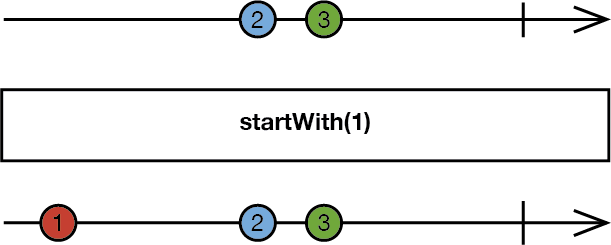
|
||||
|
||||
[More info in reactive.io website]( http://reactivex.io/documentation/operators/startwith.html )
|
||||
*/
|
||||
example("startWith") {
|
||||
|
||||
let subscription = sequenceOf(4, 5, 6, 7, 8, 9)
|
||||
.startWith(3)
|
||||
.startWith(2)
|
||||
.startWith(1)
|
||||
.startWith(0)
|
||||
.subscribe {
|
||||
print($0)
|
||||
}
|
||||
}
|
||||
|
||||
|
||||
/*:
|
||||
### `combineLatest`
|
||||
|
||||
when an item is emitted by either of two Observables, combine the latest item emitted by each Observable via a specified function and emit items based on the results of this function
|
||||
|
||||
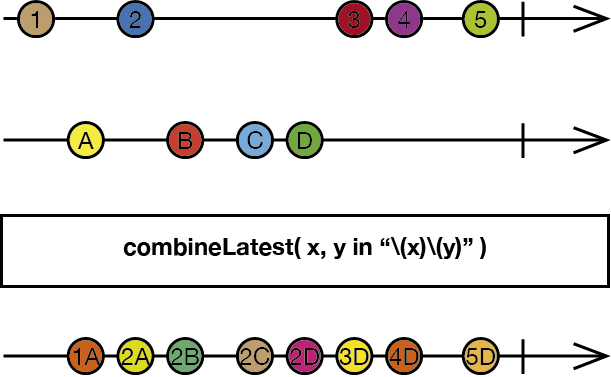
|
||||
|
||||
[More info in reactive.io website]( http://reactivex.io/documentation/operators/combinelatest.html )
|
||||
|
||||
*/
|
||||
example("combineLatest 1") {
|
||||
let intOb1 = PublishSubject<String>()
|
||||
let intOb2 = PublishSubject<Int>()
|
||||
|
||||
combineLatest(intOb1, intOb2) {
|
||||
"\($0) \($1)"
|
||||
}
|
||||
.subscribe {
|
||||
print($0)
|
||||
}
|
||||
|
||||
intOb1.on(.Next("A"))
|
||||
|
||||
intOb2.on(.Next(1))
|
||||
|
||||
intOb1.on(.Next("B"))
|
||||
|
||||
intOb2.on(.Next(2))
|
||||
}
|
||||
|
||||
|
||||
//: To produce output, at least one element has to be received from each sequence in arguements.
|
||||
|
||||
example("combineLatest 2") {
|
||||
let intOb1 = just(2)
|
||||
let intOb2 = sequenceOf(0, 1, 2, 3, 4)
|
||||
|
||||
combineLatest(intOb1, intOb2) {
|
||||
$0 * $1
|
||||
}
|
||||
.subscribe {
|
||||
print($0)
|
||||
}
|
||||
}
|
||||
|
||||
|
||||
|
||||
//: Combine latest has versions with more than 2 arguments.
|
||||
|
||||
example("combineLatest 3") {
|
||||
let intOb1 = just(2)
|
||||
let intOb2 = sequenceOf(0, 1, 2, 3)
|
||||
let intOb3 = sequenceOf(0, 1, 2, 3, 4)
|
||||
|
||||
combineLatest(intOb1, intOb2, intOb3) {
|
||||
($0 + $1) * $2
|
||||
}
|
||||
.subscribe {
|
||||
print($0)
|
||||
}
|
||||
}
|
||||
|
||||
|
||||
|
||||
/*:
|
||||
### `zip`
|
||||
|
||||
combine the emissions of multiple Observables together via a specified function and emit single items for each combination based on the results of this function
|
||||
|
||||
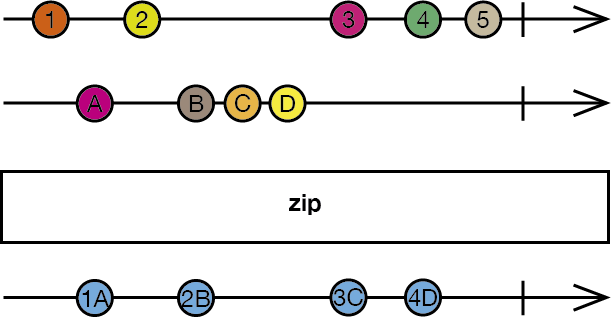
|
||||
|
||||
[More info in reactive.io website](http://reactivex.io/documentation/operators/zip.html)
|
||||
*/
|
||||
example("zip 1") {
|
||||
let intOb1 = PublishSubject<String>()
|
||||
let intOb2 = PublishSubject<Int>()
|
||||
|
||||
zip(intOb1, intOb2) {
|
||||
"\($0) \($1)"
|
||||
}
|
||||
.subscribe {
|
||||
print($0)
|
||||
}
|
||||
|
||||
intOb1.on(.Next("A"))
|
||||
|
||||
intOb2.on(.Next(1))
|
||||
|
||||
intOb1.on(.Next("B"))
|
||||
|
||||
intOb1.on(.Next("C"))
|
||||
|
||||
intOb2.on(.Next(2))
|
||||
}
|
||||
|
||||
|
||||
example("zip 2") {
|
||||
let intOb1 = just(2)
|
||||
|
||||
let intOb2 = sequenceOf(0, 1, 2, 3, 4)
|
||||
|
||||
zip(intOb1, intOb2) {
|
||||
$0 * $1
|
||||
}
|
||||
.subscribe {
|
||||
print($0)
|
||||
}
|
||||
}
|
||||
|
||||
|
||||
example("zip 3") {
|
||||
let intOb1 = sequenceOf(0, 1)
|
||||
let intOb2 = sequenceOf(0, 1, 2, 3)
|
||||
let intOb3 = sequenceOf(0, 1, 2, 3, 4)
|
||||
|
||||
zip(intOb1, intOb2, intOb3) {
|
||||
($0 + $1) * $2
|
||||
}
|
||||
.subscribe {
|
||||
print($0)
|
||||
}
|
||||
}
|
||||
|
||||
|
||||
|
||||
|
||||
/*:
|
||||
### `merge`
|
||||
|
||||
combine multiple Observables into one by merging their emissions
|
||||
|
||||
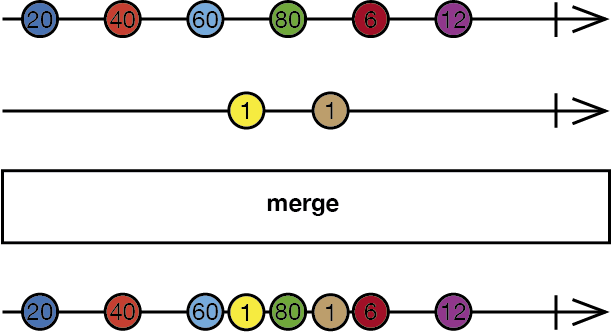
|
||||
|
||||
[More info in reactive.io website]( http://reactivex.io/documentation/operators/merge.html )
|
||||
*/
|
||||
example("merge 1") {
|
||||
let subject1 = PublishSubject<Int>()
|
||||
let subject2 = PublishSubject<Int>()
|
||||
|
||||
sequenceOf(subject1, subject2)
|
||||
.merge()
|
||||
.subscribeNext { int in
|
||||
print(int)
|
||||
}
|
||||
|
||||
subject1.on(.Next(20))
|
||||
subject1.on(.Next(40))
|
||||
subject1.on(.Next(60))
|
||||
subject2.on(.Next(1))
|
||||
subject1.on(.Next(80))
|
||||
subject1.on(.Next(100))
|
||||
subject2.on(.Next(1))
|
||||
}
|
||||
|
||||
|
||||
example("merge 2") {
|
||||
let subject1 = PublishSubject<Int>()
|
||||
let subject2 = PublishSubject<Int>()
|
||||
|
||||
sequenceOf(subject1, subject2)
|
||||
.merge(maxConcurrent: 2)
|
||||
.subscribe {
|
||||
print($0)
|
||||
}
|
||||
|
||||
subject1.on(.Next(20))
|
||||
subject1.on(.Next(40))
|
||||
subject1.on(.Next(60))
|
||||
subject2.on(.Next(1))
|
||||
subject1.on(.Next(80))
|
||||
subject1.on(.Next(100))
|
||||
subject2.on(.Next(1))
|
||||
}
|
||||
|
||||
|
||||
|
||||
/*:
|
||||
### `switchLatest`
|
||||
|
||||
convert an Observable that emits Observables into a single Observable that emits the items emitted by the most-recently-emitted of those Observables
|
||||
|
||||
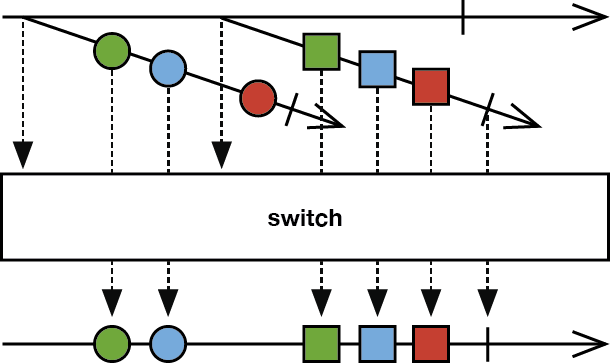
|
||||
|
||||
[More info in reactive.io website]( http://reactivex.io/documentation/operators/switch.html )
|
||||
*/
|
||||
example("switchLatest") {
|
||||
let var1 = Variable(0)
|
||||
|
||||
let var2 = Variable(200)
|
||||
|
||||
// var3 is like an Observable<Observable<Int>>
|
||||
let var3 = Variable(var1)
|
||||
|
||||
let d = var3
|
||||
.switchLatest()
|
||||
.subscribe {
|
||||
print($0)
|
||||
}
|
||||
|
||||
var1.value = 1
|
||||
var1.value = 2
|
||||
var1.value = 3
|
||||
var1.value = 4
|
||||
|
||||
var3.value = var2
|
||||
|
||||
var2.value = 201
|
||||
|
||||
var1.value = 5
|
||||
var1.value = 6
|
||||
var1.value = 7
|
||||
}
|
||||
|
||||
//: [Index](Index) - [Next >>](@next)
|
||||
|
|
@ -1,160 +0,0 @@
|
|||
/*:
|
||||
> # IMPORTANT: To use **Rx.playground**:
|
||||
1. Open **Rx.xcworkspace**.
|
||||
1. Build the **RxSwift-OSX** scheme (**Product** → **Build**).
|
||||
1. Open **Rx** playground in the **Project navigator**.
|
||||
1. Show the Debug Area (**View** → **Debug Area** → **Show Debug Area**).
|
||||
----
|
||||
[Previous](@previous) - [Table of Contents](Table_of_Contents)
|
||||
*/
|
||||
import RxSwift
|
||||
/*:
|
||||
# Combination Operators
|
||||
Operators that combine multiple source `Observable`s into a single `Observable`.
|
||||
## `startWith`
|
||||
Emits the specified sequence of elements before beginning to emit the elements from the source `Observable`. [More info](http://reactivex.io/documentation/operators/startwith.html)
|
||||

|
||||
*/
|
||||
example("startWith") {
|
||||
let disposeBag = DisposeBag()
|
||||
|
||||
Observable.of("🐶", "🐱", "🐭", "🐹")
|
||||
.startWith("1️⃣")
|
||||
.startWith("2️⃣")
|
||||
.startWith("3️⃣", "🅰️", "🅱️")
|
||||
.subscribe(onNext: { print($0) })
|
||||
.addDisposableTo(disposeBag)
|
||||
}
|
||||
/*:
|
||||
> As this example demonstrates, `startWith` can be chained on a last-in-first-out basis, i.e., each successive `startWith`'s elements will be prepended before the prior `startWith`'s elements.
|
||||
----
|
||||
## `merge`
|
||||
Combines elements from source `Observable` sequences into a single new `Observable` sequence, and will emit each element as it is emitted by each source `Observable` sequence. [More info](http://reactivex.io/documentation/operators/merge.html)
|
||||

|
||||
*/
|
||||
example("merge") {
|
||||
let disposeBag = DisposeBag()
|
||||
|
||||
let subject1 = PublishSubject<String>()
|
||||
let subject2 = PublishSubject<String>()
|
||||
|
||||
Observable.of(subject1, subject2)
|
||||
.merge()
|
||||
.subscribe(onNext: { print($0) })
|
||||
.addDisposableTo(disposeBag)
|
||||
|
||||
subject1.onNext("🅰️")
|
||||
|
||||
subject1.onNext("🅱️")
|
||||
|
||||
subject2.onNext("①")
|
||||
|
||||
subject2.onNext("②")
|
||||
|
||||
subject1.onNext("🆎")
|
||||
|
||||
subject2.onNext("③")
|
||||
}
|
||||
/*:
|
||||
----
|
||||
## `zip`
|
||||
Combines up to 8 source `Observable` sequences into a single new `Observable` sequence, and will emit from the combined `Observable` sequence the elements from each of the source `Observable` sequences at the corresponding index. [More info](http://reactivex.io/documentation/operators/zip.html)
|
||||

|
||||
*/
|
||||
example("zip") {
|
||||
let disposeBag = DisposeBag()
|
||||
|
||||
let stringSubject = PublishSubject<String>()
|
||||
let intSubject = PublishSubject<Int>()
|
||||
|
||||
Observable.zip(stringSubject, intSubject) { stringElement, intElement in
|
||||
"\(stringElement) \(intElement)"
|
||||
}
|
||||
.subscribe(onNext: { print($0) })
|
||||
.addDisposableTo(disposeBag)
|
||||
|
||||
stringSubject.onNext("🅰️")
|
||||
stringSubject.onNext("🅱️")
|
||||
|
||||
intSubject.onNext(1)
|
||||
|
||||
intSubject.onNext(2)
|
||||
|
||||
stringSubject.onNext("🆎")
|
||||
intSubject.onNext(3)
|
||||
}
|
||||
/*:
|
||||
----
|
||||
## `combineLatest`
|
||||
Combines up to 8 source `Observable` sequences into a single new `Observable` sequence, and will begin emitting from the combined `Observable` sequence the latest elements of each source `Observable` sequence once all source sequences have emitted at least one element, and also when any of the source `Observable` sequences emits a new element. [More info](http://reactivex.io/documentation/operators/combinelatest.html)
|
||||

|
||||
*/
|
||||
example("combineLatest") {
|
||||
let disposeBag = DisposeBag()
|
||||
|
||||
let stringSubject = PublishSubject<String>()
|
||||
let intSubject = PublishSubject<Int>()
|
||||
|
||||
Observable.combineLatest(stringSubject, intSubject) { stringElement, intElement in
|
||||
"\(stringElement) \(intElement)"
|
||||
}
|
||||
.subscribe(onNext: { print($0) })
|
||||
.addDisposableTo(disposeBag)
|
||||
|
||||
stringSubject.onNext("🅰️")
|
||||
|
||||
stringSubject.onNext("🅱️")
|
||||
intSubject.onNext(1)
|
||||
|
||||
intSubject.onNext(2)
|
||||
|
||||
stringSubject.onNext("🆎")
|
||||
}
|
||||
//: There is also a `combineLatest` extension on `Array`:
|
||||
example("Array.combineLatest") {
|
||||
let disposeBag = DisposeBag()
|
||||
|
||||
let stringObservable = Observable.just("❤️")
|
||||
let fruitObservable = Observable.from(["🍎", "🍐", "🍊"])
|
||||
let animalObservable = Observable.of("🐶", "🐱", "🐭", "🐹")
|
||||
|
||||
[stringObservable, fruitObservable, animalObservable].combineLatest {
|
||||
"\($0[0]) \($0[1]) \($0[2])"
|
||||
}
|
||||
.subscribe(onNext: { print($0) })
|
||||
.addDisposableTo(disposeBag)
|
||||
}
|
||||
/*:
|
||||
> The `combineLatest` extension on `Array` requires that all source `Observable` sequences are of the same type.
|
||||
----
|
||||
## `switchLatest`
|
||||
Transforms the elements emitted by an `Observable` sequence into `Observable` sequences, and emits elements from the most recent inner `Observable` sequence. [More info](http://reactivex.io/documentation/operators/switch.html)
|
||||

|
||||
*/
|
||||
example("switchLatest") {
|
||||
let disposeBag = DisposeBag()
|
||||
|
||||
let subject1 = BehaviorSubject(value: "⚽️")
|
||||
let subject2 = BehaviorSubject(value: "🍎")
|
||||
|
||||
let variable = Variable(subject1)
|
||||
|
||||
variable.asObservable()
|
||||
.switchLatest()
|
||||
.subscribe(onNext: { print($0) })
|
||||
.addDisposableTo(disposeBag)
|
||||
|
||||
subject1.onNext("🏈")
|
||||
subject1.onNext("🏀")
|
||||
|
||||
variable.value = subject2
|
||||
|
||||
subject1.onNext("⚾️")
|
||||
|
||||
subject2.onNext("🍐")
|
||||
}
|
||||
/*:
|
||||
> In this example, adding ⚾️ onto `subject1` after setting `variable.value` to `subject2` has no effect, because only the most recent inner `Observable` sequence (`subject2`) will emit elements.
|
||||
*/
|
||||
|
||||
//: [Next](@next) - [Table of Contents](Table_of_Contents)
|
||||
|
|
@ -0,0 +1,73 @@
|
|||
//: [<< Previous](@previous) - [Index](Index)
|
||||
|
||||
import Cocoa
|
||||
import RxSwift
|
||||
|
||||
/*:
|
||||
## Conditional and Boolean Operators
|
||||
|
||||
Operators that evaluate one or more Observables or items emitted by Observables.
|
||||
|
||||
*/
|
||||
|
||||
/*:
|
||||
### `takeUntil`
|
||||
Discard any items emitted by an Observable after a second Observable emits an item or terminates.
|
||||
|
||||
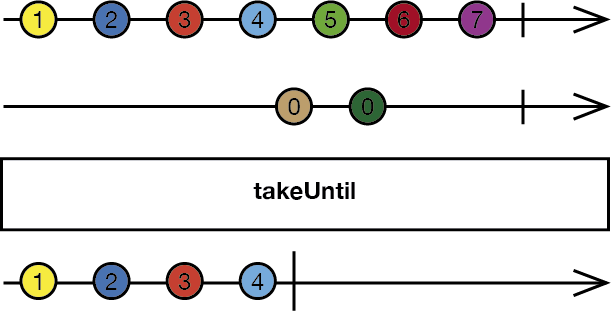
|
||||
|
||||
[More info in reactive.io website]( http://reactivex.io/documentation/operators/takeuntil.html )
|
||||
*/
|
||||
|
||||
example("takeUntil") {
|
||||
let originalSequence = PublishSubject<Int>()
|
||||
let whenThisSendsNextWorldStops = PublishSubject<Int>()
|
||||
|
||||
originalSequence
|
||||
.takeUntil(whenThisSendsNextWorldStops)
|
||||
.subscribe {
|
||||
print($0)
|
||||
}
|
||||
|
||||
originalSequence.on(.Next(1))
|
||||
originalSequence.on(.Next(2))
|
||||
originalSequence.on(.Next(3))
|
||||
originalSequence.on(.Next(4))
|
||||
|
||||
whenThisSendsNextWorldStops.on(.Next(1))
|
||||
|
||||
originalSequence.on(.Next(5))
|
||||
}
|
||||
|
||||
|
||||
/*:
|
||||
### `takeWhile`
|
||||
|
||||
Mirror items emitted by an Observable until a specified condition becomes false
|
||||
|
||||
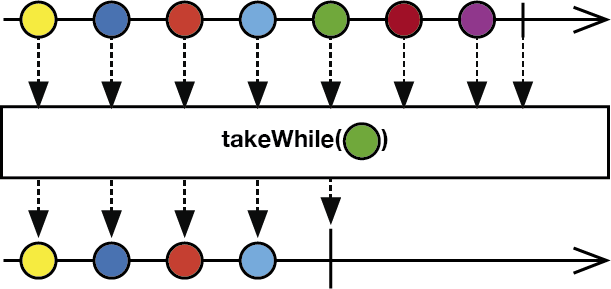
|
||||
|
||||
[More info in reactive.io website]( http://reactivex.io/documentation/operators/takewhile.html )
|
||||
*/
|
||||
example("takeWhile") {
|
||||
|
||||
let sequence = PublishSubject<Int>()
|
||||
|
||||
sequence
|
||||
.takeWhile { int in
|
||||
int < 4
|
||||
}
|
||||
.subscribe {
|
||||
print($0)
|
||||
}
|
||||
|
||||
sequence.on(.Next(1))
|
||||
sequence.on(.Next(2))
|
||||
sequence.on(.Next(3))
|
||||
sequence.on(.Next(4))
|
||||
sequence.on(.Next(5))
|
||||
}
|
||||
|
||||
|
||||
|
||||
//: [Index](Index) - [Next >>](@next)
|
||||
|
|
@ -0,0 +1,205 @@
|
|||
//: [<< Previous](@previous) - [Index](Index)
|
||||
|
||||
import RxSwift
|
||||
import XCPlayground
|
||||
|
||||
/*:
|
||||
## Connectable Observable Operators
|
||||
|
||||
A Connectable Observable resembles an ordinary Observable, except that it does not begin emitting items when it is subscribed to, but only when its connect() method is called. In this way you can wait for all intended Subscribers to subscribe to the Observable before the Observable begins emitting items.
|
||||
|
||||
Specialty Observables that have more precisely-controlled subscription dynamics.
|
||||
*/
|
||||
|
||||
func sampleWithoutConnectableOperators() {
|
||||
|
||||
let int1 = interval(1, MainScheduler.sharedInstance)
|
||||
|
||||
int1
|
||||
.subscribe {
|
||||
print("first subscription \($0)")
|
||||
}
|
||||
|
||||
delay(5) {
|
||||
int1
|
||||
.subscribe {
|
||||
print("second subscription \($0)")
|
||||
}
|
||||
}
|
||||
|
||||
}
|
||||
|
||||
//sampleWithoutConnectableOperators()
|
||||
|
||||
|
||||
|
||||
/*:
|
||||
### `multicast`
|
||||
|
||||
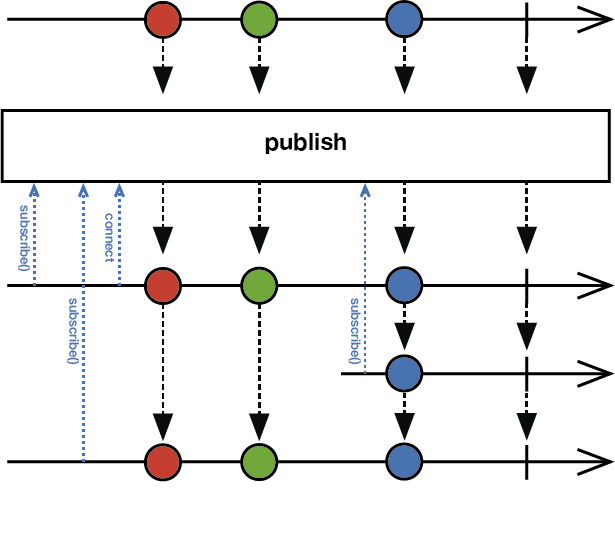
|
||||
|
||||
[More info in reactive.io website]( http://reactivex.io/documentation/operators/publish.html )
|
||||
*/
|
||||
func sampleWithMulticast() {
|
||||
|
||||
let subject1 = PublishSubject<Int64>()
|
||||
|
||||
subject1
|
||||
.subscribe {
|
||||
print("Subject \($0)")
|
||||
}
|
||||
|
||||
let int1 = interval(1, MainScheduler.sharedInstance)
|
||||
.multicast(subject1)
|
||||
|
||||
int1
|
||||
.subscribe {
|
||||
print("first subscription \($0)")
|
||||
}
|
||||
|
||||
delay(2) {
|
||||
int1.connect()
|
||||
}
|
||||
|
||||
delay(4) {
|
||||
int1
|
||||
.subscribe {
|
||||
print("second subscription \($0)")
|
||||
}
|
||||
}
|
||||
|
||||
delay(6) {
|
||||
int1
|
||||
.subscribe {
|
||||
print("third subscription \($0)")
|
||||
}
|
||||
}
|
||||
|
||||
}
|
||||
|
||||
// sampleWithMulticast()
|
||||
|
||||
|
||||
/*:
|
||||
### `replay`
|
||||
Ensure that all observers see the same sequence of emitted items, even if they subscribe after the Observable has begun emitting items.
|
||||
|
||||
publish = multicast + replay subject
|
||||
|
||||
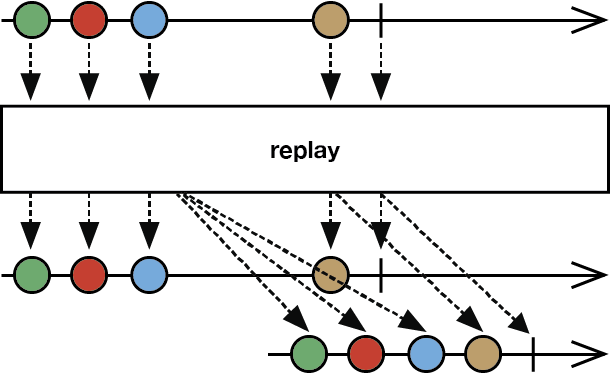
|
||||
|
||||
[More info in reactive.io website]( http://reactivex.io/documentation/operators/replay.html )
|
||||
*/
|
||||
func sampleWithReplayBuffer0() {
|
||||
|
||||
let int1 = interval(1, MainScheduler.sharedInstance)
|
||||
.replay(0)
|
||||
|
||||
int1
|
||||
.subscribe {
|
||||
print("first subscription \($0)")
|
||||
}
|
||||
|
||||
delay(2) {
|
||||
int1.connect()
|
||||
}
|
||||
|
||||
delay(4) {
|
||||
int1
|
||||
.subscribe {
|
||||
print("second subscription \($0)")
|
||||
}
|
||||
}
|
||||
|
||||
delay(6) {
|
||||
int1
|
||||
.subscribe {
|
||||
print("third subscription \($0)")
|
||||
}
|
||||
}
|
||||
|
||||
}
|
||||
|
||||
// sampleWithReplayBuffer0()
|
||||
|
||||
|
||||
func sampleWithReplayBuffer2() {
|
||||
|
||||
print("--- sampleWithReplayBuffer2 ---\n")
|
||||
|
||||
let int1 = interval(1, MainScheduler.sharedInstance)
|
||||
.replay(2)
|
||||
|
||||
int1
|
||||
.subscribe {
|
||||
print("first subscription \($0)")
|
||||
}
|
||||
|
||||
delay(2) {
|
||||
int1.connect()
|
||||
}
|
||||
|
||||
delay(4) {
|
||||
int1
|
||||
.subscribe {
|
||||
print("second subscription \($0)")
|
||||
}
|
||||
}
|
||||
|
||||
delay(6) {
|
||||
int1
|
||||
.subscribe {
|
||||
print("third subscription \($0)")
|
||||
}
|
||||
}
|
||||
|
||||
}
|
||||
|
||||
// sampleWithReplayBuffer2()
|
||||
|
||||
|
||||
/*:
|
||||
### `publish`
|
||||
Convert an ordinary Observable into a connectable Observable.
|
||||
|
||||
publish = multicast + publish subject
|
||||
|
||||
so publish is basically replay(0)
|
||||
|
||||
[More info in reactive.io website]( http://reactivex.io/documentation/operators/publish.html )
|
||||
*/
|
||||
func sampleWithPublish() {
|
||||
|
||||
let int1 = interval(1, MainScheduler.sharedInstance)
|
||||
.publish()
|
||||
|
||||
int1
|
||||
.subscribe {
|
||||
print("first subscription \($0)")
|
||||
}
|
||||
|
||||
delay(2) {
|
||||
int1.connect()
|
||||
}
|
||||
|
||||
delay(4) {
|
||||
int1
|
||||
.subscribe {
|
||||
print("second subscription \($0)")
|
||||
}
|
||||
}
|
||||
|
||||
delay(6) {
|
||||
int1
|
||||
.subscribe {
|
||||
print("third subscription \($0)")
|
||||
}
|
||||
}
|
||||
|
||||
}
|
||||
|
||||
// sampleWithPublish()
|
||||
|
||||
XCPSetExecutionShouldContinueIndefinitely(true)
|
||||
|
||||
//: [Index](Index)
|
||||
|
|
@ -1,133 +0,0 @@
|
|||
/*:
|
||||
> # IMPORTANT: To use **Rx.playground**:
|
||||
1. Open **Rx.xcworkspace**.
|
||||
1. Build the **RxSwift-OSX** scheme (**Product** → **Build**).
|
||||
1. Open **Rx** playground in the **Project navigator**.
|
||||
1. Show the Debug Area (**View** → **Debug Area** → **Show Debug Area**).
|
||||
----
|
||||
[Previous](@previous) - [Table of Contents](Table_of_Contents)
|
||||
*/
|
||||
import RxSwift
|
||||
|
||||
playgroundShouldContinueIndefinitely()
|
||||
/*:
|
||||
## Connectable Operators
|
||||
Connectable `Observable` sequences resembles ordinary `Observable` sequences, except that they not begin emitting elements when subscribed to, but instead, only when their `connect()` method is called. In this way, you can wait for all intended subscribers to subscribe to a connectable `Observable` sequence before it begins emitting elements.
|
||||
> Within each example on this page is a commented-out method. Uncomment that method to run the example, and then comment it out again to stop running the example.
|
||||
#
|
||||
Before learning about connectable operators, let's take a look at an example of a non-connectable operator:
|
||||
*/
|
||||
func sampleWithoutConnectableOperators() {
|
||||
printExampleHeader(#function)
|
||||
|
||||
let interval = Observable<Int>.interval(1, scheduler: MainScheduler.instance)
|
||||
|
||||
_ = interval
|
||||
.subscribe(onNext: { print("Subscription: 1, Event: \($0)") })
|
||||
|
||||
delay(5) {
|
||||
_ = interval
|
||||
.subscribe(onNext: { print("Subscription: 2, Event: \($0)") })
|
||||
}
|
||||
}
|
||||
|
||||
//sampleWithoutConnectableOperators() // ⚠️ Uncomment to run this example; comment to stop running
|
||||
/*:
|
||||
> `interval` creates an `Observable` sequence that emits elements after each `period`, on the specified scheduler. [More info](http://reactivex.io/documentation/operators/interval.html)
|
||||
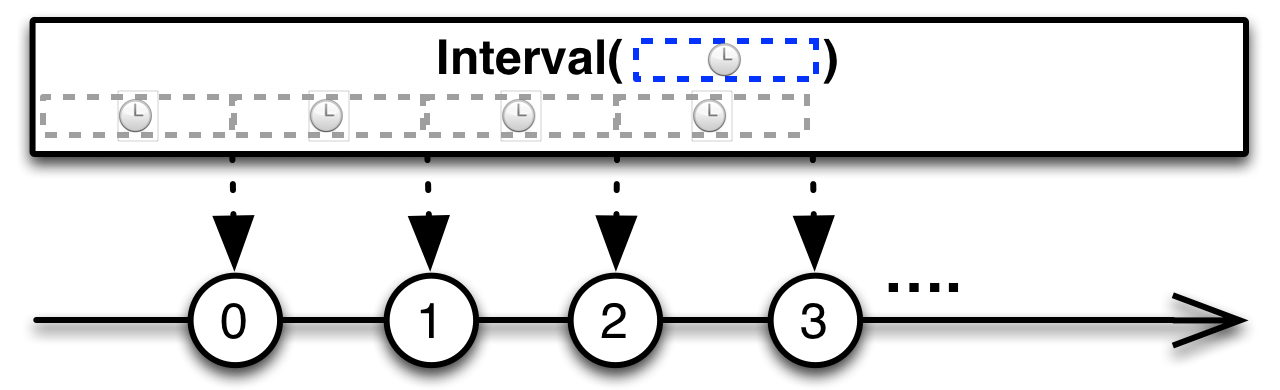
|
||||
----
|
||||
## `publish`
|
||||
Converts the source `Observable` sequence into a connectable sequence. [More info](http://reactivex.io/documentation/operators/publish.html)
|
||||
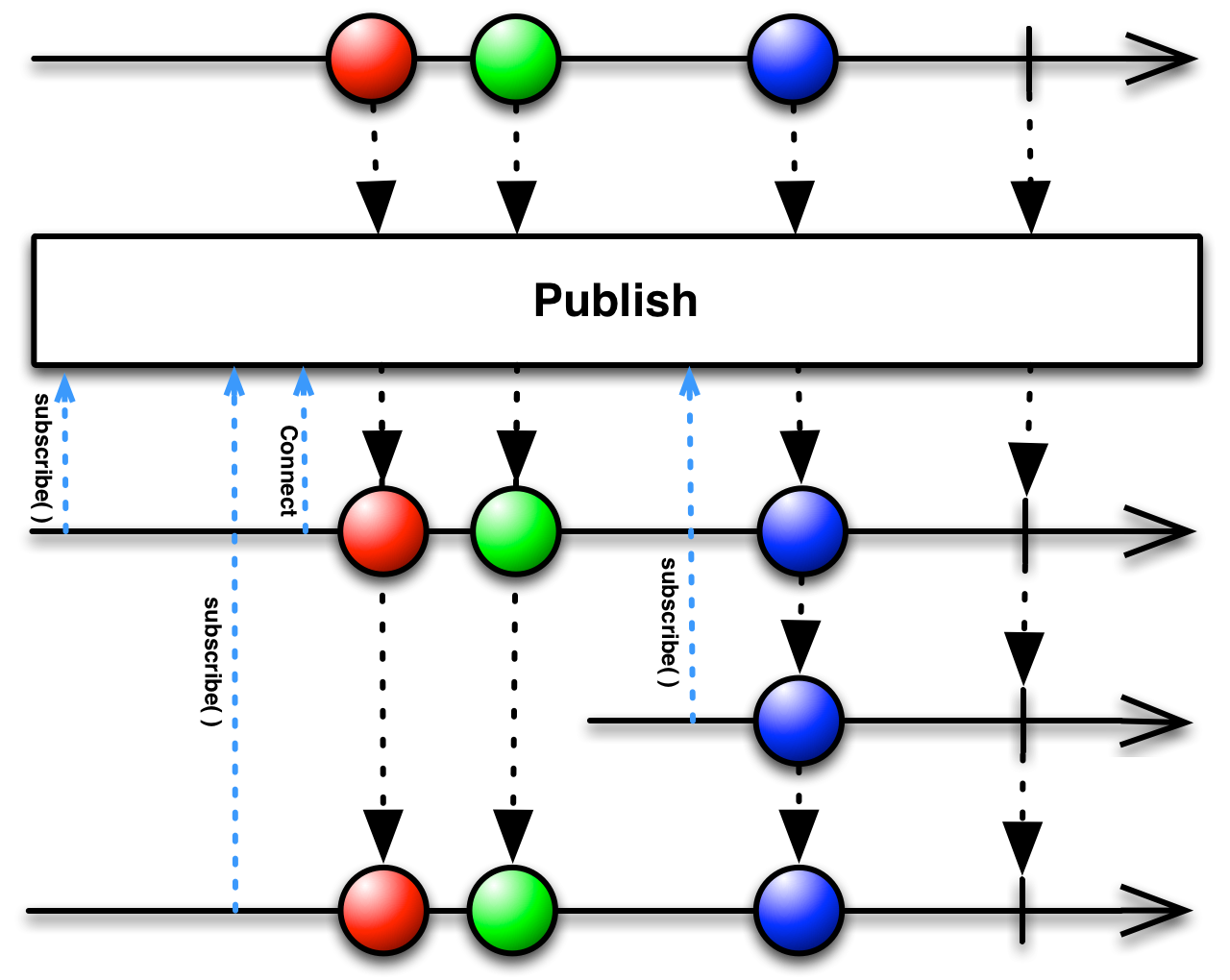
|
||||
*/
|
||||
func sampleWithPublish() {
|
||||
printExampleHeader(#function)
|
||||
|
||||
let intSequence = Observable<Int>.interval(1, scheduler: MainScheduler.instance)
|
||||
.publish()
|
||||
|
||||
_ = intSequence
|
||||
.subscribe(onNext: { print("Subscription 1:, Event: \($0)") })
|
||||
|
||||
delay(2) { _ = intSequence.connect() }
|
||||
|
||||
delay(4) {
|
||||
_ = intSequence
|
||||
.subscribe(onNext: { print("Subscription 2:, Event: \($0)") })
|
||||
}
|
||||
|
||||
delay(6) {
|
||||
_ = intSequence
|
||||
.subscribe(onNext: { print("Subscription 3:, Event: \($0)") })
|
||||
}
|
||||
}
|
||||
|
||||
//sampleWithPublish() // ⚠️ Uncomment to run this example; comment to stop running
|
||||
|
||||
//: > Schedulers are an abstraction of mechanisms for performing work, such as on specific threads or dispatch queues. [More info](https://github.com/ReactiveX/RxSwift/blob/master/Documentation/Schedulers.md)
|
||||
|
||||
/*:
|
||||
----
|
||||
## `replay`
|
||||
Converts the source `Observable` sequence into a connectable sequence, and will replay `bufferSize` number of previous emissions to each new subscriber. [More info](http://reactivex.io/documentation/operators/replay.html)
|
||||

|
||||
*/
|
||||
func sampleWithReplayBuffer() {
|
||||
printExampleHeader(#function)
|
||||
|
||||
let intSequence = Observable<Int>.interval(1, scheduler: MainScheduler.instance)
|
||||
.replay(5)
|
||||
|
||||
_ = intSequence
|
||||
.subscribe(onNext: { print("Subscription 1:, Event: \($0)") })
|
||||
|
||||
delay(2) { _ = intSequence.connect() }
|
||||
|
||||
delay(4) {
|
||||
_ = intSequence
|
||||
.subscribe(onNext: { print("Subscription 2:, Event: \($0)") })
|
||||
}
|
||||
|
||||
delay(8) {
|
||||
_ = intSequence
|
||||
.subscribe(onNext: { print("Subscription 3:, Event: \($0)") })
|
||||
}
|
||||
}
|
||||
|
||||
// sampleWithReplayBuffer() // ⚠️ Uncomment to run this example; comment to stop running
|
||||
|
||||
/*:
|
||||
----
|
||||
## `multicast`
|
||||
Converts the source `Observable` sequence into a connectable sequence, and broadcasts its emissions via the specified `subject`.
|
||||
*/
|
||||
func sampleWithMulticast() {
|
||||
printExampleHeader(#function)
|
||||
|
||||
let subject = PublishSubject<Int>()
|
||||
|
||||
_ = subject
|
||||
.subscribe(onNext: { print("Subject: \($0)") })
|
||||
|
||||
let intSequence = Observable<Int>.interval(1, scheduler: MainScheduler.instance)
|
||||
.multicast(subject)
|
||||
|
||||
_ = intSequence
|
||||
.subscribe(onNext: { print("\tSubscription 1:, Event: \($0)") })
|
||||
|
||||
delay(2) { _ = intSequence.connect() }
|
||||
|
||||
delay(4) {
|
||||
_ = intSequence
|
||||
.subscribe(onNext: { print("\tSubscription 2:, Event: \($0)") })
|
||||
}
|
||||
|
||||
delay(6) {
|
||||
_ = intSequence
|
||||
.subscribe(onNext: { print("\tSubscription 3:, Event: \($0)") })
|
||||
}
|
||||
}
|
||||
|
||||
//sampleWithMulticast() // ⚠️ Uncomment to run this example; comment to stop running
|
||||
|
||||
//: [Next](@next) - [Table of Contents](Table_of_Contents)
|
||||
|
|
@ -1,212 +0,0 @@
|
|||
/*:
|
||||
> # IMPORTANT: To use **Rx.playground**:
|
||||
1. Open **Rx.xcworkspace**.
|
||||
1. Build the **RxSwift-OSX** scheme (**Product** → **Build**).
|
||||
1. Open **Rx** playground in the **Project navigator**.
|
||||
1. Show the Debug Area (**View** → **Debug Area** → **Show Debug Area**).
|
||||
----
|
||||
[Previous](@previous) - [Table of Contents](Table_of_Contents)
|
||||
*/
|
||||
import RxSwift
|
||||
/*:
|
||||
# Creating and Subscribing to `Observable`s
|
||||
There are several ways to create and subscribe to `Observable` sequences.
|
||||
## never
|
||||
Creates a sequence that never terminates and never emits any events. [More info](http://reactivex.io/documentation/operators/empty-never-throw.html)
|
||||
*/
|
||||
example("never") {
|
||||
let disposeBag = DisposeBag()
|
||||
let neverSequence = Observable<String>.never()
|
||||
|
||||
let neverSequenceSubscription = neverSequence
|
||||
.subscribe { _ in
|
||||
print("This will never be printed")
|
||||
}
|
||||
|
||||
neverSequenceSubscription.addDisposableTo(disposeBag)
|
||||
}
|
||||
/*:
|
||||
----
|
||||
## empty
|
||||
Creates an empty `Observable` sequence that only emits a Completed event. [More info](http://reactivex.io/documentation/operators/empty-never-throw.html)
|
||||
*/
|
||||
example("empty") {
|
||||
let disposeBag = DisposeBag()
|
||||
|
||||
Observable<Int>.empty()
|
||||
.subscribe { event in
|
||||
print(event)
|
||||
}
|
||||
.addDisposableTo(disposeBag)
|
||||
}
|
||||
/*:
|
||||
> This example also introduces chaining together creating and subscribing to an `Observable` sequence.
|
||||
----
|
||||
## just
|
||||
Creates an `Observable` sequence with a single element. [More info](http://reactivex.io/documentation/operators/just.html)
|
||||
*/
|
||||
example("just") {
|
||||
let disposeBag = DisposeBag()
|
||||
|
||||
Observable.just("🔴")
|
||||
.subscribe { event in
|
||||
print(event)
|
||||
}
|
||||
.addDisposableTo(disposeBag)
|
||||
}
|
||||
/*:
|
||||
----
|
||||
## of
|
||||
Creates an `Observable` sequence with a fixed number of elements.
|
||||
*/
|
||||
example("of") {
|
||||
let disposeBag = DisposeBag()
|
||||
|
||||
Observable.of("🐶", "🐱", "🐭", "🐹")
|
||||
.subscribe(onNext: { element in
|
||||
print(element)
|
||||
})
|
||||
.addDisposableTo(disposeBag)
|
||||
}
|
||||
/*:
|
||||
> This example also introduces using the `subscribe(onNext:)` convenience method. Unlike `subscribe(_:)`, which subscribes an _event_ handler for all event types (Next, Error, and Completed), `subscribe(onNext:)` subscribes an _element_ handler that will ignore Error and Completed events and only produce Next event elements. There are also `subscribe(onError:)` and `subscribe(onCompleted:)` convenience methods, should you only want to subscribe to those event types. And there is a `subscribe(onNext:onError:onCompleted:onDisposed:)` method, which allows you to react to one or more event types and when the subscription is terminated for any reason, or disposed, in a single call:
|
||||
```
|
||||
someObservable.subscribe(
|
||||
onNext: { print("Element:", $0) },
|
||||
onError: { print("Error:", $0) },
|
||||
onCompleted: { print("Completed") },
|
||||
onDisposed: { print("Disposed") }
|
||||
)
|
||||
```
|
||||
----
|
||||
## from
|
||||
Creates an `Observable` sequence from a `SequenceType`, such as an `Array`, `Dictionary`, or `Set`.
|
||||
*/
|
||||
example("from") {
|
||||
let disposeBag = DisposeBag()
|
||||
|
||||
Observable.from(["🐶", "🐱", "🐭", "🐹"])
|
||||
.subscribe(onNext: { print($0) })
|
||||
.addDisposableTo(disposeBag)
|
||||
}
|
||||
/*:
|
||||
> This example also demonstrates using the default argument name `$0` instead of explicitly naming the argument.
|
||||
----
|
||||
## create
|
||||
Creates a custom `Observable` sequence. [More info](http://reactivex.io/documentation/operators/create.html)
|
||||
*/
|
||||
example("create") {
|
||||
let disposeBag = DisposeBag()
|
||||
|
||||
let myJust = { (element: String) -> Observable<String> in
|
||||
return Observable.create { observer in
|
||||
observer.on(.next(element))
|
||||
observer.on(.completed)
|
||||
return Disposables.create()
|
||||
}
|
||||
}
|
||||
|
||||
myJust("🔴")
|
||||
.subscribe { print($0) }
|
||||
.addDisposableTo(disposeBag)
|
||||
}
|
||||
/*:
|
||||
----
|
||||
## range
|
||||
Creates an `Observable` sequence that emits a range of sequential integers and then terminates. [More info](http://reactivex.io/documentation/operators/range.html)
|
||||
*/
|
||||
example("range") {
|
||||
let disposeBag = DisposeBag()
|
||||
|
||||
Observable.range(start: 1, count: 10)
|
||||
.subscribe { print($0) }
|
||||
.addDisposableTo(disposeBag)
|
||||
}
|
||||
/*:
|
||||
----
|
||||
## repeatElement
|
||||
Creates an `Observable` sequence that emits the given element indefinitely. [More info](http://reactivex.io/documentation/operators/repeat.html)
|
||||
*/
|
||||
example("repeatElement") {
|
||||
let disposeBag = DisposeBag()
|
||||
|
||||
Observable.repeatElement("🔴")
|
||||
.take(3)
|
||||
.subscribe(onNext: { print($0) })
|
||||
.addDisposableTo(disposeBag)
|
||||
}
|
||||
/*:
|
||||
> This example also introduces using the `take` operator to return a specified number of elements from the start of a sequence.
|
||||
----
|
||||
## generate
|
||||
Creates an `Observable` sequence that generates values for as long as the provided condition evaluates to `true`.
|
||||
*/
|
||||
example("generate") {
|
||||
let disposeBag = DisposeBag()
|
||||
|
||||
Observable.generate(
|
||||
initialState: 0,
|
||||
condition: { $0 < 3 },
|
||||
iterate: { $0 + 1 }
|
||||
)
|
||||
.subscribe(onNext: { print($0) })
|
||||
.addDisposableTo(disposeBag)
|
||||
}
|
||||
/*:
|
||||
----
|
||||
## deferred
|
||||
Creates a new `Observable` sequence for each subscriber. [More info](http://reactivex.io/documentation/operators/defer.html)
|
||||
*/
|
||||
example("deferred") {
|
||||
let disposeBag = DisposeBag()
|
||||
var count = 1
|
||||
|
||||
let deferredSequence = Observable<String>.deferred {
|
||||
print("Creating \(count)")
|
||||
count += 1
|
||||
|
||||
return Observable.create { observer in
|
||||
print("Emitting...")
|
||||
observer.onNext("🐶")
|
||||
observer.onNext("🐱")
|
||||
observer.onNext("🐵")
|
||||
return Disposables.create()
|
||||
}
|
||||
}
|
||||
|
||||
deferredSequence
|
||||
.subscribe(onNext: { print($0) })
|
||||
.addDisposableTo(disposeBag)
|
||||
|
||||
deferredSequence
|
||||
.subscribe(onNext: { print($0) })
|
||||
.addDisposableTo(disposeBag)
|
||||
}
|
||||
/*:
|
||||
----
|
||||
## error
|
||||
Creates an `Observable` sequence that emits no items and immediately terminates with an error.
|
||||
*/
|
||||
example("error") {
|
||||
let disposeBag = DisposeBag()
|
||||
|
||||
Observable<Int>.error(TestError.test)
|
||||
.subscribe { print($0) }
|
||||
.addDisposableTo(disposeBag)
|
||||
}
|
||||
/*:
|
||||
----
|
||||
## doOn
|
||||
Invokes a side-effect action for each emitted event and returns (passes through) the original event. [More info](http://reactivex.io/documentation/operators/do.html)
|
||||
*/
|
||||
example("doOn") {
|
||||
let disposeBag = DisposeBag()
|
||||
|
||||
Observable.of("🍎", "🍐", "🍊", "🍋")
|
||||
.do(onNext: { print("Intercepted:", $0) }, onError: { print("Intercepted error:", $0) }, onCompleted: { print("Completed") })
|
||||
.subscribe(onNext: { print($0) })
|
||||
.addDisposableTo(disposeBag)
|
||||
}
|
||||
//: > There are also `doOnNext(_:)`, `doOnError(_:)`, and `doOnCompleted(_:)` convenience methods to intercept those specific events, and `doOn(onNext:onError:onCompleted:)` to intercept one or more events in a single call.
|
||||
|
||||
//: [Next](@next) - [Table of Contents](Table_of_Contents)
|
||||
|
|
@ -1,83 +0,0 @@
|
|||
/*:
|
||||
> # IMPORTANT: To use **Rx.playground**:
|
||||
1. Open **Rx.xcworkspace**.
|
||||
1. Build the **RxSwift-OSX** scheme (**Product** → **Build**).
|
||||
1. Open **Rx** playground in the **Project navigator**.
|
||||
1. Show the Debug Area (**View** → **Debug Area** → **Show Debug Area**).
|
||||
----
|
||||
[Previous](@previous) - [Table of Contents](Table_of_Contents)
|
||||
*/
|
||||
import RxSwift
|
||||
/*:
|
||||
# Debugging Operators
|
||||
Operators to help debug Rx code.
|
||||
## `debug`
|
||||
Prints out all subscriptions, events, and disposals.
|
||||
*/
|
||||
example("debug") {
|
||||
let disposeBag = DisposeBag()
|
||||
var count = 1
|
||||
|
||||
let sequenceThatErrors = Observable<String>.create { observer in
|
||||
observer.onNext("🍎")
|
||||
observer.onNext("🍐")
|
||||
observer.onNext("🍊")
|
||||
|
||||
if count < 5 {
|
||||
observer.onError(TestError.test)
|
||||
print("Error encountered")
|
||||
count += 1
|
||||
}
|
||||
|
||||
observer.onNext("🐶")
|
||||
observer.onNext("🐱")
|
||||
observer.onNext("🐭")
|
||||
observer.onCompleted()
|
||||
|
||||
return Disposables.create()
|
||||
}
|
||||
|
||||
sequenceThatErrors
|
||||
.retry(3)
|
||||
.debug()
|
||||
.subscribe(onNext: { print($0) })
|
||||
.addDisposableTo(disposeBag)
|
||||
}
|
||||
/*:
|
||||
----
|
||||
## `RxSwift.resourceCount`
|
||||
Provides a count of all Rx resource allocations, which is useful for detecting leaks during development.
|
||||
*/
|
||||
#if NOT_IN_PLAYGROUND
|
||||
#else
|
||||
example("RxSwift.resourceCount") {
|
||||
print(RxSwift.resourceCount)
|
||||
|
||||
let disposeBag = DisposeBag()
|
||||
|
||||
print(RxSwift.resourceCount)
|
||||
|
||||
let variable = Variable("🍎")
|
||||
|
||||
let subscription1 = variable.asObservable().subscribe(onNext: { print($0) })
|
||||
|
||||
print(RxSwift.resourceCount)
|
||||
|
||||
let subscription2 = variable.asObservable().subscribe(onNext: { print($0) })
|
||||
|
||||
print(RxSwift.resourceCount)
|
||||
|
||||
subscription1.dispose()
|
||||
|
||||
print(RxSwift.resourceCount)
|
||||
|
||||
subscription2.dispose()
|
||||
|
||||
print(RxSwift.resourceCount)
|
||||
}
|
||||
|
||||
print(RxSwift.resourceCount)
|
||||
#endif
|
||||
//: > `RxSwift.resourceCount` is not enabled by default, and should generally not be enabled in Release builds. [Click here](Enable_RxSwift.resourceCount) for instructions on how to enable it.
|
||||
|
||||
//: [Next](@next) - [Table of Contents](Table_of_Contents)
|
||||
|
|
@ -1,30 +0,0 @@
|
|||
//: [Back](@previous)
|
||||
/*:
|
||||
Follow these instructions to enable `RxSwift.resourceCount` in your project:
|
||||
#
|
||||
**CocoaPods**
|
||||
1. Add a `post_install` hook to your Podfile, e.g.:
|
||||
```
|
||||
target 'AppTarget' do
|
||||
pod 'RxSwift'
|
||||
end
|
||||
|
||||
post_install do |installer|
|
||||
installer.pods_project.targets.each do |target|
|
||||
if target.name == 'RxSwift'
|
||||
target.build_configurations.each do |config|
|
||||
if config.name == 'Debug'
|
||||
config.build_settings['OTHER_SWIFT_FLAGS'] ||= ['-D', 'TRACE_RESOURCES']
|
||||
end
|
||||
end
|
||||
end
|
||||
end
|
||||
end
|
||||
```
|
||||
2. Run `pod update`.
|
||||
3. Build project (**Product** → **Build**).
|
||||
#
|
||||
**Carthage**
|
||||
1. Run `carthage build --configuration Debug`.
|
||||
2. Build project (**Product** → **Build**).
|
||||
*/
|
||||
|
|
@ -1,131 +1,94 @@
|
|||
/*:
|
||||
> # IMPORTANT: To use **Rx.playground**:
|
||||
1. Open **Rx.xcworkspace**.
|
||||
1. Build the **RxSwift-OSX** scheme (**Product** → **Build**).
|
||||
1. Open **Rx** playground in the **Project navigator**.
|
||||
1. Show the Debug Area (**View** → **Debug Area** → **Show Debug Area**).
|
||||
----
|
||||
[Previous](@previous) - [Table of Contents](Table_of_Contents)
|
||||
*/
|
||||
//: [<< Previous](@previous) - [Index](Index)
|
||||
|
||||
import RxSwift
|
||||
import Foundation
|
||||
/*:
|
||||
# Error Handling Operators
|
||||
## Error Handling Operators
|
||||
|
||||
Operators that help to recover from error notifications from an Observable.
|
||||
## `catchErrorJustReturn`
|
||||
Recovers from an Error event by returning an `Observable` sequence that emits a single element and then terminates. [More info](http://reactivex.io/documentation/operators/catch.html)
|
||||
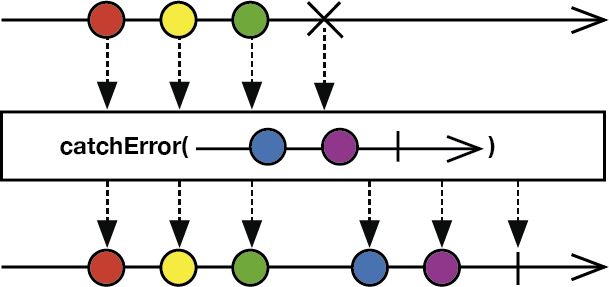
|
||||
*/
|
||||
example("catchErrorJustReturn") {
|
||||
let disposeBag = DisposeBag()
|
||||
|
||||
let sequenceThatFails = PublishSubject<String>()
|
||||
|
||||
sequenceThatFails
|
||||
.catchErrorJustReturn("😊")
|
||||
.subscribe { print($0) }
|
||||
.addDisposableTo(disposeBag)
|
||||
|
||||
sequenceThatFails.onNext("😬")
|
||||
sequenceThatFails.onNext("😨")
|
||||
sequenceThatFails.onNext("😡")
|
||||
sequenceThatFails.onNext("🔴")
|
||||
sequenceThatFails.onError(TestError.test)
|
||||
}
|
||||
|
||||
/*:
|
||||
----
|
||||
## `catchError`
|
||||
Recovers from an Error event by switching to the provided recovery `Observable` sequence. [More info](http://reactivex.io/documentation/operators/catch.html)
|
||||

|
||||
*/
|
||||
example("catchError") {
|
||||
let disposeBag = DisposeBag()
|
||||
|
||||
let sequenceThatFails = PublishSubject<String>()
|
||||
let recoverySequence = PublishSubject<String>()
|
||||
|
||||
### `catchError`
|
||||
|
||||
Recover from an `Error` notification by continuing the sequence without error
|
||||
|
||||

|
||||
|
||||
[More info in reactive.io website]( http://reactivex.io/documentation/operators/catch.html )
|
||||
*/
|
||||
example("catchError 1") {
|
||||
let sequenceThatFails = PublishSubject<Int>()
|
||||
let recoverySequence = sequenceOf(100, 200, 300, 400)
|
||||
|
||||
sequenceThatFails
|
||||
.catchError {
|
||||
print("Error:", $0)
|
||||
.catchError { error in
|
||||
return recoverySequence
|
||||
}
|
||||
.subscribe { print($0) }
|
||||
.addDisposableTo(disposeBag)
|
||||
|
||||
sequenceThatFails.onNext("😬")
|
||||
sequenceThatFails.onNext("😨")
|
||||
sequenceThatFails.onNext("😡")
|
||||
sequenceThatFails.onNext("🔴")
|
||||
sequenceThatFails.onError(TestError.test)
|
||||
|
||||
recoverySequence.onNext("😊")
|
||||
}
|
||||
/*:
|
||||
----
|
||||
## `retry`
|
||||
Recovers repeatedly Error events by resubscribing to the `Observable` sequence, indefinitely. [More info](http://reactivex.io/documentation/operators/retry.html)
|
||||
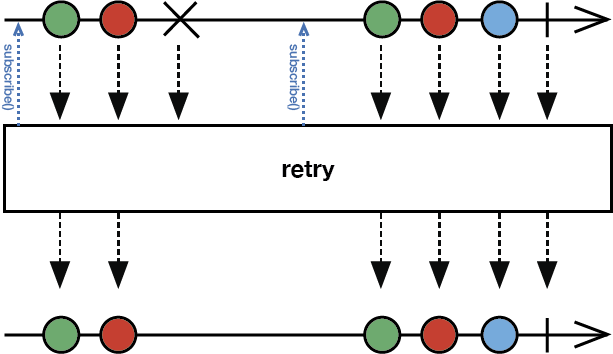
|
||||
*/
|
||||
example("retry") {
|
||||
let disposeBag = DisposeBag()
|
||||
var count = 1
|
||||
|
||||
let sequenceThatErrors = Observable<String>.create { observer in
|
||||
observer.onNext("🍎")
|
||||
observer.onNext("🍐")
|
||||
observer.onNext("🍊")
|
||||
|
||||
if count == 1 {
|
||||
observer.onError(TestError.test)
|
||||
print("Error encountered")
|
||||
count += 1
|
||||
.subscribe {
|
||||
print($0)
|
||||
}
|
||||
|
||||
observer.onNext("🐶")
|
||||
observer.onNext("🐱")
|
||||
observer.onNext("🐭")
|
||||
observer.onCompleted()
|
||||
|
||||
return Disposables.create()
|
||||
}
|
||||
|
||||
sequenceThatErrors
|
||||
.retry()
|
||||
.subscribe(onNext: { print($0) })
|
||||
.addDisposableTo(disposeBag)
|
||||
}
|
||||
/*:
|
||||
----
|
||||
## `retry(_:)`
|
||||
Recovers repeatedly from Error events by resubscribing to the `Observable` sequence, up to `maxAttemptCount` number of retries. [More info](http://reactivex.io/documentation/operators/retry.html)
|
||||

|
||||
*/
|
||||
example("retry maxAttemptCount") {
|
||||
let disposeBag = DisposeBag()
|
||||
var count = 1
|
||||
|
||||
let sequenceThatErrors = Observable<String>.create { observer in
|
||||
observer.onNext("🍎")
|
||||
observer.onNext("🍐")
|
||||
observer.onNext("🍊")
|
||||
|
||||
if count < 5 {
|
||||
observer.onError(TestError.test)
|
||||
print("Error encountered")
|
||||
count += 1
|
||||
}
|
||||
|
||||
observer.onNext("🐶")
|
||||
observer.onNext("🐱")
|
||||
observer.onNext("🐭")
|
||||
observer.onCompleted()
|
||||
|
||||
return Disposables.create()
|
||||
}
|
||||
|
||||
sequenceThatErrors
|
||||
.retry(3)
|
||||
.subscribe(onNext: { print($0) })
|
||||
.addDisposableTo(disposeBag)
|
||||
|
||||
sequenceThatFails.on(.Next(1))
|
||||
sequenceThatFails.on(.Next(2))
|
||||
sequenceThatFails.on(.Next(3))
|
||||
sequenceThatFails.on(.Next(4))
|
||||
sequenceThatFails.on(.Error(NSError(domain: "Test", code: 0, userInfo: nil)))
|
||||
}
|
||||
|
||||
//: [Next](@next) - [Table of Contents](Table_of_Contents)
|
||||
|
||||
example("catchError 2") {
|
||||
let sequenceThatFails = PublishSubject<Int>()
|
||||
|
||||
sequenceThatFails
|
||||
.catchErrorJustReturn(100)
|
||||
.subscribe {
|
||||
print($0)
|
||||
}
|
||||
|
||||
sequenceThatFails.on(.Next(1))
|
||||
sequenceThatFails.on(.Next(2))
|
||||
sequenceThatFails.on(.Next(3))
|
||||
sequenceThatFails.on(.Next(4))
|
||||
sequenceThatFails.on(.Error(NSError(domain: "Test", code: 0, userInfo: nil)))
|
||||
}
|
||||
|
||||
|
||||
|
||||
/*:
|
||||
### `retry`
|
||||
|
||||
If a source Observable emits an error, resubscribe to it in the hopes that it will complete without error
|
||||
|
||||

|
||||
|
||||
[More info in reactive.io website]( http://reactivex.io/documentation/operators/retry.html )
|
||||
*/
|
||||
example("retry") {
|
||||
var count = 1 // bad practice, only for example purposes
|
||||
let funnyLookingSequence: Observable<Int> = create { observer in
|
||||
let error = NSError(domain: "Test", code: 0, userInfo: nil)
|
||||
observer.on(.Next(0))
|
||||
observer.on(.Next(1))
|
||||
observer.on(.Next(2))
|
||||
if count < 2 {
|
||||
observer.on(.Error(error))
|
||||
count++
|
||||
}
|
||||
observer.on(.Next(3))
|
||||
observer.on(.Next(4))
|
||||
observer.on(.Next(5))
|
||||
observer.on(.Completed)
|
||||
|
||||
return NopDisposable.instance
|
||||
}
|
||||
|
||||
funnyLookingSequence
|
||||
.retry()
|
||||
.subscribe {
|
||||
print($0)
|
||||
}
|
||||
}
|
||||
|
||||
|
||||
//: [Index](Index) - [Next >>](@next)
|
||||
|
|
|
|||
|
|
@ -0,0 +1,69 @@
|
|||
//: [<< Previous](@previous) - [Index](Index)
|
||||
|
||||
import RxSwift
|
||||
|
||||
/*:
|
||||
## Filtering Observables
|
||||
|
||||
Operators that selectively emit items from a source Observable.
|
||||
*/
|
||||
|
||||
/*:
|
||||
### `filter`
|
||||
|
||||
Emit only those items from an Observable that pass a predicate test
|
||||
|
||||
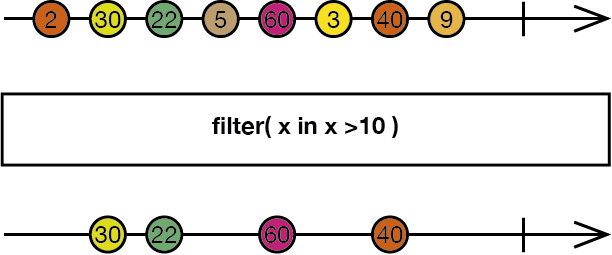
|
||||
|
||||
[More info in reactive.io website]( http://reactivex.io/documentation/operators/filter.html )
|
||||
*/
|
||||
|
||||
example("filter") {
|
||||
let subscription = sequenceOf(0, 1, 2, 3, 4, 5, 6, 7, 8, 9)
|
||||
.filter {
|
||||
$0 % 2 == 0
|
||||
}
|
||||
.subscribe {
|
||||
print($0)
|
||||
}
|
||||
}
|
||||
|
||||
|
||||
/*:
|
||||
### `distinctUntilChanged`
|
||||
|
||||
Suppress duplicate items emitted by an Observable
|
||||
|
||||
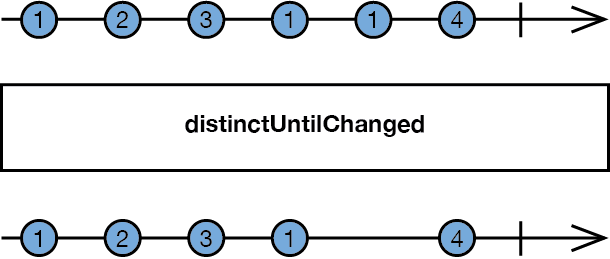
|
||||
|
||||
[More info in reactive.io website]( http://reactivex.io/documentation/operators/distinct.html )
|
||||
*/
|
||||
example("distinctUntilChanged") {
|
||||
let subscription = sequenceOf(1, 2, 3, 1, 1, 4)
|
||||
.distinctUntilChanged()
|
||||
.subscribe {
|
||||
print($0)
|
||||
}
|
||||
}
|
||||
|
||||
|
||||
/*:
|
||||
### `take`
|
||||
|
||||
Emit only the first n items emitted by an Observable
|
||||
|
||||

|
||||
|
||||
[More info in reactive.io website]( http://reactivex.io/documentation/operators/take.html )
|
||||
*/
|
||||
example("take") {
|
||||
let subscription = sequenceOf(1, 2, 3, 4, 5, 6)
|
||||
.take(3)
|
||||
.subscribe {
|
||||
print($0)
|
||||
}
|
||||
}
|
||||
|
||||
|
||||
|
||||
//: [Index](Index) - [Next >>](@next)
|
||||
|
|
@ -1,231 +0,0 @@
|
|||
/*:
|
||||
> # IMPORTANT: To use **Rx.playground**:
|
||||
1. Open **Rx.xcworkspace**.
|
||||
1. Build the **RxSwift-OSX** scheme (**Product** → **Build**).
|
||||
1. Open **Rx** playground in the **Project navigator**.
|
||||
1. Show the Debug Area (**View** → **Debug Area** → **Show Debug Area**).
|
||||
----
|
||||
[Previous](@previous) - [Table of Contents](Table_of_Contents)
|
||||
*/
|
||||
import RxSwift
|
||||
/*:
|
||||
# Filtering and Conditional Operators
|
||||
Operators that selectively emit elements from a source `Observable` sequence.
|
||||
## `filter`
|
||||
Emits only those elements from an `Observable` sequence that meet the specified condition. [More info](http://reactivex.io/documentation/operators/filter.html)
|
||||

|
||||
*/
|
||||
example("filter") {
|
||||
let disposeBag = DisposeBag()
|
||||
|
||||
Observable.of(
|
||||
"🐱", "🐰", "🐶",
|
||||
"🐸", "🐱", "🐰",
|
||||
"🐹", "🐸", "🐱")
|
||||
.filter {
|
||||
$0 == "🐱"
|
||||
}
|
||||
.subscribe(onNext: { print($0) })
|
||||
.addDisposableTo(disposeBag)
|
||||
}
|
||||
/*:
|
||||
----
|
||||
## `distinctUntilChanged`
|
||||
Suppresses sequential duplicate elements emitted by an `Observable` sequence. [More info](http://reactivex.io/documentation/operators/distinct.html)
|
||||

|
||||
*/
|
||||
example("distinctUntilChanged") {
|
||||
let disposeBag = DisposeBag()
|
||||
|
||||
Observable.of("🐱", "🐷", "🐱", "🐱", "🐱", "🐵", "🐱")
|
||||
.distinctUntilChanged()
|
||||
.subscribe(onNext: { print($0) })
|
||||
.addDisposableTo(disposeBag)
|
||||
}
|
||||
/*:
|
||||
----
|
||||
## `elementAt`
|
||||
Emits only the element at the specified index of all elements emitted by an `Observable` sequence. [More info](http://reactivex.io/documentation/operators/elementat.html)
|
||||
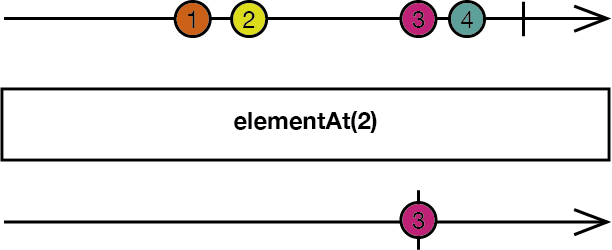
|
||||
*/
|
||||
example("elementAt") {
|
||||
let disposeBag = DisposeBag()
|
||||
|
||||
Observable.of("🐱", "🐰", "🐶", "🐸", "🐷", "🐵")
|
||||
.elementAt(3)
|
||||
.subscribe(onNext: { print($0) })
|
||||
.addDisposableTo(disposeBag)
|
||||
}
|
||||
/*:
|
||||
----
|
||||
## `single`
|
||||
Emits only the first element (or the first element that meets a condition) emitted by an `Observable` sequence. Will throw an error if the `Observable` sequence does not emit exactly one element.
|
||||
*/
|
||||
example("single") {
|
||||
let disposeBag = DisposeBag()
|
||||
|
||||
Observable.of("🐱", "🐰", "🐶", "🐸", "🐷", "🐵")
|
||||
.single()
|
||||
.subscribe(onNext: { print($0) })
|
||||
.addDisposableTo(disposeBag)
|
||||
}
|
||||
|
||||
example("single with conditions") {
|
||||
let disposeBag = DisposeBag()
|
||||
|
||||
Observable.of("🐱", "🐰", "🐶", "🐸", "🐷", "🐵")
|
||||
.single { $0 == "🐸" }
|
||||
.subscribe { print($0) }
|
||||
.addDisposableTo(disposeBag)
|
||||
|
||||
Observable.of("🐱", "🐰", "🐶", "🐱", "🐰", "🐶")
|
||||
.single { $0 == "🐰" }
|
||||
.subscribe { print($0) }
|
||||
.addDisposableTo(disposeBag)
|
||||
|
||||
Observable.of("🐱", "🐰", "🐶", "🐸", "🐷", "🐵")
|
||||
.single { $0 == "🔵" }
|
||||
.subscribe { print($0) }
|
||||
.addDisposableTo(disposeBag)
|
||||
}
|
||||
/*:
|
||||
----
|
||||
## `take`
|
||||
Emits only the specified number of elements from the beginning of an `Observable` sequence. [More info](http://reactivex.io/documentation/operators/take.html)
|
||||

|
||||
*/
|
||||
example("take") {
|
||||
let disposeBag = DisposeBag()
|
||||
|
||||
Observable.of("🐱", "🐰", "🐶", "🐸", "🐷", "🐵")
|
||||
.take(3)
|
||||
.subscribe(onNext: { print($0) })
|
||||
.addDisposableTo(disposeBag)
|
||||
}
|
||||
/*:
|
||||
----
|
||||
## `takeLast`
|
||||
Emits only the specified number of elements from the end of an `Observable` sequence. [More info](http://reactivex.io/documentation/operators/takelast.html)
|
||||
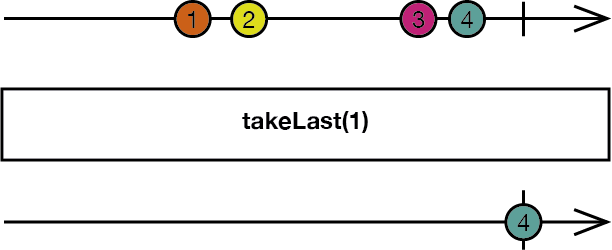
|
||||
*/
|
||||
example("takeLast") {
|
||||
let disposeBag = DisposeBag()
|
||||
|
||||
Observable.of("🐱", "🐰", "🐶", "🐸", "🐷", "🐵")
|
||||
.takeLast(3)
|
||||
.subscribe(onNext: { print($0) })
|
||||
.addDisposableTo(disposeBag)
|
||||
}
|
||||
/*:
|
||||
----
|
||||
## `takeWhile`
|
||||
Emits elements from the beginning of an `Observable` sequence as long as the specified condition evaluates to `true`. [More info](http://reactivex.io/documentation/operators/takewhile.html)
|
||||

|
||||
*/
|
||||
example("takeWhile") {
|
||||
let disposeBag = DisposeBag()
|
||||
|
||||
Observable.of(1, 2, 3, 4, 5, 6)
|
||||
.takeWhile { $0 < 4 }
|
||||
.subscribe(onNext: { print($0) })
|
||||
.addDisposableTo(disposeBag)
|
||||
}
|
||||
/*:
|
||||
----
|
||||
## `takeUntil`
|
||||
Emits elements from a source `Observable` sequence until a reference `Observable` sequence emits an element. [More info](http://reactivex.io/documentation/operators/takeuntil.html)
|
||||

|
||||
*/
|
||||
example("takeUntil") {
|
||||
let disposeBag = DisposeBag()
|
||||
|
||||
let sourceSequence = PublishSubject<String>()
|
||||
let referenceSequence = PublishSubject<String>()
|
||||
|
||||
sourceSequence
|
||||
.takeUntil(referenceSequence)
|
||||
.subscribe { print($0) }
|
||||
.addDisposableTo(disposeBag)
|
||||
|
||||
sourceSequence.onNext("🐱")
|
||||
sourceSequence.onNext("🐰")
|
||||
sourceSequence.onNext("🐶")
|
||||
|
||||
referenceSequence.onNext("🔴")
|
||||
|
||||
sourceSequence.onNext("🐸")
|
||||
sourceSequence.onNext("🐷")
|
||||
sourceSequence.onNext("🐵")
|
||||
}
|
||||
/*:
|
||||
----
|
||||
## `skip`
|
||||
Suppresses emitting the specified number of elements from the beginning of an `Observable` sequence. [More info](http://reactivex.io/documentation/operators/skip.html)
|
||||
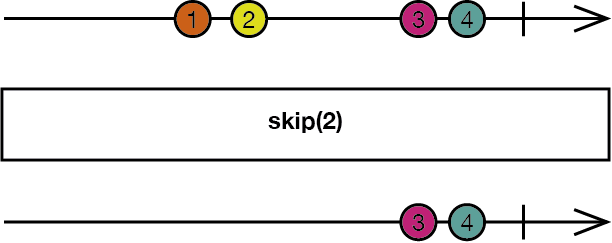
|
||||
*/
|
||||
example("skip") {
|
||||
let disposeBag = DisposeBag()
|
||||
|
||||
Observable.of("🐱", "🐰", "🐶", "🐸", "🐷", "🐵")
|
||||
.skip(2)
|
||||
.subscribe(onNext: { print($0) })
|
||||
.addDisposableTo(disposeBag)
|
||||
}
|
||||
/*:
|
||||
----
|
||||
## `skipWhile`
|
||||
Suppresses emitting the elements from the beginning of an `Observable` sequence that meet the specified condition. [More info](http://reactivex.io/documentation/operators/skipwhile.html)
|
||||
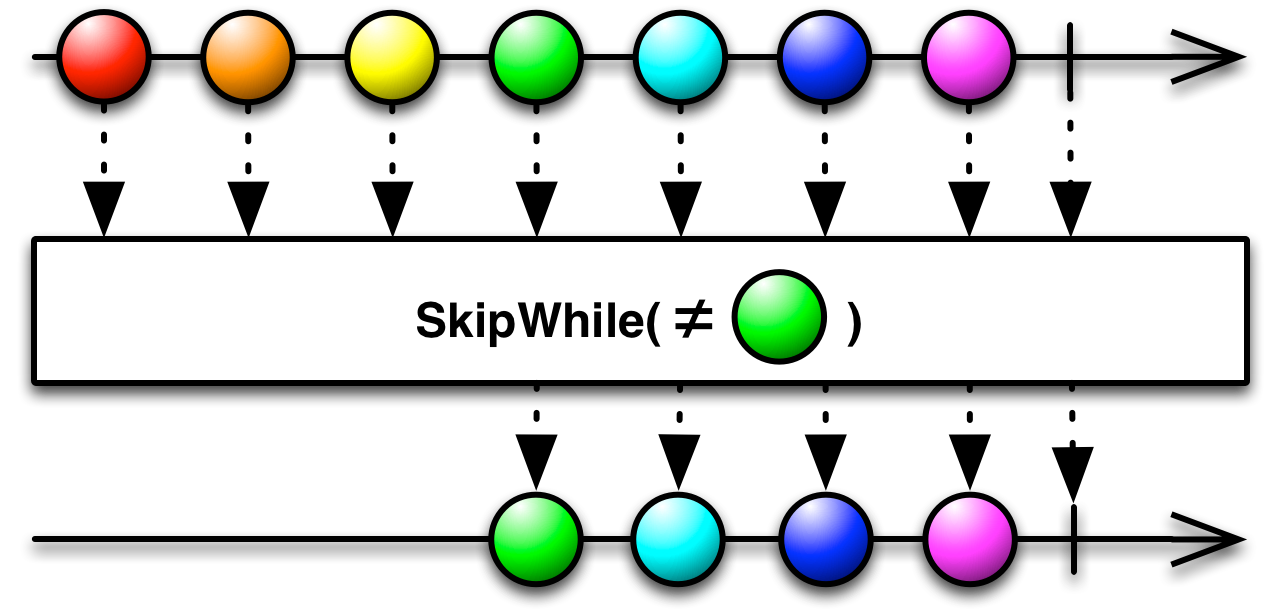
|
||||
*/
|
||||
example("skipWhile") {
|
||||
let disposeBag = DisposeBag()
|
||||
|
||||
Observable.of(1, 2, 3, 4, 5, 6)
|
||||
.skipWhile { $0 < 4 }
|
||||
.subscribe(onNext: { print($0) })
|
||||
.addDisposableTo(disposeBag)
|
||||
}
|
||||
/*:
|
||||
----
|
||||
## `skipWhileWithIndex`
|
||||
Suppresses emitting the elements from the beginning of an `Observable` sequence that meet the specified condition, and emits the remaining elements. The closure is also passed each element's index.
|
||||
*/
|
||||
example("skipWhileWithIndex") {
|
||||
let disposeBag = DisposeBag()
|
||||
|
||||
Observable.of("🐱", "🐰", "🐶", "🐸", "🐷", "🐵")
|
||||
.skipWhileWithIndex { element, index in
|
||||
index < 3
|
||||
}
|
||||
.subscribe(onNext: { print($0) })
|
||||
.addDisposableTo(disposeBag)
|
||||
}
|
||||
/*:
|
||||
----
|
||||
## `skipUntil`
|
||||
Suppresses emitting the elements from a source `Observable` sequence until a reference `Observable` sequence emits an element. [More info](http://reactivex.io/documentation/operators/skipuntil.html)
|
||||
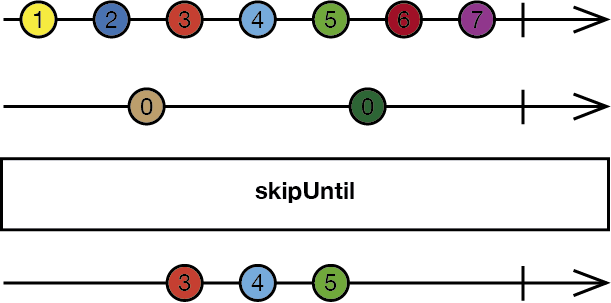
|
||||
*/
|
||||
example("skipUntil") {
|
||||
let disposeBag = DisposeBag()
|
||||
|
||||
let sourceSequence = PublishSubject<String>()
|
||||
let referenceSequence = PublishSubject<String>()
|
||||
|
||||
sourceSequence
|
||||
.skipUntil(referenceSequence)
|
||||
.subscribe(onNext: { print($0) })
|
||||
.addDisposableTo(disposeBag)
|
||||
|
||||
sourceSequence.onNext("🐱")
|
||||
sourceSequence.onNext("🐰")
|
||||
sourceSequence.onNext("🐶")
|
||||
|
||||
referenceSequence.onNext("🔴")
|
||||
|
||||
sourceSequence.onNext("🐸")
|
||||
sourceSequence.onNext("🐷")
|
||||
sourceSequence.onNext("🐵")
|
||||
}
|
||||
|
||||
//: [Next](@next) - [Table of Contents](Table_of_Contents)
|
||||
|
|
@ -0,0 +1,27 @@
|
|||
|
||||
/*:
|
||||
> # IMPORTANT: To use `RxSamples`, please:
|
||||
|
||||
1. Open `Rx.xcworkspace`
|
||||
2. Build `RxSwift-OSX` scheme
|
||||
3. And then open `Rx` playground in `Rx.xcworkspace` tree view.
|
||||
4. Choose `View > Show Debug Area`
|
||||
*/
|
||||
|
||||
/*:
|
||||
## Index:
|
||||
|
||||
1. [Introduction](Introduction)
|
||||
1. [Subjects](Subjects)
|
||||
1. [Transforming Observables](Transforming_Observables)
|
||||
1. [Filtering Observables](Filtering_Observables)
|
||||
1. [Combining Observables](Combining_Observables)
|
||||
1. [Error Handling Operators](Error_Handling_Operators)
|
||||
1. [Observable Utility Operators](Observable_Utility_Operators)
|
||||
1. [Conditional and Boolean Operators](Conditional_and_Boolean_Operators)
|
||||
1. [Mathematical and Aggregate Operators](Mathematical_and_Aggregate_Operators)
|
||||
1. [Connectable Observable Operators](Connectable_Observable_Operators)
|
||||
|
||||
*/
|
||||
|
||||
//: [Index](Index) - [Next >>](@next)
|
||||
|
|
@ -1,85 +1,171 @@
|
|||
/*:
|
||||
> # IMPORTANT: To use **Rx.playground**:
|
||||
1. Open **Rx.xcworkspace**.
|
||||
1. Build the **RxSwift-OSX** scheme (**Product** → **Build**).
|
||||
1. Open **Rx** playground in the **Project navigator**.
|
||||
1. Show the Debug Area (**View** → **Debug Area** → **Show Debug Area**).
|
||||
----
|
||||
[Previous](@previous)
|
||||
*/
|
||||
//: [<< Index](@previous)
|
||||
|
||||
import RxSwift
|
||||
import Foundation
|
||||
|
||||
/*:
|
||||
# Introduction
|
||||
|
||||
## Why use RxSwift?
|
||||
|
||||
A vast majority of the code we write involves responding to external events. When a user manipulates a control, we need to write an `@IBAction` handler to respond. We need to observe notifications to detect when the keyboard changes position. We must provide closures to execute when URL sessions respond with data. And we use KVO to detect changes to variables.
|
||||
A vast majority of the code we write revolves around responding to external actions. When a user manipulates a control, we need to write an @IBAction to respond to that. We need to observe Notifications to detect when the keyboard changes position. We must provide blocks to execute when URL Sessions respond with data. And we use KVO to detect changes in variables.
|
||||
All of these various systems makes our code needlessly complex. Wouldn't it be better if there was one consistent system that handled all of our call/response code? Rx is such a system.
|
||||
|
||||
RxSwift is the official implementation of [Reactive Extensions](http://reactivex.io) (aka Rx), which exist for [most major languages and platforms](http://reactivex.io/languages.html).
|
||||
|
||||
## Observables
|
||||
The key to understanding RxSwift is in understanding the notion of Observables. Creating them, manipulating them, and subscribing to them in order to react to changes.
|
||||
|
||||
## Creating and Subscribing to Observables
|
||||
The first step in understanding this library is in understanding how to create Observables. There are a number of functions available to make Observables.
|
||||
Creating an Observable is one thing, but if nothing subscribes to the observable, then nothing will come of it so both are explained simultaneously.
|
||||
*/
|
||||
|
||||
/*:
|
||||
## Concepts
|
||||
|
||||
**Every `Observable` instance is just a sequence.**
|
||||
|
||||
The key advantage for an `Observable` sequence vs. Swift's `SequenceType` is that it can also receive elements asynchronously. _This is the essence of RxSwift._ Everything else expands upon this concept.
|
||||
|
||||
* An `Observable` (`ObservableType`) is equivalent to a `SequenceType`.
|
||||
* The `ObservableType.subscribe(_:)` method is equivalent to `SequenceType.generate()`.
|
||||
* `ObservableType.subscribe(_:)` takes an observer (`ObserverType`) parameter, which will be subscribed to automatically receive sequence events and elements emitted by the `Observable`, instead of manually calling `next()` on the returned generator.
|
||||
*/
|
||||
/*:
|
||||
If an `Observable` emits a next event (`Event.next(Element)`), it can continue to emit more events. However, if the `Observable` emits either an error event (`Event.error(ErrorType)`) or a completed event (`Event.completed`), the `Observable` sequence cannot emit additional events to the subscriber.
|
||||
|
||||
Sequence grammar explains this more concisely:
|
||||
|
||||
`next* (error | completed)?`
|
||||
|
||||
And this can also be explained more visually using diagrams:
|
||||
|
||||
`--1--2--3--4--5--6--|----> // "|" = Terminates normally`
|
||||
|
||||
`--a--b--c--d--e--f--X----> // "X" = Terminates with an error`
|
||||
|
||||
`--tap--tap----------tap--> // "|" = Continues indefinitely, such as a sequence of button taps`
|
||||
|
||||
> These diagrams are called marble diagrams. You can learn more about them at [RxMarbles.com](http://rxmarbles.com).
|
||||
### empty
|
||||
`empty` creates an empty sequence. The only message it sends is the `.Completed` message.
|
||||
*/
|
||||
/*:
|
||||
### Observables and observers (aka subscribers)
|
||||
|
||||
`Observable`s will not execute their subscription closure unless there is a subscriber. In the following example, the closure of the `Observable` will never be executed, because there are no subscribers:
|
||||
*/
|
||||
example("Observable with no subscribers") {
|
||||
_ = Observable<String>.create { observerOfString -> Disposable in
|
||||
print("This will never be printed")
|
||||
observerOfString.on(.next("😬"))
|
||||
observerOfString.on(.completed)
|
||||
return Disposables.create()
|
||||
}
|
||||
}
|
||||
/*:
|
||||
----
|
||||
In the following example, the closure will be executed when `subscribe(_:)` is called:
|
||||
*/
|
||||
example("Observable with subscriber") {
|
||||
_ = Observable<String>.create { observerOfString in
|
||||
print("Observable created")
|
||||
observerOfString.on(.next("😉"))
|
||||
observerOfString.on(.completed)
|
||||
return Disposables.create()
|
||||
|
||||
example("empty") {
|
||||
let emptySequence: Observable<Int> = empty()
|
||||
|
||||
let subscription = emptySequence
|
||||
.subscribe { event in
|
||||
print(event)
|
||||
}
|
||||
}
|
||||
|
||||
|
||||
/*:
|
||||
### never
|
||||
`never` creates a sequence that never sends any element or completes.
|
||||
*/
|
||||
|
||||
example("never") {
|
||||
let neverSequence: Observable<String> = never()
|
||||
|
||||
let subscription = neverSequence
|
||||
.subscribe { _ in
|
||||
print("This block is never called.")
|
||||
}
|
||||
}
|
||||
|
||||
/*:
|
||||
### just
|
||||
`just` represents sequence that contains one element. It sends two messages to subscribers. The first message is the value of single element and the second message is `.Completed`.
|
||||
*/
|
||||
|
||||
example("just") {
|
||||
let singleElementSequence = just(32)
|
||||
|
||||
let subscription = singleElementSequence
|
||||
.subscribe { event in
|
||||
print(event)
|
||||
}
|
||||
}
|
||||
|
||||
/*:
|
||||
### sequenceOf
|
||||
`sequenceOf` creates a sequence of a fixed number of elements.
|
||||
*/
|
||||
|
||||
example("sequenceOf") {
|
||||
let sequenceOfElements/* : Observable<Int> */ = sequenceOf(0, 1, 2, 3, 4, 5, 6, 7, 8, 9)
|
||||
|
||||
let subscription = sequenceOfElements
|
||||
.subscribe { event in
|
||||
print(event)
|
||||
}
|
||||
}
|
||||
|
||||
/*:
|
||||
### from
|
||||
`from` creates a sequence from `SequenceType`
|
||||
*/
|
||||
|
||||
example("from") {
|
||||
let sequenceFromArray = [1, 2, 3, 4, 5].asObservable()
|
||||
|
||||
let subscription = sequenceFromArray
|
||||
.subscribe { event in
|
||||
print(event)
|
||||
}
|
||||
}
|
||||
|
||||
/*:
|
||||
### create
|
||||
`create` creates sequence using Swift closure. This examples creates custom version of `just` operator.
|
||||
*/
|
||||
|
||||
example("create") {
|
||||
let myJust = { (singleElement: Int) -> Observable<Int> in
|
||||
return create { observer in
|
||||
observer.on(.Next(singleElement))
|
||||
observer.on(.Completed)
|
||||
|
||||
return NopDisposable.instance
|
||||
}
|
||||
}
|
||||
|
||||
let subscription = myJust(5)
|
||||
.subscribe { event in
|
||||
print(event)
|
||||
}
|
||||
}
|
||||
|
||||
/*:
|
||||
### failWith
|
||||
create an Observable that emits no items and terminates with an error
|
||||
*/
|
||||
|
||||
example("failWith") {
|
||||
let error = NSError(domain: "Test", code: -1, userInfo: nil)
|
||||
|
||||
let erroredSequence: Observable<Int> = failWith(error)
|
||||
|
||||
let subscription = erroredSequence
|
||||
.subscribe { event in
|
||||
print(event)
|
||||
}
|
||||
}
|
||||
|
||||
/*:
|
||||
### `deferred`
|
||||
|
||||
do not create the Observable until the observer subscribes, and create a fresh Observable for each observer
|
||||
|
||||
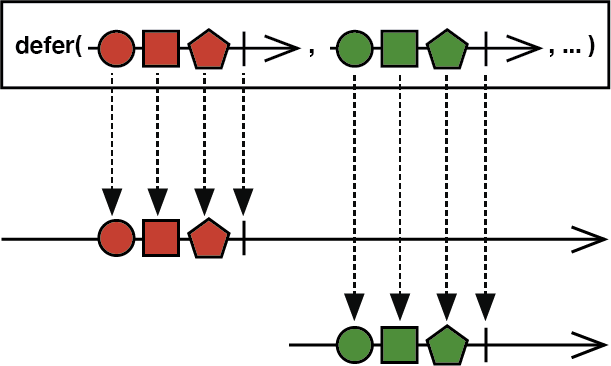
|
||||
|
||||
[More info in reactive.io website]( http://reactivex.io/documentation/operators/defer.html )
|
||||
*/
|
||||
example("deferred") {
|
||||
let deferredSequence: Observable<Int> = deferred {
|
||||
print("creating")
|
||||
return create { observer in
|
||||
print("emmiting")
|
||||
observer.on(.Next(0))
|
||||
observer.on(.Next(1))
|
||||
observer.on(.Next(2))
|
||||
|
||||
return NopDisposable.instance
|
||||
}
|
||||
}
|
||||
|
||||
deferredSequence
|
||||
.subscribe { event in
|
||||
print(event)
|
||||
}
|
||||
}
|
||||
/*:
|
||||
> Don't concern yourself with the details of how these `Observable`s were created in these examples. We'll get into that [next](@next).
|
||||
#
|
||||
> `subscribe(_:)` returns a `Disposable` instance that represents a disposable resource such as a subscription. It was ignored in the previous simple example, but it should normally be properly handled. This usually means adding it to a `DisposeBag` instance. All examples going forward will include proper handling, because, well, practice makes _permanent_ 🙂. You can learn more about this in the [Disposing section](https://github.com/ReactiveX/RxSwift/blob/master/Documentation/GettingStarted.md#disposing) of the [Getting Started guide](https://github.com/ReactiveX/RxSwift/blob/master/Documentation/GettingStarted.md).
|
||||
*/
|
||||
|
||||
//: [Next](@next) - [Table of Contents](Table_of_Contents)
|
||||
deferredSequence
|
||||
.subscribe { event in
|
||||
print(event)
|
||||
}
|
||||
}
|
||||
|
||||
/*:
|
||||
There is a lot more useful methods in the RxCocoa library, so check them out:
|
||||
* `rx_observe` exist on every NSObject and wraps KVO.
|
||||
* `rx_tap` exists on buttons and wraps @IBActions
|
||||
* `rx_notification` wraps NotificationCenter events
|
||||
* ... and many others
|
||||
*/
|
||||
|
||||
//: [Index](Index) - [Next >>](@next)
|
||||
|
|
|
|||
|
|
@ -1,72 +1,77 @@
|
|||
/*:
|
||||
> # IMPORTANT: To use **Rx.playground**:
|
||||
1. Open **Rx.xcworkspace**.
|
||||
1. Build the **RxSwift-OSX** scheme (**Product** → **Build**).
|
||||
1. Open **Rx** playground in the **Project navigator**.
|
||||
1. Show the Debug Area (**View** → **Debug Area** → **Show Debug Area**).
|
||||
----
|
||||
[Previous](@previous) - [Table of Contents](Table_of_Contents)
|
||||
*/
|
||||
//: [<< Previous](@previous) - [Index](Index)
|
||||
|
||||
import RxSwift
|
||||
|
||||
/*:
|
||||
# Mathematical and Aggregate Operators
|
||||
Operators that operate on the entire sequence of items emitted by an `Observable`.
|
||||
## `toArray`
|
||||
Converts an `Observable` sequence into an array, emits that array as a new single-element `Observable` sequence, and then terminates. [More info](http://reactivex.io/documentation/operators/to.html)
|
||||
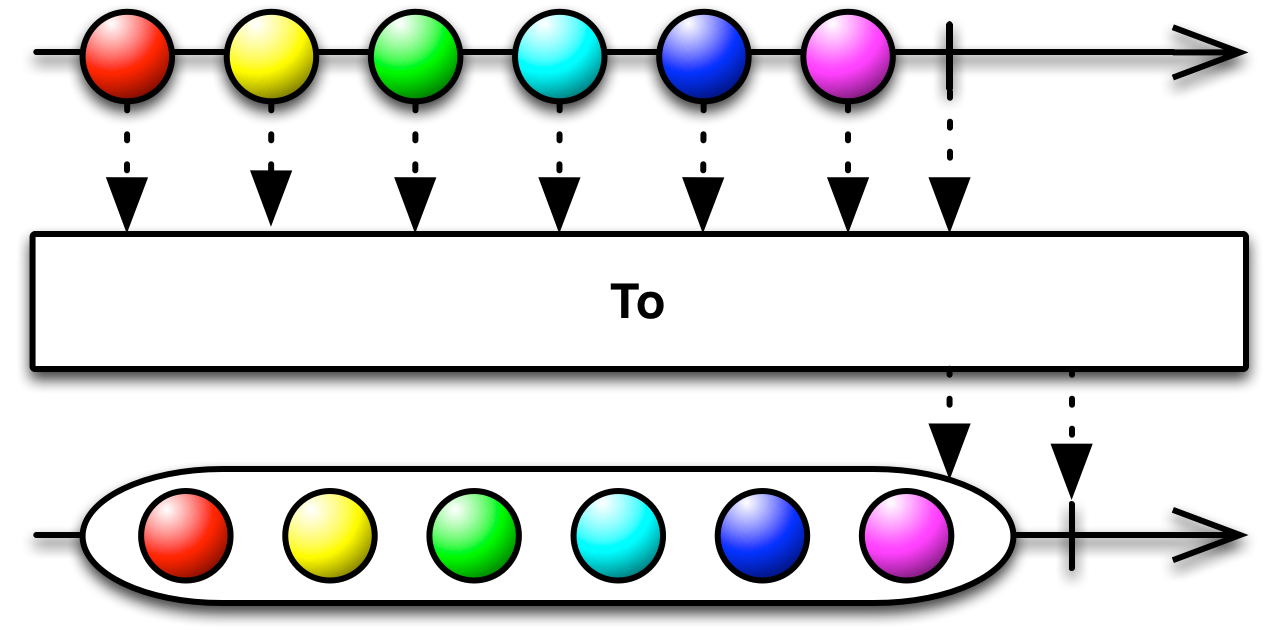
|
||||
*/
|
||||
example("toArray") {
|
||||
let disposeBag = DisposeBag()
|
||||
|
||||
Observable.range(start: 1, count: 10)
|
||||
.toArray()
|
||||
.subscribe { print($0) }
|
||||
.addDisposableTo(disposeBag)
|
||||
}
|
||||
## Mathematical and Aggregate Operators
|
||||
|
||||
Operators that operate on the entire sequence of items emitted by an Observable
|
||||
|
||||
*/
|
||||
|
||||
/*:
|
||||
----
|
||||
## `reduce`
|
||||
Begins with an initial seed value, and then applies an accumulator closure to all elements emitted by an `Observable` sequence, and returns the aggregate result as a single-element `Observable` sequence. [More info](http://reactivex.io/documentation/operators/reduce.html)
|
||||
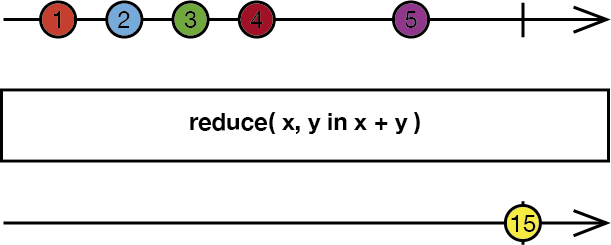
|
||||
*/
|
||||
example("reduce") {
|
||||
let disposeBag = DisposeBag()
|
||||
|
||||
Observable.of(10, 100, 1000)
|
||||
.reduce(1, accumulator: +)
|
||||
.subscribe(onNext: { print($0) })
|
||||
.addDisposableTo(disposeBag)
|
||||
}
|
||||
/*:
|
||||
----
|
||||
## `concat`
|
||||
Joins elements from inner `Observable` sequences of an `Observable` sequence in a sequential manner, waiting for each sequence to terminate successfully before emitting elements from the next sequence. [More info](http://reactivex.io/documentation/operators/concat.html)
|
||||
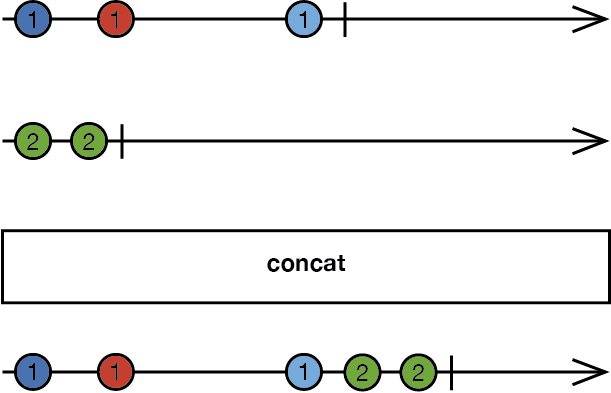
|
||||
*/
|
||||
### `concat`
|
||||
|
||||
Emit the emissions from two or more Observables without interleaving them.
|
||||
|
||||

|
||||
|
||||
[More info in reactive.io website]( http://reactivex.io/documentation/operators/concat.html )
|
||||
*/
|
||||
example("concat") {
|
||||
let disposeBag = DisposeBag()
|
||||
let var1 = BehaviorSubject(value: 0)
|
||||
let var2 = BehaviorSubject(value: 200)
|
||||
|
||||
let subject1 = BehaviorSubject(value: "🍎")
|
||||
let subject2 = BehaviorSubject(value: "🐶")
|
||||
// var3 is like an Observable<Observable<Int>>
|
||||
let var3 = BehaviorSubject(value: var1)
|
||||
|
||||
let variable = Variable(subject1)
|
||||
|
||||
variable.asObservable()
|
||||
let d = var3
|
||||
.concat()
|
||||
.subscribe { print($0) }
|
||||
.addDisposableTo(disposeBag)
|
||||
.subscribe {
|
||||
print($0)
|
||||
}
|
||||
|
||||
subject1.onNext("🍐")
|
||||
subject1.onNext("🍊")
|
||||
var1.on(.Next(1))
|
||||
var1.on(.Next(2))
|
||||
var1.on(.Next(3))
|
||||
var1.on(.Next(4))
|
||||
|
||||
variable.value = subject2
|
||||
var3.on(.Next(var2))
|
||||
|
||||
subject2.onNext("I would be ignored")
|
||||
subject2.onNext("🐱")
|
||||
var2.on(.Next(201))
|
||||
|
||||
subject1.onCompleted()
|
||||
var1.on(.Next(5))
|
||||
var1.on(.Next(6))
|
||||
var1.on(.Next(7))
|
||||
var1.on(.Completed)
|
||||
|
||||
subject2.onNext("🐭")
|
||||
var2.on(.Next(202))
|
||||
var2.on(.Next(203))
|
||||
var2.on(.Next(204))
|
||||
}
|
||||
|
||||
//: [Next](@next) - [Table of Contents](Table_of_Contents)
|
||||
|
||||
/*:
|
||||
|
||||
|
||||
### `reduce`
|
||||
|
||||
Apply a function to each item emitted by an Observable, sequentially, and emit the final value.
|
||||
This function will perform a function on each element in the sequence until it is completed, then send a message with the aggregate value. It works much like the Swift `reduce` function works on sequences.
|
||||
|
||||

|
||||
|
||||
[More info in reactive.io website]( http://reactivex.io/documentation/operators/reduce.html )
|
||||
|
||||
*/
|
||||
example("reduce") {
|
||||
sequenceOf(0, 1, 2, 3, 4, 5, 6, 7, 8, 9)
|
||||
.reduce(0, +)
|
||||
.subscribe {
|
||||
print($0)
|
||||
}
|
||||
}
|
||||
|
||||
|
||||
|
||||
//: [Index](Index) - [Next >>](@next)
|
||||
|
|
|
|||
|
|
@ -0,0 +1,113 @@
|
|||
//: [<< Previous](@previous) - [Index](Index)
|
||||
|
||||
import RxSwift
|
||||
import Foundation
|
||||
/*:
|
||||
## Observable Utility Operators
|
||||
|
||||
A toolbox of useful Operators for working with Observables.
|
||||
|
||||
*/
|
||||
|
||||
/*:
|
||||
### `subscribe`
|
||||
|
||||
[More info in reactive.io website]( http://reactivex.io/documentation/operators/subscribe.html )
|
||||
*/
|
||||
|
||||
example("subscribe") {
|
||||
let sequenceOfInts = PublishSubject<Int>()
|
||||
|
||||
sequenceOfInts
|
||||
.subscribe {
|
||||
print($0)
|
||||
}
|
||||
|
||||
sequenceOfInts.on(.Next(1))
|
||||
sequenceOfInts.on(.Completed)
|
||||
}
|
||||
|
||||
|
||||
/*:
|
||||
There are several variants of the `subscribe` operator.
|
||||
*/
|
||||
|
||||
/*:
|
||||
|
||||
### `subscribeNext`
|
||||
|
||||
*/
|
||||
example("subscribeNext") {
|
||||
let sequenceOfInts = PublishSubject<Int>()
|
||||
|
||||
sequenceOfInts
|
||||
.subscribeNext {
|
||||
print($0)
|
||||
}
|
||||
|
||||
sequenceOfInts.on(.Next(1))
|
||||
sequenceOfInts.on(.Completed)
|
||||
}
|
||||
|
||||
|
||||
/*:
|
||||
|
||||
### `subscribeCompleted`
|
||||
|
||||
*/
|
||||
example("subscribeCompleted") {
|
||||
let sequenceOfInts = PublishSubject<Int>()
|
||||
|
||||
sequenceOfInts
|
||||
.subscribeCompleted {
|
||||
print("It's completed")
|
||||
}
|
||||
|
||||
sequenceOfInts.on(.Next(1))
|
||||
sequenceOfInts.on(.Completed)
|
||||
}
|
||||
|
||||
|
||||
/*:
|
||||
|
||||
### `subscribeError`
|
||||
|
||||
*/
|
||||
example("subscribeError") {
|
||||
let sequenceOfInts = PublishSubject<Int>()
|
||||
|
||||
sequenceOfInts
|
||||
.subscribeError { error in
|
||||
print(error)
|
||||
}
|
||||
|
||||
sequenceOfInts.on(.Next(1))
|
||||
sequenceOfInts.on(.Error(NSError(domain: "Examples", code: -1, userInfo: nil)))
|
||||
}
|
||||
|
||||
|
||||
/*:
|
||||
### `doOn`
|
||||
|
||||
register an action to take upon a variety of Observable lifecycle events
|
||||
|
||||

|
||||
|
||||
[More info in reactive.io website]( http://reactivex.io/documentation/operators/do.html )
|
||||
*/
|
||||
example("doOn") {
|
||||
let sequenceOfInts = PublishSubject<Int>()
|
||||
|
||||
sequenceOfInts
|
||||
.doOn {
|
||||
print("Intercepted event \($0)")
|
||||
}
|
||||
.subscribe {
|
||||
print($0)
|
||||
}
|
||||
|
||||
sequenceOfInts.on(.Next(1))
|
||||
sequenceOfInts.on(.Completed)
|
||||
}
|
||||
|
||||
//: [Index](Index) - [Next >>](@next)
|
||||
|
|
@ -0,0 +1,98 @@
|
|||
//: [<< Previous](@previous) - [Index](Index)
|
||||
|
||||
import RxSwift
|
||||
|
||||
/*:
|
||||
|
||||
A Subject is a sort of bridge or proxy that is available in some implementations of ReactiveX that acts both as an observer and as an Observable. Because it is an observer, it can subscribe to one or more Observables, and because it is an Observable, it can pass through the items it observes by reemitting them, and it can also emit new items.
|
||||
*/
|
||||
|
||||
func writeSequenceToConsole<O: ObservableType>(name: String, sequence: O) {
|
||||
sequence
|
||||
.subscribe { e in
|
||||
print("Subscription: \(name), event: \(e)")
|
||||
}
|
||||
}
|
||||
|
||||
|
||||
/*:
|
||||
|
||||
## PublishSubject
|
||||
|
||||
`PublishSubject` emits to an observer only those items that are emitted by the source Observable(s) subsequent to the time of the subscription.
|
||||
|
||||
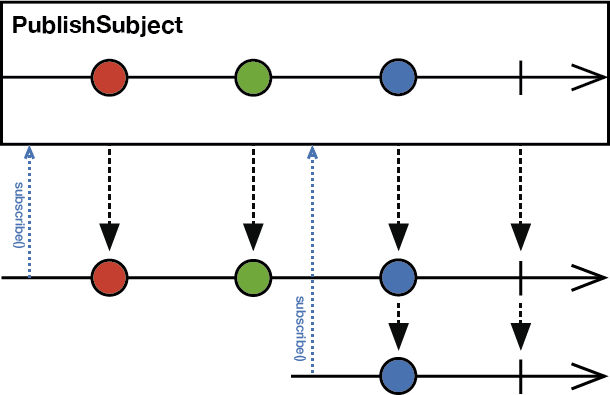
|
||||
|
||||

|
||||
|
||||
*/
|
||||
example("PublishSubject") {
|
||||
let subject = PublishSubject<String>()
|
||||
writeSequenceToConsole("1", sequence: subject)
|
||||
subject.on(.Next("a"))
|
||||
subject.on(.Next("b"))
|
||||
writeSequenceToConsole("2", sequence: subject)
|
||||
subject.on(.Next("c"))
|
||||
subject.on(.Next("d"))
|
||||
}
|
||||
|
||||
|
||||
/*:
|
||||
|
||||
## ReplaySubject
|
||||
|
||||
`ReplaySubject` emits to any observer all of the items that were emitted by the source Observable(s), regardless of when the observer subscribes.
|
||||
|
||||
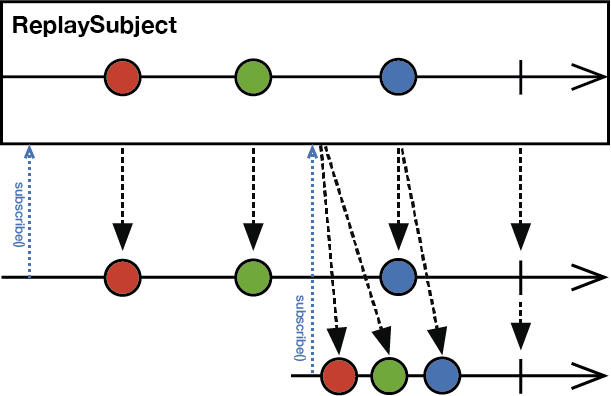
|
||||
*/
|
||||
example("ReplaySubject") {
|
||||
let subject = ReplaySubject<String>.create(bufferSize: 1)
|
||||
|
||||
writeSequenceToConsole("1", sequence: subject)
|
||||
subject.on(.Next("a"))
|
||||
subject.on(.Next("b"))
|
||||
writeSequenceToConsole("2", sequence: subject)
|
||||
subject.on(.Next("c"))
|
||||
subject.on(.Next("d"))
|
||||
}
|
||||
|
||||
|
||||
/*:
|
||||
|
||||
## BehaviorSubject
|
||||
|
||||
When an observer subscribes to a `BehaviorSubject`, it begins by emitting the item most recently emitted by the source Observable (or a seed/default value if none has yet been emitted) and then continues to emit any other items emitted later by the source Observable(s).
|
||||
|
||||
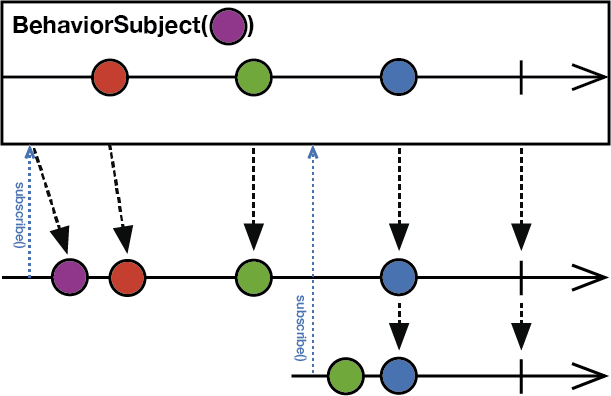
|
||||
|
||||
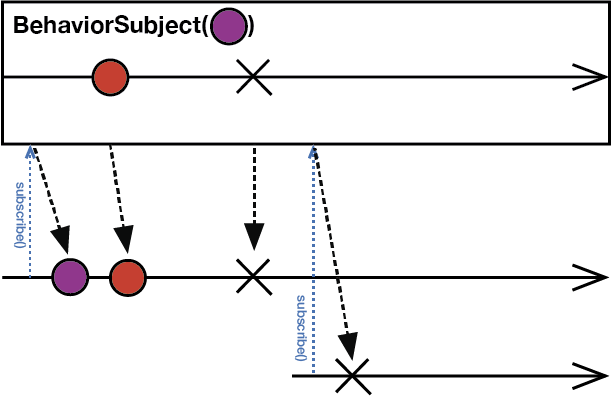
|
||||
*/
|
||||
example("BehaviorSubject") {
|
||||
let subject = BehaviorSubject(value: "z")
|
||||
writeSequenceToConsole("1", sequence: subject)
|
||||
subject.on(.Next("a"))
|
||||
subject.on(.Next("b"))
|
||||
writeSequenceToConsole("2", sequence: subject)
|
||||
subject.on(.Next("c"))
|
||||
subject.on(.Next("d"))
|
||||
subject.on(.Completed)
|
||||
}
|
||||
|
||||
/*:
|
||||
|
||||
## Variable
|
||||
|
||||
`Variable` wraps `BehaviorSubject`. Advantage of using variable over `BehaviorSubject` is that variable can never explicitly complete or error out, and `BehaviorSubject` can in case `Error` or `Completed` message is send to it. `Variable` will also automatically complete in case it's being deallocated.
|
||||
|
||||
*/
|
||||
example("Variable") {
|
||||
let variable = Variable("z")
|
||||
writeSequenceToConsole("1", sequence: variable)
|
||||
variable.value = "a"
|
||||
variable.value = "b"
|
||||
writeSequenceToConsole("2", sequence: variable)
|
||||
variable.value = "c"
|
||||
variable.value = "d"
|
||||
}
|
||||
|
||||
//: [Index](Index) - [Next >>](@next)
|
||||
|
|
@ -1,21 +0,0 @@
|
|||
/*:
|
||||
> # IMPORTANT: To use **Rx.playground**:
|
||||
1. Open **Rx.xcworkspace**.
|
||||
1. Build the **RxSwift-OSX** scheme (**Product** → **Build**).
|
||||
1. Open **Rx** playground in the **Project navigator**.
|
||||
1. Show the Debug Area (**View** → **Debug Area** → **Show Debug Area**).
|
||||
----
|
||||
## Table of Contents:
|
||||
1. [Introduction](Introduction)
|
||||
1. [Creating and Subscribing to Observables](Creating_and_Subscribing_to_Observables)
|
||||
1. [Working with Subjects](Working_with_Subjects)
|
||||
1. [Combining Operators](Combining_Operators)
|
||||
1. [Transforming Operators](Transforming_Operators)
|
||||
1. [Filtering and Conditional Operators](Filtering_and_Conditional_Operators)
|
||||
1. [Mathematical and Aggregate Operators](Mathematical_and_Aggregate_Operators)
|
||||
1. [Connectable Operators](Connectable_Operators)
|
||||
1. [Error Handling Operators](Error_Handling_Operators)
|
||||
1. [Debugging Operators](Debugging_Operators)
|
||||
*/
|
||||
|
||||
//: [Next](@next)
|
||||
|
|
@ -0,0 +1,78 @@
|
|||
//: [<< Previous](@previous) - [Index](Index)
|
||||
|
||||
import RxSwift
|
||||
|
||||
/*:
|
||||
## Transforming Observables
|
||||
|
||||
Operators that transform items that are emitted by an Observable.
|
||||
*/
|
||||
|
||||
/*:
|
||||
### `map` / `select`
|
||||
|
||||
Transform the items emitted by an Observable by applying a function to each item
|
||||
|
||||
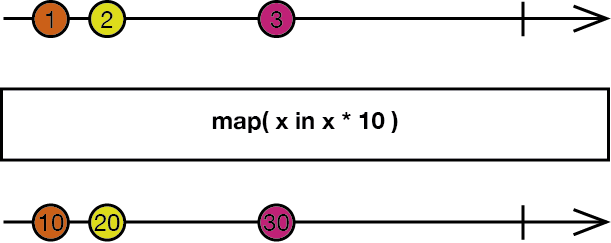
|
||||
|
||||
[More info in reactive.io website]( http://reactivex.io/documentation/operators/map.html )
|
||||
*/
|
||||
|
||||
example("map") {
|
||||
let originalSequence = sequenceOf(Character("A"), Character("B"), Character("C"))
|
||||
|
||||
originalSequence
|
||||
.map { char in
|
||||
char.hashValue
|
||||
}
|
||||
.subscribe { print($0) }
|
||||
}
|
||||
|
||||
|
||||
/*:
|
||||
### `flatMap`
|
||||
|
||||
Transform the items emitted by an Observable into Observables, then flatten the emissions from those into a single Observable
|
||||
|
||||
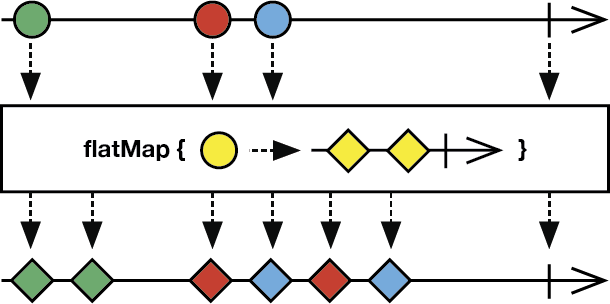
|
||||
|
||||
[More info in reactive.io website]( http://reactivex.io/documentation/operators/flatmap.html )
|
||||
*/
|
||||
example("flatMap") {
|
||||
let sequenceInt = sequenceOf(1, 2, 3)
|
||||
|
||||
let sequenceString = sequenceOf("A", "B", "C", "D", "E", "F", "--")
|
||||
|
||||
sequenceInt
|
||||
.flatMap { int in
|
||||
sequenceString
|
||||
}
|
||||
.subscribe {
|
||||
print($0)
|
||||
}
|
||||
}
|
||||
|
||||
|
||||
/*:
|
||||
### `scan`
|
||||
|
||||
Apply a function to each item emitted by an Observable, sequentially, and emit each successive value
|
||||
|
||||
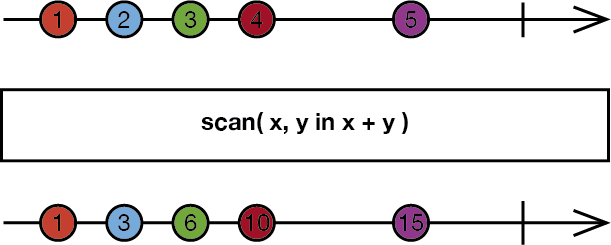
|
||||
|
||||
[More info in reactive.io website]( http://reactivex.io/documentation/operators/scan.html )
|
||||
*/
|
||||
example("scan") {
|
||||
let sequenceToSum = sequenceOf(0, 1, 2, 3, 4, 5)
|
||||
|
||||
sequenceToSum
|
||||
.scan(0) { acum, elem in
|
||||
acum + elem
|
||||
}
|
||||
.subscribe {
|
||||
print($0)
|
||||
}
|
||||
}
|
||||
|
||||
|
||||
//: [Index](Index) - [Next >>](@next)
|
||||
|
|
@ -1,78 +0,0 @@
|
|||
/*:
|
||||
> # IMPORTANT: To use **Rx.playground**:
|
||||
1. Open **Rx.xcworkspace**.
|
||||
1. Build the **RxSwift-OSX** scheme (**Product** → **Build**).
|
||||
1. Open **Rx** playground in the **Project navigator**.
|
||||
1. Show the Debug Area (**View** → **Debug Area** → **Show Debug Area**).
|
||||
----
|
||||
[Previous](@previous) - [Table of Contents](Table_of_Contents)
|
||||
*/
|
||||
import RxSwift
|
||||
/*:
|
||||
# Transforming Operators
|
||||
Operators that transform Next event elements emitted by an `Observable` sequence.
|
||||
## `map`
|
||||
Applies a transforming closure to elements emitted by an `Observable` sequence, and returns a new `Observable` sequence of the transformed elements. [More info](http://reactivex.io/documentation/operators/map.html)
|
||||

|
||||
*/
|
||||
example("map") {
|
||||
let disposeBag = DisposeBag()
|
||||
Observable.of(1, 2, 3)
|
||||
.map { $0 * $0 }
|
||||
.subscribe(onNext: { print($0) })
|
||||
.addDisposableTo(disposeBag)
|
||||
}
|
||||
/*:
|
||||
----
|
||||
## `flatMap` and `flatMapLatest`
|
||||
Transforms the elements emitted by an `Observable` sequence into `Observable` sequences, and merges the emissions from both `Observable` sequences into a single `Observable` sequence. This is also useful when, for example, when you have an `Observable` sequence that itself emits `Observable` sequences, and you want to be able to react to new emissions from either `Observable` sequence. The difference between `flatMap` and `flatMapLatest` is, `flatMapLatest` will only emit elements from the most recent inner `Observable` sequence. [More info](http://reactivex.io/documentation/operators/flatmap.html)
|
||||

|
||||
*/
|
||||
example("flatMap and flatMapLatest") {
|
||||
let disposeBag = DisposeBag()
|
||||
|
||||
struct Player {
|
||||
var score: Variable<Int>
|
||||
}
|
||||
|
||||
let 👦🏻 = Player(score: Variable(80))
|
||||
let 👧🏼 = Player(score: Variable(90))
|
||||
|
||||
let player = Variable(👦🏻)
|
||||
|
||||
player.asObservable()
|
||||
.flatMap { $0.score.asObservable() } // Change flatMap to flatMapLatest and observe change in printed output
|
||||
.subscribe(onNext: { print($0) })
|
||||
.addDisposableTo(disposeBag)
|
||||
|
||||
👦🏻.score.value = 85
|
||||
|
||||
player.value = 👧🏼
|
||||
|
||||
👦🏻.score.value = 95 // Will be printed when using flatMap, but will not be printed when using flatMapLatest
|
||||
|
||||
👧🏼.score.value = 100
|
||||
}
|
||||
/*:
|
||||
> In this example, using `flatMap` may have unintended consequences. After assigning 👧🏼 to `player.value`, `👧🏼.score` will begin to emit elements, but the previous inner `Observable` sequence (`👦🏻.score`) will also still emit elements. By changing `flatMap` to `flatMapLatest`, only the most recent inner `Observable` sequence (`👧🏼.score`) will emit elements, i.e., setting `👦🏻.score.value` to `95` has no effect.
|
||||
#
|
||||
> `flatMapLatest` is actually a combination of the `map` and `switchLatest` operators.
|
||||
*/
|
||||
/*:
|
||||
----
|
||||
## `scan`
|
||||
Begins with an initial seed value, and then applies an accumulator closure to each element emitted by an `Observable` sequence, and returns each intermediate result as a single-element `Observable` sequence. [More info](http://reactivex.io/documentation/operators/scan.html)
|
||||

|
||||
*/
|
||||
example("scan") {
|
||||
let disposeBag = DisposeBag()
|
||||
|
||||
Observable.of(10, 100, 1000)
|
||||
.scan(1) { aggregateValue, newValue in
|
||||
aggregateValue + newValue
|
||||
}
|
||||
.subscribe(onNext: { print($0) })
|
||||
.addDisposableTo(disposeBag)
|
||||
}
|
||||
|
||||
//: [Next](@next) - [Table of Contents](Table_of_Contents)
|
||||
|
|
@ -1,110 +0,0 @@
|
|||
/*:
|
||||
> # IMPORTANT: To use **Rx.playground**:
|
||||
1. Open **Rx.xcworkspace**.
|
||||
1. Build the **RxSwift-OSX** scheme (**Product** → **Build**).
|
||||
1. Open **Rx** playground in the **Project navigator**.
|
||||
1. Show the Debug Area (**View** → **Debug Area** → **Show Debug Area**).
|
||||
----
|
||||
[Previous](@previous) - [Table of Contents](Table_of_Contents)
|
||||
*/
|
||||
import RxSwift
|
||||
/*:
|
||||
# Working with Subjects
|
||||
A Subject is a sort of bridge or proxy that is available in some implementations of Rx that acts as both an observer and `Observable`. Because it is an observer, it can subscribe to one or more `Observable`s, and because it is an `Observable`, it can pass through the items it observes by reemitting them, and it can also emit new items. [More info](http://reactivex.io/documentation/subject.html)
|
||||
*/
|
||||
extension ObservableType {
|
||||
|
||||
/**
|
||||
Add observer with `id` and print each emitted event.
|
||||
- parameter id: an identifier for the subscription.
|
||||
*/
|
||||
func addObserver(_ id: String) -> Disposable {
|
||||
return subscribe { print("Subscription:", id, "Event:", $0) }
|
||||
}
|
||||
|
||||
}
|
||||
|
||||
func writeSequenceToConsole<O: ObservableType>(name: String, sequence: O) -> Disposable {
|
||||
return sequence.subscribe { event in
|
||||
print("Subscription: \(name), event: \(event)")
|
||||
}
|
||||
}
|
||||
/*:
|
||||
## PublishSubject
|
||||
Broadcasts new events to all observers as of their time of the subscription.
|
||||

|
||||
*/
|
||||
example("PublishSubject") {
|
||||
let disposeBag = DisposeBag()
|
||||
let subject = PublishSubject<String>()
|
||||
|
||||
subject.addObserver("1").addDisposableTo(disposeBag)
|
||||
subject.onNext("🐶")
|
||||
subject.onNext("🐱")
|
||||
|
||||
subject.addObserver("2").addDisposableTo(disposeBag)
|
||||
subject.onNext("🅰️")
|
||||
subject.onNext("🅱️")
|
||||
}
|
||||
/*:
|
||||
> This example also introduces using the `onNext(_:)` convenience method, equivalent to `on(.next(_:)`, which causes a new Next event to be emitted to subscribers with the provided `element`. There are also `onError(_:)` and `onCompleted()` convenience methods, equivalent to `on(.error(_:))` and `on(.completed)`, respectively.
|
||||
----
|
||||
## ReplaySubject
|
||||
Broadcasts new events to all subscribers, and the specified `bufferSize` number of previous events to new subscribers.
|
||||

|
||||
*/
|
||||
example("ReplaySubject") {
|
||||
let disposeBag = DisposeBag()
|
||||
let subject = ReplaySubject<String>.create(bufferSize: 1)
|
||||
|
||||
subject.addObserver("1").addDisposableTo(disposeBag)
|
||||
subject.onNext("🐶")
|
||||
subject.onNext("🐱")
|
||||
|
||||
subject.addObserver("2").addDisposableTo(disposeBag)
|
||||
subject.onNext("🅰️")
|
||||
subject.onNext("🅱️")
|
||||
}
|
||||
/*:
|
||||
----
|
||||
## BehaviorSubject
|
||||
Broadcasts new events to all subscribers, and the most recent (or initial) value to new subscribers.
|
||||

|
||||
*/
|
||||
example("BehaviorSubject") {
|
||||
let disposeBag = DisposeBag()
|
||||
let subject = BehaviorSubject(value: "🔴")
|
||||
|
||||
subject.addObserver("1").addDisposableTo(disposeBag)
|
||||
subject.onNext("🐶")
|
||||
subject.onNext("🐱")
|
||||
|
||||
subject.addObserver("2").addDisposableTo(disposeBag)
|
||||
subject.onNext("🅰️")
|
||||
subject.onNext("🅱️")
|
||||
|
||||
subject.addObserver("3").addDisposableTo(disposeBag)
|
||||
subject.onNext("🍐")
|
||||
subject.onNext("🍊")
|
||||
}
|
||||
/*:
|
||||
> Notice what's missing in these previous examples? A Completed event. `PublishSubject`, `ReplaySubject`, and `BehaviorSubject` do not automatically emit Completed events when they are about to be disposed of.
|
||||
----
|
||||
## Variable
|
||||
Wraps a `BehaviorSubject`, so it will emit the most recent (or initial) value to new subscribers. And `Variable` also maintains current value state. `Variable` will never emit an Error event. However, it will automatically emit a Completed event and terminate on `deinit`.
|
||||
*/
|
||||
example("Variable") {
|
||||
let disposeBag = DisposeBag()
|
||||
let variable = Variable("🔴")
|
||||
|
||||
variable.asObservable().addObserver("1").addDisposableTo(disposeBag)
|
||||
variable.value = "🐶"
|
||||
variable.value = "🐱"
|
||||
|
||||
variable.asObservable().addObserver("2").addDisposableTo(disposeBag)
|
||||
variable.value = "🅰️"
|
||||
variable.value = "🅱️"
|
||||
}
|
||||
//: > Call `asObservable()` on a `Variable` instance in order to access its underlying `BehaviorSubject` sequence. `Variable`s do not implement the `on` operator (or, e.g., `onNext(_:)`), but instead expose a `value` property that can be used to get the current value, and also set a new value. Setting a new value will also add that value onto its underlying `BehaviorSubject` sequence.
|
||||
|
||||
//: [Next](@next) - [Table of Contents](Table_of_Contents)
|
||||
|
|
@ -1,47 +1,16 @@
|
|||
|
||||
import Foundation
|
||||
|
||||
/**
|
||||
Encloses each code example in its own scope. Prints a `description` header and then executes the `action` closure.
|
||||
- parameter description: example description
|
||||
- parameter action: `Void` closure
|
||||
*/
|
||||
public func example(_ description: String, action: (Void) -> Void) {
|
||||
printExampleHeader(description)
|
||||
public func example(description: String, action: () -> ()) {
|
||||
print("\n--- \(description) example ---")
|
||||
action()
|
||||
}
|
||||
|
||||
public func printExampleHeader(_ description: String) {
|
||||
print("\n--- \(description) example ---")
|
||||
}
|
||||
|
||||
public enum TestError: Swift.Error {
|
||||
case test
|
||||
}
|
||||
|
||||
|
||||
/**
|
||||
Executes `closure` on main thread after `delay` seconds.
|
||||
- parameter delay: time in seconds to wait before executing `closure`
|
||||
- parameter closure: `Void` closure
|
||||
*/
|
||||
public func delay(_ delay: Double, closure: @escaping (Void) -> Void) {
|
||||
|
||||
let delayTime = DispatchTime.now() + DispatchTimeInterval.seconds(Int(delay))
|
||||
DispatchQueue.main.asyncAfter(deadline: delayTime) {
|
||||
closure()
|
||||
}
|
||||
}
|
||||
|
||||
#if NOT_IN_PLAYGROUND
|
||||
|
||||
public func playgroundShouldContinueIndefinitely() { }
|
||||
|
||||
#else
|
||||
|
||||
import PlaygroundSupport
|
||||
|
||||
public func playgroundShouldContinueIndefinitely() {
|
||||
PlaygroundPage.current.needsIndefiniteExecution = true
|
||||
}
|
||||
|
||||
#endif
|
||||
public func delay(delay:Double, closure:()->()) {
|
||||
dispatch_after(
|
||||
dispatch_time(
|
||||
DISPATCH_TIME_NOW,
|
||||
Int64(delay * Double(NSEC_PER_SEC))
|
||||
),
|
||||
dispatch_get_main_queue(), closure)
|
||||
}
|
||||
|
|
@ -1,12 +0,0 @@
|
|||
[
|
||||
{
|
||||
"file": "/Users/mo/Documents/OpenSource/RxSwift/Rx.playground/Sources/SupportCode.swift",
|
||||
"offset": 276,
|
||||
"remove": 9,
|
||||
},
|
||||
{
|
||||
"file": "/Users/mo/Documents/OpenSource/RxSwift/Rx.playground/Sources/SupportCode.swift",
|
||||
"offset": 733,
|
||||
"text": "@escaping ",
|
||||
}
|
||||
]
|
||||
|
|
@ -1,17 +1,16 @@
|
|||
<?xml version="1.0" encoding="UTF-8" standalone="yes"?>
|
||||
<playground version='6.0' target-platform='osx' display-mode='raw' last-migration='0800'>
|
||||
<playground version='6.0' target-platform='osx' requires-full-environment='true' display-mode='rendered'>
|
||||
<pages>
|
||||
<page name='Table_of_Contents'/>
|
||||
<page name='Index'/>
|
||||
<page name='Introduction'/>
|
||||
<page name='Creating_and_Subscribing_to_Observables'/>
|
||||
<page name='Working_with_Subjects'/>
|
||||
<page name='Combining_Operators'/>
|
||||
<page name='Transforming_Operators'/>
|
||||
<page name='Filtering_and_Conditional_Operators'/>
|
||||
<page name='Mathematical_and_Aggregate_Operators'/>
|
||||
<page name='Connectable_Operators'/>
|
||||
<page name='Subjects'/>
|
||||
<page name='Transforming_Observables'/>
|
||||
<page name='Filtering_Observables'/>
|
||||
<page name='Combining_Observables'/>
|
||||
<page name='Error_Handling_Operators'/>
|
||||
<page name='Debugging_Operators'/>
|
||||
<page name='Enable_RxSwift.resourceCount'/>
|
||||
<page name='Observable_Utility_Operators'/>
|
||||
<page name='Conditional_and_Boolean_Operators'/>
|
||||
<page name='Mathematical_and_Aggregate_Operators'/>
|
||||
<page name='Connectable_Observable_Operators'/>
|
||||
</pages>
|
||||
</playground>
|
||||
File diff suppressed because it is too large
Load Diff
|
|
@ -1,6 +1,6 @@
|
|||
<?xml version="1.0" encoding="UTF-8"?>
|
||||
<Scheme
|
||||
LastUpgradeVersion = "0800"
|
||||
LastUpgradeVersion = "0710"
|
||||
version = "1.3">
|
||||
<BuildAction
|
||||
parallelizeBuildables = "YES"
|
||||
|
|
|
|||
|
|
@ -1,6 +1,6 @@
|
|||
<?xml version="1.0" encoding="UTF-8"?>
|
||||
<Scheme
|
||||
LastUpgradeVersion = "0800"
|
||||
LastUpgradeVersion = "0710"
|
||||
version = "1.3">
|
||||
<BuildAction
|
||||
parallelizeBuildables = "YES"
|
||||
|
|
|
|||
|
|
@ -1,6 +1,6 @@
|
|||
<?xml version="1.0" encoding="UTF-8"?>
|
||||
<Scheme
|
||||
LastUpgradeVersion = "0800"
|
||||
LastUpgradeVersion = "0710"
|
||||
version = "1.3">
|
||||
<BuildAction
|
||||
parallelizeBuildables = "YES"
|
||||
|
|
|
|||
|
|
@ -1,6 +1,6 @@
|
|||
<?xml version="1.0" encoding="UTF-8"?>
|
||||
<Scheme
|
||||
LastUpgradeVersion = "0800"
|
||||
LastUpgradeVersion = "0710"
|
||||
version = "1.3">
|
||||
<BuildAction
|
||||
parallelizeBuildables = "YES"
|
||||
|
|
|
|||
|
|
@ -1,6 +1,6 @@
|
|||
<?xml version="1.0" encoding="UTF-8"?>
|
||||
<Scheme
|
||||
LastUpgradeVersion = "0800"
|
||||
LastUpgradeVersion = "0710"
|
||||
version = "1.3">
|
||||
<BuildAction
|
||||
parallelizeBuildables = "YES"
|
||||
|
|
|
|||
|
|
@ -1,80 +0,0 @@
|
|||
<?xml version="1.0" encoding="UTF-8"?>
|
||||
<Scheme
|
||||
LastUpgradeVersion = "0800"
|
||||
version = "1.3">
|
||||
<BuildAction
|
||||
parallelizeBuildables = "YES"
|
||||
buildImplicitDependencies = "YES">
|
||||
<BuildActionEntries>
|
||||
<BuildActionEntry
|
||||
buildForTesting = "YES"
|
||||
buildForRunning = "YES"
|
||||
buildForProfiling = "YES"
|
||||
buildForArchiving = "YES"
|
||||
buildForAnalyzing = "YES">
|
||||
<BuildableReference
|
||||
BuildableIdentifier = "primary"
|
||||
BlueprintIdentifier = "D2138C741BB9BE9800339B5C"
|
||||
BuildableName = "RxCocoa.framework"
|
||||
BlueprintName = "RxCocoa-tvOS"
|
||||
ReferencedContainer = "container:Rx.xcodeproj">
|
||||
</BuildableReference>
|
||||
</BuildActionEntry>
|
||||
</BuildActionEntries>
|
||||
</BuildAction>
|
||||
<TestAction
|
||||
buildConfiguration = "Debug"
|
||||
selectedDebuggerIdentifier = "Xcode.DebuggerFoundation.Debugger.LLDB"
|
||||
selectedLauncherIdentifier = "Xcode.DebuggerFoundation.Launcher.LLDB"
|
||||
shouldUseLaunchSchemeArgsEnv = "YES">
|
||||
<Testables>
|
||||
</Testables>
|
||||
<AdditionalOptions>
|
||||
</AdditionalOptions>
|
||||
</TestAction>
|
||||
<LaunchAction
|
||||
buildConfiguration = "Debug"
|
||||
selectedDebuggerIdentifier = "Xcode.DebuggerFoundation.Debugger.LLDB"
|
||||
selectedLauncherIdentifier = "Xcode.DebuggerFoundation.Launcher.LLDB"
|
||||
launchStyle = "0"
|
||||
useCustomWorkingDirectory = "NO"
|
||||
ignoresPersistentStateOnLaunch = "NO"
|
||||
debugDocumentVersioning = "YES"
|
||||
debugServiceExtension = "internal"
|
||||
allowLocationSimulation = "YES">
|
||||
<MacroExpansion>
|
||||
<BuildableReference
|
||||
BuildableIdentifier = "primary"
|
||||
BlueprintIdentifier = "D2138C741BB9BE9800339B5C"
|
||||
BuildableName = "RxCocoa.framework"
|
||||
BlueprintName = "RxCocoa-tvOS"
|
||||
ReferencedContainer = "container:Rx.xcodeproj">
|
||||
</BuildableReference>
|
||||
</MacroExpansion>
|
||||
<AdditionalOptions>
|
||||
</AdditionalOptions>
|
||||
</LaunchAction>
|
||||
<ProfileAction
|
||||
buildConfiguration = "Release"
|
||||
shouldUseLaunchSchemeArgsEnv = "YES"
|
||||
savedToolIdentifier = ""
|
||||
useCustomWorkingDirectory = "NO"
|
||||
debugDocumentVersioning = "YES">
|
||||
<MacroExpansion>
|
||||
<BuildableReference
|
||||
BuildableIdentifier = "primary"
|
||||
BlueprintIdentifier = "D2138C741BB9BE9800339B5C"
|
||||
BuildableName = "RxCocoa.framework"
|
||||
BlueprintName = "RxCocoa-tvOS"
|
||||
ReferencedContainer = "container:Rx.xcodeproj">
|
||||
</BuildableReference>
|
||||
</MacroExpansion>
|
||||
</ProfileAction>
|
||||
<AnalyzeAction
|
||||
buildConfiguration = "Debug">
|
||||
</AnalyzeAction>
|
||||
<ArchiveAction
|
||||
buildConfiguration = "Release"
|
||||
revealArchiveInOrganizer = "YES">
|
||||
</ArchiveAction>
|
||||
</Scheme>
|
||||
|
|
@ -1,6 +1,6 @@
|
|||
<?xml version="1.0" encoding="UTF-8"?>
|
||||
<Scheme
|
||||
LastUpgradeVersion = "0800"
|
||||
LastUpgradeVersion = "0710"
|
||||
version = "1.3">
|
||||
<BuildAction
|
||||
parallelizeBuildables = "YES"
|
||||
|
|
|
|||
|
|
@ -1,6 +1,6 @@
|
|||
<?xml version="1.0" encoding="UTF-8"?>
|
||||
<Scheme
|
||||
LastUpgradeVersion = "0800"
|
||||
LastUpgradeVersion = "0710"
|
||||
version = "1.3">
|
||||
<BuildAction
|
||||
parallelizeBuildables = "YES"
|
||||
|
|
@ -28,26 +28,7 @@
|
|||
selectedLauncherIdentifier = "Xcode.DebuggerFoundation.Launcher.LLDB"
|
||||
shouldUseLaunchSchemeArgsEnv = "YES">
|
||||
<Testables>
|
||||
<TestableReference
|
||||
skipped = "NO">
|
||||
<BuildableReference
|
||||
BuildableIdentifier = "primary"
|
||||
BlueprintIdentifier = "C83509931C38742C0027C24C"
|
||||
BuildableName = "AllTests-OSX.xctest"
|
||||
BlueprintName = "AllTests-OSX"
|
||||
ReferencedContainer = "container:Rx.xcodeproj">
|
||||
</BuildableReference>
|
||||
</TestableReference>
|
||||
</Testables>
|
||||
<MacroExpansion>
|
||||
<BuildableReference
|
||||
BuildableIdentifier = "primary"
|
||||
BlueprintIdentifier = "C88BB81A1B07E5ED0064D411"
|
||||
BuildableName = "RxSwift.framework"
|
||||
BlueprintName = "RxSwift-OSX"
|
||||
ReferencedContainer = "container:Rx.xcodeproj">
|
||||
</BuildableReference>
|
||||
</MacroExpansion>
|
||||
<AdditionalOptions>
|
||||
</AdditionalOptions>
|
||||
</TestAction>
|
||||
|
|
|
|||
|
|
@ -1,6 +1,6 @@
|
|||
<?xml version="1.0" encoding="UTF-8"?>
|
||||
<Scheme
|
||||
LastUpgradeVersion = "0800"
|
||||
LastUpgradeVersion = "0710"
|
||||
version = "1.3">
|
||||
<BuildAction
|
||||
parallelizeBuildables = "YES"
|
||||
|
|
@ -28,26 +28,7 @@
|
|||
selectedLauncherIdentifier = "Xcode.DebuggerFoundation.Launcher.LLDB"
|
||||
shouldUseLaunchSchemeArgsEnv = "YES">
|
||||
<Testables>
|
||||
<TestableReference
|
||||
skipped = "NO">
|
||||
<BuildableReference
|
||||
BuildableIdentifier = "primary"
|
||||
BlueprintIdentifier = "C83508C21C386F6F0027C24C"
|
||||
BuildableName = "AllTests-iOS.xctest"
|
||||
BlueprintName = "AllTests-iOS"
|
||||
ReferencedContainer = "container:Rx.xcodeproj">
|
||||
</BuildableReference>
|
||||
</TestableReference>
|
||||
</Testables>
|
||||
<MacroExpansion>
|
||||
<BuildableReference
|
||||
BuildableIdentifier = "primary"
|
||||
BlueprintIdentifier = "C8A56AD61AD7424700B4673B"
|
||||
BuildableName = "RxSwift.framework"
|
||||
BlueprintName = "RxSwift-iOS"
|
||||
ReferencedContainer = "container:Rx.xcodeproj">
|
||||
</BuildableReference>
|
||||
</MacroExpansion>
|
||||
<AdditionalOptions>
|
||||
</AdditionalOptions>
|
||||
</TestAction>
|
||||
|
|
|
|||
|
|
@ -1,6 +1,6 @@
|
|||
<?xml version="1.0" encoding="UTF-8"?>
|
||||
<Scheme
|
||||
LastUpgradeVersion = "0800"
|
||||
LastUpgradeVersion = "0710"
|
||||
version = "1.3">
|
||||
<BuildAction
|
||||
parallelizeBuildables = "YES"
|
||||
|
|
|
|||
|
|
@ -1,80 +0,0 @@
|
|||
<?xml version="1.0" encoding="UTF-8"?>
|
||||
<Scheme
|
||||
LastUpgradeVersion = "0800"
|
||||
version = "1.3">
|
||||
<BuildAction
|
||||
parallelizeBuildables = "YES"
|
||||
buildImplicitDependencies = "YES">
|
||||
<BuildActionEntries>
|
||||
<BuildActionEntry
|
||||
buildForTesting = "YES"
|
||||
buildForRunning = "YES"
|
||||
buildForProfiling = "YES"
|
||||
buildForArchiving = "YES"
|
||||
buildForAnalyzing = "YES">
|
||||
<BuildableReference
|
||||
BuildableIdentifier = "primary"
|
||||
BlueprintIdentifier = "C88FA50E1C25C4B500CCFEA4"
|
||||
BuildableName = "RxTests.framework"
|
||||
BlueprintName = "RxTests-OSX"
|
||||
ReferencedContainer = "container:Rx.xcodeproj">
|
||||
</BuildableReference>
|
||||
</BuildActionEntry>
|
||||
</BuildActionEntries>
|
||||
</BuildAction>
|
||||
<TestAction
|
||||
buildConfiguration = "Debug"
|
||||
selectedDebuggerIdentifier = "Xcode.DebuggerFoundation.Debugger.LLDB"
|
||||
selectedLauncherIdentifier = "Xcode.DebuggerFoundation.Launcher.LLDB"
|
||||
shouldUseLaunchSchemeArgsEnv = "YES">
|
||||
<Testables>
|
||||
</Testables>
|
||||
<AdditionalOptions>
|
||||
</AdditionalOptions>
|
||||
</TestAction>
|
||||
<LaunchAction
|
||||
buildConfiguration = "Debug"
|
||||
selectedDebuggerIdentifier = "Xcode.DebuggerFoundation.Debugger.LLDB"
|
||||
selectedLauncherIdentifier = "Xcode.DebuggerFoundation.Launcher.LLDB"
|
||||
launchStyle = "0"
|
||||
useCustomWorkingDirectory = "NO"
|
||||
ignoresPersistentStateOnLaunch = "NO"
|
||||
debugDocumentVersioning = "YES"
|
||||
debugServiceExtension = "internal"
|
||||
allowLocationSimulation = "YES">
|
||||
<MacroExpansion>
|
||||
<BuildableReference
|
||||
BuildableIdentifier = "primary"
|
||||
BlueprintIdentifier = "C88FA50E1C25C4B500CCFEA4"
|
||||
BuildableName = "RxTests.framework"
|
||||
BlueprintName = "RxTests-OSX"
|
||||
ReferencedContainer = "container:Rx.xcodeproj">
|
||||
</BuildableReference>
|
||||
</MacroExpansion>
|
||||
<AdditionalOptions>
|
||||
</AdditionalOptions>
|
||||
</LaunchAction>
|
||||
<ProfileAction
|
||||
buildConfiguration = "Release"
|
||||
shouldUseLaunchSchemeArgsEnv = "YES"
|
||||
savedToolIdentifier = ""
|
||||
useCustomWorkingDirectory = "NO"
|
||||
debugDocumentVersioning = "YES">
|
||||
<MacroExpansion>
|
||||
<BuildableReference
|
||||
BuildableIdentifier = "primary"
|
||||
BlueprintIdentifier = "C88FA50E1C25C4B500CCFEA4"
|
||||
BuildableName = "RxTests.framework"
|
||||
BlueprintName = "RxTests-OSX"
|
||||
ReferencedContainer = "container:Rx.xcodeproj">
|
||||
</BuildableReference>
|
||||
</MacroExpansion>
|
||||
</ProfileAction>
|
||||
<AnalyzeAction
|
||||
buildConfiguration = "Debug">
|
||||
</AnalyzeAction>
|
||||
<ArchiveAction
|
||||
buildConfiguration = "Release"
|
||||
revealArchiveInOrganizer = "YES">
|
||||
</ArchiveAction>
|
||||
</Scheme>
|
||||
|
|
@ -1,80 +0,0 @@
|
|||
<?xml version="1.0" encoding="UTF-8"?>
|
||||
<Scheme
|
||||
LastUpgradeVersion = "0800"
|
||||
version = "1.3">
|
||||
<BuildAction
|
||||
parallelizeBuildables = "YES"
|
||||
buildImplicitDependencies = "YES">
|
||||
<BuildActionEntries>
|
||||
<BuildActionEntry
|
||||
buildForTesting = "YES"
|
||||
buildForRunning = "YES"
|
||||
buildForProfiling = "YES"
|
||||
buildForArchiving = "YES"
|
||||
buildForAnalyzing = "YES">
|
||||
<BuildableReference
|
||||
BuildableIdentifier = "primary"
|
||||
BlueprintIdentifier = "C88FA51F1C25C4C000CCFEA4"
|
||||
BuildableName = "RxTests.framework"
|
||||
BlueprintName = "RxTests-tvOS"
|
||||
ReferencedContainer = "container:Rx.xcodeproj">
|
||||
</BuildableReference>
|
||||
</BuildActionEntry>
|
||||
</BuildActionEntries>
|
||||
</BuildAction>
|
||||
<TestAction
|
||||
buildConfiguration = "Debug"
|
||||
selectedDebuggerIdentifier = "Xcode.DebuggerFoundation.Debugger.LLDB"
|
||||
selectedLauncherIdentifier = "Xcode.DebuggerFoundation.Launcher.LLDB"
|
||||
shouldUseLaunchSchemeArgsEnv = "YES">
|
||||
<Testables>
|
||||
</Testables>
|
||||
<AdditionalOptions>
|
||||
</AdditionalOptions>
|
||||
</TestAction>
|
||||
<LaunchAction
|
||||
buildConfiguration = "Debug"
|
||||
selectedDebuggerIdentifier = "Xcode.DebuggerFoundation.Debugger.LLDB"
|
||||
selectedLauncherIdentifier = "Xcode.DebuggerFoundation.Launcher.LLDB"
|
||||
launchStyle = "0"
|
||||
useCustomWorkingDirectory = "NO"
|
||||
ignoresPersistentStateOnLaunch = "NO"
|
||||
debugDocumentVersioning = "YES"
|
||||
debugServiceExtension = "internal"
|
||||
allowLocationSimulation = "YES">
|
||||
<MacroExpansion>
|
||||
<BuildableReference
|
||||
BuildableIdentifier = "primary"
|
||||
BlueprintIdentifier = "C88FA51F1C25C4C000CCFEA4"
|
||||
BuildableName = "RxTests.framework"
|
||||
BlueprintName = "RxTests-tvOS"
|
||||
ReferencedContainer = "container:Rx.xcodeproj">
|
||||
</BuildableReference>
|
||||
</MacroExpansion>
|
||||
<AdditionalOptions>
|
||||
</AdditionalOptions>
|
||||
</LaunchAction>
|
||||
<ProfileAction
|
||||
buildConfiguration = "Release"
|
||||
shouldUseLaunchSchemeArgsEnv = "YES"
|
||||
savedToolIdentifier = ""
|
||||
useCustomWorkingDirectory = "NO"
|
||||
debugDocumentVersioning = "YES">
|
||||
<MacroExpansion>
|
||||
<BuildableReference
|
||||
BuildableIdentifier = "primary"
|
||||
BlueprintIdentifier = "C88FA51F1C25C4C000CCFEA4"
|
||||
BuildableName = "RxTests.framework"
|
||||
BlueprintName = "RxTests-tvOS"
|
||||
ReferencedContainer = "container:Rx.xcodeproj">
|
||||
</BuildableReference>
|
||||
</MacroExpansion>
|
||||
</ProfileAction>
|
||||
<AnalyzeAction
|
||||
buildConfiguration = "Debug">
|
||||
</AnalyzeAction>
|
||||
<ArchiveAction
|
||||
buildConfiguration = "Release"
|
||||
revealArchiveInOrganizer = "YES">
|
||||
</ArchiveAction>
|
||||
</Scheme>
|
||||
|
|
@ -1,111 +1,24 @@
|
|||
<?xml version="1.0" encoding="UTF-8"?>
|
||||
<Workspace
|
||||
version = "1.0">
|
||||
<FileRef
|
||||
location = "group:Rx.playground">
|
||||
</FileRef>
|
||||
<FileRef
|
||||
location = "group:Package.swift">
|
||||
</FileRef>
|
||||
<FileRef
|
||||
location = "group:LICENSE.md">
|
||||
</FileRef>
|
||||
<FileRef
|
||||
location = "group:README.md">
|
||||
</FileRef>
|
||||
<FileRef
|
||||
location = "group:ISSUE_TEMPLATE.md">
|
||||
</FileRef>
|
||||
<FileRef
|
||||
location = "group:CHANGELOG.md">
|
||||
</FileRef>
|
||||
<Group
|
||||
location = "container:"
|
||||
name = "Podspecs">
|
||||
<FileRef
|
||||
location = "group:RxBlocking.podspec">
|
||||
</FileRef>
|
||||
<FileRef
|
||||
location = "group:RxCocoa.podspec">
|
||||
</FileRef>
|
||||
<FileRef
|
||||
location = "group:RxSwift.podspec">
|
||||
</FileRef>
|
||||
<FileRef
|
||||
location = "group:RxTests.podspec">
|
||||
</FileRef>
|
||||
</Group>
|
||||
<Group
|
||||
location = "group:scripts"
|
||||
name = "scripts">
|
||||
<FileRef
|
||||
location = "group:all-tests.sh">
|
||||
</FileRef>
|
||||
<FileRef
|
||||
location = "group:common.sh">
|
||||
</FileRef>
|
||||
<FileRef
|
||||
location = "group:/Users/kzaher/Projects/RxSwift/scripts/package-spm.swift">
|
||||
</FileRef>
|
||||
<FileRef
|
||||
location = "group:test-linux.sh">
|
||||
</FileRef>
|
||||
<FileRef
|
||||
location = "group:validate-headers.swift">
|
||||
</FileRef>
|
||||
<FileRef
|
||||
location = "group:validate-playgrounds.sh">
|
||||
</FileRef>
|
||||
<FileRef
|
||||
location = "group:validate-podspec.sh">
|
||||
</FileRef>
|
||||
<FileRef
|
||||
location = "group:validate-markdown.sh">
|
||||
</FileRef>
|
||||
</Group>
|
||||
<Group
|
||||
location = "group:Documentation"
|
||||
name = "Documentation">
|
||||
<FileRef
|
||||
location = "group:API.md">
|
||||
</FileRef>
|
||||
<FileRef
|
||||
location = "group:DesignRationale.md">
|
||||
</FileRef>
|
||||
<FileRef
|
||||
location = "group:Examples.md">
|
||||
</FileRef>
|
||||
<FileRef
|
||||
location = "group:GettingStarted.md">
|
||||
</FileRef>
|
||||
<FileRef
|
||||
location = "group:HotAndColdObservables.md">
|
||||
</FileRef>
|
||||
<FileRef
|
||||
location = "group:Linux.md">
|
||||
</FileRef>
|
||||
<FileRef
|
||||
location = "group:MathBehindRx.md">
|
||||
</FileRef>
|
||||
<FileRef
|
||||
location = "group:Migration.md">
|
||||
</FileRef>
|
||||
<FileRef
|
||||
location = "group:Schedulers.md">
|
||||
</FileRef>
|
||||
<FileRef
|
||||
location = "group:Subjects.md">
|
||||
</FileRef>
|
||||
<FileRef
|
||||
location = "group:Units.md">
|
||||
</FileRef>
|
||||
<FileRef
|
||||
location = "group:Warnings.md">
|
||||
</FileRef>
|
||||
</Group>
|
||||
<FileRef
|
||||
location = "group:Rx.playground">
|
||||
</FileRef>
|
||||
<FileRef
|
||||
location = "group:Rx.xcodeproj">
|
||||
</FileRef>
|
||||
<FileRef
|
||||
location = "group:RxTests/RxTests.xcodeproj">
|
||||
</FileRef>
|
||||
<FileRef
|
||||
location = "group:Preprocessor/Preprocessor.xcodeproj">
|
||||
</FileRef>
|
||||
|
|
|
|||
|
|
@ -1,14 +1,9 @@
|
|||
Pod::Spec.new do |s|
|
||||
s.name = "RxBlocking"
|
||||
s.version = "3.0.0.alpha.1"
|
||||
s.version = "2.0.0-beta.1"
|
||||
s.summary = "RxSwift Blocking operatos"
|
||||
s.description = <<-DESC
|
||||
Set of blocking operators for RxSwift. These operators are mostly intended for unit/integration tests
|
||||
with a couple of other special scenarios where they could be useful.
|
||||
|
||||
E.g.
|
||||
|
||||
Waiting for observable sequence to complete before exiting command line application.
|
||||
Set of blocking operators for unit testing
|
||||
DESC
|
||||
s.homepage = "https://github.com/ReactiveX/RxSwift"
|
||||
s.license = 'MIT'
|
||||
|
|
@ -18,11 +13,11 @@ Waiting for observable sequence to complete before exiting command line applicat
|
|||
s.requires_arc = true
|
||||
|
||||
s.ios.deployment_target = '8.0'
|
||||
s.osx.deployment_target = '10.10'
|
||||
s.osx.deployment_target = '10.9'
|
||||
s.watchos.deployment_target = '2.0'
|
||||
s.tvos.deployment_target = '9.0'
|
||||
|
||||
s.source_files = 'RxBlocking/**/*.swift'
|
||||
|
||||
s.dependency 'RxSwift', '~> 3.0.0.alpha.1'
|
||||
s.dependency 'RxSwift', '~> 2.0.0-beta'
|
||||
end
|
||||
|
|
|
|||
|
|
@ -13,44 +13,44 @@ import Foundation
|
|||
|
||||
extension BlockingObservable {
|
||||
/**
|
||||
Blocks current thread until sequence terminates.
|
||||
|
||||
If sequence terminates with error, terminating error will be thrown.
|
||||
|
||||
- returns: All elements of sequence.
|
||||
*/
|
||||
Blocks current thread until sequence terminates.
|
||||
|
||||
If sequence terminates with error, terminating error will be thrown.
|
||||
|
||||
- returns: All elements of sequence.
|
||||
*/
|
||||
public func toArray() throws -> [E] {
|
||||
let condition = NSCondition()
|
||||
|
||||
var elements: [E] = Array<E>()
|
||||
|
||||
var error: ErrorType?
|
||||
|
||||
var ended = false
|
||||
|
||||
var error: Swift.Error?
|
||||
|
||||
let lock = RunLoopLock()
|
||||
|
||||
let d = SingleAssignmentDisposable()
|
||||
|
||||
lock.dispatch {
|
||||
d.disposable = self.source.subscribe { e in
|
||||
if d.isDisposed {
|
||||
return
|
||||
}
|
||||
switch e {
|
||||
case .next(let element):
|
||||
elements.append(element)
|
||||
case .error(let e):
|
||||
error = e
|
||||
d.dispose()
|
||||
lock.stop()
|
||||
case .completed:
|
||||
d.dispose()
|
||||
lock.stop()
|
||||
}
|
||||
_ = self.source.subscribe { e in
|
||||
switch e {
|
||||
case .Next(let element):
|
||||
elements.append(element)
|
||||
case .Error(let e):
|
||||
error = e
|
||||
condition.lock()
|
||||
ended = true
|
||||
condition.signal()
|
||||
condition.unlock()
|
||||
case .Completed:
|
||||
condition.lock()
|
||||
ended = true
|
||||
condition.signal()
|
||||
condition.unlock()
|
||||
}
|
||||
}
|
||||
|
||||
lock.run()
|
||||
|
||||
d.dispose()
|
||||
|
||||
condition.lock()
|
||||
while !ended {
|
||||
condition.wait()
|
||||
}
|
||||
condition.unlock()
|
||||
|
||||
if let error = error {
|
||||
throw error
|
||||
}
|
||||
|
|
@ -61,96 +61,48 @@ extension BlockingObservable {
|
|||
|
||||
extension BlockingObservable {
|
||||
/**
|
||||
Blocks current thread until sequence produces first element.
|
||||
|
||||
If sequence terminates with error before producing first element, terminating error will be thrown.
|
||||
|
||||
- returns: First element of sequence. If sequence is empty `nil` is returned.
|
||||
*/
|
||||
Blocks current thread until sequence produces first element.
|
||||
|
||||
If sequence terminates with error before producing first element, terminating error will be thrown.
|
||||
|
||||
- returns: First element of sequence. If sequence is empty `nil` is returned.
|
||||
*/
|
||||
public func first() throws -> E? {
|
||||
let condition = NSCondition()
|
||||
|
||||
var element: E?
|
||||
|
||||
var error: Swift.Error?
|
||||
|
||||
|
||||
var error: ErrorType?
|
||||
|
||||
var ended = false
|
||||
|
||||
let d = SingleAssignmentDisposable()
|
||||
|
||||
let lock = RunLoopLock()
|
||||
|
||||
lock.dispatch {
|
||||
d.disposable = self.source.subscribe { e in
|
||||
if d.isDisposed {
|
||||
return
|
||||
}
|
||||
|
||||
switch e {
|
||||
case .next(let e):
|
||||
if element == nil {
|
||||
element = e
|
||||
}
|
||||
break
|
||||
case .error(let e):
|
||||
error = e
|
||||
default:
|
||||
break
|
||||
}
|
||||
|
||||
d.dispose()
|
||||
lock.stop()
|
||||
}
|
||||
}
|
||||
|
||||
lock.run()
|
||||
|
||||
d.dispose()
|
||||
|
||||
if let error = error {
|
||||
throw error
|
||||
}
|
||||
|
||||
return element
|
||||
}
|
||||
}
|
||||
|
||||
extension BlockingObservable {
|
||||
/**
|
||||
Blocks current thread until sequence terminates.
|
||||
|
||||
If sequence terminates with error, terminating error will be thrown.
|
||||
|
||||
- returns: Last element in the sequence. If sequence is empty `nil` is returned.
|
||||
*/
|
||||
public func last() throws -> E? {
|
||||
var element: E?
|
||||
|
||||
var error: Swift.Error?
|
||||
|
||||
let d = SingleAssignmentDisposable()
|
||||
|
||||
let lock = RunLoopLock()
|
||||
|
||||
lock.dispatch {
|
||||
d.disposable = self.source.subscribe { e in
|
||||
if d.isDisposed {
|
||||
return
|
||||
}
|
||||
switch e {
|
||||
case .next(let e):
|
||||
|
||||
d.disposable = self.source.subscribe { e in
|
||||
switch e {
|
||||
case .Next(let e):
|
||||
if element == nil {
|
||||
element = e
|
||||
return
|
||||
case .error(let e):
|
||||
error = e
|
||||
default:
|
||||
break
|
||||
}
|
||||
|
||||
d.dispose()
|
||||
lock.stop()
|
||||
break
|
||||
case .Error(let e):
|
||||
error = e
|
||||
default:
|
||||
break
|
||||
}
|
||||
|
||||
condition.lock()
|
||||
ended = true
|
||||
condition.signal()
|
||||
condition.unlock()
|
||||
}
|
||||
|
||||
lock.run()
|
||||
|
||||
condition.lock()
|
||||
while !ended {
|
||||
condition.wait()
|
||||
}
|
||||
d.dispose()
|
||||
condition.unlock()
|
||||
|
||||
if let error = error {
|
||||
throw error
|
||||
|
|
@ -162,70 +114,46 @@ extension BlockingObservable {
|
|||
|
||||
extension BlockingObservable {
|
||||
/**
|
||||
Blocks current thread until sequence terminates.
|
||||
|
||||
If sequence terminates with error before producing first element, terminating error will be thrown.
|
||||
|
||||
- returns: Returns the only element of an sequence, and reports an error if there is not exactly one element in the observable sequence.
|
||||
*/
|
||||
public func single() throws -> E? {
|
||||
return try single { _ in true }
|
||||
}
|
||||
|
||||
/**
|
||||
Blocks current thread until sequence terminates.
|
||||
|
||||
If sequence terminates with error before producing first element, terminating error will be thrown.
|
||||
|
||||
- parameter predicate: A function to test each source element for a condition.
|
||||
- returns: Returns the only element of an sequence that satisfies the condition in the predicate, and reports an error if there is not exactly one element in the sequence.
|
||||
*/
|
||||
public func single(_ predicate: @escaping (E) throws -> Bool) throws -> E? {
|
||||
Blocks current thread until sequence terminates.
|
||||
|
||||
If sequence terminates with error, terminating error will be thrown.
|
||||
|
||||
- returns: Last element in the sequence. If sequence is empty `nil` is returned.
|
||||
*/
|
||||
public func last() throws -> E? {
|
||||
let condition = NSCondition()
|
||||
|
||||
var element: E?
|
||||
|
||||
var error: Swift.Error?
|
||||
var error: ErrorType?
|
||||
|
||||
var ended = false
|
||||
|
||||
let d = SingleAssignmentDisposable()
|
||||
|
||||
let lock = RunLoopLock()
|
||||
|
||||
lock.dispatch {
|
||||
d.disposable = self.source.subscribe { e in
|
||||
if d.isDisposed {
|
||||
return
|
||||
}
|
||||
switch e {
|
||||
case .next(let e):
|
||||
do {
|
||||
if try !predicate(e) {
|
||||
return
|
||||
}
|
||||
if element == nil {
|
||||
element = e
|
||||
} else {
|
||||
throw RxError.moreThanOneElement
|
||||
}
|
||||
} catch (let err) {
|
||||
error = err
|
||||
d.dispose()
|
||||
lock.stop()
|
||||
}
|
||||
return
|
||||
case .error(let e):
|
||||
error = e
|
||||
case .completed:
|
||||
if element == nil {
|
||||
error = RxError.noElements
|
||||
}
|
||||
}
|
||||
|
||||
d.dispose()
|
||||
lock.stop()
|
||||
d.disposable = self.source.subscribe { e in
|
||||
switch e {
|
||||
case .Next(let e):
|
||||
element = e
|
||||
return
|
||||
case .Error(let e):
|
||||
error = e
|
||||
default:
|
||||
break
|
||||
}
|
||||
|
||||
condition.lock()
|
||||
ended = true
|
||||
condition.signal()
|
||||
condition.unlock()
|
||||
}
|
||||
|
||||
lock.run()
|
||||
condition.lock()
|
||||
while !ended {
|
||||
condition.wait()
|
||||
}
|
||||
d.dispose()
|
||||
condition.unlock()
|
||||
|
||||
if let error = error {
|
||||
throw error
|
||||
|
|
@ -233,4 +161,4 @@ extension BlockingObservable {
|
|||
|
||||
return element
|
||||
}
|
||||
}
|
||||
}
|
||||
Binary file not shown.
|
|
@ -1,9 +1,9 @@
|
|||
//
|
||||
// ObservableConvertibleType+Blocking.swift
|
||||
// Observable+Blocking.swift
|
||||
// RxBlocking
|
||||
//
|
||||
// Created by Krunoslav Zaher on 7/12/15.
|
||||
// Copyright © 2015 Krunoslav Zaher. All rights reserved.
|
||||
// Copyright (c) 2015 Krunoslav Zaher. All rights reserved.
|
||||
//
|
||||
|
||||
import Foundation
|
||||
|
|
@ -17,8 +17,8 @@ extension ObservableConvertibleType {
|
|||
|
||||
- returns: `BlockingObservable` version of `self`
|
||||
*/
|
||||
// @warn_unused_result(message:"http://git.io/rxs.uo")
|
||||
@warn_unused_result(message="http://git.io/rxs.uo")
|
||||
public func toBlocking() -> BlockingObservable<E> {
|
||||
return BlockingObservable(source: self.asObservable())
|
||||
}
|
||||
}
|
||||
}
|
||||
|
|
@ -1,72 +0,0 @@
|
|||
//
|
||||
// RunLoopLock.swift
|
||||
// Rx
|
||||
//
|
||||
// Created by Krunoslav Zaher on 11/5/15.
|
||||
// Copyright © 2015 Krunoslav Zaher. All rights reserved.
|
||||
//
|
||||
|
||||
import Foundation
|
||||
#if !RX_NO_MODULE
|
||||
import RxSwift
|
||||
#endif
|
||||
|
||||
typealias AtomicInt = Int32
|
||||
|
||||
#if os(Linux)
|
||||
func AtomicIncrement(increment: UnsafeMutablePointer<AtomicInt>) -> AtomicInt {
|
||||
increment.memory = increment.memory + 1
|
||||
return increment.memory
|
||||
}
|
||||
|
||||
func AtomicDecrement(increment: UnsafeMutablePointer<AtomicInt>) -> AtomicInt {
|
||||
increment.memory = increment.memory - 1
|
||||
return increment.memory
|
||||
}
|
||||
#else
|
||||
let AtomicIncrement = OSAtomicIncrement32
|
||||
let AtomicDecrement = OSAtomicDecrement32
|
||||
#endif
|
||||
|
||||
class RunLoopLock {
|
||||
let currentRunLoop: CFRunLoop
|
||||
|
||||
var calledRun: AtomicInt = 0
|
||||
var calledStop: AtomicInt = 0
|
||||
|
||||
init() {
|
||||
currentRunLoop = CFRunLoopGetCurrent()
|
||||
}
|
||||
|
||||
func dispatch(_ action: @escaping () -> ()) {
|
||||
CFRunLoopPerformBlock(currentRunLoop, CFRunLoopMode.defaultMode.rawValue) {
|
||||
if CurrentThreadScheduler.isScheduleRequired {
|
||||
_ = CurrentThreadScheduler.instance.schedule(()) { _ in
|
||||
action()
|
||||
return Disposables.create()
|
||||
}
|
||||
}
|
||||
else {
|
||||
action()
|
||||
}
|
||||
}
|
||||
CFRunLoopWakeUp(currentRunLoop)
|
||||
}
|
||||
|
||||
func stop() {
|
||||
if AtomicIncrement(&calledStop) != 1 {
|
||||
return
|
||||
}
|
||||
CFRunLoopPerformBlock(currentRunLoop, CFRunLoopMode.defaultMode.rawValue) {
|
||||
CFRunLoopStop(self.currentRunLoop)
|
||||
}
|
||||
CFRunLoopWakeUp(currentRunLoop)
|
||||
}
|
||||
|
||||
func run() {
|
||||
if AtomicIncrement(&calledRun) != 1 {
|
||||
fatalError("Run can be only called once")
|
||||
}
|
||||
CFRunLoopRun()
|
||||
}
|
||||
}
|
||||
|
|
@ -1,11 +1,11 @@
|
|||
Pod::Spec.new do |s|
|
||||
s.name = "RxCocoa"
|
||||
s.version = "3.0.0.alpha.1"
|
||||
s.version = "2.0.0-beta.1"
|
||||
s.summary = "RxSwift Cocoa extensions"
|
||||
s.description = <<-DESC
|
||||
* UI extensions
|
||||
* NSURL extensions
|
||||
* KVO extensions
|
||||
* UI extensions
|
||||
* NSURL extensions
|
||||
* KVO extensions
|
||||
DESC
|
||||
s.homepage = "https://github.com/ReactiveX/RxSwift"
|
||||
s.license = 'MIT'
|
||||
|
|
@ -15,7 +15,7 @@ Pod::Spec.new do |s|
|
|||
s.requires_arc = true
|
||||
|
||||
s.ios.deployment_target = '8.0'
|
||||
s.osx.deployment_target = '10.10'
|
||||
s.osx.deployment_target = '10.9'
|
||||
s.watchos.deployment_target = '2.0'
|
||||
s.tvos.deployment_target = '9.0'
|
||||
|
||||
|
|
@ -25,5 +25,5 @@ Pod::Spec.new do |s|
|
|||
s.watchos.source_files = 'RxCocoa/iOS/**/*.swift'
|
||||
s.tvos.source_files = 'RxCocoa/iOS/**/*.swift'
|
||||
|
||||
s.dependency 'RxSwift', '~> 3.0.0.alpha.1'
|
||||
s.dependency 'RxSwift', '~> 2.0.0-beta'
|
||||
end
|
||||
|
|
|
|||
|
|
@ -3,7 +3,7 @@
|
|||
// RxCocoa
|
||||
//
|
||||
// Created by Carlos García on 8/7/15.
|
||||
// Copyright © 2015 Krunoslav Zaher. All rights reserved.
|
||||
// Copyright (c) 2015 Krunoslav Zaher. All rights reserved.
|
||||
//
|
||||
|
||||
import CoreLocation
|
||||
|
|
@ -12,15 +12,15 @@ import RxSwift
|
|||
#endif
|
||||
|
||||
|
||||
extension Reactive where Base: CLLocationManager {
|
||||
extension CLLocationManager {
|
||||
|
||||
/**
|
||||
Reactive wrapper for `delegate`.
|
||||
|
||||
For more information take a look at `DelegateProxyType` protocol documentation.
|
||||
*/
|
||||
public var delegate: DelegateProxy {
|
||||
return RxCLLocationManagerDelegateProxy.proxyForObject(base)
|
||||
public var rx_delegate: DelegateProxy {
|
||||
return proxyForObject(self) as RxCLLocationManagerDelegateProxy
|
||||
}
|
||||
|
||||
// MARK: Responding to Location Events
|
||||
|
|
@ -28,44 +28,40 @@ extension Reactive where Base: CLLocationManager {
|
|||
/**
|
||||
Reactive wrapper for `delegate` message.
|
||||
*/
|
||||
public var didUpdateLocations: Observable<[CLLocation]> {
|
||||
return delegate.observe(#selector(CLLocationManagerDelegate.locationManager(_:didUpdateLocations:)))
|
||||
public var rx_didUpdateLocations: Observable<[CLLocation]!> {
|
||||
return rx_delegate.observe("locationManager:didUpdateLocations:")
|
||||
.map { a in
|
||||
return try castOrThrow([CLLocation].self, a[1])
|
||||
return a[1] as? [CLLocation]
|
||||
}
|
||||
}
|
||||
|
||||
/**
|
||||
Reactive wrapper for `delegate` message.
|
||||
*/
|
||||
public var didFailWithError: Observable<NSError> {
|
||||
return delegate.observe(#selector(CLLocationManagerDelegate.locationManager(_:didFailWithError:)))
|
||||
public var rx_didFailWithError: Observable<NSError!> {
|
||||
return rx_delegate.observe("locationManager:didFailWithError:")
|
||||
.map { a in
|
||||
return try castOrThrow(NSError.self, a[1])
|
||||
return a[1] as? NSError
|
||||
}
|
||||
}
|
||||
|
||||
#if os(iOS) || os(OSX)
|
||||
/**
|
||||
Reactive wrapper for `delegate` message.
|
||||
*/
|
||||
public var didFinishDeferredUpdatesWithError: Observable<NSError?> {
|
||||
return delegate.observe(#selector(CLLocationManagerDelegate.locationManager(_:didFinishDeferredUpdatesWithError:)))
|
||||
public var rx_didFinishDeferredUpdatesWithError: Observable<NSError!> {
|
||||
return rx_delegate.observe("locationManager:didFinishDeferredUpdatesWithError:")
|
||||
.map { a in
|
||||
return try castOptionalOrThrow(NSError.self, a[1])
|
||||
return a[1] as? NSError
|
||||
}
|
||||
}
|
||||
#endif
|
||||
|
||||
#if os(iOS)
|
||||
|
||||
// MARK: Pausing Location Updates
|
||||
|
||||
/**
|
||||
Reactive wrapper for `delegate` message.
|
||||
*/
|
||||
public var didPauseLocationUpdates: Observable<Void> {
|
||||
return delegate.observe(#selector(CLLocationManagerDelegate.locationManagerDidPauseLocationUpdates(_:)))
|
||||
public var rx_didPauseLocationUpdates: Observable<Void> {
|
||||
return rx_delegate.observe("locationManagerDidPauseLocationUpdates:")
|
||||
.map { _ in
|
||||
return ()
|
||||
}
|
||||
|
|
@ -74,8 +70,8 @@ extension Reactive where Base: CLLocationManager {
|
|||
/**
|
||||
Reactive wrapper for `delegate` message.
|
||||
*/
|
||||
public var didResumeLocationUpdates: Observable<Void> {
|
||||
return delegate.observe( #selector(CLLocationManagerDelegate.locationManagerDidResumeLocationUpdates(_:)))
|
||||
public var rx_didResumeLocationUpdates: Observable<Void> {
|
||||
return rx_delegate.observe("locationManagerDidResumeLocationUpdates:")
|
||||
.map { _ in
|
||||
return ()
|
||||
}
|
||||
|
|
@ -86,102 +82,92 @@ extension Reactive where Base: CLLocationManager {
|
|||
/**
|
||||
Reactive wrapper for `delegate` message.
|
||||
*/
|
||||
public var didUpdateHeading: Observable<CLHeading> {
|
||||
return delegate.observe(#selector(CLLocationManagerDelegate.locationManager(_:didUpdateHeading:)))
|
||||
#if os(iOS) || os(OSX)
|
||||
public var rx_didUpdateHeading: Observable<CLHeading!> {
|
||||
return rx_delegate.observe("locationManager:didUpdateHeading:")
|
||||
.map { a in
|
||||
return try castOrThrow(CLHeading.self, a[1])
|
||||
return a[1] as? CLHeading
|
||||
}
|
||||
}
|
||||
#endif
|
||||
|
||||
// MARK: Responding to Region Events
|
||||
|
||||
/**
|
||||
Reactive wrapper for `delegate` message.
|
||||
*/
|
||||
public var didEnterRegion: Observable<CLRegion> {
|
||||
return delegate.observe(#selector(CLLocationManagerDelegate.locationManager(_:didEnterRegion:)))
|
||||
public var rx_didEnterRegion: Observable<CLRegion!> {
|
||||
return rx_delegate.observe("locationManager:didEnterRegion:")
|
||||
.map { a in
|
||||
return try castOrThrow(CLRegion.self, a[1])
|
||||
return a[1] as? CLRegion
|
||||
}
|
||||
}
|
||||
|
||||
/**
|
||||
Reactive wrapper for `delegate` message.
|
||||
*/
|
||||
public var didExitRegion: Observable<CLRegion> {
|
||||
return delegate.observe(#selector(CLLocationManagerDelegate.locationManager(_:didExitRegion:)))
|
||||
public var rx_didExitRegion: Observable<CLRegion!> {
|
||||
return rx_delegate.observe("locationManager:didExitRegion:")
|
||||
.map { a in
|
||||
return try castOrThrow(CLRegion.self, a[1])
|
||||
return a[1] as? CLRegion
|
||||
}
|
||||
}
|
||||
|
||||
#endif
|
||||
|
||||
/**
|
||||
Reactive wrapper for `delegate` message.
|
||||
*/
|
||||
#if os(iOS) || os(OSX)
|
||||
|
||||
/**
|
||||
Reactive wrapper for `delegate` message.
|
||||
*/
|
||||
@available(OSX 10.10, *)
|
||||
public var didDetermineStateForRegion: Observable<(state: CLRegionState, region: CLRegion)> {
|
||||
return delegate.observe(#selector(CLLocationManagerDelegate.locationManager(_:didDetermineState:for:)))
|
||||
public var rx_didDetermineStateForRegion: Observable<(state: CLRegionState, region: CLRegion!)> {
|
||||
return rx_delegate.observe("locationManager:didDetermineState:forRegion:")
|
||||
.map { a in
|
||||
let stateNumber = try castOrThrow(NSNumber.self, a[1])
|
||||
let state = CLRegionState(rawValue: stateNumber.intValue) ?? CLRegionState.unknown
|
||||
let region = try castOrThrow(CLRegion.self, a[2])
|
||||
return (state: state, region: region)
|
||||
let stateNumber = a[1] as! NSNumber
|
||||
return (state: CLRegionState(rawValue: stateNumber.integerValue) ?? CLRegionState.Unknown, region: a[2] as? CLRegion)
|
||||
}
|
||||
}
|
||||
|
||||
/**
|
||||
Reactive wrapper for `delegate` message.
|
||||
*/
|
||||
public var monitoringDidFailForRegionWithError: Observable<(region: CLRegion?, error: NSError)> {
|
||||
return delegate.observe(#selector(CLLocationManagerDelegate.locationManager(_:monitoringDidFailFor:withError:)))
|
||||
.map { a in
|
||||
let region = try castOptionalOrThrow(CLRegion.self, a[1])
|
||||
let error = try castOrThrow(NSError.self, a[2])
|
||||
return (region: region, error: error)
|
||||
}
|
||||
}
|
||||
|
||||
/**
|
||||
Reactive wrapper for `delegate` message.
|
||||
*/
|
||||
public var didStartMonitoringForRegion: Observable<CLRegion> {
|
||||
return delegate.observe(#selector(CLLocationManagerDelegate.locationManager(_:didStartMonitoringFor:)))
|
||||
.map { a in
|
||||
return try castOrThrow(CLRegion.self, a[1])
|
||||
}
|
||||
}
|
||||
|
||||
#endif
|
||||
|
||||
#if os(iOS)
|
||||
/**
|
||||
Reactive wrapper for `delegate` message.
|
||||
*/
|
||||
public var rx_monitoringDidFailForRegionWithError: Observable<(region: CLRegion!, error: NSError!)> {
|
||||
return rx_delegate.observe("locationManager:monitoringDidFailForRegion:withError:")
|
||||
.map { a in
|
||||
return (region: a[1] as? CLRegion, error: a[2] as? NSError)
|
||||
}
|
||||
}
|
||||
|
||||
/**
|
||||
Reactive wrapper for `delegate` message.
|
||||
*/
|
||||
public var rx_didStartMonitoringForRegion: Observable<CLRegion!> {
|
||||
return rx_delegate.observe("locationManager:didStartMonitoringForRegion:")
|
||||
.map { a in
|
||||
return a[1] as? CLRegion
|
||||
}
|
||||
}
|
||||
|
||||
// MARK: Responding to Ranging Events
|
||||
|
||||
#if os(iOS)
|
||||
|
||||
/**
|
||||
Reactive wrapper for `delegate` message.
|
||||
*/
|
||||
public var didRangeBeaconsInRegion: Observable<(beacons: [CLBeacon], region: CLBeaconRegion)> {
|
||||
return delegate.observe(#selector(CLLocationManagerDelegate.locationManager(_:didRangeBeacons:in:)))
|
||||
public var rx_didRangeBeaconsInRegion: Observable<(beacons: [CLBeacon]!, region: CLBeaconRegion!)> {
|
||||
return rx_delegate.observe("locationManager:didRangeBeacons:inRegion:")
|
||||
.map { a in
|
||||
let beacons = try castOrThrow([CLBeacon].self, a[1])
|
||||
let region = try castOrThrow(CLBeaconRegion.self, a[2])
|
||||
return (beacons: beacons, region: region)
|
||||
return (beacons: a[1] as? [CLBeacon], region: a[2] as? CLBeaconRegion)
|
||||
}
|
||||
}
|
||||
|
||||
/**
|
||||
Reactive wrapper for `delegate` message.
|
||||
*/
|
||||
public var rangingBeaconsDidFailForRegionWithError: Observable<(region: CLBeaconRegion, error: NSError)> {
|
||||
return delegate.observe(#selector(CLLocationManagerDelegate.locationManager(_:rangingBeaconsDidFailFor:withError:)))
|
||||
public var rx_rangingBeaconsDidFailForRegionWithError: Observable<(region: CLBeaconRegion!, error: NSError!)> {
|
||||
return rx_delegate.observe("locationManager:rangingBeaconsDidFailForRegion:withError:")
|
||||
.map { a in
|
||||
let region = try castOrThrow(CLBeaconRegion.self, a[1])
|
||||
let error = try castOrThrow(NSError.self, a[2])
|
||||
return (region: region, error: error)
|
||||
return (region: a[1] as? CLBeaconRegion, error: a[2] as? NSError)
|
||||
}
|
||||
}
|
||||
|
||||
|
|
@ -191,25 +177,25 @@ extension Reactive where Base: CLLocationManager {
|
|||
Reactive wrapper for `delegate` message.
|
||||
*/
|
||||
@available(iOS 8.0, *)
|
||||
public var didVisit: Observable<CLVisit> {
|
||||
return delegate.observe(#selector(CLLocationManagerDelegate.locationManager(_:didVisit:)))
|
||||
public var rx_didVisit: Observable<CLVisit!> {
|
||||
return rx_delegate.observe("locationManager:didVisit:")
|
||||
.map { a in
|
||||
return try castOrThrow(CLVisit.self, a[1])
|
||||
return a[1] as? CLVisit
|
||||
}
|
||||
}
|
||||
|
||||
#endif
|
||||
#endif
|
||||
|
||||
// MARK: Responding to Authorization Changes
|
||||
|
||||
/**
|
||||
Reactive wrapper for `delegate` message.
|
||||
*/
|
||||
public var didChangeAuthorizationStatus: Observable<CLAuthorizationStatus> {
|
||||
return delegate.observe(#selector(CLLocationManagerDelegate.locationManager(_:didChangeAuthorization:)))
|
||||
public var rx_didChangeAuthorizationStatus: Observable<CLAuthorizationStatus?> {
|
||||
return rx_delegate.observe("locationManager:didChangeAuthorizationStatus:")
|
||||
.map { a in
|
||||
let number = try castOrThrow(NSNumber.self, a[1])
|
||||
return CLAuthorizationStatus(rawValue: Int32(number.intValue)) ?? .notDetermined
|
||||
let number = a[1] as! NSNumber
|
||||
return CLAuthorizationStatus(rawValue: Int32(number.integerValue))
|
||||
}
|
||||
}
|
||||
|
||||
|
|
|
|||
|
|
@ -15,7 +15,7 @@ import RxSwift
|
|||
Protocol that enables extension of `ControlEvent`.
|
||||
*/
|
||||
public protocol ControlEventType : ObservableType {
|
||||
|
||||
|
||||
/**
|
||||
- returns: `ControlEvent` interface
|
||||
*/
|
||||
|
|
@ -31,56 +31,40 @@ public protocol ControlEventType : ObservableType {
|
|||
- it won't send any initial value on subscription
|
||||
- it will `Complete` sequence on control being deallocated
|
||||
- it never errors out
|
||||
- it delivers events on `MainScheduler.instance`
|
||||
|
||||
**The implementation of `ControlEvent` will ensure that sequence of events is being subscribed on main scheduler
|
||||
(`subscribeOn(ConcurrentMainScheduler.instance)` behavior).**
|
||||
|
||||
**It is implementor's responsibility to make sure that that all other properties enumerated above are satisfied.**
|
||||
|
||||
**If they aren't, then using this unit communicates wrong properties and could potentially break someone's code.**
|
||||
|
||||
**In case `events` observable sequence that is being passed into initializer doesn't satisfy all enumerated
|
||||
properties, please don't use this unit.**
|
||||
- it delivers events on `MainScheduler.sharedInstance`
|
||||
*/
|
||||
public struct ControlEvent<PropertyType> : ControlEventType {
|
||||
public typealias E = PropertyType
|
||||
|
||||
let _events: Observable<PropertyType>
|
||||
|
||||
/**
|
||||
Initializes control event with a observable sequence that represents events.
|
||||
|
||||
- parameter events: Observable sequence that represents events.
|
||||
- returns: Control event created with a observable sequence of events.
|
||||
*/
|
||||
public init<Ev: ObservableType>(events: Ev) where Ev.E == E {
|
||||
_events = events.subscribeOn(ConcurrentMainScheduler.instance)
|
||||
|
||||
let source: Observable<PropertyType>
|
||||
|
||||
init(source: Observable<PropertyType>) {
|
||||
self.source = source.subscribeOn(ConcurrentMainScheduler.sharedInstance)
|
||||
}
|
||||
|
||||
|
||||
/**
|
||||
Subscribes an observer to control events.
|
||||
|
||||
|
||||
- parameter observer: Observer to subscribe to events.
|
||||
- returns: Disposable object that can be used to unsubscribe the observer from receiving control events.
|
||||
*/
|
||||
public func subscribe<O : ObserverType>(_ observer: O) -> Disposable where O.E == E {
|
||||
return _events.subscribe(observer)
|
||||
public func subscribe<O : ObserverType where O.E == E>(observer: O) -> Disposable {
|
||||
return self.source.subscribe(observer)
|
||||
}
|
||||
|
||||
|
||||
/**
|
||||
- returns: `Observable` interface.
|
||||
*/
|
||||
// @warn_unused_result(message:"http://git.io/rxs.uo")
|
||||
@warn_unused_result(message="http://git.io/rxs.uo")
|
||||
public func asObservable() -> Observable<E> {
|
||||
return _events
|
||||
return self.source
|
||||
}
|
||||
|
||||
|
||||
/**
|
||||
- returns: `ControlEvent` interface.
|
||||
*/
|
||||
// @warn_unused_result(message:"http://git.io/rxs.uo")
|
||||
@warn_unused_result(message="http://git.io/rxs.uo")
|
||||
public func asControlEvent() -> ControlEvent<E> {
|
||||
return self
|
||||
}
|
||||
}
|
||||
}
|
||||
|
|
@ -15,7 +15,7 @@ import RxSwift
|
|||
Protocol that enables extension of `ControlProperty`.
|
||||
*/
|
||||
public protocol ControlPropertyType : ObservableType, ObserverType {
|
||||
|
||||
|
||||
/**
|
||||
- returns: `ControlProperty` interface
|
||||
*/
|
||||
|
|
@ -29,82 +29,63 @@ public protocol ControlPropertyType : ObservableType, ObserverType {
|
|||
|
||||
- it never fails
|
||||
- `shareReplay(1)` behavior
|
||||
- it's stateful, upon subscription (calling subscribe) last element is immediately replayed if it was produced
|
||||
- it's stateful, upon subscription (calling subscribe) last element is immediatelly replayed if it was produced
|
||||
- it will `Complete` sequence on control being deallocated
|
||||
- it never errors out
|
||||
- it delivers events on `MainScheduler.instance`
|
||||
|
||||
**The implementation of `ControlProperty` will ensure that sequence of values is being subscribed on main scheduler
|
||||
(`subscribeOn(ConcurrentMainScheduler.instance)` behavior).**
|
||||
|
||||
**It is implementor's responsibility to make sure that that all other properties enumerated above are satisfied.**
|
||||
|
||||
**If they aren't, then using this unit communicates wrong properties and could potentially break someone's code.**
|
||||
|
||||
**In case `values` observable sequence that is being passed into initializer doesn't satisfy all enumerated
|
||||
properties, please don't use this unit.**
|
||||
- it delivers events on `MainScheduler.sharedInstance`
|
||||
*/
|
||||
public struct ControlProperty<PropertyType> : ControlPropertyType {
|
||||
public typealias E = PropertyType
|
||||
|
||||
let _values: Observable<PropertyType>
|
||||
let _valueSink: AnyObserver<PropertyType>
|
||||
|
||||
/**
|
||||
Initializes control property with a observable sequence that represents property values and observer that enables
|
||||
binding values to property.
|
||||
|
||||
- parameter values: Observable sequence that represents property values.
|
||||
- parameter valueSink: Observer that enables binding values to control property.
|
||||
- returns: Control property created with a observable sequence of values and an observer that enables binding values
|
||||
to property.
|
||||
*/
|
||||
public init<V: ObservableType, S: ObserverType>(values: V, valueSink: S) where E == V.E, E == S.E {
|
||||
_values = values.subscribeOn(ConcurrentMainScheduler.instance)
|
||||
_valueSink = valueSink.asObserver()
|
||||
|
||||
let source: Observable<PropertyType>
|
||||
let observer: AnyObserver<PropertyType>
|
||||
|
||||
init(source: Observable<PropertyType>, observer: AnyObserver<PropertyType>) {
|
||||
self.source = source.subscribeOn(ConcurrentMainScheduler.sharedInstance)
|
||||
self.observer = observer
|
||||
}
|
||||
|
||||
|
||||
/**
|
||||
Subscribes an observer to control property values.
|
||||
|
||||
|
||||
- parameter observer: Observer to subscribe to property values.
|
||||
- returns: Disposable object that can be used to unsubscribe the observer from receiving control property values.
|
||||
*/
|
||||
public func subscribe<O : ObserverType>(_ observer: O) -> Disposable where O.E == E {
|
||||
return _values.subscribe(observer)
|
||||
public func subscribe<O : ObserverType where O.E == E>(observer: O) -> Disposable {
|
||||
return self.source.subscribe(observer)
|
||||
}
|
||||
|
||||
|
||||
/**
|
||||
- returns: `Observable` interface.
|
||||
*/
|
||||
// @warn_unused_result(message:"http://git.io/rxs.uo")
|
||||
@warn_unused_result(message="http://git.io/rxs.uo")
|
||||
public func asObservable() -> Observable<E> {
|
||||
return _values
|
||||
return self.source
|
||||
}
|
||||
|
||||
|
||||
/**
|
||||
- returns: `ControlProperty` interface.
|
||||
*/
|
||||
// @warn_unused_result(message:"http://git.io/rxs.uo")
|
||||
@warn_unused_result(message="http://git.io/rxs.uo")
|
||||
public func asControlProperty() -> ControlProperty<E> {
|
||||
return self
|
||||
}
|
||||
|
||||
|
||||
/**
|
||||
Binds event to user interface.
|
||||
|
||||
|
||||
- In case next element is received, it is being set to control value.
|
||||
- In case error is received, DEBUG buids raise fatal error, RELEASE builds log event to standard output.
|
||||
- In case sequence completes, nothing happens.
|
||||
*/
|
||||
public func on(_ event: Event<E>) {
|
||||
public func on(event: Event<E>) {
|
||||
switch event {
|
||||
case .error(let error):
|
||||
case .Error(let error):
|
||||
bindingErrorToInterface(error)
|
||||
case .next:
|
||||
_valueSink.on(event)
|
||||
case .completed:
|
||||
_valueSink.on(event)
|
||||
case .Next:
|
||||
self.observer.on(event)
|
||||
case .Completed:
|
||||
self.observer.on(event)
|
||||
}
|
||||
}
|
||||
}
|
||||
}
|
||||
|
|
@ -17,14 +17,14 @@ extension ControlEvent {
|
|||
|
||||
`ControlEvent` already can't fail, so no special case needs to be handled.
|
||||
*/
|
||||
// @warn_unused_result(message:"http://git.io/rxs.uo")
|
||||
@warn_unused_result(message="http://git.io/rxs.uo")
|
||||
public func asDriver() -> Driver<E> {
|
||||
return self.asDriver { (error) -> Driver<E> in
|
||||
#if DEBUG
|
||||
rxFatalError("Somehow driver received error from a source that shouldn't fail.")
|
||||
#else
|
||||
return Driver.empty()
|
||||
return Drive.empty()
|
||||
#endif
|
||||
}
|
||||
}
|
||||
}
|
||||
}
|
||||
|
|
@ -17,14 +17,14 @@ extension ControlProperty {
|
|||
|
||||
`ControlProperty` already can't fail, so no special case needs to be handled.
|
||||
*/
|
||||
// @warn_unused_result(message:"http://git.io/rxs.uo")
|
||||
@warn_unused_result(message="http://git.io/rxs.uo")
|
||||
public func asDriver() -> Driver<E> {
|
||||
return self.asDriver { (error) -> Driver<E> in
|
||||
#if DEBUG
|
||||
rxFatalError("Somehow driver received error from a source that shouldn't fail.")
|
||||
#else
|
||||
return Driver.empty()
|
||||
return Drive.empty()
|
||||
#endif
|
||||
}
|
||||
}
|
||||
}
|
||||
}
|
||||
|
|
@ -1,4 +1,5 @@
|
|||
// This file is autogenerated. Take a look at `Preprocessor` target in RxSwift project
|
||||
// This file is autogenerated.
|
||||
// Take a look at `Preprocessor` target in RxSwift project
|
||||
//
|
||||
// Driver+Operators+arity.swift
|
||||
// Rx
|
||||
|
|
@ -16,308 +17,279 @@ import RxSwift
|
|||
|
||||
// 2
|
||||
|
||||
extension Driver {
|
||||
/**
|
||||
Merges the specified observable sequences into one observable sequence by using the selector function whenever all of the observable sequences have produced an element at a corresponding index.
|
||||
/**
|
||||
Merges the specified observable sequences into one observable sequence by using the selector function whenever all of the observable sequences have produced an element at a corresponding index.
|
||||
|
||||
- parameter resultSelector: Function to invoke for each series of elements at corresponding indexes in the sources.
|
||||
- returns: An observable sequence containing the result of combining elements of the sources using the specified result selector function.
|
||||
*/
|
||||
// @warn_unused_result(message:"http://git.io/rxs.uo")
|
||||
public static func zip<O1: DriverConvertibleType, O2: DriverConvertibleType>
|
||||
(_ source1: O1, _ source2: O2, resultSelector: @escaping (O1.E, O2.E) throws -> E)
|
||||
-> Driver<E> {
|
||||
let source = Observable.zip(
|
||||
- parameter resultSelector: Function to invoke for each series of elements at corresponding indexes in the sources.
|
||||
- returns: An observable sequence containing the result of combining elements of the sources using the specified result selector function.
|
||||
*/
|
||||
@warn_unused_result(message="http://git.io/rxs.uo")
|
||||
public func zip<O1: DriverConvertibleType, O2: DriverConvertibleType, R>
|
||||
(source1: O1, _ source2: O2, resultSelector: (O1.E, O2.E) throws -> R)
|
||||
-> Driver<R> {
|
||||
let source = zip(
|
||||
source1.asDriver().asObservable(), source2.asDriver().asObservable(),
|
||||
resultSelector: resultSelector
|
||||
)
|
||||
|
||||
return Driver(source)
|
||||
}
|
||||
|
||||
/**
|
||||
Merges the specified observable sequences into one observable sequence by using the selector function whenever any of the observable sequences produces an element.
|
||||
|
||||
- parameter resultSelector: Function to invoke whenever any of the sources produces an element.
|
||||
- returns: An observable sequence containing the result of combining elements of the sources using the specified result selector function.
|
||||
*/
|
||||
@warn_unused_result(message="http://git.io/rxs.uo")
|
||||
public func combineLatest<O1: DriverConvertibleType, O2: DriverConvertibleType, R>
|
||||
(source1: O1, _ source2: O2, resultSelector: (O1.E, O2.E) throws -> R)
|
||||
-> Driver<R> {
|
||||
let source = combineLatest(
|
||||
source1.asDriver().asObservable(), source2.asDriver().asObservable(),
|
||||
resultSelector: resultSelector
|
||||
)
|
||||
|
||||
return Driver(source)
|
||||
}
|
||||
}
|
||||
|
||||
extension Driver {
|
||||
/**
|
||||
Merges the specified observable sequences into one observable sequence by using the selector function whenever any of the observable sequences produces an element.
|
||||
|
||||
- parameter resultSelector: Function to invoke whenever any of the sources produces an element.
|
||||
- returns: An observable sequence containing the result of combining elements of the sources using the specified result selector function.
|
||||
*/
|
||||
// @warn_unused_result(message:"http://git.io/rxs.uo")
|
||||
public static func combineLatest<O1: DriverConvertibleType, O2: DriverConvertibleType>
|
||||
(_ source1: O1, _ source2: O2, resultSelector: @escaping (O1.E, O2.E) throws -> E)
|
||||
-> Driver<E> {
|
||||
let source = Observable.combineLatest(
|
||||
source1.asDriver().asObservable(), source2.asDriver().asObservable(),
|
||||
resultSelector: resultSelector
|
||||
)
|
||||
|
||||
return Driver(source)
|
||||
}
|
||||
return Driver(source)
|
||||
}
|
||||
|
||||
|
||||
|
||||
// 3
|
||||
|
||||
extension Driver {
|
||||
/**
|
||||
Merges the specified observable sequences into one observable sequence by using the selector function whenever all of the observable sequences have produced an element at a corresponding index.
|
||||
/**
|
||||
Merges the specified observable sequences into one observable sequence by using the selector function whenever all of the observable sequences have produced an element at a corresponding index.
|
||||
|
||||
- parameter resultSelector: Function to invoke for each series of elements at corresponding indexes in the sources.
|
||||
- returns: An observable sequence containing the result of combining elements of the sources using the specified result selector function.
|
||||
*/
|
||||
// @warn_unused_result(message:"http://git.io/rxs.uo")
|
||||
public static func zip<O1: DriverConvertibleType, O2: DriverConvertibleType, O3: DriverConvertibleType>
|
||||
(_ source1: O1, _ source2: O2, _ source3: O3, resultSelector: @escaping (O1.E, O2.E, O3.E) throws -> E)
|
||||
-> Driver<E> {
|
||||
let source = Observable.zip(
|
||||
- parameter resultSelector: Function to invoke for each series of elements at corresponding indexes in the sources.
|
||||
- returns: An observable sequence containing the result of combining elements of the sources using the specified result selector function.
|
||||
*/
|
||||
@warn_unused_result(message="http://git.io/rxs.uo")
|
||||
public func zip<O1: DriverConvertibleType, O2: DriverConvertibleType, O3: DriverConvertibleType, R>
|
||||
(source1: O1, _ source2: O2, _ source3: O3, resultSelector: (O1.E, O2.E, O3.E) throws -> R)
|
||||
-> Driver<R> {
|
||||
let source = zip(
|
||||
source1.asDriver().asObservable(), source2.asDriver().asObservable(), source3.asDriver().asObservable(),
|
||||
resultSelector: resultSelector
|
||||
)
|
||||
|
||||
return Driver(source)
|
||||
}
|
||||
|
||||
/**
|
||||
Merges the specified observable sequences into one observable sequence by using the selector function whenever any of the observable sequences produces an element.
|
||||
|
||||
- parameter resultSelector: Function to invoke whenever any of the sources produces an element.
|
||||
- returns: An observable sequence containing the result of combining elements of the sources using the specified result selector function.
|
||||
*/
|
||||
@warn_unused_result(message="http://git.io/rxs.uo")
|
||||
public func combineLatest<O1: DriverConvertibleType, O2: DriverConvertibleType, O3: DriverConvertibleType, R>
|
||||
(source1: O1, _ source2: O2, _ source3: O3, resultSelector: (O1.E, O2.E, O3.E) throws -> R)
|
||||
-> Driver<R> {
|
||||
let source = combineLatest(
|
||||
source1.asDriver().asObservable(), source2.asDriver().asObservable(), source3.asDriver().asObservable(),
|
||||
resultSelector: resultSelector
|
||||
)
|
||||
|
||||
return Driver(source)
|
||||
}
|
||||
}
|
||||
|
||||
extension Driver {
|
||||
/**
|
||||
Merges the specified observable sequences into one observable sequence by using the selector function whenever any of the observable sequences produces an element.
|
||||
|
||||
- parameter resultSelector: Function to invoke whenever any of the sources produces an element.
|
||||
- returns: An observable sequence containing the result of combining elements of the sources using the specified result selector function.
|
||||
*/
|
||||
// @warn_unused_result(message:"http://git.io/rxs.uo")
|
||||
public static func combineLatest<O1: DriverConvertibleType, O2: DriverConvertibleType, O3: DriverConvertibleType>
|
||||
(_ source1: O1, _ source2: O2, _ source3: O3, resultSelector: @escaping (O1.E, O2.E, O3.E) throws -> E)
|
||||
-> Driver<E> {
|
||||
let source = Observable.combineLatest(
|
||||
source1.asDriver().asObservable(), source2.asDriver().asObservable(), source3.asDriver().asObservable(),
|
||||
resultSelector: resultSelector
|
||||
)
|
||||
|
||||
return Driver(source)
|
||||
}
|
||||
return Driver(source)
|
||||
}
|
||||
|
||||
|
||||
|
||||
// 4
|
||||
|
||||
extension Driver {
|
||||
/**
|
||||
Merges the specified observable sequences into one observable sequence by using the selector function whenever all of the observable sequences have produced an element at a corresponding index.
|
||||
/**
|
||||
Merges the specified observable sequences into one observable sequence by using the selector function whenever all of the observable sequences have produced an element at a corresponding index.
|
||||
|
||||
- parameter resultSelector: Function to invoke for each series of elements at corresponding indexes in the sources.
|
||||
- returns: An observable sequence containing the result of combining elements of the sources using the specified result selector function.
|
||||
*/
|
||||
// @warn_unused_result(message:"http://git.io/rxs.uo")
|
||||
public static func zip<O1: DriverConvertibleType, O2: DriverConvertibleType, O3: DriverConvertibleType, O4: DriverConvertibleType>
|
||||
(_ source1: O1, _ source2: O2, _ source3: O3, _ source4: O4, resultSelector: @escaping (O1.E, O2.E, O3.E, O4.E) throws -> E)
|
||||
-> Driver<E> {
|
||||
let source = Observable.zip(
|
||||
- parameter resultSelector: Function to invoke for each series of elements at corresponding indexes in the sources.
|
||||
- returns: An observable sequence containing the result of combining elements of the sources using the specified result selector function.
|
||||
*/
|
||||
@warn_unused_result(message="http://git.io/rxs.uo")
|
||||
public func zip<O1: DriverConvertibleType, O2: DriverConvertibleType, O3: DriverConvertibleType, O4: DriverConvertibleType, R>
|
||||
(source1: O1, _ source2: O2, _ source3: O3, _ source4: O4, resultSelector: (O1.E, O2.E, O3.E, O4.E) throws -> R)
|
||||
-> Driver<R> {
|
||||
let source = zip(
|
||||
source1.asDriver().asObservable(), source2.asDriver().asObservable(), source3.asDriver().asObservable(), source4.asDriver().asObservable(),
|
||||
resultSelector: resultSelector
|
||||
)
|
||||
|
||||
return Driver(source)
|
||||
}
|
||||
|
||||
/**
|
||||
Merges the specified observable sequences into one observable sequence by using the selector function whenever any of the observable sequences produces an element.
|
||||
|
||||
- parameter resultSelector: Function to invoke whenever any of the sources produces an element.
|
||||
- returns: An observable sequence containing the result of combining elements of the sources using the specified result selector function.
|
||||
*/
|
||||
@warn_unused_result(message="http://git.io/rxs.uo")
|
||||
public func combineLatest<O1: DriverConvertibleType, O2: DriverConvertibleType, O3: DriverConvertibleType, O4: DriverConvertibleType, R>
|
||||
(source1: O1, _ source2: O2, _ source3: O3, _ source4: O4, resultSelector: (O1.E, O2.E, O3.E, O4.E) throws -> R)
|
||||
-> Driver<R> {
|
||||
let source = combineLatest(
|
||||
source1.asDriver().asObservable(), source2.asDriver().asObservable(), source3.asDriver().asObservable(), source4.asDriver().asObservable(),
|
||||
resultSelector: resultSelector
|
||||
)
|
||||
|
||||
return Driver(source)
|
||||
}
|
||||
}
|
||||
|
||||
extension Driver {
|
||||
/**
|
||||
Merges the specified observable sequences into one observable sequence by using the selector function whenever any of the observable sequences produces an element.
|
||||
|
||||
- parameter resultSelector: Function to invoke whenever any of the sources produces an element.
|
||||
- returns: An observable sequence containing the result of combining elements of the sources using the specified result selector function.
|
||||
*/
|
||||
// @warn_unused_result(message:"http://git.io/rxs.uo")
|
||||
public static func combineLatest<O1: DriverConvertibleType, O2: DriverConvertibleType, O3: DriverConvertibleType, O4: DriverConvertibleType>
|
||||
(_ source1: O1, _ source2: O2, _ source3: O3, _ source4: O4, resultSelector: @escaping (O1.E, O2.E, O3.E, O4.E) throws -> E)
|
||||
-> Driver<E> {
|
||||
let source = Observable.combineLatest(
|
||||
source1.asDriver().asObservable(), source2.asDriver().asObservable(), source3.asDriver().asObservable(), source4.asDriver().asObservable(),
|
||||
resultSelector: resultSelector
|
||||
)
|
||||
|
||||
return Driver(source)
|
||||
}
|
||||
return Driver(source)
|
||||
}
|
||||
|
||||
|
||||
|
||||
// 5
|
||||
|
||||
extension Driver {
|
||||
/**
|
||||
Merges the specified observable sequences into one observable sequence by using the selector function whenever all of the observable sequences have produced an element at a corresponding index.
|
||||
/**
|
||||
Merges the specified observable sequences into one observable sequence by using the selector function whenever all of the observable sequences have produced an element at a corresponding index.
|
||||
|
||||
- parameter resultSelector: Function to invoke for each series of elements at corresponding indexes in the sources.
|
||||
- returns: An observable sequence containing the result of combining elements of the sources using the specified result selector function.
|
||||
*/
|
||||
// @warn_unused_result(message:"http://git.io/rxs.uo")
|
||||
public static func zip<O1: DriverConvertibleType, O2: DriverConvertibleType, O3: DriverConvertibleType, O4: DriverConvertibleType, O5: DriverConvertibleType>
|
||||
(_ source1: O1, _ source2: O2, _ source3: O3, _ source4: O4, _ source5: O5, resultSelector: @escaping (O1.E, O2.E, O3.E, O4.E, O5.E) throws -> E)
|
||||
-> Driver<E> {
|
||||
let source = Observable.zip(
|
||||
- parameter resultSelector: Function to invoke for each series of elements at corresponding indexes in the sources.
|
||||
- returns: An observable sequence containing the result of combining elements of the sources using the specified result selector function.
|
||||
*/
|
||||
@warn_unused_result(message="http://git.io/rxs.uo")
|
||||
public func zip<O1: DriverConvertibleType, O2: DriverConvertibleType, O3: DriverConvertibleType, O4: DriverConvertibleType, O5: DriverConvertibleType, R>
|
||||
(source1: O1, _ source2: O2, _ source3: O3, _ source4: O4, _ source5: O5, resultSelector: (O1.E, O2.E, O3.E, O4.E, O5.E) throws -> R)
|
||||
-> Driver<R> {
|
||||
let source = zip(
|
||||
source1.asDriver().asObservable(), source2.asDriver().asObservable(), source3.asDriver().asObservable(), source4.asDriver().asObservable(), source5.asDriver().asObservable(),
|
||||
resultSelector: resultSelector
|
||||
)
|
||||
|
||||
return Driver(source)
|
||||
}
|
||||
|
||||
/**
|
||||
Merges the specified observable sequences into one observable sequence by using the selector function whenever any of the observable sequences produces an element.
|
||||
|
||||
- parameter resultSelector: Function to invoke whenever any of the sources produces an element.
|
||||
- returns: An observable sequence containing the result of combining elements of the sources using the specified result selector function.
|
||||
*/
|
||||
@warn_unused_result(message="http://git.io/rxs.uo")
|
||||
public func combineLatest<O1: DriverConvertibleType, O2: DriverConvertibleType, O3: DriverConvertibleType, O4: DriverConvertibleType, O5: DriverConvertibleType, R>
|
||||
(source1: O1, _ source2: O2, _ source3: O3, _ source4: O4, _ source5: O5, resultSelector: (O1.E, O2.E, O3.E, O4.E, O5.E) throws -> R)
|
||||
-> Driver<R> {
|
||||
let source = combineLatest(
|
||||
source1.asDriver().asObservable(), source2.asDriver().asObservable(), source3.asDriver().asObservable(), source4.asDriver().asObservable(), source5.asDriver().asObservable(),
|
||||
resultSelector: resultSelector
|
||||
)
|
||||
|
||||
return Driver(source)
|
||||
}
|
||||
}
|
||||
|
||||
extension Driver {
|
||||
/**
|
||||
Merges the specified observable sequences into one observable sequence by using the selector function whenever any of the observable sequences produces an element.
|
||||
|
||||
- parameter resultSelector: Function to invoke whenever any of the sources produces an element.
|
||||
- returns: An observable sequence containing the result of combining elements of the sources using the specified result selector function.
|
||||
*/
|
||||
// @warn_unused_result(message:"http://git.io/rxs.uo")
|
||||
public static func combineLatest<O1: DriverConvertibleType, O2: DriverConvertibleType, O3: DriverConvertibleType, O4: DriverConvertibleType, O5: DriverConvertibleType>
|
||||
(_ source1: O1, _ source2: O2, _ source3: O3, _ source4: O4, _ source5: O5, resultSelector: @escaping (O1.E, O2.E, O3.E, O4.E, O5.E) throws -> E)
|
||||
-> Driver<E> {
|
||||
let source = Observable.combineLatest(
|
||||
source1.asDriver().asObservable(), source2.asDriver().asObservable(), source3.asDriver().asObservable(), source4.asDriver().asObservable(), source5.asDriver().asObservable(),
|
||||
resultSelector: resultSelector
|
||||
)
|
||||
|
||||
return Driver(source)
|
||||
}
|
||||
return Driver(source)
|
||||
}
|
||||
|
||||
|
||||
|
||||
// 6
|
||||
|
||||
extension Driver {
|
||||
/**
|
||||
Merges the specified observable sequences into one observable sequence by using the selector function whenever all of the observable sequences have produced an element at a corresponding index.
|
||||
/**
|
||||
Merges the specified observable sequences into one observable sequence by using the selector function whenever all of the observable sequences have produced an element at a corresponding index.
|
||||
|
||||
- parameter resultSelector: Function to invoke for each series of elements at corresponding indexes in the sources.
|
||||
- returns: An observable sequence containing the result of combining elements of the sources using the specified result selector function.
|
||||
*/
|
||||
// @warn_unused_result(message:"http://git.io/rxs.uo")
|
||||
public static func zip<O1: DriverConvertibleType, O2: DriverConvertibleType, O3: DriverConvertibleType, O4: DriverConvertibleType, O5: DriverConvertibleType, O6: DriverConvertibleType>
|
||||
(_ source1: O1, _ source2: O2, _ source3: O3, _ source4: O4, _ source5: O5, _ source6: O6, resultSelector: @escaping (O1.E, O2.E, O3.E, O4.E, O5.E, O6.E) throws -> E)
|
||||
-> Driver<E> {
|
||||
let source = Observable.zip(
|
||||
- parameter resultSelector: Function to invoke for each series of elements at corresponding indexes in the sources.
|
||||
- returns: An observable sequence containing the result of combining elements of the sources using the specified result selector function.
|
||||
*/
|
||||
@warn_unused_result(message="http://git.io/rxs.uo")
|
||||
public func zip<O1: DriverConvertibleType, O2: DriverConvertibleType, O3: DriverConvertibleType, O4: DriverConvertibleType, O5: DriverConvertibleType, O6: DriverConvertibleType, R>
|
||||
(source1: O1, _ source2: O2, _ source3: O3, _ source4: O4, _ source5: O5, _ source6: O6, resultSelector: (O1.E, O2.E, O3.E, O4.E, O5.E, O6.E) throws -> R)
|
||||
-> Driver<R> {
|
||||
let source = zip(
|
||||
source1.asDriver().asObservable(), source2.asDriver().asObservable(), source3.asDriver().asObservable(), source4.asDriver().asObservable(), source5.asDriver().asObservable(), source6.asDriver().asObservable(),
|
||||
resultSelector: resultSelector
|
||||
)
|
||||
|
||||
return Driver(source)
|
||||
}
|
||||
|
||||
/**
|
||||
Merges the specified observable sequences into one observable sequence by using the selector function whenever any of the observable sequences produces an element.
|
||||
|
||||
- parameter resultSelector: Function to invoke whenever any of the sources produces an element.
|
||||
- returns: An observable sequence containing the result of combining elements of the sources using the specified result selector function.
|
||||
*/
|
||||
@warn_unused_result(message="http://git.io/rxs.uo")
|
||||
public func combineLatest<O1: DriverConvertibleType, O2: DriverConvertibleType, O3: DriverConvertibleType, O4: DriverConvertibleType, O5: DriverConvertibleType, O6: DriverConvertibleType, R>
|
||||
(source1: O1, _ source2: O2, _ source3: O3, _ source4: O4, _ source5: O5, _ source6: O6, resultSelector: (O1.E, O2.E, O3.E, O4.E, O5.E, O6.E) throws -> R)
|
||||
-> Driver<R> {
|
||||
let source = combineLatest(
|
||||
source1.asDriver().asObservable(), source2.asDriver().asObservable(), source3.asDriver().asObservable(), source4.asDriver().asObservable(), source5.asDriver().asObservable(), source6.asDriver().asObservable(),
|
||||
resultSelector: resultSelector
|
||||
)
|
||||
|
||||
return Driver(source)
|
||||
}
|
||||
}
|
||||
|
||||
extension Driver {
|
||||
/**
|
||||
Merges the specified observable sequences into one observable sequence by using the selector function whenever any of the observable sequences produces an element.
|
||||
|
||||
- parameter resultSelector: Function to invoke whenever any of the sources produces an element.
|
||||
- returns: An observable sequence containing the result of combining elements of the sources using the specified result selector function.
|
||||
*/
|
||||
// @warn_unused_result(message:"http://git.io/rxs.uo")
|
||||
public static func combineLatest<O1: DriverConvertibleType, O2: DriverConvertibleType, O3: DriverConvertibleType, O4: DriverConvertibleType, O5: DriverConvertibleType, O6: DriverConvertibleType>
|
||||
(_ source1: O1, _ source2: O2, _ source3: O3, _ source4: O4, _ source5: O5, _ source6: O6, resultSelector: @escaping (O1.E, O2.E, O3.E, O4.E, O5.E, O6.E) throws -> E)
|
||||
-> Driver<E> {
|
||||
let source = Observable.combineLatest(
|
||||
source1.asDriver().asObservable(), source2.asDriver().asObservable(), source3.asDriver().asObservable(), source4.asDriver().asObservable(), source5.asDriver().asObservable(), source6.asDriver().asObservable(),
|
||||
resultSelector: resultSelector
|
||||
)
|
||||
|
||||
return Driver(source)
|
||||
}
|
||||
return Driver(source)
|
||||
}
|
||||
|
||||
|
||||
|
||||
// 7
|
||||
|
||||
extension Driver {
|
||||
/**
|
||||
Merges the specified observable sequences into one observable sequence by using the selector function whenever all of the observable sequences have produced an element at a corresponding index.
|
||||
/**
|
||||
Merges the specified observable sequences into one observable sequence by using the selector function whenever all of the observable sequences have produced an element at a corresponding index.
|
||||
|
||||
- parameter resultSelector: Function to invoke for each series of elements at corresponding indexes in the sources.
|
||||
- returns: An observable sequence containing the result of combining elements of the sources using the specified result selector function.
|
||||
*/
|
||||
// @warn_unused_result(message:"http://git.io/rxs.uo")
|
||||
public static func zip<O1: DriverConvertibleType, O2: DriverConvertibleType, O3: DriverConvertibleType, O4: DriverConvertibleType, O5: DriverConvertibleType, O6: DriverConvertibleType, O7: DriverConvertibleType>
|
||||
(_ source1: O1, _ source2: O2, _ source3: O3, _ source4: O4, _ source5: O5, _ source6: O6, _ source7: O7, resultSelector: @escaping (O1.E, O2.E, O3.E, O4.E, O5.E, O6.E, O7.E) throws -> E)
|
||||
-> Driver<E> {
|
||||
let source = Observable.zip(
|
||||
- parameter resultSelector: Function to invoke for each series of elements at corresponding indexes in the sources.
|
||||
- returns: An observable sequence containing the result of combining elements of the sources using the specified result selector function.
|
||||
*/
|
||||
@warn_unused_result(message="http://git.io/rxs.uo")
|
||||
public func zip<O1: DriverConvertibleType, O2: DriverConvertibleType, O3: DriverConvertibleType, O4: DriverConvertibleType, O5: DriverConvertibleType, O6: DriverConvertibleType, O7: DriverConvertibleType, R>
|
||||
(source1: O1, _ source2: O2, _ source3: O3, _ source4: O4, _ source5: O5, _ source6: O6, _ source7: O7, resultSelector: (O1.E, O2.E, O3.E, O4.E, O5.E, O6.E, O7.E) throws -> R)
|
||||
-> Driver<R> {
|
||||
let source = zip(
|
||||
source1.asDriver().asObservable(), source2.asDriver().asObservable(), source3.asDriver().asObservable(), source4.asDriver().asObservable(), source5.asDriver().asObservable(), source6.asDriver().asObservable(), source7.asDriver().asObservable(),
|
||||
resultSelector: resultSelector
|
||||
)
|
||||
|
||||
return Driver(source)
|
||||
}
|
||||
|
||||
/**
|
||||
Merges the specified observable sequences into one observable sequence by using the selector function whenever any of the observable sequences produces an element.
|
||||
|
||||
- parameter resultSelector: Function to invoke whenever any of the sources produces an element.
|
||||
- returns: An observable sequence containing the result of combining elements of the sources using the specified result selector function.
|
||||
*/
|
||||
@warn_unused_result(message="http://git.io/rxs.uo")
|
||||
public func combineLatest<O1: DriverConvertibleType, O2: DriverConvertibleType, O3: DriverConvertibleType, O4: DriverConvertibleType, O5: DriverConvertibleType, O6: DriverConvertibleType, O7: DriverConvertibleType, R>
|
||||
(source1: O1, _ source2: O2, _ source3: O3, _ source4: O4, _ source5: O5, _ source6: O6, _ source7: O7, resultSelector: (O1.E, O2.E, O3.E, O4.E, O5.E, O6.E, O7.E) throws -> R)
|
||||
-> Driver<R> {
|
||||
let source = combineLatest(
|
||||
source1.asDriver().asObservable(), source2.asDriver().asObservable(), source3.asDriver().asObservable(), source4.asDriver().asObservable(), source5.asDriver().asObservable(), source6.asDriver().asObservable(), source7.asDriver().asObservable(),
|
||||
resultSelector: resultSelector
|
||||
)
|
||||
|
||||
return Driver(source)
|
||||
}
|
||||
}
|
||||
|
||||
extension Driver {
|
||||
/**
|
||||
Merges the specified observable sequences into one observable sequence by using the selector function whenever any of the observable sequences produces an element.
|
||||
|
||||
- parameter resultSelector: Function to invoke whenever any of the sources produces an element.
|
||||
- returns: An observable sequence containing the result of combining elements of the sources using the specified result selector function.
|
||||
*/
|
||||
// @warn_unused_result(message:"http://git.io/rxs.uo")
|
||||
public static func combineLatest<O1: DriverConvertibleType, O2: DriverConvertibleType, O3: DriverConvertibleType, O4: DriverConvertibleType, O5: DriverConvertibleType, O6: DriverConvertibleType, O7: DriverConvertibleType>
|
||||
(_ source1: O1, _ source2: O2, _ source3: O3, _ source4: O4, _ source5: O5, _ source6: O6, _ source7: O7, resultSelector: @escaping (O1.E, O2.E, O3.E, O4.E, O5.E, O6.E, O7.E) throws -> E)
|
||||
-> Driver<E> {
|
||||
let source = Observable.combineLatest(
|
||||
source1.asDriver().asObservable(), source2.asDriver().asObservable(), source3.asDriver().asObservable(), source4.asDriver().asObservable(), source5.asDriver().asObservable(), source6.asDriver().asObservable(), source7.asDriver().asObservable(),
|
||||
resultSelector: resultSelector
|
||||
)
|
||||
|
||||
return Driver(source)
|
||||
}
|
||||
return Driver(source)
|
||||
}
|
||||
|
||||
|
||||
|
||||
// 8
|
||||
|
||||
extension Driver {
|
||||
/**
|
||||
Merges the specified observable sequences into one observable sequence by using the selector function whenever all of the observable sequences have produced an element at a corresponding index.
|
||||
/**
|
||||
Merges the specified observable sequences into one observable sequence by using the selector function whenever all of the observable sequences have produced an element at a corresponding index.
|
||||
|
||||
- parameter resultSelector: Function to invoke for each series of elements at corresponding indexes in the sources.
|
||||
- returns: An observable sequence containing the result of combining elements of the sources using the specified result selector function.
|
||||
*/
|
||||
// @warn_unused_result(message:"http://git.io/rxs.uo")
|
||||
public static func zip<O1: DriverConvertibleType, O2: DriverConvertibleType, O3: DriverConvertibleType, O4: DriverConvertibleType, O5: DriverConvertibleType, O6: DriverConvertibleType, O7: DriverConvertibleType, O8: DriverConvertibleType>
|
||||
(_ source1: O1, _ source2: O2, _ source3: O3, _ source4: O4, _ source5: O5, _ source6: O6, _ source7: O7, _ source8: O8, resultSelector: @escaping (O1.E, O2.E, O3.E, O4.E, O5.E, O6.E, O7.E, O8.E) throws -> E)
|
||||
-> Driver<E> {
|
||||
let source = Observable.zip(
|
||||
- parameter resultSelector: Function to invoke for each series of elements at corresponding indexes in the sources.
|
||||
- returns: An observable sequence containing the result of combining elements of the sources using the specified result selector function.
|
||||
*/
|
||||
@warn_unused_result(message="http://git.io/rxs.uo")
|
||||
public func zip<O1: DriverConvertibleType, O2: DriverConvertibleType, O3: DriverConvertibleType, O4: DriverConvertibleType, O5: DriverConvertibleType, O6: DriverConvertibleType, O7: DriverConvertibleType, O8: DriverConvertibleType, R>
|
||||
(source1: O1, _ source2: O2, _ source3: O3, _ source4: O4, _ source5: O5, _ source6: O6, _ source7: O7, _ source8: O8, resultSelector: (O1.E, O2.E, O3.E, O4.E, O5.E, O6.E, O7.E, O8.E) throws -> R)
|
||||
-> Driver<R> {
|
||||
let source = zip(
|
||||
source1.asDriver().asObservable(), source2.asDriver().asObservable(), source3.asDriver().asObservable(), source4.asDriver().asObservable(), source5.asDriver().asObservable(), source6.asDriver().asObservable(), source7.asDriver().asObservable(), source8.asDriver().asObservable(),
|
||||
resultSelector: resultSelector
|
||||
)
|
||||
|
||||
return Driver(source)
|
||||
}
|
||||
|
||||
/**
|
||||
Merges the specified observable sequences into one observable sequence by using the selector function whenever any of the observable sequences produces an element.
|
||||
|
||||
- parameter resultSelector: Function to invoke whenever any of the sources produces an element.
|
||||
- returns: An observable sequence containing the result of combining elements of the sources using the specified result selector function.
|
||||
*/
|
||||
@warn_unused_result(message="http://git.io/rxs.uo")
|
||||
public func combineLatest<O1: DriverConvertibleType, O2: DriverConvertibleType, O3: DriverConvertibleType, O4: DriverConvertibleType, O5: DriverConvertibleType, O6: DriverConvertibleType, O7: DriverConvertibleType, O8: DriverConvertibleType, R>
|
||||
(source1: O1, _ source2: O2, _ source3: O3, _ source4: O4, _ source5: O5, _ source6: O6, _ source7: O7, _ source8: O8, resultSelector: (O1.E, O2.E, O3.E, O4.E, O5.E, O6.E, O7.E, O8.E) throws -> R)
|
||||
-> Driver<R> {
|
||||
let source = combineLatest(
|
||||
source1.asDriver().asObservable(), source2.asDriver().asObservable(), source3.asDriver().asObservable(), source4.asDriver().asObservable(), source5.asDriver().asObservable(), source6.asDriver().asObservable(), source7.asDriver().asObservable(), source8.asDriver().asObservable(),
|
||||
resultSelector: resultSelector
|
||||
)
|
||||
|
||||
return Driver(source)
|
||||
}
|
||||
return Driver(source)
|
||||
}
|
||||
|
||||
extension Driver {
|
||||
/**
|
||||
Merges the specified observable sequences into one observable sequence by using the selector function whenever any of the observable sequences produces an element.
|
||||
|
||||
- parameter resultSelector: Function to invoke whenever any of the sources produces an element.
|
||||
- returns: An observable sequence containing the result of combining elements of the sources using the specified result selector function.
|
||||
*/
|
||||
// @warn_unused_result(message:"http://git.io/rxs.uo")
|
||||
public static func combineLatest<O1: DriverConvertibleType, O2: DriverConvertibleType, O3: DriverConvertibleType, O4: DriverConvertibleType, O5: DriverConvertibleType, O6: DriverConvertibleType, O7: DriverConvertibleType, O8: DriverConvertibleType>
|
||||
(_ source1: O1, _ source2: O2, _ source3: O3, _ source4: O4, _ source5: O5, _ source6: O6, _ source7: O7, _ source8: O8, resultSelector: @escaping (O1.E, O2.E, O3.E, O4.E, O5.E, O6.E, O7.E, O8.E) throws -> E)
|
||||
-> Driver<E> {
|
||||
let source = Observable.combineLatest(
|
||||
source1.asDriver().asObservable(), source2.asDriver().asObservable(), source3.asDriver().asObservable(), source4.asDriver().asObservable(), source5.asDriver().asObservable(), source6.asDriver().asObservable(), source7.asDriver().asObservable(), source8.asDriver().asObservable(),
|
||||
resultSelector: resultSelector
|
||||
)
|
||||
|
||||
return Driver(source)
|
||||
}
|
||||
}
|
||||
|
||||
|
||||
|
|
|
|||
|
|
@ -15,44 +15,40 @@ import RxSwift
|
|||
|
||||
// <%= i %>
|
||||
|
||||
extension Driver {
|
||||
/**
|
||||
Merges the specified observable sequences into one observable sequence by using the selector function whenever all of the observable sequences have produced an element at a corresponding index.
|
||||
/**
|
||||
Merges the specified observable sequences into one observable sequence by using the selector function whenever all of the observable sequences have produced an element at a corresponding index.
|
||||
|
||||
- parameter resultSelector: Function to invoke for each series of elements at corresponding indexes in the sources.
|
||||
- returns: An observable sequence containing the result of combining elements of the sources using the specified result selector function.
|
||||
*/
|
||||
// @warn_unused_result(message:"http://git.io/rxs.uo")
|
||||
public static func zip<<%= (Array(1...i).map { "O\($0): DriverConvertibleType" }).joined(separator: ", ") %>>
|
||||
(<%= (Array(1...i).map { "_ source\($0): O\($0)" }).joined(separator: ", ") %>, resultSelector: @escaping (<%= (Array(1...i).map { "O\($0).E" }).joined(separator: ", ") %>) throws -> E)
|
||||
-> Driver<E> {
|
||||
let source = Observable.zip(
|
||||
<%= (Array(1...i).map { "source\($0).asDriver().asObservable()" }).joined(separator: ", ") %>,
|
||||
- parameter resultSelector: Function to invoke for each series of elements at corresponding indexes in the sources.
|
||||
- returns: An observable sequence containing the result of combining elements of the sources using the specified result selector function.
|
||||
*/
|
||||
@warn_unused_result(message="http://git.io/rxs.uo")
|
||||
public func zip<<%= (Array(1...i).map { "O\($0): DriverConvertibleType" }).joinWithSeparator(", ") %>, R>
|
||||
(<%= (Array(1...i).map { "source\($0): O\($0)" }).joinWithSeparator(", _ ") %>, resultSelector: (<%= (Array(1...i).map { "O\($0).E" }).joinWithSeparator(", ") %>) throws -> R)
|
||||
-> Driver<R> {
|
||||
let source = zip(
|
||||
<%= (Array(1...i).map { "source\($0).asDriver().asObservable()" }).joinWithSeparator(", ") %>,
|
||||
resultSelector: resultSelector
|
||||
)
|
||||
|
||||
return Driver(source)
|
||||
}
|
||||
|
||||
/**
|
||||
Merges the specified observable sequences into one observable sequence by using the selector function whenever any of the observable sequences produces an element.
|
||||
|
||||
- parameter resultSelector: Function to invoke whenever any of the sources produces an element.
|
||||
- returns: An observable sequence containing the result of combining elements of the sources using the specified result selector function.
|
||||
*/
|
||||
@warn_unused_result(message="http://git.io/rxs.uo")
|
||||
public func combineLatest<<%= (Array(1...i).map { "O\($0): DriverConvertibleType" }).joinWithSeparator(", ") %>, R>
|
||||
(<%= (Array(1...i).map { "source\($0): O\($0)" }).joinWithSeparator(", _ ") %>, resultSelector: (<%= (Array(1...i).map { "O\($0).E" }).joinWithSeparator(", ") %>) throws -> R)
|
||||
-> Driver<R> {
|
||||
let source = combineLatest(
|
||||
<%= (Array(1...i).map { "source\($0).asDriver().asObservable()" }).joinWithSeparator(", ") %>,
|
||||
resultSelector: resultSelector
|
||||
)
|
||||
|
||||
return Driver(source)
|
||||
}
|
||||
return Driver(source)
|
||||
}
|
||||
|
||||
extension Driver {
|
||||
/**
|
||||
Merges the specified observable sequences into one observable sequence by using the selector function whenever any of the observable sequences produces an element.
|
||||
|
||||
- parameter resultSelector: Function to invoke whenever any of the sources produces an element.
|
||||
- returns: An observable sequence containing the result of combining elements of the sources using the specified result selector function.
|
||||
*/
|
||||
// @warn_unused_result(message:"http://git.io/rxs.uo")
|
||||
public static func combineLatest<<%= (Array(1...i).map { "O\($0): DriverConvertibleType" }).joined(separator: ", ") %>>
|
||||
(<%= (Array(1...i).map { "_ source\($0): O\($0)" }).joined(separator: ", ") %>, resultSelector: @escaping (<%= (Array(1...i).map { "O\($0).E" }).joined(separator: ", ") %>) throws -> E)
|
||||
-> Driver<E> {
|
||||
let source = Observable.combineLatest(
|
||||
<%= (Array(1...i).map { "source\($0).asDriver().asObservable()" }).joined(separator: ", ") %>,
|
||||
resultSelector: resultSelector
|
||||
)
|
||||
|
||||
return Driver(source)
|
||||
}
|
||||
}
|
||||
|
||||
<% } %>
|
||||
<% } %>
|
||||
|
|
@ -11,7 +11,6 @@ import Foundation
|
|||
import RxSwift
|
||||
#endif
|
||||
|
||||
// MARK: map
|
||||
extension DriverConvertibleType {
|
||||
|
||||
/**
|
||||
|
|
@ -20,25 +19,22 @@ extension DriverConvertibleType {
|
|||
- parameter selector: A transform function to apply to each source element.
|
||||
- returns: An observable sequence whose elements are the result of invoking the transform function on each element of source.
|
||||
*/
|
||||
// @warn_unused_result(message:"http://git.io/rxs.uo")
|
||||
public func map<R>(_ selector: @escaping (E) -> R) -> Driver<R> {
|
||||
@warn_unused_result(message="http://git.io/rxs.uo")
|
||||
public func map<R>(selector: E -> R) -> Driver<R> {
|
||||
let source = self
|
||||
.asObservable()
|
||||
.map(selector)
|
||||
return Driver<R>(source)
|
||||
}
|
||||
}
|
||||
|
||||
// MARK: filter
|
||||
extension DriverConvertibleType {
|
||||
|
||||
/**
|
||||
Filters the elements of an observable sequence based on a predicate.
|
||||
|
||||
- parameter predicate: A function to test each source element for a condition.
|
||||
- returns: An observable sequence that contains elements from the input sequence that satisfy the condition.
|
||||
*/
|
||||
// @warn_unused_result(message:"http://git.io/rxs.uo")
|
||||
public func filter(_ predicate: @escaping (E) -> Bool) -> Driver<E> {
|
||||
@warn_unused_result(message="http://git.io/rxs.uo")
|
||||
public func filter(predicate: (E) -> Bool) -> Driver<E> {
|
||||
let source = self
|
||||
.asObservable()
|
||||
.filter(predicate)
|
||||
|
|
@ -46,7 +42,6 @@ extension DriverConvertibleType {
|
|||
}
|
||||
}
|
||||
|
||||
// MARK: switchLatest
|
||||
extension DriverConvertibleType where E : DriverConvertibleType {
|
||||
|
||||
/**
|
||||
|
|
@ -58,7 +53,7 @@ extension DriverConvertibleType where E : DriverConvertibleType {
|
|||
|
||||
- returns: The observable sequence that at any point in time produces the elements of the most recent inner observable sequence that has been received.
|
||||
*/
|
||||
// @warn_unused_result(message:"http://git.io/rxs.uo")
|
||||
@warn_unused_result(message="http://git.io/rxs.uo")
|
||||
public func switchLatest() -> Driver<E.E> {
|
||||
let source: Observable<E.E> = self
|
||||
.asObservable()
|
||||
|
|
@ -68,49 +63,6 @@ extension DriverConvertibleType where E : DriverConvertibleType {
|
|||
}
|
||||
}
|
||||
|
||||
// MARK: flatMapLatest
|
||||
extension DriverConvertibleType {
|
||||
/**
|
||||
Projects each element of an observable sequence into a new sequence of observable sequences and then
|
||||
transforms an observable sequence of observable sequences into an observable sequence producing values only from the most recent observable sequence.
|
||||
|
||||
It is a combination of `map` + `switchLatest` operator
|
||||
|
||||
- parameter selector: A transform function to apply to each element.
|
||||
- returns: An observable sequence whose elements are the result of invoking the transform function on each element of source producing an
|
||||
Observable of Observable sequences and that at any point in time produces the elements of the most recent inner observable sequence that has been received.
|
||||
*/
|
||||
// @warn_unused_result(message:"http://git.io/rxs.uo")
|
||||
public func flatMapLatest<R>(_ selector: @escaping (E) -> Driver<R>)
|
||||
-> Driver<R> {
|
||||
let source: Observable<R> = self
|
||||
.asObservable()
|
||||
.flatMapLatest(selector)
|
||||
return Driver<R>(source)
|
||||
}
|
||||
}
|
||||
|
||||
// MARK: flatMapFirst
|
||||
extension DriverConvertibleType {
|
||||
|
||||
/**
|
||||
Projects each element of an observable sequence to an observable sequence and merges the resulting observable sequences into one observable sequence.
|
||||
If element is received while there is some projected observable sequence being merged it will simply be ignored.
|
||||
|
||||
- parameter selector: A transform function to apply to element that was observed while no observable is executing in parallel.
|
||||
- returns: An observable sequence whose elements are the result of invoking the one-to-many transform function on each element of the input sequence that was received while no other sequence was being calculated.
|
||||
*/
|
||||
// @warn_unused_result(message:"http://git.io/rxs.uo")
|
||||
public func flatMapFirst<R>(_ selector: @escaping (E) -> Driver<R>)
|
||||
-> Driver<R> {
|
||||
let source: Observable<R> = self
|
||||
.asObservable()
|
||||
.flatMapFirst(selector)
|
||||
return Driver<R>(source)
|
||||
}
|
||||
}
|
||||
|
||||
// MARK: doOn
|
||||
extension DriverConvertibleType {
|
||||
|
||||
/**
|
||||
|
|
@ -119,12 +71,11 @@ extension DriverConvertibleType {
|
|||
- parameter eventHandler: Action to invoke for each event in the observable sequence.
|
||||
- returns: The source sequence with the side-effecting behavior applied.
|
||||
*/
|
||||
// @warn_unused_result(message:"http://git.io/rxs.uo")
|
||||
@available(*, deprecated, renamed: "do(onNext:onError:onCompleted:)")
|
||||
public func doOn(_ eventHandler: @escaping (Event<E>) -> Void)
|
||||
@warn_unused_result(message="http://git.io/rxs.uo")
|
||||
public func doOn(eventHandler: (Event<E>) -> Void)
|
||||
-> Driver<E> {
|
||||
let source = self.asObservable()
|
||||
.doOn(eventHandler)
|
||||
.doOn(eventHandler)
|
||||
|
||||
return Driver(source)
|
||||
}
|
||||
|
|
@ -133,67 +84,20 @@ extension DriverConvertibleType {
|
|||
Invokes an action for each event in the observable sequence, and propagates all observer messages through the result sequence.
|
||||
|
||||
- parameter onNext: Action to invoke for each element in the observable sequence.
|
||||
- parameter onError: Action to invoke upon errored termination of the observable sequence. This callback will never be invoked since driver can't error out.
|
||||
- parameter onError: Action to invoke upon errored termination of the observable sequence.
|
||||
- parameter onCompleted: Action to invoke upon graceful termination of the observable sequence.
|
||||
- returns: The source sequence with the side-effecting behavior applied.
|
||||
*/
|
||||
// @warn_unused_result(message:"http://git.io/rxs.uo")
|
||||
@available(*, deprecated, renamed: "do(onNext:onError:onCompleted:)")
|
||||
public func doOn(onNext: ((E) -> Void)? = nil, onError: ((Swift.Error) -> Void)? = nil, onCompleted: (() -> Void)? = nil)
|
||||
@warn_unused_result(message="http://git.io/rxs.uo")
|
||||
public func doOn(onNext onNext: (E -> Void)? = nil, onError: (ErrorType -> Void)? = nil, onCompleted: (() -> Void)? = nil)
|
||||
-> Driver<E> {
|
||||
let source = self.asObservable()
|
||||
.doOn(onNext: onNext, onError: onError, onCompleted: onCompleted)
|
||||
|
||||
return Driver(source)
|
||||
}
|
||||
|
||||
/**
|
||||
Invokes an action for each Next event in the observable sequence, and propagates all observer messages through the result sequence.
|
||||
|
||||
- parameter onNext: Action to invoke for each element in the observable sequence.
|
||||
- returns: The source sequence with the side-effecting behavior applied.
|
||||
*/
|
||||
// @warn_unused_result(message:"http://git.io/rxs.uo")
|
||||
@available(*, deprecated, renamed: "do(onNext:)")
|
||||
public func doOnNext(_ onNext: @escaping (E) -> Void)
|
||||
-> Driver<E> {
|
||||
return self.do(onNext: onNext)
|
||||
}
|
||||
|
||||
/**
|
||||
Invokes an action for the Completed event in the observable sequence, and propagates all observer messages through the result sequence.
|
||||
|
||||
- parameter onCompleted: Action to invoke upon graceful termination of the observable sequence.
|
||||
- returns: The source sequence with the side-effecting behavior applied.
|
||||
*/
|
||||
// @warn_unused_result(message:"http://git.io/rxs.uo")
|
||||
@available(*, deprecated, renamed: "do(onCompleted:)")
|
||||
public func doOnCompleted(_ onCompleted: @escaping () -> Void)
|
||||
-> Driver<E> {
|
||||
return self.do(onCompleted: onCompleted)
|
||||
}
|
||||
|
||||
/**
|
||||
Invokes an action for each event in the observable sequence, and propagates all observer messages through the result sequence.
|
||||
|
||||
- parameter onNext: Action to invoke for each element in the observable sequence.
|
||||
- parameter onError: Action to invoke upon errored termination of the observable sequence. This callback will never be invoked since driver can't error out.
|
||||
- parameter onCompleted: Action to invoke upon graceful termination of the observable sequence.
|
||||
- parameter onSubscribe: Action to invoke before subscribing to source observable sequence.
|
||||
- parameter onDispose: Action to invoke after subscription to source observable has been disposed for any reason. It can be either because sequence terminates for some reason or observer subscription being disposed.
|
||||
- returns: The source sequence with the side-effecting behavior applied.
|
||||
*/
|
||||
// @warn_unused_result(message:"http://git.io/rxs.uo")
|
||||
public func `do`(onNext: ((E) -> Void)? = nil, onError: ((Swift.Error) -> Void)? = nil, onCompleted: (() -> Void)? = nil, onSubscribe: (() -> ())? = nil, onDispose: (() -> ())? = nil)
|
||||
-> Driver<E> {
|
||||
let source = self.asObservable()
|
||||
.do(onNext: onNext, onError: onError, onCompleted: onCompleted, onSubscribe: onSubscribe, onDispose: onDispose)
|
||||
|
||||
return Driver(source)
|
||||
}
|
||||
}
|
||||
|
||||
// MARK: debug
|
||||
extension DriverConvertibleType {
|
||||
|
||||
/**
|
||||
|
|
@ -202,15 +106,14 @@ extension DriverConvertibleType {
|
|||
- parameter identifier: Identifier that is printed together with event description to standard output.
|
||||
- returns: An observable sequence whose events are printed to standard output.
|
||||
*/
|
||||
// @warn_unused_result(message:"http://git.io/rxs.uo")
|
||||
public func debug(_ identifier: String? = nil, file: String = #file, line: UInt = #line, function: String = #function) -> Driver<E> {
|
||||
@warn_unused_result(message="http://git.io/rxs.uo")
|
||||
public func debug(identifier: String = "\(__FILE__):\(__LINE__)") -> Driver<E> {
|
||||
let source = self.asObservable()
|
||||
.debug(identifier, file: file, line: line, function: function)
|
||||
.debug(identifier)
|
||||
return Driver(source)
|
||||
}
|
||||
}
|
||||
|
||||
// MARK: distinctUntilChanged
|
||||
extension DriverConvertibleType where E: Equatable {
|
||||
|
||||
/**
|
||||
|
|
@ -218,7 +121,7 @@ extension DriverConvertibleType where E: Equatable {
|
|||
|
||||
- returns: An observable sequence only containing the distinct contiguous elements, based on equality operator, from the source sequence.
|
||||
*/
|
||||
// @warn_unused_result(message:"http://git.io/rxs.uo")
|
||||
@warn_unused_result(message="http://git.io/rxs.uo")
|
||||
public func distinctUntilChanged()
|
||||
-> Driver<E> {
|
||||
let source = self.asObservable()
|
||||
|
|
@ -236,8 +139,8 @@ extension DriverConvertibleType {
|
|||
- parameter keySelector: A function to compute the comparison key for each element.
|
||||
- returns: An observable sequence only containing the distinct contiguous elements, based on a computed key value, from the source sequence.
|
||||
*/
|
||||
// @warn_unused_result(message:"http://git.io/rxs.uo")
|
||||
public func distinctUntilChanged<K: Equatable>(_ keySelector: @escaping (E) -> K) -> Driver<E> {
|
||||
@warn_unused_result(message="http://git.io/rxs.uo")
|
||||
public func distinctUntilChanged<K: Equatable>(keySelector: (E) -> K) -> Driver<E> {
|
||||
let source = self.asObservable()
|
||||
.distinctUntilChanged(keySelector, comparer: { $0 == $1 })
|
||||
return Driver(source)
|
||||
|
|
@ -249,8 +152,8 @@ extension DriverConvertibleType {
|
|||
- parameter comparer: Equality comparer for computed key values.
|
||||
- returns: An observable sequence only containing the distinct contiguous elements, based on `comparer`, from the source sequence.
|
||||
*/
|
||||
// @warn_unused_result(message:"http://git.io/rxs.uo")
|
||||
public func distinctUntilChanged(_ comparer: @escaping (E, E) -> Bool) -> Driver<E> {
|
||||
@warn_unused_result(message="http://git.io/rxs.uo")
|
||||
public func distinctUntilChanged(comparer: (lhs: E, rhs: E) -> Bool) -> Driver<E> {
|
||||
let source = self.asObservable()
|
||||
.distinctUntilChanged({ $0 }, comparer: comparer)
|
||||
return Driver(source)
|
||||
|
|
@ -263,8 +166,8 @@ extension DriverConvertibleType {
|
|||
- parameter comparer: Equality comparer for computed key values.
|
||||
- returns: An observable sequence only containing the distinct contiguous elements, based on a computed key value and the comparer, from the source sequence.
|
||||
*/
|
||||
// @warn_unused_result(message:"http://git.io/rxs.uo")
|
||||
public func distinctUntilChanged<K>(_ keySelector: @escaping (E) -> K, comparer: @escaping (K, K) -> Bool) -> Driver<E> {
|
||||
@warn_unused_result(message="http://git.io/rxs.uo")
|
||||
public func distinctUntilChanged<K>(keySelector: (E) -> K, comparer: (lhs: K, rhs: K) -> Bool) -> Driver<E> {
|
||||
let source = self.asObservable()
|
||||
.distinctUntilChanged(keySelector, comparer: comparer)
|
||||
return Driver(source)
|
||||
|
|
@ -272,7 +175,6 @@ extension DriverConvertibleType {
|
|||
}
|
||||
|
||||
|
||||
// MARK: flatMap
|
||||
extension DriverConvertibleType {
|
||||
|
||||
/**
|
||||
|
|
@ -281,8 +183,8 @@ extension DriverConvertibleType {
|
|||
- parameter selector: A transform function to apply to each element.
|
||||
- returns: An observable sequence whose elements are the result of invoking the one-to-many transform function on each element of the input sequence.
|
||||
*/
|
||||
// @warn_unused_result(message:"http://git.io/rxs.uo")
|
||||
public func flatMap<R>(_ selector: @escaping (E) -> Driver<R>) -> Driver<R> {
|
||||
@warn_unused_result(message="http://git.io/rxs.uo")
|
||||
public func flatMap<R>(selector: (E) -> Driver<R>) -> Driver<R> {
|
||||
let source = self.asObservable()
|
||||
.flatMap(selector)
|
||||
|
||||
|
|
@ -290,7 +192,7 @@ extension DriverConvertibleType {
|
|||
}
|
||||
}
|
||||
|
||||
// MARK: merge
|
||||
// merge
|
||||
extension DriverConvertibleType where E : DriverConvertibleType {
|
||||
|
||||
/**
|
||||
|
|
@ -299,7 +201,7 @@ extension DriverConvertibleType where E : DriverConvertibleType {
|
|||
- parameter maxConcurrent: Maximum number of inner observable sequences being subscribed to concurrently.
|
||||
- returns: The observable sequence that merges the elements of the observable sequences.
|
||||
*/
|
||||
// @warn_unused_result(message:"http://git.io/rxs.uo")
|
||||
@warn_unused_result(message="http://git.io/rxs.uo")
|
||||
public func merge() -> Driver<E.E> {
|
||||
let source = self.asObservable()
|
||||
.map { $0.asDriver() }
|
||||
|
|
@ -312,8 +214,8 @@ extension DriverConvertibleType where E : DriverConvertibleType {
|
|||
|
||||
- returns: The observable sequence that merges the elements of the inner sequences.
|
||||
*/
|
||||
// @warn_unused_result(message:"http://git.io/rxs.uo")
|
||||
public func merge(maxConcurrent: Int)
|
||||
@warn_unused_result(message="http://git.io/rxs.uo")
|
||||
public func merge(maxConcurrent maxConcurrent: Int)
|
||||
-> Driver<E.E> {
|
||||
let source = self.asObservable()
|
||||
.map { $0.asDriver() }
|
||||
|
|
@ -322,7 +224,7 @@ extension DriverConvertibleType where E : DriverConvertibleType {
|
|||
}
|
||||
}
|
||||
|
||||
// MARK: throttle
|
||||
// throttle
|
||||
extension DriverConvertibleType {
|
||||
|
||||
/**
|
||||
|
|
@ -331,36 +233,38 @@ extension DriverConvertibleType {
|
|||
`throttle` and `debounce` are synonyms.
|
||||
|
||||
- parameter dueTime: Throttling duration for each element.
|
||||
- parameter scheduler: Scheduler to run the throttle timers and send events on.
|
||||
- returns: The throttled sequence.
|
||||
*/
|
||||
// @warn_unused_result(message:"http://git.io/rxs.uo")
|
||||
public func throttle(_ dueTime: RxTimeInterval)
|
||||
@warn_unused_result(message="http://git.io/rxs.uo")
|
||||
public func throttle<S: SchedulerType>(dueTime: S.TimeInterval, _ scheduler: S)
|
||||
-> Driver<E> {
|
||||
let source = self.asObservable()
|
||||
.throttle(dueTime, scheduler: driverObserveOnScheduler)
|
||||
.throttle(dueTime, scheduler)
|
||||
|
||||
return Driver(source)
|
||||
}
|
||||
|
||||
|
||||
/**
|
||||
Ignores elements from an observable sequence which are followed by another element within a specified relative time duration, using the specified scheduler to run throttling timers.
|
||||
|
||||
`throttle` and `debounce` are synonyms.
|
||||
|
||||
- parameter dueTime: Throttling duration for each element.
|
||||
- parameter scheduler: Scheduler to run the throttle timers and send events on.
|
||||
- returns: The throttled sequence.
|
||||
*/
|
||||
// @warn_unused_result(message:"http://git.io/rxs.uo")
|
||||
public func debounce(_ dueTime: RxTimeInterval)
|
||||
@warn_unused_result(message="http://git.io/rxs.uo")
|
||||
public func debounce<S: SchedulerType>(dueTime: S.TimeInterval, _ scheduler: S)
|
||||
-> Driver<E> {
|
||||
let source = self.asObservable()
|
||||
.debounce(dueTime, scheduler: driverObserveOnScheduler)
|
||||
.debounce(dueTime, scheduler)
|
||||
|
||||
return Driver(source)
|
||||
}
|
||||
}
|
||||
|
||||
// MARK: scan
|
||||
// scan
|
||||
extension DriverConvertibleType {
|
||||
/**
|
||||
Applies an accumulator function over an observable sequence and returns each intermediate result. The specified seed value is used as the initial accumulator value.
|
||||
|
|
@ -371,8 +275,8 @@ extension DriverConvertibleType {
|
|||
- parameter accumulator: An accumulator function to be invoked on each element.
|
||||
- returns: An observable sequence containing the accumulated values.
|
||||
*/
|
||||
// @warn_unused_result(message:"http://git.io/rxs.uo")
|
||||
public func scan<A>(_ seed: A, accumulator: @escaping (A, E) -> A)
|
||||
@warn_unused_result(message="http://git.io/rxs.uo")
|
||||
public func scan<A>(seed: A, accumulator: (A, E) -> A)
|
||||
-> Driver<A> {
|
||||
let source = self.asObservable()
|
||||
.scan(seed, accumulator: accumulator)
|
||||
|
|
@ -380,39 +284,22 @@ extension DriverConvertibleType {
|
|||
}
|
||||
}
|
||||
|
||||
// MARK: concat
|
||||
extension Sequence where Iterator.Element : DriverConvertibleType {
|
||||
extension SequenceType where Generator.Element : DriverConvertibleType {
|
||||
|
||||
/**
|
||||
Concatenates all observable sequences in the given sequence, as long as the previous observable sequence terminated successfully.
|
||||
|
||||
- returns: An observable sequence that contains the elements of each given sequence, in sequential order.
|
||||
*/
|
||||
// @warn_unused_result(message:"http://git.io/rxs.uo")
|
||||
public func concat()
|
||||
-> Driver<Iterator.Element.E> {
|
||||
let source = self.lazy.map { $0.asDriver().asObservable() }.concat()
|
||||
return Driver<Iterator.Element.E>(source)
|
||||
}
|
||||
}
|
||||
|
||||
extension Collection where Iterator.Element : DriverConvertibleType {
|
||||
|
||||
/**
|
||||
Concatenates all observable sequences in the given sequence, as long as the previous observable sequence terminated successfully.
|
||||
|
||||
- returns: An observable sequence that contains the elements of each given sequence, in sequential order.
|
||||
*/
|
||||
// @warn_unused_result(message:"http://git.io/rxs.uo")
|
||||
@warn_unused_result(message="http://git.io/rxs.uo")
|
||||
public func concat()
|
||||
-> Driver<Generator.Element.E> {
|
||||
let source = self.map { $0.asDriver().asObservable() }.concat()
|
||||
let source: Observable<Generator.Element.E> = self.lazy.map { $0.asDriver() }.concat()
|
||||
return Driver<Generator.Element.E>(source)
|
||||
}
|
||||
}
|
||||
|
||||
// MARK: zip
|
||||
extension Collection where Iterator.Element : DriverConvertibleType {
|
||||
extension CollectionType where Generator.Element : DriverConvertibleType {
|
||||
|
||||
/**
|
||||
Merges the specified observable sequences into one observable sequence by using the selector function whenever all of the observable sequences have produced an element at a corresponding index.
|
||||
|
|
@ -420,15 +307,14 @@ extension Collection where Iterator.Element : DriverConvertibleType {
|
|||
- parameter resultSelector: Function to invoke for each series of elements at corresponding indexes in the sources.
|
||||
- returns: An observable sequence containing the result of combining elements of the sources using the specified result selector function.
|
||||
*/
|
||||
// @warn_unused_result(message:"http://git.io/rxs.uo")
|
||||
public func zip<R>(_ resultSelector: @escaping ([Generator.Element.E]) throws -> R) -> Driver<R> {
|
||||
let source = self.map { $0.asDriver().asObservable() }.zip(resultSelector)
|
||||
@warn_unused_result(message="http://git.io/rxs.uo")
|
||||
public func zip<R>(resultSelector: [Generator.Element.E] throws -> R) -> Driver<R> {
|
||||
let source: Observable<R> = self.map { $0.asDriver() }.zip(resultSelector)
|
||||
return Driver<R>(source)
|
||||
}
|
||||
}
|
||||
|
||||
// MARK: combineLatest
|
||||
extension Collection where Iterator.Element : DriverConvertibleType {
|
||||
extension CollectionType where Generator.Element : DriverConvertibleType {
|
||||
|
||||
/**
|
||||
Merges the specified observable sequences into one observable sequence by using the selector function whenever any of the observable sequences produces an element.
|
||||
|
|
@ -436,81 +322,9 @@ extension Collection where Iterator.Element : DriverConvertibleType {
|
|||
- parameter resultSelector: Function to invoke whenever any of the sources produces an element.
|
||||
- returns: An observable sequence containing the result of combining elements of the sources using the specified result selector function.
|
||||
*/
|
||||
// @warn_unused_result(message:"http://git.io/rxs.uo")
|
||||
public func combineLatest<R>(_ resultSelector: @escaping ([Generator.Element.E]) throws -> R) -> Driver<R> {
|
||||
let source = self.map { $0.asDriver().asObservable() }.combineLatest(resultSelector)
|
||||
@warn_unused_result(message="http://git.io/rxs.uo")
|
||||
public func combineLatest<R>(resultSelector: [Generator.Element.E] throws -> R) -> Driver<R> {
|
||||
let source : Observable<R> = self.map { $0.asDriver() }.combineLatest(resultSelector)
|
||||
return Driver<R>(source)
|
||||
}
|
||||
}
|
||||
|
||||
// MARK: withLatestFrom
|
||||
extension DriverConvertibleType {
|
||||
|
||||
/**
|
||||
Merges two observable sequences into one observable sequence by combining each element from self with the latest element from the second source, if any.
|
||||
|
||||
- parameter second: Second observable source.
|
||||
- parameter resultSelector: Function to invoke for each element from the self combined with the latest element from the second source, if any.
|
||||
- returns: An observable sequence containing the result of combining each element of the self with the latest element from the second source, if any, using the specified result selector function.
|
||||
*/
|
||||
public func withLatestFrom<SecondO: DriverConvertibleType, ResultType>(_ second: SecondO, resultSelector: @escaping (E, SecondO.E) -> ResultType) -> Driver<ResultType> {
|
||||
let source = self.asObservable()
|
||||
.withLatestFrom(second.asDriver(), resultSelector: resultSelector)
|
||||
|
||||
return Driver<ResultType>(source)
|
||||
}
|
||||
|
||||
/**
|
||||
Merges two observable sequences into one observable sequence by using latest element from the second sequence every time when `self` emitts an element.
|
||||
|
||||
- parameter second: Second observable source.
|
||||
- returns: An observable sequence containing the result of combining each element of the self with the latest element from the second source, if any, using the specified result selector function.
|
||||
*/
|
||||
public func withLatestFrom<SecondO: DriverConvertibleType>(_ second: SecondO) -> Driver<SecondO.E> {
|
||||
let source = self.asObservable()
|
||||
.withLatestFrom(second.asDriver())
|
||||
|
||||
return Driver<SecondO.E>(source)
|
||||
}
|
||||
}
|
||||
|
||||
// MARK: skip
|
||||
extension DriverConvertibleType {
|
||||
|
||||
/**
|
||||
Bypasses a specified number of elements in an observable sequence and then returns the remaining elements.
|
||||
|
||||
- seealso: [skip operator on reactivex.io](http://reactivex.io/documentation/operators/skip.html)
|
||||
|
||||
- parameter count: The number of elements to skip before returning the remaining elements.
|
||||
- returns: An observable sequence that contains the elements that occur after the specified index in the input sequence.
|
||||
*/
|
||||
// @warn_unused_result(message:"http://git.io/rxs.uo")
|
||||
public func skip(_ count: Int)
|
||||
-> Driver<E> {
|
||||
let source = self.asObservable()
|
||||
.skip(count)
|
||||
return Driver(source)
|
||||
}
|
||||
}
|
||||
|
||||
// MARK: startWith
|
||||
extension DriverConvertibleType {
|
||||
|
||||
/**
|
||||
Prepends a value to an observable sequence.
|
||||
|
||||
- seealso: [startWith operator on reactivex.io](http://reactivex.io/documentation/operators/startwith.html)
|
||||
|
||||
- parameter element: Element to prepend to the specified sequence.
|
||||
- returns: The source sequence prepended with the specified values.
|
||||
*/
|
||||
// @warn_unused_result(message:"http://git.io/rxs.uo")
|
||||
public func startWith(_ element: E)
|
||||
-> Driver<E> {
|
||||
let source = self.asObservable()
|
||||
.startWith(element)
|
||||
|
||||
return Driver(source)
|
||||
}
|
||||
}
|
||||
}
|
||||
|
|
@ -1,5 +1,5 @@
|
|||
//
|
||||
// Driver+Subscription.swift
|
||||
// Driver+Extensions.swift
|
||||
// Rx
|
||||
//
|
||||
// Created by Krunoslav Zaher on 9/19/15.
|
||||
|
|
@ -11,50 +11,28 @@ import Foundation
|
|||
import RxSwift
|
||||
#endif
|
||||
|
||||
private let driverErrorMessage = "`drive*` family of methods can be only called from `MainThread`.\n" +
|
||||
"This is required to ensure that the last replayed `Driver` element is delivered on `MainThread`.\n"
|
||||
|
||||
extension DriverConvertibleType {
|
||||
/**
|
||||
Creates new subscription and sends elements to observer.
|
||||
This method can be only called from `MainThread`.
|
||||
|
||||
In this form it's equivalent to `subscribe` method, but it communicates intent better.
|
||||
|
||||
- parameter observer: Observer that receives events.
|
||||
- returns: Disposable object that can be used to unsubscribe the observer from the subject.
|
||||
*/
|
||||
// @warn_unused_result(message:"http://git.io/rxs.ud")
|
||||
public func drive<O: ObserverType>(_ observer: O) -> Disposable where O.E == E {
|
||||
MainScheduler.ensureExecutingOnScheduler(errorMessage: driverErrorMessage)
|
||||
@warn_unused_result(message="http://git.io/rxs.ud")
|
||||
public func drive<O: ObserverType where O.E == E>(observer: O) -> Disposable {
|
||||
return self.asObservable().subscribe(observer)
|
||||
}
|
||||
|
||||
/**
|
||||
Creates new subscription and sends elements to variable.
|
||||
This method can be only called from `MainThread`.
|
||||
|
||||
- parameter variable: Target variable for sequence elements.
|
||||
- returns: Disposable object that can be used to unsubscribe the observer from the variable.
|
||||
*/
|
||||
// @warn_unused_result(message:"http://git.io/rxs.ud")
|
||||
public func drive(_ variable: Variable<E>) -> Disposable {
|
||||
MainScheduler.ensureExecutingOnScheduler(errorMessage: driverErrorMessage)
|
||||
return drive(onNext: { e in
|
||||
variable.value = e
|
||||
})
|
||||
}
|
||||
|
||||
/**
|
||||
Subscribes to observable sequence using custom binder function.
|
||||
This method can be only called from `MainThread`.
|
||||
|
||||
- parameter with: Function used to bind elements from `self`.
|
||||
- returns: Object representing subscription.
|
||||
*/
|
||||
// @warn_unused_result(message:"http://git.io/rxs.ud")
|
||||
public func drive<R>(_ transformation: (Observable<E>) -> R) -> R {
|
||||
MainScheduler.ensureExecutingOnScheduler(errorMessage: driverErrorMessage)
|
||||
@warn_unused_result(message="http://git.io/rxs.ud")
|
||||
public func drive<R>(transformation: Observable<E> -> R) -> R {
|
||||
return transformation(self.asObservable())
|
||||
}
|
||||
|
||||
|
|
@ -66,21 +44,17 @@ extension DriverConvertibleType {
|
|||
return with(self)(curriedArgument)
|
||||
}
|
||||
|
||||
This method can be only called from `MainThread`.
|
||||
|
||||
- parameter with: Function used to bind elements from `self`.
|
||||
- parameter curriedArgument: Final argument passed to `binder` to finish binding process.
|
||||
- returns: Object representing subscription.
|
||||
*/
|
||||
// @warn_unused_result(message:"http://git.io/rxs.ud")
|
||||
public func drive<R1, R2>(_ with: (Observable<E>) -> (R1) -> R2, curriedArgument: R1) -> R2 {
|
||||
MainScheduler.ensureExecutingOnScheduler(errorMessage: driverErrorMessage)
|
||||
@warn_unused_result(message="http://git.io/rxs.ud")
|
||||
public func drive<R1, R2>(with: Observable<E> -> R1 -> R2, curriedArgument: R1) -> R2 {
|
||||
return with(self.asObservable())(curriedArgument)
|
||||
}
|
||||
|
||||
/**
|
||||
Subscribes an element handler, a completion handler and disposed handler to an observable sequence.
|
||||
This method can be only called from `MainThread`.
|
||||
|
||||
Error callback is not exposed because `Driver` can't error out.
|
||||
|
||||
|
|
@ -91,24 +65,20 @@ extension DriverConvertibleType {
|
|||
gracefully completed, errored, or if the generation is cancelled by disposing subscription)
|
||||
- returns: Subscription object used to unsubscribe from the observable sequence.
|
||||
*/
|
||||
// @warn_unused_result(message:"http://git.io/rxs.ud")
|
||||
public func drive(onNext: ((E) -> Void)? = nil, onCompleted: (() -> Void)? = nil, onDisposed: (() -> Void)? = nil) -> Disposable {
|
||||
MainScheduler.ensureExecutingOnScheduler(errorMessage: driverErrorMessage)
|
||||
@warn_unused_result(message="http://git.io/rxs.ud")
|
||||
public func drive(onNext onNext: ((E) -> Void)? = nil, onCompleted: (() -> Void)? = nil, onDisposed: (() -> Void)? = nil) -> Disposable {
|
||||
return self.asObservable().subscribe(onNext: onNext, onCompleted: onCompleted, onDisposed: onDisposed)
|
||||
}
|
||||
|
||||
/**
|
||||
Subscribes an element handler to an observable sequence.
|
||||
This method can be only called from `MainThread`.
|
||||
|
||||
- parameter onNext: Action to invoke for each element in the observable sequence.
|
||||
- returns: Subscription object used to unsubscribe from the observable sequence.
|
||||
*/
|
||||
// @warn_unused_result(message:"http://git.io/rxs.ud")
|
||||
@available(*, deprecated, renamed: "drive(onNext:)")
|
||||
public func driveNext(_ onNext: @escaping (E) -> Void) -> Disposable {
|
||||
MainScheduler.ensureExecutingOnScheduler(errorMessage: driverErrorMessage)
|
||||
return self.asObservable().subscribe(onNext: onNext)
|
||||
@warn_unused_result(message="http://git.io/rxs.ud")
|
||||
public func driveNext(onNext: E -> Void) -> Disposable {
|
||||
return self.asObservable().subscribeNext(onNext)
|
||||
}
|
||||
}
|
||||
|
||||
|
|
|
|||
|
|
@ -15,16 +15,16 @@ import RxSwift
|
|||
A type that can be converted to `Driver`.
|
||||
*/
|
||||
public protocol DriverConvertibleType : ObservableConvertibleType {
|
||||
|
||||
|
||||
/**
|
||||
Converts self to `Driver`.
|
||||
*/
|
||||
// @warn_unused_result(message:"http://git.io/rxs.uo")
|
||||
@warn_unused_result(message="http://git.io/rxs.uo")
|
||||
func asDriver() -> Driver<E>
|
||||
}
|
||||
|
||||
extension DriverConvertibleType {
|
||||
// @warn_unused_result(message:"http://git.io/rxs.uo")
|
||||
@warn_unused_result(message="http://git.io/rxs.uo")
|
||||
public func asObservable() -> Observable<E> {
|
||||
return asDriver().asObservable()
|
||||
}
|
||||
|
|
@ -34,32 +34,25 @@ extension DriverConvertibleType {
|
|||
Unit that represents observable sequence with following properties:
|
||||
|
||||
- it never fails
|
||||
- it delivers events on `MainScheduler.instance`
|
||||
- `shareReplayLatestWhileConnected()` behavior
|
||||
- it delivers events on `MainScheduler.sharedInstance`
|
||||
- `shareReplay(1)` behavior
|
||||
- all observers share sequence computation resources
|
||||
- it's stateful, upon subscription (calling subscribe) last element is immediatelly replayed if it was produced
|
||||
- computation of elements is reference counted with respect to the number of observers
|
||||
- if there are no subscribers, it will release sequence computation resources
|
||||
- it uses lockless versions of optimized operators (main dispatch queue is used as shared lock)
|
||||
|
||||
`Driver<Element>` can be considered a builder pattern for observable sequences that drive the application.
|
||||
|
||||
If observable sequence has produced at least one element, after new subscription is made last produced element will be
|
||||
immediately replayed on the same thread on which the subscription was made.
|
||||
|
||||
When using `drive*`, `subscribe*` and `bind*` family of methods, they should always be called from main thread.
|
||||
|
||||
If `drive*`, `subscribe*` and `bind*` are called from background thread, it is possible that initial replay
|
||||
will happen on background thread, and subsequent events will arrive on main thread.
|
||||
|
||||
To find out more about units and how to use them, please visit `Documentation/Units.md`.
|
||||
To find out more about units and how to use them, please go to `Documentation/Units.md`.
|
||||
*/
|
||||
public struct Driver<Element> : DriverConvertibleType {
|
||||
public typealias E = Element
|
||||
|
||||
|
||||
let _source: Observable<E>
|
||||
|
||||
|
||||
init(_ source: Observable<E>) {
|
||||
self._source = source.shareReplayLatestWhileConnected()
|
||||
self._source = source.shareReplay(1)
|
||||
}
|
||||
|
||||
init(raw: Observable<E>) {
|
||||
|
|
@ -75,7 +68,7 @@ public struct Driver<Element> : DriverConvertibleType {
|
|||
/**
|
||||
- returns: Built observable sequence.
|
||||
*/
|
||||
// @warn_unused_result(message:"http://git.io/rxs.uo")
|
||||
@warn_unused_result(message="http://git.io/rxs.uo")
|
||||
public func asObservable() -> Observable<E> {
|
||||
return _source
|
||||
}
|
||||
|
|
@ -83,139 +76,104 @@ public struct Driver<Element> : DriverConvertibleType {
|
|||
/**
|
||||
- returns: `self`
|
||||
*/
|
||||
// @warn_unused_result(message:"http://git.io/rxs.uo")
|
||||
@warn_unused_result(message="http://git.io/rxs.uo")
|
||||
public func asDriver() -> Driver<E> {
|
||||
return self
|
||||
}
|
||||
}
|
||||
|
||||
|
||||
extension Driver {
|
||||
|
||||
public struct Drive {
|
||||
|
||||
#if !RX_NO_MODULE
|
||||
|
||||
/**
|
||||
Returns an empty observable sequence, using the specified scheduler to send out the single `Completed` message.
|
||||
|
||||
- returns: An observable sequence with no elements.
|
||||
*/
|
||||
@warn_unused_result(message="http://git.io/rxs.uo")
|
||||
public static func empty<E>() -> Driver<E> {
|
||||
return Driver(raw: RxSwift.empty().subscribeOn(ConcurrentMainScheduler.sharedInstance))
|
||||
}
|
||||
|
||||
/**
|
||||
Returns a non-terminating observable sequence, which can be used to denote an infinite duration.
|
||||
|
||||
- returns: An observable sequence whose observers will never get called.
|
||||
*/
|
||||
@warn_unused_result(message="http://git.io/rxs.uo")
|
||||
public static func never<E>() -> Driver<E> {
|
||||
return Driver(raw: RxSwift.never().subscribeOn(ConcurrentMainScheduler.sharedInstance))
|
||||
}
|
||||
|
||||
/**
|
||||
Returns an observable sequence that contains a single element.
|
||||
|
||||
- parameter element: Single element in the resulting observable sequence.
|
||||
- returns: An observable sequence containing the single specified element.
|
||||
*/
|
||||
@warn_unused_result(message="http://git.io/rxs.uo")
|
||||
public static func just<E>(element: E) -> Driver<E> {
|
||||
return Driver(raw: RxSwift.just(element).subscribeOn(ConcurrentMainScheduler.sharedInstance))
|
||||
}
|
||||
|
||||
#else
|
||||
|
||||
/**
|
||||
Returns an empty observable sequence, using the specified scheduler to send out the single `Completed` message.
|
||||
|
||||
- returns: An observable sequence with no elements.
|
||||
*/
|
||||
// @warn_unused_result(message:"http://git.io/rxs.uo")
|
||||
public static func empty() -> Driver<E> {
|
||||
return Driver(Observable.empty().subscribeOn(driverSubscribeOnScheduler))
|
||||
@warn_unused_result(message="http://git.io/rxs.uo")
|
||||
public static func empty<E>() -> Driver<E> {
|
||||
return Driver(raw: _empty().subscribeOn(ConcurrentMainScheduler.sharedInstance))
|
||||
}
|
||||
|
||||
|
||||
/**
|
||||
Returns a non-terminating observable sequence, which can be used to denote an infinite duration.
|
||||
|
||||
|
||||
- returns: An observable sequence whose observers will never get called.
|
||||
*/
|
||||
// @warn_unused_result(message:"http://git.io/rxs.uo")
|
||||
public static func never() -> Driver<E> {
|
||||
return Driver(Observable.never().subscribeOn(driverSubscribeOnScheduler))
|
||||
@warn_unused_result(message="http://git.io/rxs.uo")
|
||||
public static func never<E>() -> Driver<E> {
|
||||
return Driver(raw: _never().subscribeOn(ConcurrentMainScheduler.sharedInstance))
|
||||
}
|
||||
|
||||
|
||||
/**
|
||||
Returns an observable sequence that contains a single element.
|
||||
|
||||
|
||||
- parameter element: Single element in the resulting observable sequence.
|
||||
- returns: An observable sequence containing the single specified element.
|
||||
*/
|
||||
// @warn_unused_result(message:"http://git.io/rxs.uo")
|
||||
public static func just(_ element: E) -> Driver<E> {
|
||||
return Driver(Observable.just(element).subscribeOn(driverSubscribeOnScheduler))
|
||||
@warn_unused_result(message="http://git.io/rxs.uo")
|
||||
public static func just<E>(element: E) -> Driver<E> {
|
||||
return Driver(raw: _just(element).subscribeOn(ConcurrentMainScheduler.sharedInstance))
|
||||
}
|
||||
|
||||
#endif
|
||||
|
||||
/**
|
||||
Returns an observable sequence that invokes the specified factory function whenever a new observer subscribes.
|
||||
|
||||
- parameter observableFactory: Observable factory function to invoke for each observer that subscribes to the resulting sequence.
|
||||
- returns: An observable sequence whose observers trigger an invocation of the given observable factory function.
|
||||
*/
|
||||
// @warn_unused_result(message:"http://git.io/rxs.uo")
|
||||
public static func deferred(_ observableFactory: @escaping () -> Driver<E>)
|
||||
-> Driver<E> {
|
||||
return Driver(Observable.deferred { observableFactory().asObservable() })
|
||||
}
|
||||
|
||||
/**
|
||||
This method creates a new Observable instance with a variable number of elements.
|
||||
|
||||
- seealso: [from operator on reactivex.io](http://reactivex.io/documentation/operators/from.html)
|
||||
|
||||
- parameter elements: Elements to generate.
|
||||
- returns: The observable sequence whose elements are pulled from the given arguments.
|
||||
*/
|
||||
// @warn_unused_result(message:"http://git.io/rxs.uo")
|
||||
public static func of(_ elements: E ...) -> Driver<E> {
|
||||
let source = Observable.from(elements, scheduler: driverSubscribeOnScheduler)
|
||||
@warn_unused_result(message="http://git.io/rxs.uo")
|
||||
public static func sequenceOf<E>(elements: E ...) -> Driver<E> {
|
||||
let source = elements.asObservable().subscribeOn(ConcurrentMainScheduler.sharedInstance)
|
||||
return Driver(raw: source)
|
||||
}
|
||||
|
||||
}
|
||||
|
||||
extension Driver where Element : SignedInteger {
|
||||
/**
|
||||
Returns an observable sequence that produces a value after each period, using the specified scheduler to run timers and to send out observer messages.
|
||||
// name clashes :(
|
||||
|
||||
#if RX_NO_MODULE
|
||||
|
||||
- seealso: [interval operator on reactivex.io](http://reactivex.io/documentation/operators/interval.html)
|
||||
|
||||
- parameter period: Period for producing the values in the resulting sequence.
|
||||
- returns: An observable sequence that produces a value after each period.
|
||||
*/
|
||||
// @warn_unused_result(message:"http://git.io/rxs.uo")
|
||||
public static func interval(_ period: RxTimeInterval)
|
||||
-> Driver<E> {
|
||||
return Driver(Observable.interval(period, scheduler: driverObserveOnScheduler))
|
||||
}
|
||||
func _empty<E>() -> Observable<E> {
|
||||
return empty()
|
||||
}
|
||||
|
||||
// MARK: timer
|
||||
|
||||
extension Driver where Element: SignedInteger {
|
||||
/**
|
||||
Returns an observable sequence that periodically produces a value after the specified initial relative due time has elapsed, using the specified scheduler to run timers.
|
||||
|
||||
- seealso: [timer operator on reactivex.io](http://reactivex.io/documentation/operators/timer.html)
|
||||
|
||||
- parameter dueTime: Relative time at which to produce the first value.
|
||||
- parameter period: Period to produce subsequent values.
|
||||
- returns: An observable sequence that produces a value after due time has elapsed and then each period.
|
||||
*/
|
||||
// @warn_unused_result(message:"http://git.io/rxs.uo")
|
||||
public static func timer(_ dueTime: RxTimeInterval, period: RxTimeInterval)
|
||||
-> Driver<E> {
|
||||
return Driver(Observable.timer(dueTime, period: period, scheduler: driverObserveOnScheduler))
|
||||
}
|
||||
func _never<E>() -> Observable<E> {
|
||||
return never()
|
||||
}
|
||||
|
||||
/**
|
||||
This method can be used in unit tests to ensure that driver is using mock schedulers instead of
|
||||
main schedulers.
|
||||
|
||||
**This shouldn't be used in normal release builds.**
|
||||
*/
|
||||
public func driveOnScheduler(_ scheduler: SchedulerType, action: () -> ()) {
|
||||
let originalObserveOnScheduler = driverObserveOnScheduler
|
||||
let originalSubscribeOnScheduler = driverSubscribeOnScheduler
|
||||
|
||||
driverObserveOnScheduler = scheduler
|
||||
driverSubscribeOnScheduler = scheduler
|
||||
|
||||
action()
|
||||
|
||||
// If you remove this line , compiler buggy optimizations will change behavior of this code
|
||||
_forceCompilerToStopDoingInsaneOptimizationsThatBreakCode(driverObserveOnScheduler)
|
||||
_forceCompilerToStopDoingInsaneOptimizationsThatBreakCode(driverSubscribeOnScheduler)
|
||||
// Scary, I know
|
||||
|
||||
driverObserveOnScheduler = originalObserveOnScheduler
|
||||
driverSubscribeOnScheduler = originalSubscribeOnScheduler
|
||||
func _just<E>(element: E) -> Observable<E> {
|
||||
return just(element)
|
||||
}
|
||||
|
||||
func _forceCompilerToStopDoingInsaneOptimizationsThatBreakCode(_ scheduler: SchedulerType) {
|
||||
let a: Int32 = 1
|
||||
let b = 314 + Int32(arc4random() & 1)
|
||||
if a == b {
|
||||
print(scheduler)
|
||||
}
|
||||
}
|
||||
|
||||
var driverObserveOnScheduler: SchedulerType = MainScheduler.instance
|
||||
var driverSubscribeOnScheduler: SchedulerType = ConcurrentMainScheduler.instance
|
||||
|
||||
#endif
|
||||
|
|
|
|||
|
|
@ -18,11 +18,11 @@ extension ObservableConvertibleType {
|
|||
- parameter onErrorJustReturn: Element to return in case of error and after that complete the sequence.
|
||||
- returns: Driving observable sequence.
|
||||
*/
|
||||
// @warn_unused_result(message:"http://git.io/rxs.uo")
|
||||
public func asDriver(onErrorJustReturn: E) -> Driver<E> {
|
||||
@warn_unused_result(message="http://git.io/rxs.uo")
|
||||
public func asDriver(onErrorJustReturn onErrorJustReturn: E) -> Driver<E> {
|
||||
let source = self
|
||||
.asObservable()
|
||||
.observeOn(driverObserveOnScheduler)
|
||||
.observeOn(MainScheduler.sharedInstance)
|
||||
.catchErrorJustReturn(onErrorJustReturn)
|
||||
return Driver(source)
|
||||
}
|
||||
|
|
@ -33,11 +33,11 @@ extension ObservableConvertibleType {
|
|||
- parameter onErrorDriveWith: Driver that continues to drive the sequence in case of error.
|
||||
- returns: Driving observable sequence.
|
||||
*/
|
||||
// @warn_unused_result(message:"http://git.io/rxs.uo")
|
||||
public func asDriver(onErrorDriveWith: Driver<E>) -> Driver<E> {
|
||||
@warn_unused_result(message="http://git.io/rxs.uo")
|
||||
public func asDriver(onErrorDriveWith onErrorDriveWith: Driver<E>) -> Driver<E> {
|
||||
let source = self
|
||||
.asObservable()
|
||||
.observeOn(driverObserveOnScheduler)
|
||||
.observeOn(MainScheduler.sharedInstance)
|
||||
.catchError { _ in
|
||||
onErrorDriveWith.asObservable()
|
||||
}
|
||||
|
|
@ -50,14 +50,14 @@ extension ObservableConvertibleType {
|
|||
- parameter onErrorRecover: Calculates driver that continues to drive the sequence in case of error.
|
||||
- returns: Driving observable sequence.
|
||||
*/
|
||||
// @warn_unused_result(message:"http://git.io/rxs.uo")
|
||||
public func asDriver(onErrorRecover: @escaping (_ error: Swift.Error) -> Driver<E>) -> Driver<E> {
|
||||
@warn_unused_result(message="http://git.io/rxs.uo")
|
||||
public func asDriver(onErrorRecover onErrorRecover: (error: ErrorType) -> Driver<E>) -> Driver<E> {
|
||||
let source = self
|
||||
.asObservable()
|
||||
.observeOn(driverObserveOnScheduler)
|
||||
.observeOn(MainScheduler.sharedInstance)
|
||||
.catchError { error in
|
||||
onErrorRecover(error).asObservable()
|
||||
onErrorRecover(error: error).asObservable()
|
||||
}
|
||||
return Driver(source)
|
||||
}
|
||||
}
|
||||
}
|
||||
|
|
@ -1,26 +0,0 @@
|
|||
//
|
||||
// Variable+Driver.swift
|
||||
// Rx
|
||||
//
|
||||
// Created by Krunoslav Zaher on 12/28/15.
|
||||
// Copyright © 2015 Krunoslav Zaher. All rights reserved.
|
||||
//
|
||||
|
||||
import Foundation
|
||||
#if !RX_NO_MODULE
|
||||
import RxSwift
|
||||
#endif
|
||||
|
||||
extension Variable {
|
||||
/**
|
||||
Converts `Variable` to `Driver` unit.
|
||||
|
||||
- returns: Driving observable sequence.
|
||||
*/
|
||||
// @warn_unused_result(message:"http://git.io/rxs.uo")
|
||||
public func asDriver() -> Driver<E> {
|
||||
let source = self.asObservable()
|
||||
.observeOn(driverObserveOnScheduler)
|
||||
return Driver(source)
|
||||
}
|
||||
}
|
||||
|
|
@ -1,62 +0,0 @@
|
|||
//
|
||||
// UIBindingObserver.swift
|
||||
// Rx
|
||||
//
|
||||
// Created by Krunoslav Zaher on 2/7/16.
|
||||
// Copyright © 2016 Krunoslav Zaher. All rights reserved.
|
||||
//
|
||||
|
||||
import Foundation
|
||||
#if !RX_NO_MODULE
|
||||
import RxSwift
|
||||
#endif
|
||||
|
||||
/**
|
||||
Observer that enforces interface binding rules:
|
||||
* can't bind errors (in debug builds binding of errors causes `fatalError` in release builds errors are being logged)
|
||||
* ensures binding is performed on main thread
|
||||
|
||||
`UIBindingObserver` doesn't retain target interface and in case owned interface element is released, element isn't bound.
|
||||
*/
|
||||
public class UIBindingObserver<UIElementType, Value> : ObserverType where UIElementType: AnyObject {
|
||||
public typealias E = Value
|
||||
|
||||
weak var UIElement: UIElementType?
|
||||
|
||||
let binding: (UIElementType, Value) -> Void
|
||||
|
||||
/**
|
||||
Initializes `ViewBindingObserver` using
|
||||
*/
|
||||
public init(UIElement: UIElementType, binding: @escaping (UIElementType, Value) -> Void) {
|
||||
self.UIElement = UIElement
|
||||
self.binding = binding
|
||||
}
|
||||
|
||||
/**
|
||||
Binds next element to owner view as described in `binding`.
|
||||
*/
|
||||
public func on(_ event: Event<Value>) {
|
||||
MainScheduler.ensureExecutingOnScheduler(errorMessage: "Element can be bound to user interface only on MainThread.")
|
||||
|
||||
switch event {
|
||||
case .next(let element):
|
||||
if let view = self.UIElement {
|
||||
binding(view, element)
|
||||
}
|
||||
case .error(let error):
|
||||
bindingErrorToInterface(error)
|
||||
case .completed:
|
||||
break
|
||||
}
|
||||
}
|
||||
|
||||
/**
|
||||
Erases type of observer.
|
||||
|
||||
- returns: type erased observer.
|
||||
*/
|
||||
public func asObserver() -> AnyObserver<Value> {
|
||||
return AnyObserver(eventHandler: on)
|
||||
}
|
||||
}
|
||||
|
|
@ -3,7 +3,7 @@
|
|||
// RxCocoa
|
||||
//
|
||||
// Created by Krunoslav Zaher on 6/14/15.
|
||||
// Copyright © 2015 Krunoslav Zaher. All rights reserved.
|
||||
// Copyright (c) 2015 Krunoslav Zaher. All rights reserved.
|
||||
//
|
||||
|
||||
import Foundation
|
||||
|
|
@ -19,19 +19,16 @@ Base class for `DelegateProxyType` protocol.
|
|||
|
||||
This implementation is not thread safe and can be used only from one thread (Main thread).
|
||||
*/
|
||||
open class DelegateProxy : _RXDelegateProxy {
|
||||
public class DelegateProxy : _RXDelegateProxy {
|
||||
|
||||
private var subjectsForSelector = [Selector: PublishSubject<[AnyObject]>]()
|
||||
|
||||
/**
|
||||
Parent object associated with delegate proxy.
|
||||
*/
|
||||
weak private(set) var parentObject: AnyObject?
|
||||
unowned let parentObject: AnyObject
|
||||
|
||||
/**
|
||||
Initializes new instance.
|
||||
|
||||
- parameter parentObject: Optional parent object that owns `DelegateProxy` as associated object.
|
||||
- parameter parentObject: Parent object that owns `DelegateProxy` as associated object.
|
||||
*/
|
||||
public required init(parentObject: AnyObject) {
|
||||
self.parentObject = parentObject
|
||||
|
|
@ -45,52 +42,16 @@ open class DelegateProxy : _RXDelegateProxy {
|
|||
|
||||
/**
|
||||
Returns observable sequence of invocations of delegate methods.
|
||||
|
||||
Only methods that have `void` return value can be observed using this method because
|
||||
those methods are used as a notification mechanism. It doesn't matter if they are optional
|
||||
or not. Observing is performed by installing a hidden associated `PublishSubject` that is
|
||||
used to dispatch messages to observers.
|
||||
|
||||
Delegate methods that have non `void` return value can't be observed directly using this method
|
||||
because:
|
||||
* those methods are not intended to be used as a notification mechanism, but as a behavior customization mechanism
|
||||
* there is no sensible automatic way to determine a default return value
|
||||
|
||||
In case observing of delegate methods that have return type is required, it can be done by
|
||||
manually installing a `PublishSubject` or `BehaviorSubject` and implementing delegate method.
|
||||
|
||||
e.g.
|
||||
|
||||
// delegate proxy part (RxScrollViewDelegateProxy)
|
||||
|
||||
let internalSubject = PublishSubject<CGPoint>
|
||||
|
||||
public func requiredDelegateMethod(scrollView: UIScrollView, arg1: CGPoint) -> Bool {
|
||||
internalSubject.on(.next(arg1))
|
||||
return self._forwardToDelegate?.requiredDelegateMethod?(scrollView, arg1: arg1) ?? defaultReturnValue
|
||||
}
|
||||
|
||||
....
|
||||
|
||||
// reactive property implementation in a real class (`UIScrollView`)
|
||||
public var property: Observable<CGPoint> {
|
||||
let proxy = RxScrollViewDelegateProxy.proxyForObject(base)
|
||||
return proxy.internalSubject.asObservable()
|
||||
}
|
||||
|
||||
**In case calling this method prints "Delegate proxy is already implementing `\(selector)`,
|
||||
a more performant way of registering might exist.", that means that manual observing method
|
||||
is required analog to the example above because delegate method has already been implemented.**
|
||||
|
||||
|
||||
- parameter selector: Selector used to filter observed invocations of delegate methods.
|
||||
- returns: Observable sequence of arguments passed to `selector` method.
|
||||
*/
|
||||
public func observe(_ selector: Selector) -> Observable<[AnyObject]> {
|
||||
if hasWiredImplementation(for: selector) {
|
||||
public func observe(selector: Selector) -> Observable<[AnyObject]> {
|
||||
if hasWiredImplementationForSelector(selector) {
|
||||
print("Delegate proxy is already implementing `\(selector)`, a more performant way of registering might exist.")
|
||||
}
|
||||
|
||||
if !self.responds(to: selector) {
|
||||
if !self.respondsToSelector(selector) {
|
||||
rxFatalError("This class doesn't respond to selector \(selector)")
|
||||
}
|
||||
|
||||
|
|
@ -108,8 +69,12 @@ open class DelegateProxy : _RXDelegateProxy {
|
|||
|
||||
// proxy
|
||||
|
||||
open override func interceptedSelector(_ selector: Selector, withArguments arguments: [Any]) {
|
||||
subjectsForSelector[selector]?.on(.next(arguments as [AnyObject]))
|
||||
public override func interceptedSelector(selector: Selector, withArguments arguments: [AnyObject]!) {
|
||||
subjectsForSelector[selector]?.on(.Next(arguments))
|
||||
}
|
||||
|
||||
class func _pointer(p: UnsafePointer<Void>) -> UnsafePointer<Void> {
|
||||
return p
|
||||
}
|
||||
|
||||
/**
|
||||
|
|
@ -117,7 +82,7 @@ open class DelegateProxy : _RXDelegateProxy {
|
|||
|
||||
- returns: Associated object tag.
|
||||
*/
|
||||
public class func delegateAssociatedObjectTag() -> UnsafeRawPointer {
|
||||
public class func delegateAssociatedObjectTag() -> UnsafePointer<Void> {
|
||||
return _pointer(&delegateAssociatedTag)
|
||||
}
|
||||
|
||||
|
|
@ -126,7 +91,7 @@ open class DelegateProxy : _RXDelegateProxy {
|
|||
|
||||
- returns: Initialized instance of `self`.
|
||||
*/
|
||||
public class func createProxyForObject(_ object: AnyObject) -> AnyObject {
|
||||
public class func createProxyForObject(object: AnyObject) -> AnyObject {
|
||||
return self.init(parentObject: object)
|
||||
}
|
||||
|
||||
|
|
@ -136,9 +101,9 @@ open class DelegateProxy : _RXDelegateProxy {
|
|||
- parameter object: Object that can have assigned delegate proxy.
|
||||
- returns: Assigned delegate proxy or `nil` if no delegate proxy is assigned.
|
||||
*/
|
||||
public class func assignedProxyFor(_ object: AnyObject) -> AnyObject? {
|
||||
let maybeDelegate = objc_getAssociatedObject(object, self.delegateAssociatedObjectTag())
|
||||
return castOptionalOrFatalError(maybeDelegate.map { $0 as AnyObject })
|
||||
public class func assignedProxyFor(object: AnyObject) -> AnyObject? {
|
||||
let maybeDelegate: AnyObject? = objc_getAssociatedObject(object, self.delegateAssociatedObjectTag())
|
||||
return castOptionalOrFatalError(maybeDelegate)
|
||||
}
|
||||
|
||||
/**
|
||||
|
|
@ -147,8 +112,8 @@ open class DelegateProxy : _RXDelegateProxy {
|
|||
- parameter object: Object that can have assigned delegate proxy.
|
||||
- parameter proxy: Delegate proxy object to assign to `object`.
|
||||
*/
|
||||
public class func assignProxy(_ proxy: AnyObject, toObject object: AnyObject) {
|
||||
precondition(proxy.isKind(of: self.classForCoder()))
|
||||
public class func assignProxy(proxy: AnyObject, toObject object: AnyObject) {
|
||||
precondition(proxy.isKindOfClass(self.classForCoder()))
|
||||
|
||||
objc_setAssociatedObject(object, self.delegateAssociatedObjectTag(), proxy, .OBJC_ASSOCIATION_RETAIN)
|
||||
}
|
||||
|
|
@ -160,8 +125,8 @@ open class DelegateProxy : _RXDelegateProxy {
|
|||
- parameter forwardToDelegate: Reference of delegate that receives all messages through `self`.
|
||||
- parameter retainDelegate: Should `self` retain `forwardToDelegate`.
|
||||
*/
|
||||
public func setForwardToDelegate(_ delegate: AnyObject?, retainDelegate: Bool) {
|
||||
self._setForward(toDelegate: delegate, retainDelegate: retainDelegate)
|
||||
public func setForwardToDelegate(delegate: AnyObject?, retainDelegate: Bool) {
|
||||
self._setForwardToDelegate(delegate, retainDelegate: retainDelegate)
|
||||
}
|
||||
|
||||
/**
|
||||
|
|
@ -176,16 +141,10 @@ open class DelegateProxy : _RXDelegateProxy {
|
|||
|
||||
deinit {
|
||||
for v in subjectsForSelector.values {
|
||||
v.on(.completed)
|
||||
v.on(.Completed)
|
||||
}
|
||||
#if TRACE_RESOURCES
|
||||
OSAtomicDecrement32(&resourceCount)
|
||||
#endif
|
||||
}
|
||||
|
||||
// MARK: Pointer
|
||||
|
||||
class func _pointer(_ p: UnsafeRawPointer) -> UnsafeRawPointer {
|
||||
return p
|
||||
}
|
||||
}
|
||||
}
|
||||
|
|
@ -3,7 +3,7 @@
|
|||
// RxCocoa
|
||||
//
|
||||
// Created by Krunoslav Zaher on 6/15/15.
|
||||
// Copyright © 2015 Krunoslav Zaher. All rights reserved.
|
||||
// Copyright (c) 2015 Krunoslav Zaher. All rights reserved.
|
||||
//
|
||||
|
||||
import Foundation
|
||||
|
|
@ -68,9 +68,9 @@ every view has a corresponding delegate virtual factory method.
|
|||
|
||||
In case of UITableView / UIScrollView, there is
|
||||
|
||||
extension UIScrollView {
|
||||
public func createRxDelegateProxy() -> RxScrollViewDelegateProxy {
|
||||
return RxScrollViewDelegateProxy(parentObject: base)
|
||||
extensions UIScrollView {
|
||||
public func rx_createDelegateProxy() -> RxScrollViewDelegateProxy {
|
||||
return RxScrollViewDelegateProxy(view: self)
|
||||
}
|
||||
....
|
||||
|
||||
|
|
@ -78,7 +78,7 @@ In case of UITableView / UIScrollView, there is
|
|||
and override in UITableView
|
||||
|
||||
extension UITableView {
|
||||
public override func createRxDelegateProxy() -> RxScrollViewDelegateProxy {
|
||||
public override func rx_createDelegateProxy() -> RxScrollViewDelegateProxy {
|
||||
....
|
||||
|
||||
|
||||
|
|
@ -87,7 +87,7 @@ public protocol DelegateProxyType : AnyObject {
|
|||
/**
|
||||
Creates new proxy for target object.
|
||||
*/
|
||||
static func createProxyForObject(_ object: AnyObject) -> AnyObject
|
||||
static func createProxyForObject(object: AnyObject) -> AnyObject
|
||||
|
||||
/**
|
||||
Returns assigned proxy for object.
|
||||
|
|
@ -95,7 +95,7 @@ public protocol DelegateProxyType : AnyObject {
|
|||
- parameter object: Object that can have assigned delegate proxy.
|
||||
- returns: Assigned delegate proxy or `nil` if no delegate proxy is assigned.
|
||||
*/
|
||||
static func assignedProxyFor(_ object: AnyObject) -> AnyObject?
|
||||
static func assignedProxyFor(object: AnyObject) -> AnyObject?
|
||||
|
||||
/**
|
||||
Assigns proxy to object.
|
||||
|
|
@ -103,31 +103,31 @@ public protocol DelegateProxyType : AnyObject {
|
|||
- parameter object: Object that can have assigned delegate proxy.
|
||||
- parameter proxy: Delegate proxy object to assign to `object`.
|
||||
*/
|
||||
static func assignProxy(_ proxy: AnyObject, toObject object: AnyObject)
|
||||
static func assignProxy(proxy: AnyObject, toObject object: AnyObject)
|
||||
|
||||
/**
|
||||
Returns designated delegate property for object.
|
||||
|
||||
Objects can have multiple delegate properties.
|
||||
Objects can have mutltiple delegate properties.
|
||||
|
||||
Each delegate property needs to have it's own type implementing `DelegateProxyType`.
|
||||
|
||||
- parameter object: Object that has delegate property.
|
||||
- returns: Value of delegate property.
|
||||
*/
|
||||
static func currentDelegateFor(_ object: AnyObject) -> AnyObject?
|
||||
static func currentDelegateFor(object: AnyObject) -> AnyObject?
|
||||
|
||||
/**
|
||||
Sets designated delegate property for object.
|
||||
|
||||
Objects can have multiple delegate properties.
|
||||
Objects can have mutltiple delegate properties.
|
||||
|
||||
Each delegate property needs to have it's own type implementing `DelegateProxyType`.
|
||||
|
||||
- parameter toObject: Object that has delegate property.
|
||||
- parameter delegate: Delegate value.
|
||||
*/
|
||||
static func setCurrentDelegate(_ delegate: AnyObject?, toObject object: AnyObject)
|
||||
static func setCurrentDelegate(delegate: AnyObject?, toObject object: AnyObject)
|
||||
|
||||
/**
|
||||
Returns reference of normal delegate that receives all forwarded messages
|
||||
|
|
@ -144,136 +144,106 @@ public protocol DelegateProxyType : AnyObject {
|
|||
- parameter forwardToDelegate: Reference of delegate that receives all messages through `self`.
|
||||
- parameter retainDelegate: Should `self` retain `forwardToDelegate`.
|
||||
*/
|
||||
func setForwardToDelegate(_ forwardToDelegate: AnyObject?, retainDelegate: Bool)
|
||||
func setForwardToDelegate(forwardToDelegate: AnyObject?, retainDelegate: Bool)
|
||||
}
|
||||
|
||||
@available(*, deprecated:2.5, renamed:"DelegateProxyType.proxyForObject", message:"You can just use normal static protocol extension. E.g. `RxScrollViewDelegateProxy.proxyForObject`")
|
||||
public func proxyForObject<P: DelegateProxyType>(_ type: P.Type, _ object: AnyObject) -> P {
|
||||
return P.proxyForObject(object)
|
||||
}
|
||||
/**
|
||||
Returns existing proxy for object or installs new instance of delegate proxy.
|
||||
|
||||
extension DelegateProxyType {
|
||||
/**
|
||||
Returns existing proxy for object or installs new instance of delegate proxy.
|
||||
|
||||
- parameter object: Target object on which to install delegate proxy.
|
||||
- returns: Installed instance of delegate proxy.
|
||||
- parameter object: Target object on which to install delegate proxy.
|
||||
- returns: Installed instance of delegate proxy.
|
||||
|
||||
|
||||
extension Reactive where Base: UISearchBar {
|
||||
extension UISearchBar {
|
||||
|
||||
public var delegate: DelegateProxy {
|
||||
return RxSearchBarDelegateProxy.proxyForObject(base)
|
||||
}
|
||||
|
||||
public var text: ControlProperty<String> {
|
||||
let source: Observable<String> = self.delegate.observe(#selector(UISearchBarDelegate.searchBar(_:textDidChange:)))
|
||||
...
|
||||
}
|
||||
}
|
||||
*/
|
||||
public static func proxyForObject(_ object: AnyObject) -> Self {
|
||||
MainScheduler.ensureExecutingOnScheduler()
|
||||
|
||||
let maybeProxy = Self.assignedProxyFor(object) as? Self
|
||||
|
||||
let proxy: Self
|
||||
if let existingProxy = maybeProxy {
|
||||
proxy = existingProxy
|
||||
}
|
||||
else {
|
||||
proxy = Self.createProxyForObject(object) as! Self
|
||||
Self.assignProxy(proxy, toObject: object)
|
||||
assert(Self.assignedProxyFor(object) === proxy)
|
||||
}
|
||||
|
||||
let currentDelegate: AnyObject? = Self.currentDelegateFor(object)
|
||||
|
||||
if currentDelegate !== proxy {
|
||||
proxy.setForwardToDelegate(currentDelegate, retainDelegate: false)
|
||||
assert(proxy.forwardToDelegate() === currentDelegate)
|
||||
Self.setCurrentDelegate(proxy, toObject: object)
|
||||
assert(Self.currentDelegateFor(object) === proxy)
|
||||
assert(proxy.forwardToDelegate() === currentDelegate)
|
||||
public var rx_delegate: DelegateProxy {
|
||||
return proxyForObject(self) as RxSearchBarDelegateProxy
|
||||
}
|
||||
|
||||
return proxy
|
||||
public var rx_text: ControlProperty<String> {
|
||||
let source: Observable<String> = self.rx_delegate.observe("searchBar:textDidChange:")
|
||||
...
|
||||
}
|
||||
}
|
||||
*/
|
||||
public func proxyForObject<P: DelegateProxyType>(object: AnyObject) -> P {
|
||||
MainScheduler.ensureExecutingOnScheduler()
|
||||
|
||||
let maybeProxy = P.assignedProxyFor(object) as? P
|
||||
|
||||
let proxy: P
|
||||
if maybeProxy == nil {
|
||||
proxy = P.createProxyForObject(object) as! P
|
||||
P.assignProxy(proxy, toObject: object)
|
||||
assert(P.assignedProxyFor(object) === proxy)
|
||||
}
|
||||
else {
|
||||
proxy = maybeProxy!
|
||||
}
|
||||
|
||||
let currentDelegate: AnyObject? = P.currentDelegateFor(object)
|
||||
|
||||
if currentDelegate !== proxy {
|
||||
proxy.setForwardToDelegate(currentDelegate, retainDelegate: false)
|
||||
P.setCurrentDelegate(proxy, toObject: object)
|
||||
assert(P.currentDelegateFor(object) === proxy)
|
||||
assert(proxy.forwardToDelegate() === currentDelegate)
|
||||
}
|
||||
|
||||
return proxy
|
||||
}
|
||||
|
||||
/**
|
||||
Sets forward delegate for `DelegateProxyType` associated with a specific object and return disposable that can be used to unset the forward to delegate.
|
||||
Using this method will also make sure that potential original object cached selectors are cleared and will report any accidental forward delegate mutations.
|
||||
|
||||
- parameter forwardDelegate: Delegate object to set.
|
||||
- parameter retainDelegate: Retain `forwardDelegate` while it's being set.
|
||||
- parameter onProxyForObject: Object that has `delegate` property.
|
||||
- returns: Disposable object that can be used to clear forward delegate.
|
||||
*/
|
||||
public static func installForwardDelegate(_ forwardDelegate: AnyObject, retainDelegate: Bool, onProxyForObject object: AnyObject) -> Disposable {
|
||||
weak var weakForwardDelegate: AnyObject? = forwardDelegate
|
||||
|
||||
let proxy = Self.proxyForObject(object)
|
||||
func installDelegate<P: DelegateProxyType>(proxy: P, delegate: AnyObject, retainDelegate: Bool, onProxyForObject object: AnyObject) -> Disposable {
|
||||
weak var weakDelegate: AnyObject? = delegate
|
||||
|
||||
assert(proxy.forwardToDelegate() === nil, "There is already a set delegate \(proxy.forwardToDelegate())")
|
||||
|
||||
proxy.setForwardToDelegate(delegate, retainDelegate: retainDelegate)
|
||||
|
||||
// refresh properties after delegate is set
|
||||
// some views like UITableView cache `respondsToSelector`
|
||||
P.setCurrentDelegate(nil, toObject: object)
|
||||
P.setCurrentDelegate(proxy, toObject: object)
|
||||
|
||||
assert(proxy.forwardToDelegate() === delegate, "Setting of delegate failed")
|
||||
|
||||
return AnonymousDisposable {
|
||||
MainScheduler.ensureExecutingOnScheduler()
|
||||
|
||||
assert(proxy.forwardToDelegate() === nil, "This is a feature to warn you that there is already a delegate (or data source) set somewhere previously. The action you are trying to perform will clear that delegate (data source) and that means that some of your features that depend on that delegate (data source) being set will likely stop working.\n" +
|
||||
"If you are ok with this, try to set delegate (data source) to `nil` in front of this operation.\n" +
|
||||
" This is the source object value: \(object)\n" +
|
||||
" This this the original delegate (data source) value: \(proxy.forwardToDelegate()!)\n" +
|
||||
"Hint: Maybe delegate was already set in xib or storyboard and now it's being overwritten in code.\n")
|
||||
|
||||
proxy.setForwardToDelegate(forwardDelegate, retainDelegate: retainDelegate)
|
||||
let delegate: AnyObject? = weakDelegate
|
||||
|
||||
// refresh properties after delegate is set
|
||||
// some views like UITableView cache `respondsToSelector`
|
||||
Self.setCurrentDelegate(nil, toObject: object)
|
||||
Self.setCurrentDelegate(proxy, toObject: object)
|
||||
assert(delegate == nil || proxy.forwardToDelegate() === delegate, "Delegate was changed from time it was first set. Current \(proxy.forwardToDelegate()), and it should have been \(proxy)")
|
||||
|
||||
assert(proxy.forwardToDelegate() === forwardDelegate, "Setting of delegate failed:\ncurrent:\n\(proxy.forwardToDelegate())\nexpected:\n\(forwardDelegate)")
|
||||
|
||||
return Disposables.create {
|
||||
MainScheduler.ensureExecutingOnScheduler()
|
||||
|
||||
let delegate: AnyObject? = weakForwardDelegate
|
||||
|
||||
assert(delegate == nil || proxy.forwardToDelegate() === delegate, "Delegate was changed from time it was first set. Current \(proxy.forwardToDelegate()), and it should have been \(proxy)")
|
||||
|
||||
proxy.setForwardToDelegate(nil, retainDelegate: retainDelegate)
|
||||
}
|
||||
proxy.setForwardToDelegate(nil, retainDelegate: retainDelegate)
|
||||
}
|
||||
}
|
||||
|
||||
extension ObservableType {
|
||||
func subscribeProxyDataSource<P: DelegateProxyType>(ofObject object: AnyObject, dataSource: AnyObject, retainDataSource: Bool, binding: @escaping (P, Event<E>) -> Void)
|
||||
func subscribeProxyDataSourceForObject<P: DelegateProxyType>(object: AnyObject, dataSource: AnyObject, retainDataSource: Bool, binding: (P, Event<E>) -> Void)
|
||||
-> Disposable {
|
||||
let proxy = P.proxyForObject(object)
|
||||
let disposable = P.installForwardDelegate(dataSource, retainDelegate: retainDataSource, onProxyForObject: object)
|
||||
|
||||
let subscription = self.asObservable()
|
||||
.catchError { error in
|
||||
bindingErrorToInterface(error)
|
||||
return Observable.empty()
|
||||
}
|
||||
// source can never end, otherwise it would release the subscriber, and deallocate the data source
|
||||
.concat(Observable.never())
|
||||
.subscribe { [weak object] (event: Event<E>) in
|
||||
MainScheduler.ensureExecutingOnScheduler()
|
||||
|
||||
if let object = object {
|
||||
assert(proxy === P.currentDelegateFor(object), "Proxy changed from the time it was first set.\nOriginal: \(proxy)\nExisting: \(P.currentDelegateFor(object))")
|
||||
}
|
||||
|
||||
binding(proxy, event)
|
||||
|
||||
switch event {
|
||||
case .error(let error):
|
||||
bindingErrorToInterface(error)
|
||||
disposable.dispose()
|
||||
case .completed:
|
||||
disposable.dispose()
|
||||
default:
|
||||
break
|
||||
}
|
||||
}
|
||||
let proxy: P = proxyForObject(object)
|
||||
let disposable = installDelegate(proxy, delegate: dataSource, retainDelegate: retainDataSource, onProxyForObject: object)
|
||||
|
||||
// we should never let the subscriber to complete because it should retain data source
|
||||
let source = sequenceOf(self.asObservable(), never()) as Observable<Observable<E>>
|
||||
let subscription = source.concat().subscribe { (event: Event<E>) in
|
||||
MainScheduler.ensureExecutingOnScheduler()
|
||||
|
||||
return Disposables.create(subscription, disposable)
|
||||
assert(proxy === P.currentDelegateFor(object), "Proxy changed from the time it was first set.\nOriginal: \(proxy)\nExisting: \(P.currentDelegateFor(object))")
|
||||
|
||||
binding(proxy, event)
|
||||
|
||||
switch event {
|
||||
case .Error(let error):
|
||||
bindingErrorToInterface(error)
|
||||
disposable.dispose()
|
||||
case .Completed:
|
||||
disposable.dispose()
|
||||
default:
|
||||
break
|
||||
}
|
||||
}
|
||||
|
||||
return StableCompositeDisposable.create(subscription, disposable)
|
||||
}
|
||||
}
|
||||
|
|
|
|||
|
|
@ -1,71 +0,0 @@
|
|||
//
|
||||
// KVORepresentable+CoreGraphics.swift
|
||||
// Rx
|
||||
//
|
||||
// Created by Krunoslav Zaher on 11/14/15.
|
||||
// Copyright © 2015 Krunoslav Zaher. All rights reserved.
|
||||
//
|
||||
|
||||
import Foundation
|
||||
#if !RX_NO_MODULE
|
||||
import RxSwift
|
||||
#endif
|
||||
import CoreGraphics
|
||||
|
||||
#if arch(x86_64) || arch(arm64)
|
||||
let CGRectType = "{CGRect={CGPoint=dd}{CGSize=dd}}"
|
||||
let CGSizeType = "{CGSize=dd}"
|
||||
let CGPointType = "{CGPoint=dd}"
|
||||
#elseif arch(i386) || arch(arm)
|
||||
let CGRectType = "{CGRect={CGPoint=ff}{CGSize=ff}}"
|
||||
let CGSizeType = "{CGSize=ff}"
|
||||
let CGPointType = "{CGPoint=ff}"
|
||||
#endif
|
||||
|
||||
extension CGRect : KVORepresentable {
|
||||
public typealias KVOType = NSValue
|
||||
|
||||
/**
|
||||
Constructs self from `NSValue`.
|
||||
*/
|
||||
public init?(KVOValue: KVOType) {
|
||||
if strcmp(KVOValue.objCType, CGRectType) != 0 {
|
||||
return nil
|
||||
}
|
||||
var typedValue = CGRect(x: 0, y: 0, width: 0, height: 0)
|
||||
KVOValue.getValue(&typedValue)
|
||||
self = typedValue
|
||||
}
|
||||
}
|
||||
|
||||
extension CGPoint : KVORepresentable {
|
||||
public typealias KVOType = NSValue
|
||||
|
||||
/**
|
||||
Constructs self from `NSValue`.
|
||||
*/
|
||||
public init?(KVOValue: KVOType) {
|
||||
if strcmp(KVOValue.objCType, CGPointType) != 0 {
|
||||
return nil
|
||||
}
|
||||
var typedValue = CGPoint(x: 0, y: 0)
|
||||
KVOValue.getValue(&typedValue)
|
||||
self = typedValue
|
||||
}
|
||||
}
|
||||
|
||||
extension CGSize : KVORepresentable {
|
||||
public typealias KVOType = NSValue
|
||||
|
||||
/**
|
||||
Constructs self from `NSValue`.
|
||||
*/
|
||||
public init?(KVOValue: KVOType) {
|
||||
if strcmp(KVOValue.objCType, CGSizeType) != 0 {
|
||||
return nil
|
||||
}
|
||||
var typedValue = CGSize(width: 0, height: 0)
|
||||
KVOValue.getValue(&typedValue)
|
||||
self = typedValue
|
||||
}
|
||||
}
|
||||
|
|
@ -1,93 +0,0 @@
|
|||
//
|
||||
// KVORepresentable+Swift.swift
|
||||
// Rx
|
||||
//
|
||||
// Created by Krunoslav Zaher on 11/14/15.
|
||||
// Copyright © 2015 Krunoslav Zaher. All rights reserved.
|
||||
//
|
||||
|
||||
import Foundation
|
||||
|
||||
extension Int : KVORepresentable {
|
||||
public typealias KVOType = NSNumber
|
||||
|
||||
/**
|
||||
Constructs `Self` using KVO value.
|
||||
*/
|
||||
public init?(KVOValue: KVOType) {
|
||||
self.init(KVOValue.int32Value)
|
||||
}
|
||||
}
|
||||
|
||||
extension Int32 : KVORepresentable {
|
||||
public typealias KVOType = NSNumber
|
||||
|
||||
/**
|
||||
Constructs `Self` using KVO value.
|
||||
*/
|
||||
public init?(KVOValue: KVOType) {
|
||||
self.init(KVOValue.int32Value)
|
||||
}
|
||||
}
|
||||
|
||||
extension Int64 : KVORepresentable {
|
||||
public typealias KVOType = NSNumber
|
||||
|
||||
/**
|
||||
Constructs `Self` using KVO value.
|
||||
*/
|
||||
public init?(KVOValue: KVOType) {
|
||||
self.init(KVOValue.int64Value)
|
||||
}
|
||||
}
|
||||
|
||||
extension UInt : KVORepresentable {
|
||||
public typealias KVOType = NSNumber
|
||||
|
||||
/**
|
||||
Constructs `Self` using KVO value.
|
||||
*/
|
||||
public init?(KVOValue: KVOType) {
|
||||
self.init(KVOValue.uintValue)
|
||||
}
|
||||
}
|
||||
|
||||
extension UInt32 : KVORepresentable {
|
||||
public typealias KVOType = NSNumber
|
||||
|
||||
/**
|
||||
Constructs `Self` using KVO value.
|
||||
*/
|
||||
public init?(KVOValue: KVOType) {
|
||||
self.init(KVOValue.uint32Value)
|
||||
}
|
||||
}
|
||||
|
||||
extension UInt64 : KVORepresentable {
|
||||
public typealias KVOType = NSNumber
|
||||
|
||||
/**
|
||||
Constructs `Self` using KVO value.
|
||||
*/
|
||||
public init?(KVOValue: KVOType) {
|
||||
self.init(KVOValue.uint64Value)
|
||||
}
|
||||
}
|
||||
|
||||
|
||||
extension RawRepresentable where RawValue: KVORepresentable {
|
||||
/**
|
||||
Constructs `Self` using optional KVO value.
|
||||
*/
|
||||
init?(KVOValue: RawValue.KVOType?) {
|
||||
guard let KVOValue = KVOValue else {
|
||||
return nil
|
||||
}
|
||||
|
||||
guard let rawValue = RawValue(KVOValue: KVOValue) else {
|
||||
return nil
|
||||
}
|
||||
|
||||
self.init(rawValue: rawValue)
|
||||
}
|
||||
}
|
||||
|
|
@ -1,38 +0,0 @@
|
|||
//
|
||||
// KVORepresentable.swift
|
||||
// Rx
|
||||
//
|
||||
// Created by Krunoslav Zaher on 11/14/15.
|
||||
// Copyright © 2015 Krunoslav Zaher. All rights reserved.
|
||||
//
|
||||
|
||||
import Foundation
|
||||
|
||||
/**
|
||||
Type that is KVO representable (KVO mechanism can be used to observe it).
|
||||
*/
|
||||
public protocol KVORepresentable {
|
||||
/**
|
||||
Associated KVO type.
|
||||
*/
|
||||
associatedtype KVOType
|
||||
|
||||
/**
|
||||
Constructs `Self` using KVO value.
|
||||
*/
|
||||
init?(KVOValue: KVOType)
|
||||
}
|
||||
|
||||
extension KVORepresentable {
|
||||
/**
|
||||
Initializes `KVORepresentable` with optional value.
|
||||
*/
|
||||
init?(KVOValue: KVOType?) {
|
||||
guard let KVOValue = KVOValue else {
|
||||
return nil
|
||||
}
|
||||
|
||||
self.init(KVOValue: KVOValue)
|
||||
}
|
||||
}
|
||||
|
||||
|
|
@ -3,7 +3,7 @@
|
|||
// RxCocoa
|
||||
//
|
||||
// Created by Krunoslav Zaher on 4/3/15.
|
||||
// Copyright © 2015 Krunoslav Zaher. All rights reserved.
|
||||
// Copyright (c) 2015 Krunoslav Zaher. All rights reserved.
|
||||
//
|
||||
|
||||
import Foundation
|
||||
|
|
@ -12,7 +12,7 @@ import Foundation
|
|||
Simple logging settings for RxCocoa library.
|
||||
*/
|
||||
public struct Logging {
|
||||
public typealias LogURLRequest = (URLRequest) -> Bool
|
||||
public typealias LogURLRequest = (NSURLRequest) -> Bool
|
||||
|
||||
/**
|
||||
Log URL requests to standard output in curl format.
|
||||
|
|
@ -24,4 +24,4 @@ public struct Logging {
|
|||
return false
|
||||
#endif
|
||||
}
|
||||
}
|
||||
}
|
||||
|
|
@ -1,43 +0,0 @@
|
|||
//
|
||||
// NSLayoutConstraint+Rx.swift
|
||||
// Rx
|
||||
//
|
||||
// Created by Krunoslav Zaher on 12/6/15.
|
||||
// Copyright © 2015 Krunoslav Zaher. All rights reserved.
|
||||
//
|
||||
|
||||
import Foundation
|
||||
|
||||
#if os(OSX)
|
||||
import Cocoa
|
||||
#else
|
||||
import UIKit
|
||||
#endif
|
||||
|
||||
#if !RX_NO_MODULE
|
||||
import RxSwift
|
||||
#endif
|
||||
|
||||
#if os(iOS) || os(OSX) || os(tvOS)
|
||||
extension Reactive where Base: NSLayoutConstraint {
|
||||
/**
|
||||
Bindable sink for `constant` property.
|
||||
*/
|
||||
public var constant: AnyObserver<CGFloat> {
|
||||
return UIBindingObserver(UIElement: self.base) { constraint, constant in
|
||||
constraint.constant = constant
|
||||
}.asObserver()
|
||||
}
|
||||
|
||||
/**
|
||||
Bindable sink for `active` property.
|
||||
*/
|
||||
@available(iOS 8, OSX 10.10, *)
|
||||
public var active: AnyObserver<Bool> {
|
||||
return UIBindingObserver(UIElement: self.base) { constraint, value in
|
||||
constraint.isActive = value
|
||||
}.asObserver()
|
||||
}
|
||||
}
|
||||
|
||||
#endif
|
||||
|
|
@ -16,44 +16,15 @@ extension ObservableType {
|
|||
/**
|
||||
Creates new subscription and sends elements to observer.
|
||||
|
||||
In this form it's equivalent to `subscribe` method, but it communicates intent better, and enables
|
||||
writing more consistent binding code.
|
||||
In this form it's equivalent to `subscribe` method, but it communicates intent better.
|
||||
|
||||
- parameter observer: Observer that receives events.
|
||||
- returns: Disposable object that can be used to unsubscribe the observer.
|
||||
- returns: Disposable object that can be used to unsubscribe the observer from the subject.
|
||||
*/
|
||||
// @warn_unused_result(message: "http://git.io/rxs.ud")
|
||||
public func bindTo<O: ObserverType>(_ observer: O) -> Disposable where O.E == E {
|
||||
@warn_unused_result(message="http://git.io/rxs.ud")
|
||||
public func bindTo<O: ObserverType where O.E == E>(observer: O) -> Disposable {
|
||||
return self.subscribe(observer)
|
||||
}
|
||||
|
||||
/**
|
||||
Creates new subscription and sends elements to variable.
|
||||
|
||||
In case error occurs in debug mode, `fatalError` will be raised.
|
||||
In case error occurs in release mode, `error` will be logged.
|
||||
|
||||
- parameter variable: Target variable for sequence elements.
|
||||
- returns: Disposable object that can be used to unsubscribe the observer.
|
||||
*/
|
||||
// @warn_unused_result(message: "http://git.io/rxs.ud")
|
||||
public func bindTo(_ variable: Variable<E>) -> Disposable {
|
||||
return subscribe { e in
|
||||
switch e {
|
||||
case let .next(element):
|
||||
variable.value = element
|
||||
case let .error(error):
|
||||
let error = "Binding error to variable: \(error)"
|
||||
#if DEBUG
|
||||
rxFatalError(error)
|
||||
#else
|
||||
print(error)
|
||||
#endif
|
||||
case .completed:
|
||||
break
|
||||
}
|
||||
}
|
||||
}
|
||||
|
||||
/**
|
||||
Subscribes to observable sequence using custom binder function.
|
||||
|
|
@ -61,8 +32,8 @@ extension ObservableType {
|
|||
- parameter binder: Function used to bind elements from `self`.
|
||||
- returns: Object representing subscription.
|
||||
*/
|
||||
// @warn_unused_result(message: "http://git.io/rxs.ud")
|
||||
public func bindTo<R>(_ binder: (Self) -> R) -> R {
|
||||
@warn_unused_result(message="http://git.io/rxs.ud")
|
||||
public func bindTo<R>(binder: Self -> R) -> R {
|
||||
return binder(self)
|
||||
}
|
||||
|
||||
|
|
@ -78,30 +49,20 @@ extension ObservableType {
|
|||
- parameter curriedArgument: Final argument passed to `binder` to finish binding process.
|
||||
- returns: Object representing subscription.
|
||||
*/
|
||||
// @warn_unused_result(message: "http://git.io/rxs.ud")
|
||||
public func bindTo<R1, R2>(_ binder: (Self) -> (R1) -> R2, curriedArgument: R1) -> R2 {
|
||||
@warn_unused_result(message="http://git.io/rxs.ud")
|
||||
public func bindTo<R1, R2>(binder: Self -> R1 -> R2, curriedArgument: R1) -> R2 {
|
||||
return binder(self)(curriedArgument)
|
||||
}
|
||||
|
||||
|
||||
/**
|
||||
Subscribes an element handler to an observable sequence.
|
||||
|
||||
In case error occurs in debug mode, `fatalError` will be raised.
|
||||
In case error occurs in release mode, `error` will be logged.
|
||||
Subscribes an element handler to an observable sequence.
|
||||
|
||||
- parameter onNext: Action to invoke for each element in the observable sequence.
|
||||
- returns: Subscription object used to unsubscribe from the observable sequence.
|
||||
*/
|
||||
// @warn_unused_result(message: "http://git.io/rxs.ud")
|
||||
public func bindNext(_ onNext: @escaping (E) -> Void) -> Disposable {
|
||||
return subscribe(onNext: onNext, onError: { error in
|
||||
let error = "Binding error: \(error)"
|
||||
#if DEBUG
|
||||
rxFatalError(error)
|
||||
#else
|
||||
print(error)
|
||||
#endif
|
||||
})
|
||||
@warn_unused_result(message="http://git.io/rxs.ud")
|
||||
public func bindNext(onNext: E -> Void) -> Disposable {
|
||||
return subscribeNext(onNext)
|
||||
}
|
||||
}
|
||||
}
|
||||
|
|
@ -3,7 +3,7 @@
|
|||
// RxCocoa
|
||||
//
|
||||
// Created by Krunoslav Zaher on 2/21/15.
|
||||
// Copyright © 2015 Krunoslav Zaher. All rights reserved.
|
||||
// Copyright (c) 2015 Krunoslav Zaher. All rights reserved.
|
||||
//
|
||||
|
||||
#if os(iOS) || os(tvOS) || os(OSX)
|
||||
|
|
@ -28,10 +28,10 @@ import RxSwift
|
|||
class ControlTarget: RxTarget {
|
||||
typealias Callback = (Control) -> Void
|
||||
|
||||
let selector: Selector = #selector(ControlTarget.eventHandler(_:))
|
||||
let selector: Selector = "eventHandler:"
|
||||
|
||||
weak var control: Control?
|
||||
#if os(iOS) || os(tvOS)
|
||||
#if os(iOS) || os(tvOS)
|
||||
let controlEvents: UIControlEvents
|
||||
#endif
|
||||
var callback: Callback?
|
||||
|
|
@ -45,9 +45,9 @@ class ControlTarget: RxTarget {
|
|||
|
||||
super.init()
|
||||
|
||||
control.addTarget(self, action: selector, for: controlEvents)
|
||||
control.addTarget(self, action: selector, forControlEvents: controlEvents)
|
||||
|
||||
let method = self.method(for: selector)
|
||||
let method = self.methodForSelector(selector)
|
||||
if method == nil {
|
||||
rxFatalError("Can't find method")
|
||||
}
|
||||
|
|
@ -64,15 +64,15 @@ class ControlTarget: RxTarget {
|
|||
control.target = self
|
||||
control.action = selector
|
||||
|
||||
let method = self.method(for: selector)
|
||||
let method = self.methodForSelector(selector)
|
||||
if method == nil {
|
||||
rxFatalError("Can't find method")
|
||||
}
|
||||
}
|
||||
#endif
|
||||
|
||||
func eventHandler(_ sender: Control!) {
|
||||
if let callback = self.callback, let control = self.control {
|
||||
func eventHandler(sender: Control!) {
|
||||
if let callback = self.callback, control = self.control {
|
||||
callback(control)
|
||||
}
|
||||
}
|
||||
|
|
@ -80,7 +80,7 @@ class ControlTarget: RxTarget {
|
|||
override func dispose() {
|
||||
super.dispose()
|
||||
#if os(iOS) || os(tvOS)
|
||||
self.control?.removeTarget(self, action: self.selector, for: self.controlEvents)
|
||||
self.control?.removeTarget(self, action: self.selector, forControlEvents: self.controlEvents)
|
||||
#elseif os(OSX)
|
||||
self.control?.target = nil
|
||||
self.control?.action = nil
|
||||
|
|
|
|||
|
|
@ -1,24 +0,0 @@
|
|||
//
|
||||
// DeallocObservable.swift
|
||||
// Rx
|
||||
//
|
||||
// Created by Krunoslav Zaher on 12/19/15.
|
||||
// Copyright © 2015 Krunoslav Zaher. All rights reserved.
|
||||
//
|
||||
|
||||
import Foundation
|
||||
#if !RX_NO_MODULE
|
||||
import RxSwift
|
||||
#endif
|
||||
|
||||
class DeallocObservable {
|
||||
let _subject = ReplaySubject<Void>.create(bufferSize:1)
|
||||
|
||||
init() {
|
||||
}
|
||||
|
||||
deinit {
|
||||
_subject.on(.next(()))
|
||||
_subject.on(.completed)
|
||||
}
|
||||
}
|
||||
|
|
@ -0,0 +1,26 @@
|
|||
//
|
||||
// Deallocating.swift
|
||||
// RxCocoa
|
||||
//
|
||||
// Created by Krunoslav Zaher on 7/12/15.
|
||||
// Copyright (c) 2015 Krunoslav Zaher. All rights reserved.
|
||||
//
|
||||
|
||||
import Foundation
|
||||
|
||||
#if !DISABLE_SWIZZLING
|
||||
class Deallocating : NSObject
|
||||
, RXDeallocating {
|
||||
typealias DeallocatingAction = () -> ()
|
||||
|
||||
let deallocatingAction: DeallocatingAction
|
||||
|
||||
init(deallocatingAction: DeallocatingAction) {
|
||||
self.deallocatingAction = deallocatingAction
|
||||
}
|
||||
|
||||
func deallocating() {
|
||||
deallocatingAction()
|
||||
}
|
||||
}
|
||||
#endif
|
||||
Some files were not shown because too many files have changed in this diff Show More
Loading…
Reference in New Issue