134 lines
4.8 KiB
Swift
134 lines
4.8 KiB
Swift
/*:
|
||
> # IMPORTANT: To use **Rx.playground**:
|
||
1. Open **Rx.xcworkspace**.
|
||
1. Build the **RxSwift-OSX** scheme (**Product** → **Build**).
|
||
1. Open **Rx** playground in the **Project navigator**.
|
||
1. Show the Debug Area (**View** → **Debug Area** → **Show Debug Area**).
|
||
----
|
||
[Previous](@previous) - [Table of Contents](Table_of_Contents)
|
||
*/
|
||
import RxSwift
|
||
|
||
playgroundShouldContinueIndefinitely()
|
||
/*:
|
||
## Connectable Operators
|
||
Connectable `Observable` sequences resembles ordinary `Observable` sequences, except that they not begin emitting elements when subscribed to, but instead, only when their `connect()` method is called. In this way, you can wait for all intended subscribers to subscribe to a connectable `Observable` sequence before it begins emitting elements.
|
||
> Within each example on this page is a commented-out method. Uncomment that method to run the example, and then comment it out again to stop running the example.
|
||
#
|
||
Before learning about connectable operators, let's take a look at an example of a non-connectable operator:
|
||
*/
|
||
func sampleWithoutConnectableOperators() {
|
||
printExampleHeader(#function)
|
||
|
||
let interval = Observable<Int>.interval(1, scheduler: MainScheduler.instance)
|
||
|
||
_ = interval
|
||
.subscribe(onNext: { print("Subscription: 1, Event: \($0)") })
|
||
|
||
delay(5) {
|
||
_ = interval
|
||
.subscribe(onNext: { print("Subscription: 2, Event: \($0)") })
|
||
}
|
||
}
|
||
|
||
//sampleWithoutConnectableOperators() // ⚠️ Uncomment to run this example; comment to stop running
|
||
/*:
|
||
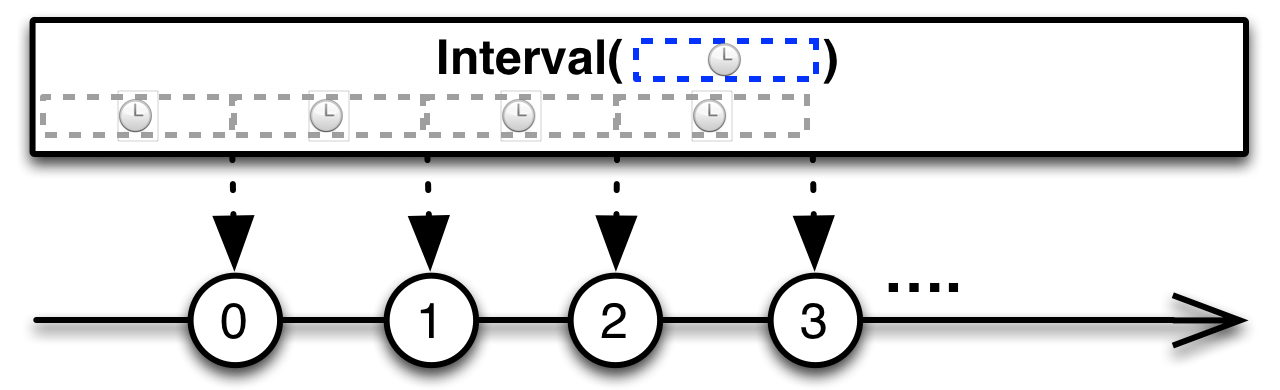
> `interval` creates an `Observable` sequence that emits elements after each `period`, on the specified scheduler. [More info](http://reactivex.io/documentation/operators/interval.html)
|
||
|
||
----
|
||
## `publish`
|
||
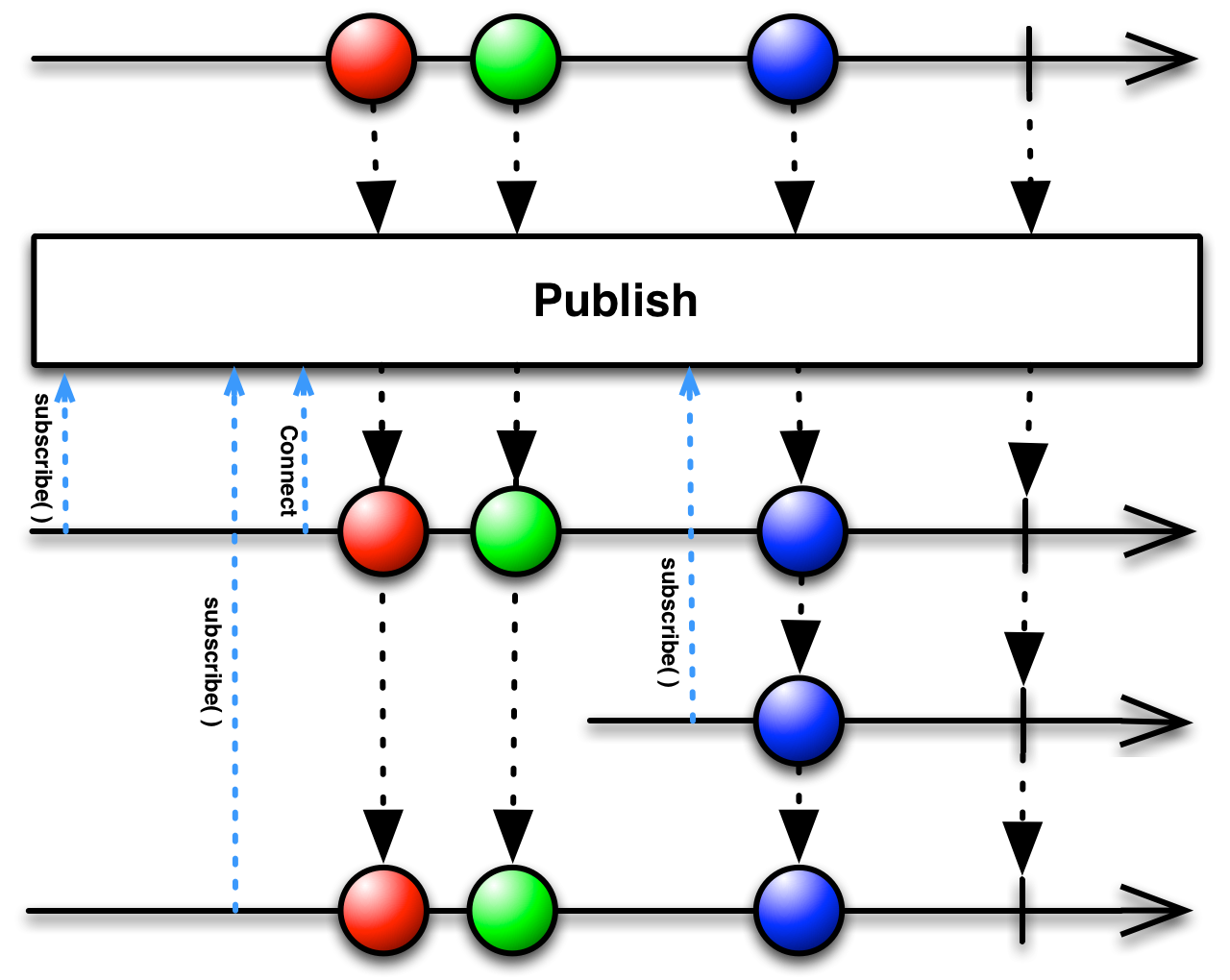
Converts the source `Observable` sequence into a connectable sequence. [More info](http://reactivex.io/documentation/operators/publish.html)
|
||
|
||
*/
|
||
func sampleWithPublish() {
|
||
printExampleHeader(#function)
|
||
|
||
let intSequence = Observable<Int>.interval(1, scheduler: MainScheduler.instance)
|
||
.publish()
|
||
|
||
_ = intSequence
|
||
.subscribe(onNext: { print("Subscription 1:, Event: \($0)") })
|
||
|
||
delay(2) { _ = intSequence.connect() }
|
||
|
||
delay(4) {
|
||
_ = intSequence
|
||
.subscribe(onNext: { print("Subscription 2:, Event: \($0)") })
|
||
}
|
||
|
||
delay(6) {
|
||
_ = intSequence
|
||
.subscribe(onNext: { print("Subscription 3:, Event: \($0)") })
|
||
}
|
||
}
|
||
|
||
//sampleWithPublish() // ⚠️ Uncomment to run this example; comment to stop running
|
||
|
||
//: > Schedulers are an abstraction of mechanisms for performing work, such as on specific threads or dispatch queues. [More info](https://github.com/ReactiveX/RxSwift/blob/master/Documentation/Schedulers.md)
|
||
|
||
/*:
|
||
----
|
||
## `replay`
|
||
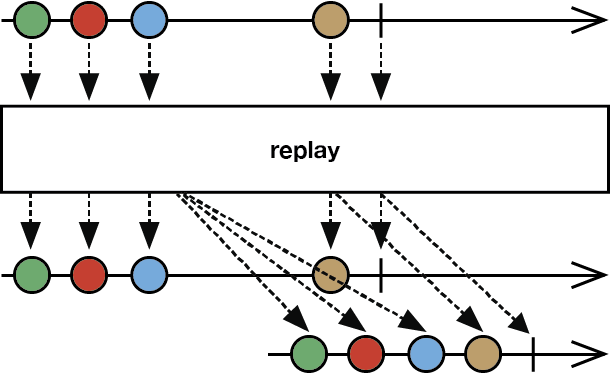
Converts the source `Observable` sequence into a connectable sequence, and will replay `bufferSize` number of previous emissions to each new subscriber. [More info](http://reactivex.io/documentation/operators/replay.html)
|
||
|
||
*/
|
||
func sampleWithReplayBuffer() {
|
||
printExampleHeader(#function)
|
||
|
||
let intSequence = Observable<Int>.interval(1, scheduler: MainScheduler.instance)
|
||
.replay(5)
|
||
|
||
_ = intSequence
|
||
.subscribe(onNext: { print("Subscription 1:, Event: \($0)") })
|
||
|
||
delay(2) { _ = intSequence.connect() }
|
||
|
||
delay(4) {
|
||
_ = intSequence
|
||
.subscribe(onNext: { print("Subscription 2:, Event: \($0)") })
|
||
}
|
||
|
||
delay(8) {
|
||
_ = intSequence
|
||
.subscribe(onNext: { print("Subscription 3:, Event: \($0)") })
|
||
}
|
||
}
|
||
|
||
// sampleWithReplayBuffer() // ⚠️ Uncomment to run this example; comment to stop running
|
||
|
||
/*:
|
||
----
|
||
## `multicast`
|
||
Converts the source `Observable` sequence into a connectable sequence, and broadcasts its emissions via the specified `subject`.
|
||
*/
|
||
func sampleWithMulticast() {
|
||
printExampleHeader(#function)
|
||
|
||
let subject = PublishSubject<Int>()
|
||
|
||
_ = subject
|
||
.subscribe(onNext: { print("Subject: \($0)") })
|
||
|
||
let intSequence = Observable<Int>.interval(1, scheduler: MainScheduler.instance)
|
||
.multicast(subject)
|
||
|
||
_ = intSequence
|
||
.subscribe(onNext: { print("\tSubscription 1:, Event: \($0)") })
|
||
|
||
delay(2) { _ = intSequence.connect() }
|
||
|
||
delay(4) {
|
||
_ = intSequence
|
||
.subscribe(onNext: { print("\tSubscription 2:, Event: \($0)") })
|
||
}
|
||
|
||
delay(6) {
|
||
_ = intSequence
|
||
.subscribe(onNext: { print("\tSubscription 3:, Event: \($0)") })
|
||
}
|
||
}
|
||
|
||
//sampleWithMulticast() // ⚠️ Uncomment to run this example; comment to stop running
|
||
|
||
//: [Next](@next) - [Table of Contents](Table_of_Contents)
|